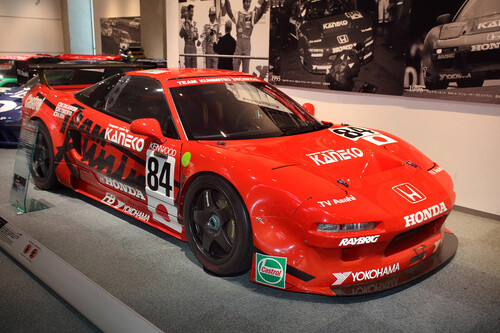
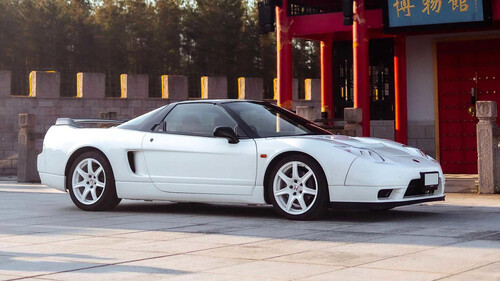
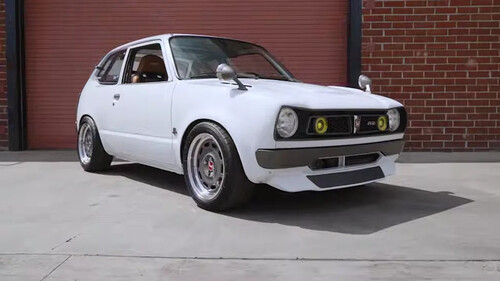
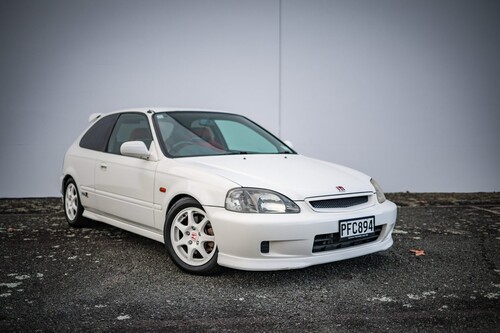
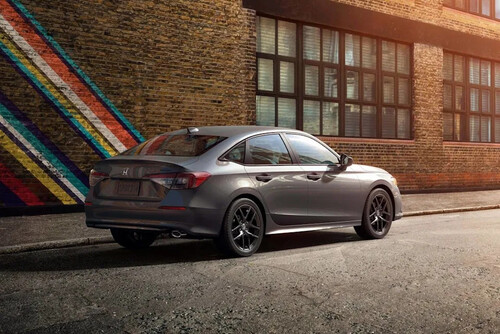
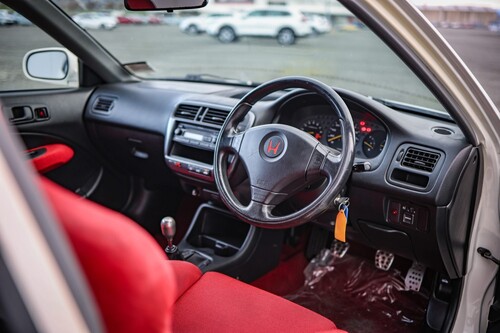
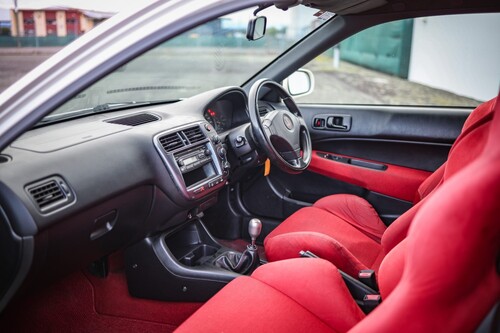
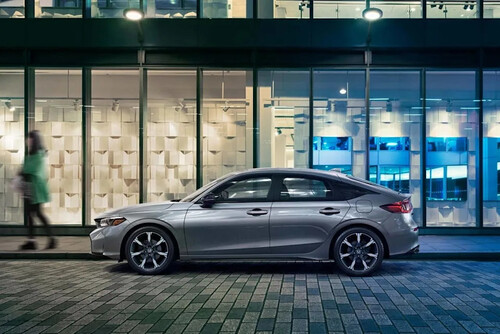
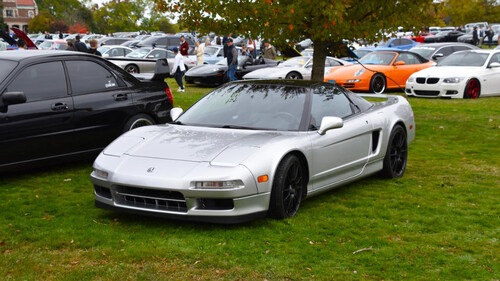
The 1996 Honda Civic Was Overbuilt in All the Right WaysAutoblogAnton AndresTue, September 8, 2026 at 3:58 PM UTCAdd us on GoogleAutoblog and Yahoo may earn commission from links in this article.Peak HondaIt's difficult to pinpoint exactly when peak Honda was, but it's safe to say it's anything it built from the late '80s right until the dawn of the new millennium. Some will also argue that we can include the mid-2000s and right before the 2010s. Regardless, Honda made a lot of bangers in the '90s.Up top, you had the NSX that wasn't just a flagship for the brand, but also a showcase of its capabilities. But even the everyday models were wonderful ownership experiences, and when it came to economy cars, the 6th-generation Honda Civic was as close to perfection as it got.HondaThe Run UpBut before sending lots of love for the 6th-gen, we have to acknowledge that the 4th- and 5th-gen Civics were also some of the best economy cars the world had produced. You didn't need to get the sporty versions to appreciate the engineering that went behind it.AdvertisementAdvertisementThe suspension alone was worth talking about, as those cars had double-wishbones, which is something reserved for sports cars. Why? It's obviously for handling and chassis dynamics, but putting it in an affordable runabout was admittedly overkill. But that's how engineering-led Honda was in those days. The 4th-gen was the start, the 5th-gen was a great follow-up, but the 6th-gen was the culmination of everything Honda had learned.HondaSeptember 5, 1995That's a date that every 6th-gen Honda Civic should know, as that was the day it became available to Japanese customers. September 4, 1995 was its official debut and announcement, and there was no concept car that previewed it, either. It was a simple, straightforward affair for a car that would later become one of Honda's most-loved models.Internally known as the EK or EJ, the car was developed with the concept of "Value Revolution." But instead of cheapening out on it to sell it cheap, Honda went all out by pouring a whole lot of smart engineering into this model. Value Revolution for the brand meant offering the best possible car for not a lot of money, even if it meant it was overbuilt. And, notice we said overbuilt and not overengineered, as Honda also wanted to keep the car simple.HondaFour Guiding PrinciplesUnder that concept, there were four goals that Honda had in mind for this model. What follows next is lifted straight from the Civic's FactBook from 1995, translated straight from Japanese. The first target was "High performance close to home," followed by "Functional and high-quality styling." Goal number three was "High level of completion," while the fourth was a "global perspective on safety, environment, and resources."AdvertisementAdvertisementBut what caught our attention were the first and third targets. What Honda meant by 'High performance close to home" was optimizing the powertrain arrangements and options, all while delivering a high level of handling competence. Of course, there was VTEC, but Honda wanted to make sure that benefitted everyone, so not only did it make a good amount of power for its available engine size (1.3, 1.5, and 1.6-liters), these were great of gas mileage, too. As for the handling part, those double wishbones were for comfort and stability, as Honda believed that great chassis dynamics was a safety feature in itself.As for "High level of completion," Honda's brief explanation of that partially answers why the 6th-gen Civic felt a cut above the typical subcompact sedan of its era, and yes, these were classified by the EPA as such. The automaker wanted it to achieve "A level of perfection that surpasses its class, achieved through meticulous refinement." If it sounds like OCD engineering, then we can't blame you. After all, the results speak for themselves.HondaThe Hot ModelsWe can't talk about this era of Civic without mentioning the performance models. In Japan, there was the SiR hatchback and sedan, the latter being called the Civic Ferio SiR. Those came with a B16A engine that made 170 hp and 116 lb-ft that revved up to 8,200 rpm. There's also the Si Coupe for the U.S. and SiR Coupe for Canada, and those used a B16A2 with 160 hp and 111 lb-ft. The B16A2 was also used in the VTI-R in Australia and New Zealand, as well as the SiR sedan in the Philippines, to name a few.Then we get to the pinnacle of performance Civics, the EK9, better known as the first Type R. Okay, it wasn't the very first Honda Type R model, but Honda gave the same hardcore treatment from the NSX to the hatchback. Lightened and stiffened, it came with a B16B engine that produced 182 hp and 118 lb-ft, with its rev limit raised to 8,600 rpm. The standard Civic chassis was good as it was, but the Type R took it to the next level. The result was a Japanese hot hatch like nothing else before it at the time.HondaHow it DroveAs someone who spent his formative years behind the wheel of various Hondas, this writer can attest just how well-sorted this era of Civic was. Even a bog-standard model with an automatic and a single-cam 1.6-liter that made 125 horses still showed signs of brilliance. The little sedan rode well, and drove with an eagerness absent in most of its rivals. It was also easy to drive and enjoyable behind the wheel, regardless of whether you were an enthusiast or not.AdvertisementAdvertisementOf course, it wasn't God's gift to mankind, as there are some minor nitpickings, but overall, it was a hard car to fault. For something that's supposedly basic transport, it drove and rode with verve. No other car felt like it before, and if we're being honest, no Civic has felt that way since. Sure, the current 11th-gen Civic is a great compact, especially in hybrid form, but the Honda Civic 6th gen is a great reminder of how Honda spoiled our expectations for affordable transport over 30 years ago, telling us that we should always expect more from a car, even for less money.HondaHondaView the 22 images of this gallery on the original articleThis story was originally published by Autoblog on Sep 8, 2026, where it first appeared in the Features section. Add Autoblog as a Preferred Source by clicking here.