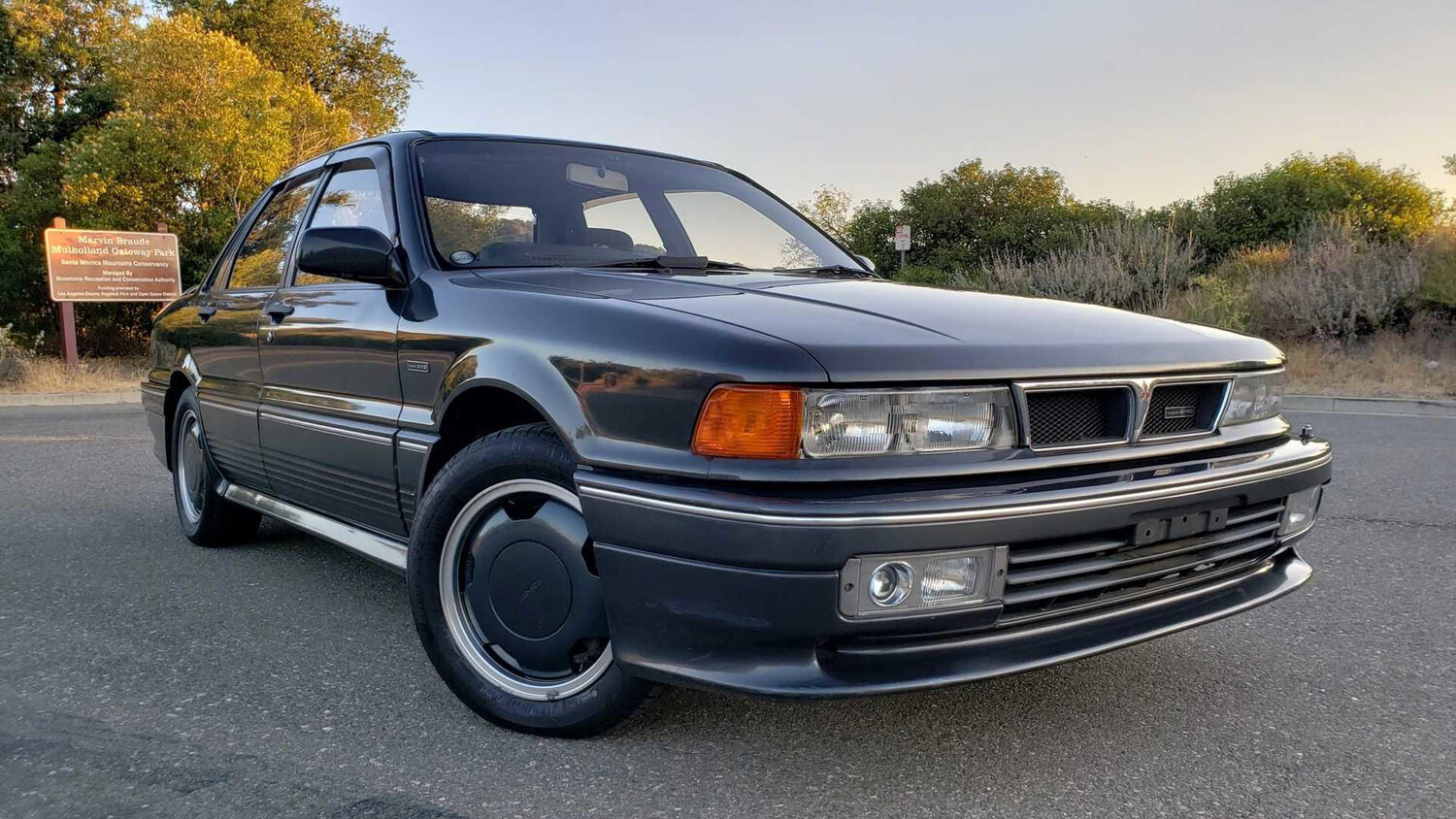
AMG, Mercedes-Benz’s high-performance subsidiary, is best known today for producing bonkers versions of standard Mercedes models. From the legendary Mercedes-AMG One, which featured a Formula 1-derived engine, to the 2012 Mercedes-Benz C63 AMG Black Series, the last great naturally aspirated C63, AMG has produced some of the most iconic sports cars out there.AMG’s history of producing souped-up cars is not limited to Mercedes alone. Almost 40 years ago, AMG was free to work with anyone, and it partnered with a Japanese manufacturer to produce an iconic sports sedan. While not as powerful as the current crop of AMG monsters, this JDM sedan was among the most menacing-looking and fun-to-drive cars of the era. This is its story. AMG Has Some Awesome Non-Mercedes-Benz Cars Under Its Belt Lyndon Conrad Bell | Top SpeedToday, it’s strange to think of AMG without thinking of Mercedes-Benz, thanks to their exclusive relationship of making some amazing performance cars. AMG’s affinity for taking relatively tame cars and turning them into insane performance cars has earned AMG models a reputation in the car culture. Just take a look at some of Mercedes-AMG’s current offers, like the AMG S 63 E Performance, a 791-horsepower sports sedan based on the already awesome S-Class sedan.Mercedes-BenzBut AMG has existed long before this partnership. This tuning firm was founded in 1967, mostly focusing on building racecar engines. It was founded by two former Mercedes engineers: Erhard Melcher and Hans Werner Aufrecht. Even back then, AMG almost exclusively focused on Mercedes cars, such as the famous Red Pig, a 1971 Mercedes 300 SEL 6.8. Soon enough, AMG started producing upgrades and accessories for other road cars.Bring a TrailerThis was the time AMG had a free hand at partnering and working with any manufacturer in the world, including Mitsubishi. Between 1986 and 1989, Mitsubishi and AMG worked on building the Debonair AMG. This car didn't receive any juicy AMG performance upgrades, though it did receive some cosmetic enhancements, including a new grille, ground effects, and a rear spoiler. But it is the second car that Mitsubishi and AMG built together that has become an icon today: the Mitsubishi Galant AMG. The Mitsubishi Galant AMG Is A Unique JDM Icon Bring a TrailerBack in 1989, Mitsubishi wasn’t exactly associated with performance just yet. Today, we know the company for its Lancer Evo exploits, thanks to its tuning arm, Ralliart, which has created some of the best rally cars in the world. But in 1989, the Lancer Evolution was still three years away. This was the start of Mitsubishi wanting a slice of the performance pie on more than just a surface level. The manufacturer wanted to go all in. AMG Had To Step In For That Bring a TrailerSo, it naturally decided to collaborate with someone who could help it get there, and what’s better than AMG? At the time, AMG wasn’t yet owned by Mercedes-Benz, so this Germany-based performance shop could still choose projects from anybody. And Mitsubishi’s proposal of producing a hotter Galant must’ve caught its attention. Both Mitsubishi and AMG had a history of working on the Debonair, too, which must’ve helped the Japanese manufacturer’s case here.Bring a TrailerThe Debonair AMG was already a great car, but Mitsubishi’s vision for the Galant was much grander. So, in 1989, Mitsubishi launched the Galant AMG. Offered in two versions: Type I and Type II, the Galant AMG featured the same 2.0-liter naturally-aspirated four-cylinder found in the Galant GTi-16v, only this time, it was tuned by AMG to produce 27 more horsepower. The engine was mated to either a four-speed automatic or a five-speed manual. The Galant AMG may not have been superfast, but it was still plenty to get you where you needed to go while having a bit of fun along the way. Reportedly Limited To Just 500 Examples Bring a TrailerThe Galant AMG’s production only lasted a few years, with the final Galant AMG leaving the factory in late 1994. While not enough information is available on how many Galant AMGs were produced, most sources suggest that Mitsubishi only produced 500 of them. Five years later, AMG would officially come under the Mercedes-Benz umbrella, ending the tuner’s ability to work with other automakers. Yes, this partnership has given us some incredible options, but the Galant AMG will remain one of the last exploits of AMG outside the Mercedes-Benz connection. The Galant AMG Had More Performance And Could Rev Higher, Too Bring a TrailerUnlike the Debonair AMG that came before the Galant AMG, this time, AMG had its hands deep within the Galant AMG’s engine. The standard Galant only produces 144 horsepower from its 4G63 engine, a figure that was underwhelming even in the early 1990s. And without a turbocharger attached to it, producing more power from the engine would prove difficult. As it turns out, this is exactly what AMG is good at. The German tuning shop managed to squeeze out 27 more ponies out of the same 2.0-liter 4G63 inline-four engine for a max output of around 170 horsepower. The Engine Got The Full AMG Treatment Bring a TrailerTo get the extra oomph out of the engine, AMG had to tweak some of the engine internals, starting with replacing the weak stock pistons with AMG’s very own. Along with that, AMG also upgraded the engine with a new intake manifold, titanium valve springs, and an upgraded camshaft. Another one of the Galant AMG’s party pieces was that the engine could now rev higher at 8,000 RPM, which was 500 RPM more than the standard engine. Performance To Run With Higher-End Mid-Size Sedans Bring a TrailerThe result was that the Galant AMG’s upgraded 4G63 four-pot engine produced 170 horsepower, which gave it a zero to 60 miles per hour time of around 6.5 to 7.8 seconds (depending on the source and transmission) and a top speed of 145 miles per hour. This performance allowed the car to run with some of the higher-end mid-size sedans of the time. Buyers could pick between a four-speed automatic transmission or a five-speed manual, the latter of which offered slightly more performance. This was a certified hot Galant. AMG Gave The Galant With Some Cosmetic Treatment, Too Bring a TrailerThe Galant AMG is a JDM icon not just for its AMG connection or performance, but it’s also among the most menacing cars of its time. You have AMG to thank for that. Mitsubishi offered the car in either gray or black, and exterior styling was enhanced with a sharp rear spoiler, unique 15-inch wheels, bulkier bumpers, and AMG badges all around. The interior also got a slight refurbishment, including AMG-branded door sills, floor mats, and a four-spoke steering wheel. Buyers could also opt for the interior with full leather seats instead of the standard cloth seats.Bring a TrailerThe Galant AMG Type I and Type II had slightly different styling, too, with the former looking a lot racier than the latter. The Type I Galant AMG featured an extended rear wing, AMG-branded bumpers, and blacked-out wheels. It also had a slightly Spartan interior. Meanwhile, the Galant Type II looked more pedestrian, with only subtle AMG badging around the car. Reportedly, more Type IIs were sold than the Galant AMG Type I. The Galant AMG Is A Rare Icon Of AMG And JDM History Bring a TrailerAs good as the Galant AMG was, it lived in the shadow of the Mitsubishi Galant VR-4, which offered much more performance. Built as a homologation model for WRC, the VR-4 featured a turbocharged 195-horsepower version of the four-cylinder engine sending power to all four wheels. It was much more fun to drive. Reportedly, Mitsubishi only made 500 units of the Galant AMG, ending its production in 1994.Bring a TrailerThe Mitsubishi wasn’t hugely popular back then, but enthusiasts are now realizing its value, and its rarity has made the Galant AMG a collector’s special. While not much information is available, Classic.com shows a 1992 Galant AMG Type I on sale for $17,000 and another 1991 Galant AMG Type II on sale for $8,900. Generally, high-mileage examples are sold for less than $10,000, but low-mileage examples go for more than twice as much. Should another pop up any time soon, we’d expect the price to go up somewhat; it is, after all, a unique piece of both JDM and AMG history.Source: Mitsubishi, AMG, Classic.com, Bring A Trailer, Hagerty