Registrations of new Tesla cars rose across several Northern European markets in October, as the U.S. automaker extended its regional sales recovery despite growing competition from Chinese rivals.
Tesla registrations soared 248 percent in Sweden, 131 percent in Norway and 34 percent in Denmark, data from Mobility Sweden, Norway’s OFV and Denmark’s bilstatistik.dk showed.
The rebound has been aided by easier year-ago comparisons, higher fuel prices, government incentives and continued growth in EV demand.
Sign up for the Automotive News Europe Breaking News alerts and be the first to know when big news happens.
Performance, however, varied across the region. Tesla saw strong gains in Norway and Sweden, but trailed several Chinese rivals in Denmark, which highlights the increasingly fragmented competitive landscape in Europe.
In Norway, Tesla recorded its best October on record and was the country’s top-selling car brand with a 9.8 percent market share, according to OFV. Chinese brands continued to expand their footprint, accounting for 22.5 percent of new passenger car registrations, their highest monthly share on record.
“Especially in Norway people are generally more affluent than elsewhere in Europe, people are less seeking the lower offerings of Chinese brands than in other European countries,” Rico Luman, senior economist at ING Research, said.
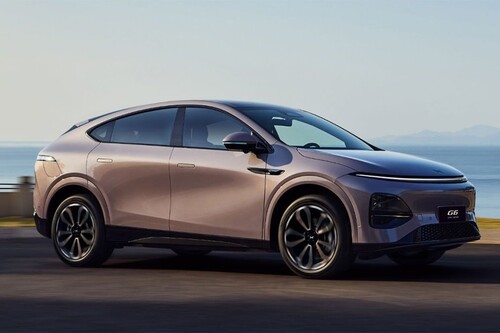
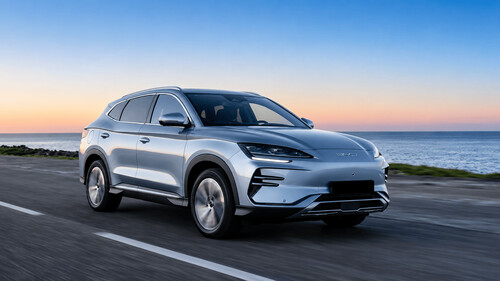
By contrast, Tesla’s market share in Denmark was only 0.73 percent, behind BYD, Leapmotor, Xpeng and SAIC-owned MG, which captured between 1.6 percent and 5.5 percent of the market each.
“Northern Europe is quite open to the new players as long as they are efficient EVs. That is what allowed Tesla to get to a leading position and it’s what is allowing the Chinese to gain ground fast,” industry analyst Felipe Munoz, who runs the Car Industry Analysis platform, told Reuters.
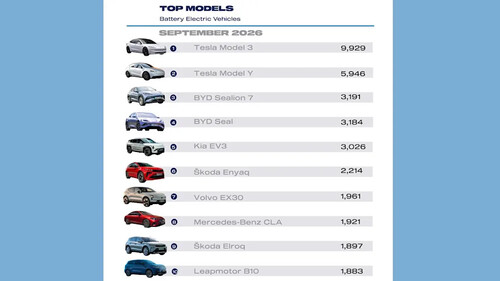
Tesla remains one of Europe’s strongest EV brands, though its reliance on the Model 3 and Model Y has left it facing growing competition from rivals with broader lineups.
The automaker said in October it had ended the third quarter with its largest passenger vehicle order backlog in four years.