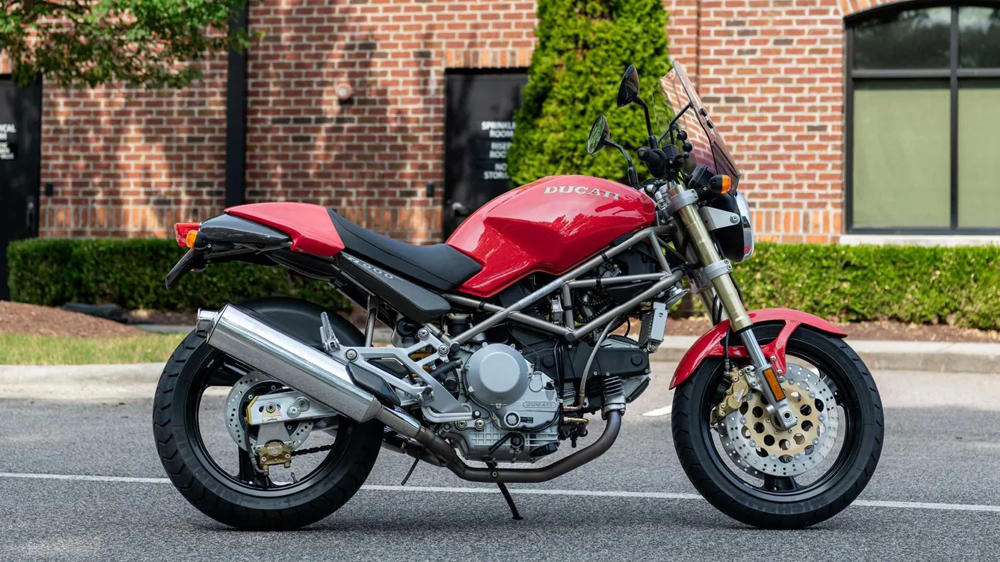
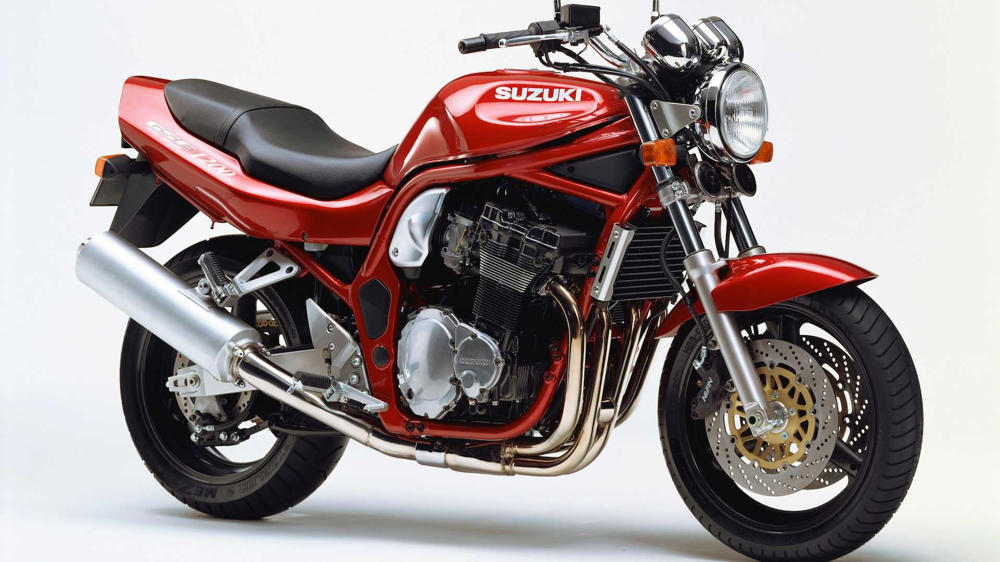
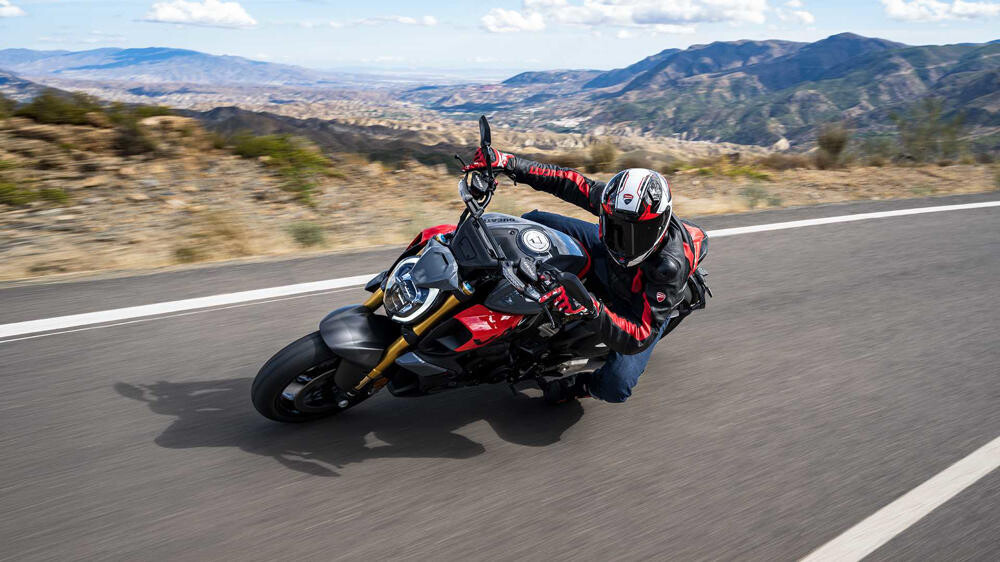
The release of the Ducati Monster back in the early 90s essentially rewrote the rulebook on standard motorcycles. Every major manufacturer was scrambling to offer what was quickly becoming known as a “naked sport bike” of their own in an effort to compete. Most of the big-bore Japanese standards had fallen flat, but in 1996, Suzuki cobbled together something quite brilliant. The Naked Bike Is Born After the Monster (pictured above) came out, we got a flurry of standard bikes that offered more sporting potential. Each offered a different balance of straight-line performance, comfort, and dynamic handling. The one thing they all had in common was more relaxed ergonomics than any of the contemporary sport bikes, which made them all more user-friendly, and more versatile. While the differences between most of these new naked sport bikes and the older standard motorcycles were, for the most part, only incremental, Suzuki brought out something that was quite different. It featured a massive, air-cooled inline-four, which made pretty much everything else on the market back in the mid 90s look a little underpowered by comparison. The Suzuki Bandit 1200 Was Cheaper Than A Supersport Key to the success of any Japanese bike competing with European rivals was price. With a sticker price of just $7,099 in 1997, the big Bandit was priced aggressively, offering more displacement than pretty much anything else in this price range. For some perspective, it undercut contemporary 600cc supersport bikes by around $500! A Reworked GSX-R Engine Offered Reliable Performance Power: 96 Horsepower To build a bike like this on a budget most certainly involved diving into the parts bin. The first, and most important find was a potent air-cooled lump, specifically the same lump which powered the original GSX-R1100. It received the classic street bike makeover, with overall horsepower being sacrificed in an effort to improve midrange performance. What was unexpected was just how much improvement there was. On the face of it, 71 pound-feet may not look all that impressive by modern standards, but what was impressive was the fact that almost all of that torque was available from around 3,000 RPM. This made its power accessible almost all the time, and also made the bike astonishingly quick off the mark with a 0–60 time of under 3 seconds, which is comparable to modern superbikes, let alone contemporary superbikes. Roll-on acceleration was just as good, overtaking anything on the highway, at virtually any speed, only required a simple twist of the wrist, irrespective of what gear you were in. Another added benefit was that, in this more mild state of tune, the already reliable superbike engine became more or less indestructible. The Bandit Was A Freight Train Of A Motorcycle Thanks to its stability, comfort, and reliability, the Bandit 1200S (pictured above) is mostly used as a budget-friendly sport tourer. Its little half-fairing also helped add to its long-distance touring potential, and as a result, these models in particular will often cross the 100,000-mile threshold. While brutally fast, and more comfortable than you might think, the Bandit is far from perfect. It is a bike that is built on a budget, and like most Suzuki motorcycles from this particular era, corrosion is a very real concern and can compromise longevity if left unchecked. It also shares several parts with other models, and while this is a good thing when it comes to serviceability, almost nothing was actually designed for this motorcycle, which has a very real effect on handling. In an effort to keep this bike affordable, not much time or effort was put into chassis development. Suzuki simply used the chassis from the 600cc Bandit, and reinforced it enough to (sort of) handle the added power. It is, in a word, crude, by modern standards. With a dry weight of 463 pounds, it is also pretty heavy for a naked bike, and you will feel all of this weight in the corners. Contemporary reviewers praised the bike for its “neutral” handling, but with a good 30 years of perspective, we can say with some authority that this is a bike that only really likes going straight. Speed On A Budget Price Range: $3,000 to $5,000 Most of these issues were negligible when the bike was new, and even more so today when you consider its performance potential. You can find a Bandit in pretty good shape for around $3,000, so while it may have been affordable back when it was new, today it offers incredible speed on a budget. Naturally, many of these bikes will be cheap for a reason, and due diligence is required. A bike this fast with worn out brakes or suspension components will be more dangerous than fun. The biggest issue is the same issue that afflicts any blue-collar hero, and that is general neglect. While you certainly don’t need a comprehensive service history for a bike this old, some form of record, or at least some receipts that prove the bike has been maintained will make a meaningful difference. Sources: Suzuki Global and Cycle World Magazine (August 1996)

 Liked by Madeleine Harris, Morgan Walker
 Liked by Madeleine Harris, Morgan Walker