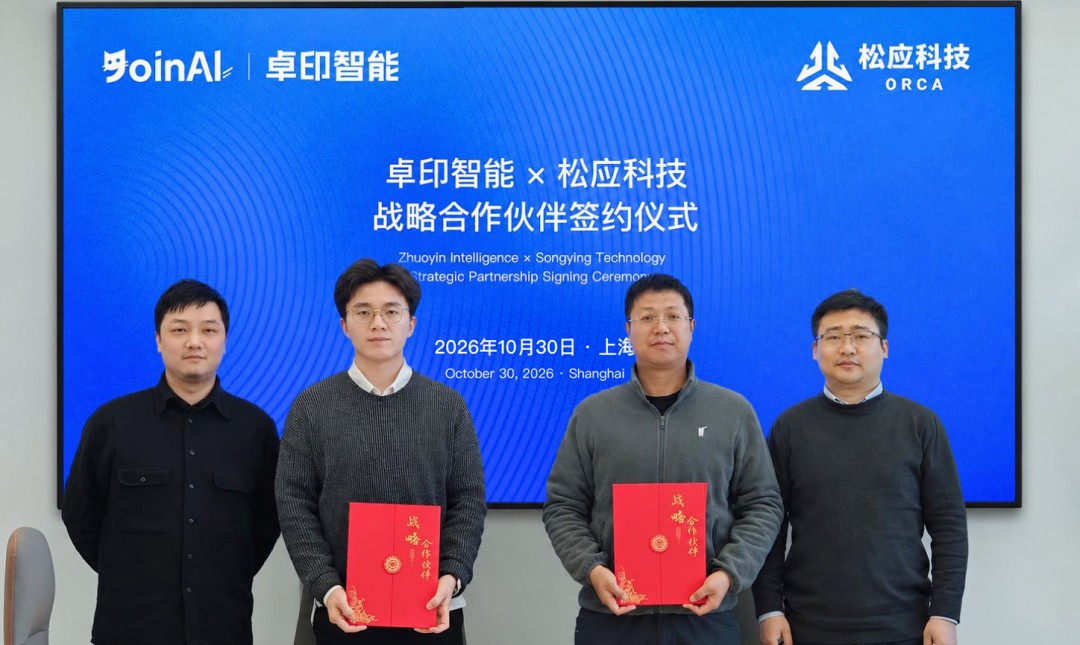
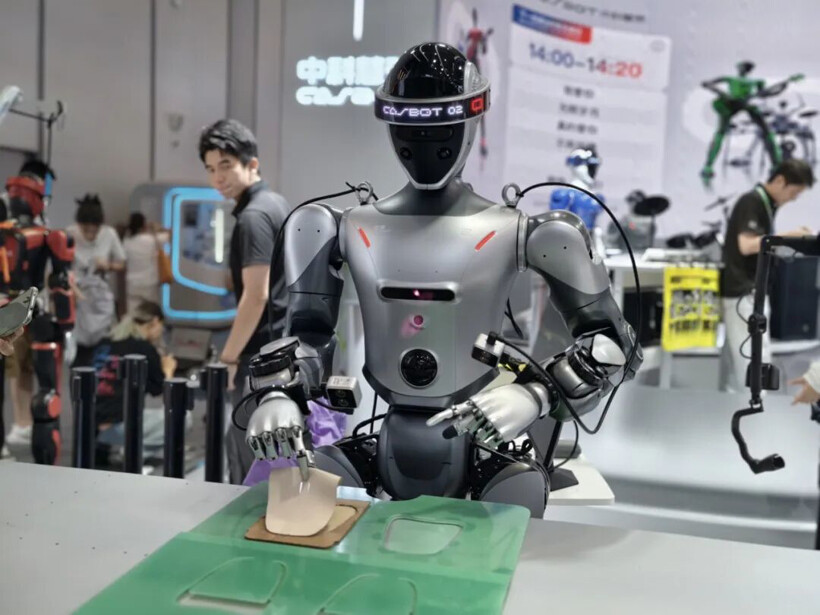
On Nov. 16, Songying Technology and JoinAI signed a strategic partnership agreement, according to Gasgoo Embodied AI. The two parties will collaborate on simulation environments, generative data, robot task training, and model validation, exploring technical pathways from digital training to real-world application. This partnership focuses on a critical challenge in embodied AI development: how to more effectively translate training experience accumulated in virtual environments into real-world task execution capabilities. Image Source: Songying Technology Songying’s proprietary physical AI operating system, ORCA OS, integrates scene construction, data generation, algorithm development, parallel training, and software- and hardware-in-the-loop validation. It supports collaborative training for various robot forms, including humanoid, quadruped, and wheeled robots. The system debuted during the 2026 World Artificial Intelligence Conference. Existing warehouse simulation demonstration by Songying Technology; Image Source: Songying Technology JoinAI, meanwhile, focuses on generative AI and physical AI, aiming to build an "Experience Layer." Leveraging products like Simulaix and Terra, it transforms real-world environmental data, human demonstrations, and task scenarios into model learning resources. In September, JoinAI raised tens of millions of yuan in an Angel+ round, with funds primarily directed toward generative world models, experience infrastructure, and training loop R&D. Under the cooperation plan, the duo will prioritize collaboration in three areas: expanding robot training scenarios by combining physical simulation with generative data; enhancing task adaptability by merging task orchestration with experience building; and connecting model training with software-hardware validation and feedback optimization. Targeting industrial applications, the pair also plans to leverage the open robot hardware ecosystem to explore integrated software-hardware solutions, and launch joint R&D in industrial manufacturing, warehousing, and logistics. As embodied AI accelerates toward industrial deployment, narrowing the gap between simulation training and real-world operations is becoming a key hurdle. This partnership will further link environment, data, and model validation capabilities, paving the way for new technical pathways in real-world robot task deployment.