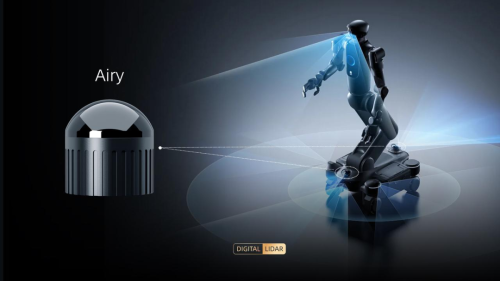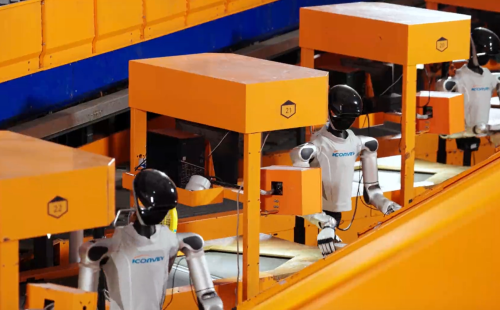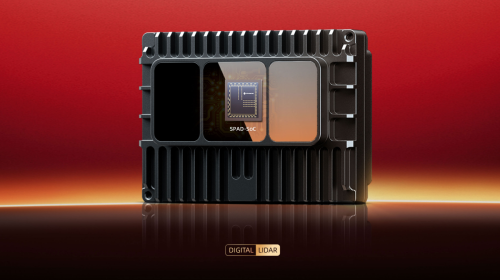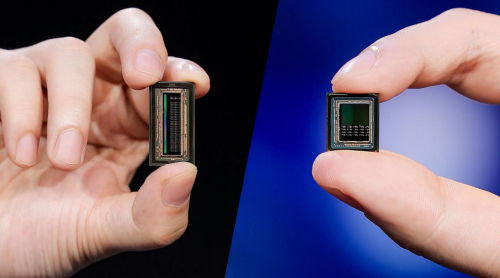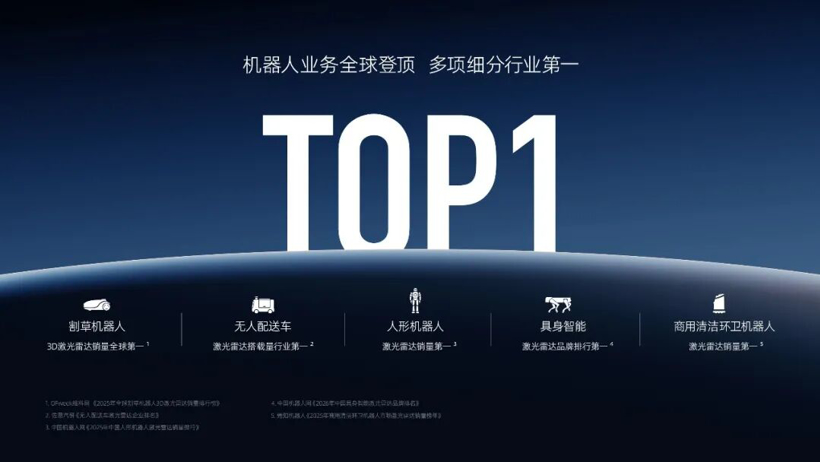
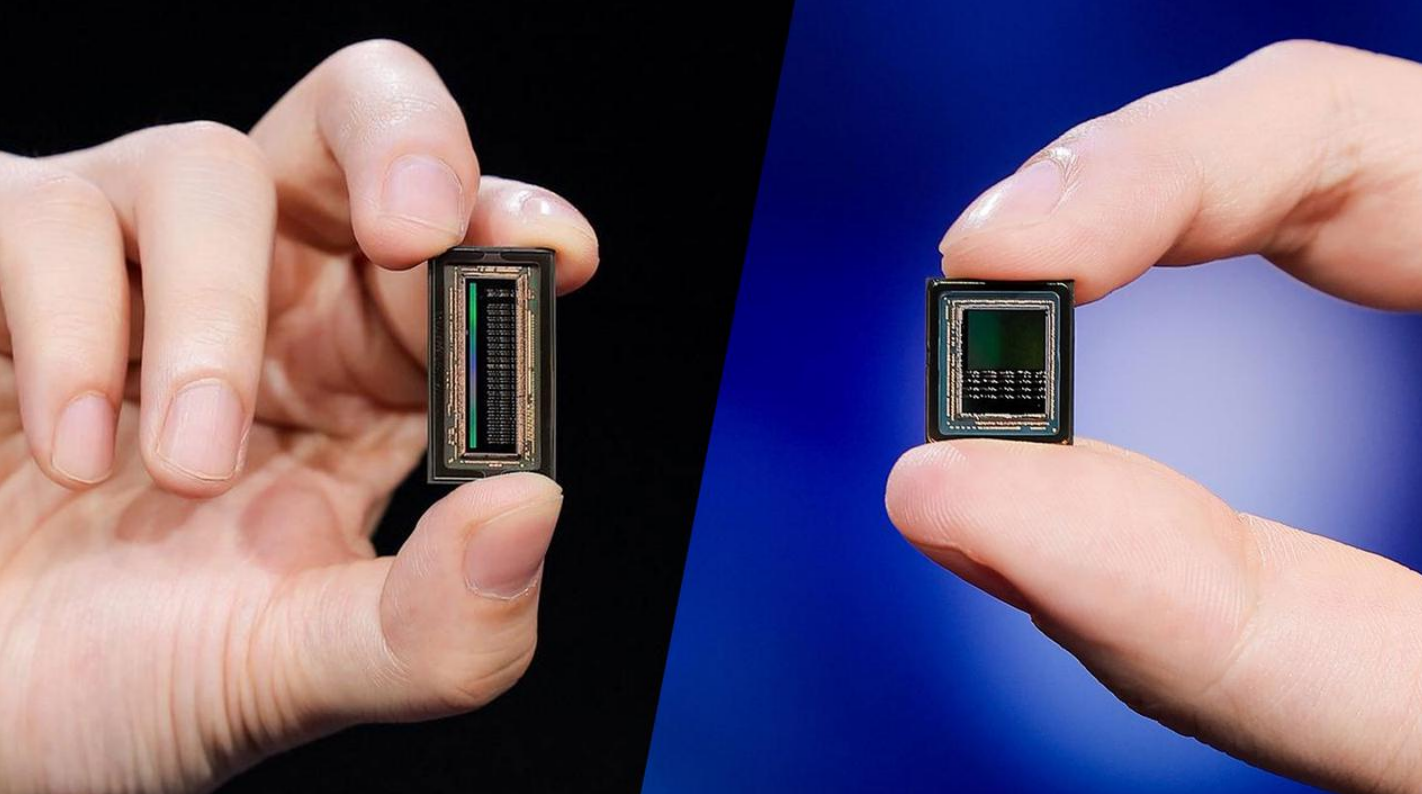























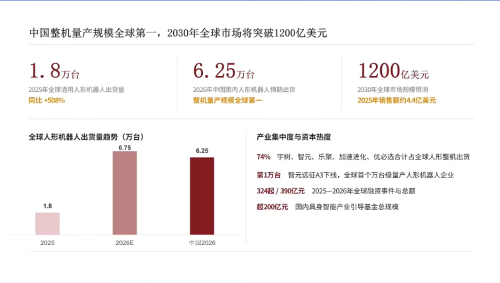



Gasgoo Munich- RoboSense (2498.HK) released its interim results for 2026 on August 26. The company posted 1.02 billion yuan in revenue for the first half — a 30.2% annual increase — while total LiDAR sales jumped 169.6% to 719,200 units. Notably, the robotics business surged, becoming the primary driver of revenue and profit growth.Robotics-focused LiDAR sales soared 510.4% to 282,600 units in the first half, accounting for nearly half of the company's product revenue and becoming the main source of gross profit. This growth is supported by deep partnerships with nearly 60 global leaders in embodied intelligence, including Unitree, AGIBOT, and Fourier.Image source: RoboSenseMoving beyond its core LiDAR business, RoboSense has, for the first time, detailed the commercialization progress of three new incremental categories for robotics: "eyes," "skin," and "muscle."The "eyes" category features spatial cameras to complement its LiDAR offerings. Powered by proprietary SPAD chips, these cameras achieve native alignment of color and depth data, outputting millimeter-level RGB-D information. This ensures stable recognition for near-field robot operations in challenging lighting or low-texture environments. The category has already secured significant orders, with deliveries scheduled to begin at the end of the third quarter and full mass production starting in 2027.The "skin" range includes visuo-tactile and MEMS tactile products. The visuo-tactile sensor significantly simplifies optical structures, reducing computing power requirements while enabling significant miniaturization suitable for fine areas like dexterous fingertips. Meanwhile, the MEMS tactile sensor leverages RoboSense's proprietary technology to address issues like drift and hysteresis in traditional electronic skin, functioning effectively on finger pads. Both products have completed development, with the first enterprise-level mass production project scheduled for commercial delivery by late September and volume production in the fourth quarter.The "muscle" category consists of joint modules, which repurpose the miniaturized motor technology from RoboSense's LiDAR systems to boost torque density and control precision. The company's first joint module has completed development and secured initial orders in the tens of thousands, with batch deliveries set to start in the fourth quarter.Notably, these three categories can either be integrated independently into robot bodies or deployed collectively within data acquisition systems. By providing perception, tactile, and actuation configurations similar to actual robots, they help narrow the gap between training data and real-world deployment.Image source: RoboSenseUnderpinning this multi-category expansion is a foundation built over more than a decade of expertise in chips, optics, MEMS, precision electromechanics, and large-scale manufacturing.In the first half, building on its "Genesis" SPAD-SoC architecture, RoboSense unveiled two chips: "Phoenix" and "Peacock." The E2, the world's smallest high-precision ultra-wide-angle LiDAR powered by the "Peacock" chip, has entered mass production, with deliveries expected to exceed 200,000 units in the second half. The "Phoenix" chip is set to see its first automotive project SOP in the fourth quarter, driving continuous iteration in the vehicle business.RoboSense is currently transforming from a single-product LiDAR vendor into a multi-category robotics technology platform. By transferring large-scale engineering capabilities validated in the automotive sector to the robotics track—and extending upstream from perception to tactile and actuation components—its platform strategy is taking shape. As the three new categories enter mass production in the second half, the robotics business is expected to contribute even more significantly to overall performance.