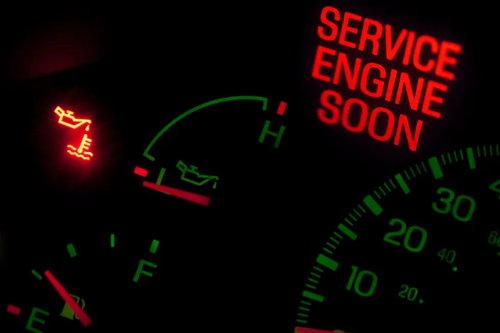
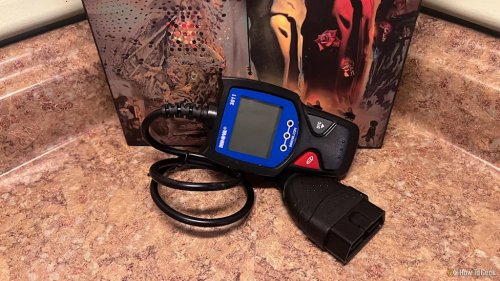
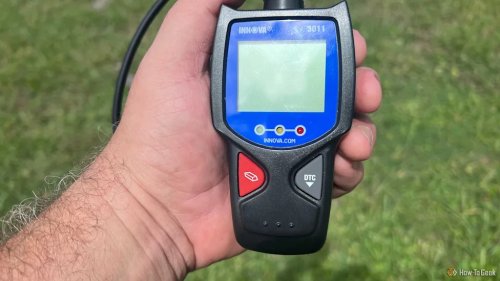
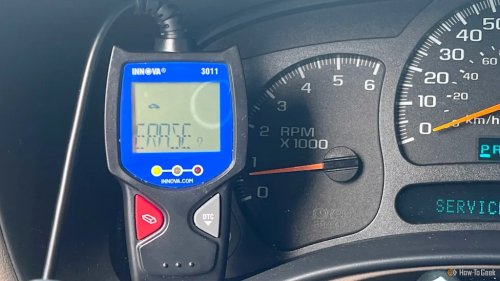
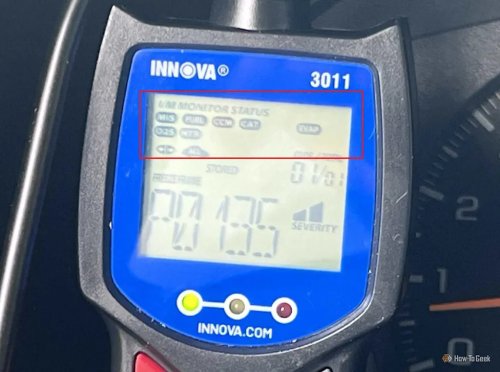
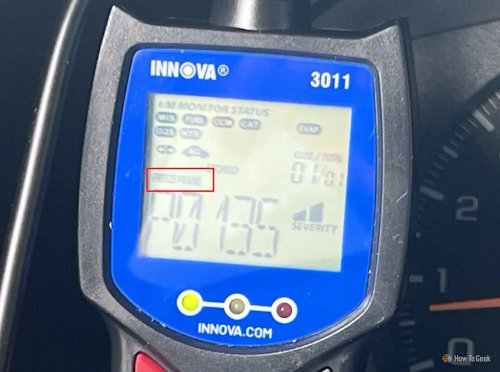
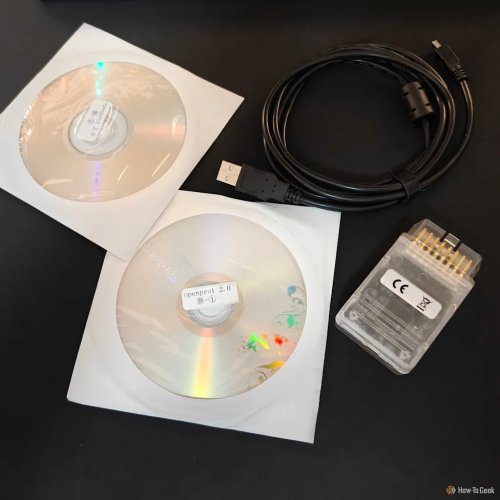
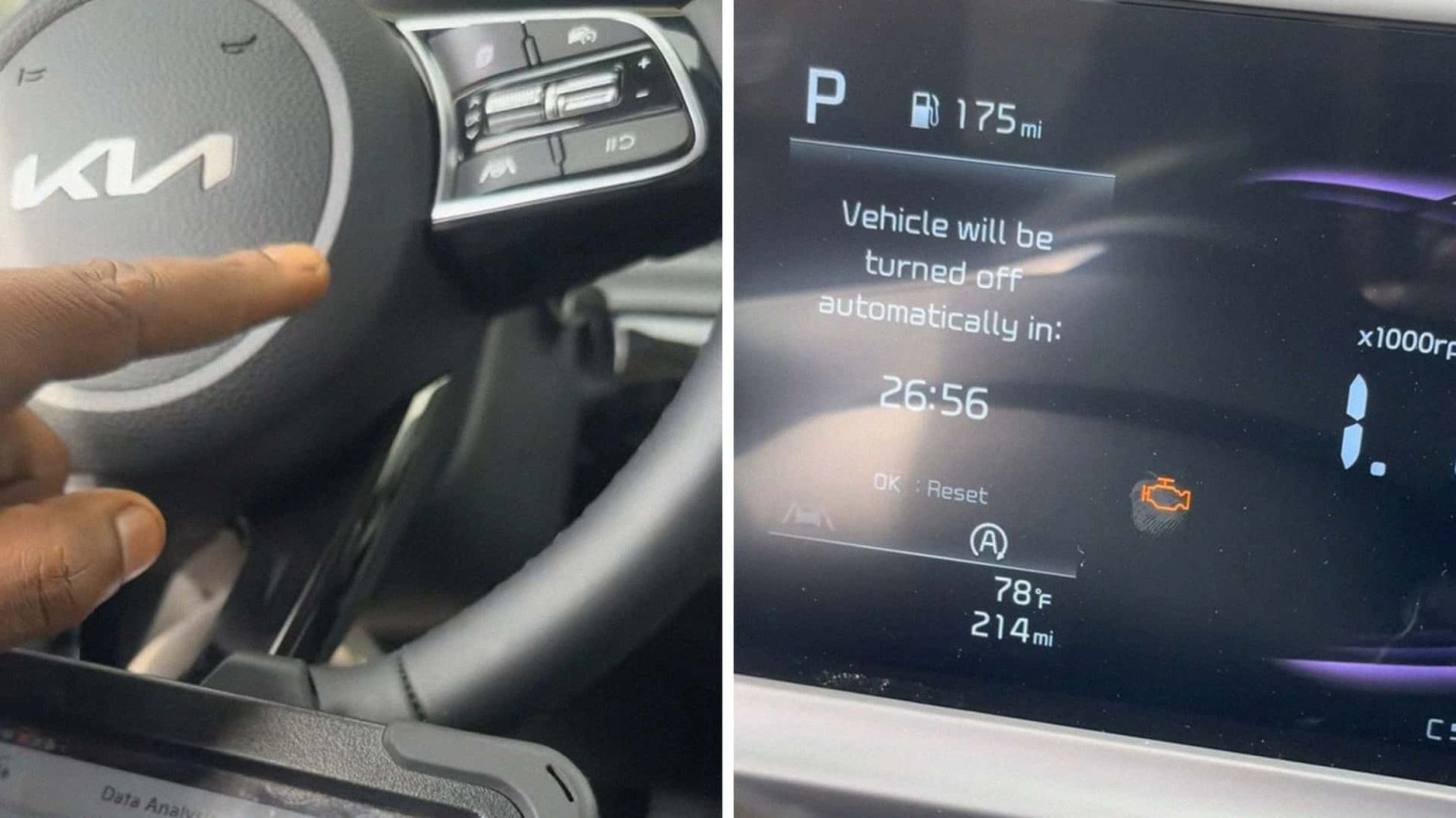
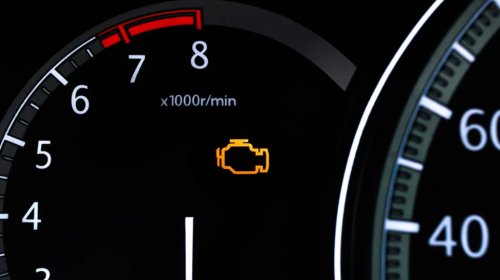
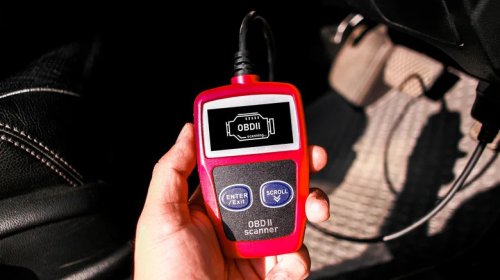
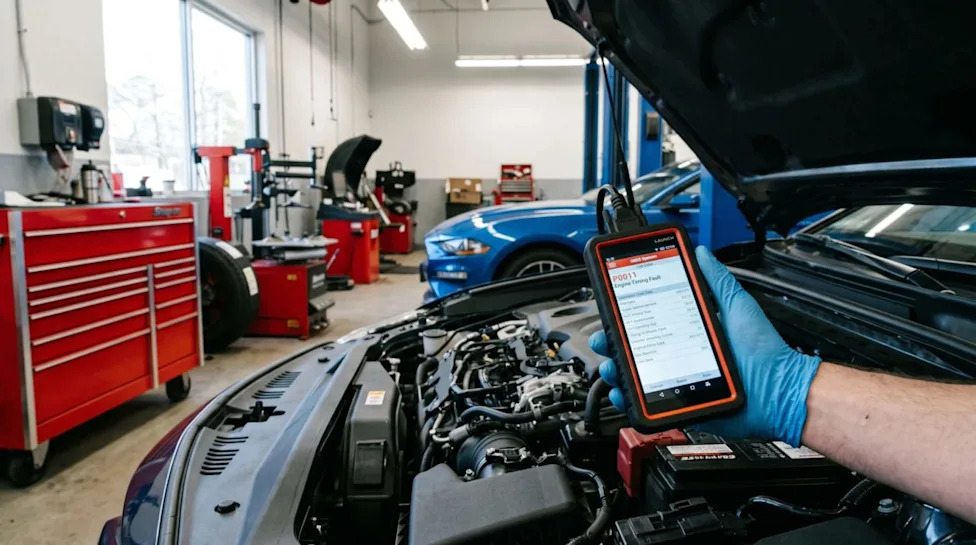
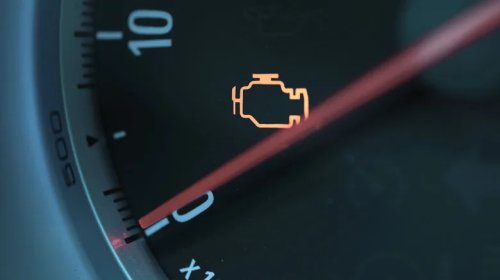
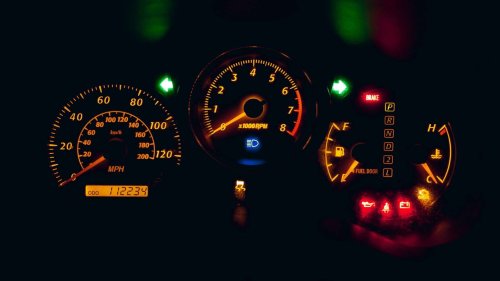
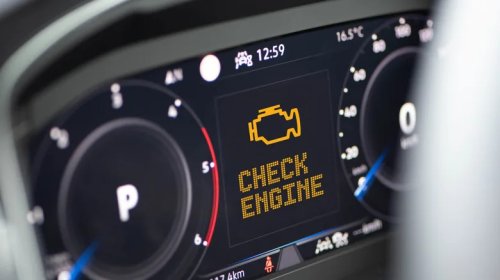
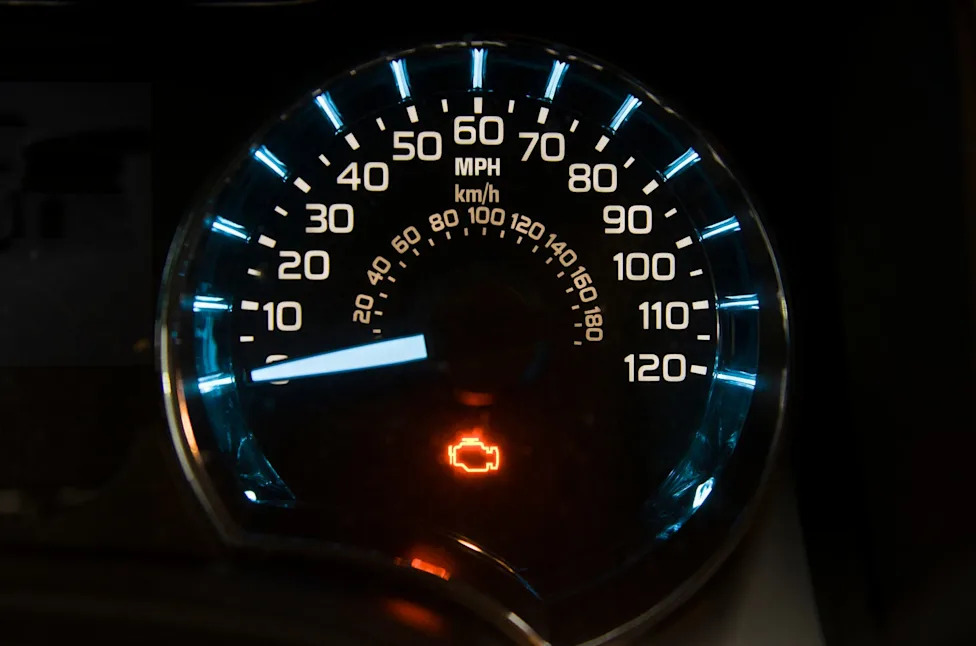
Reset a Check Engine Light at Your Own RiskGetty Images (Getty Images)"Hearst Magazines and Yahoo may earn commission or revenue on some items through these links."Neither black tape nor a Magic Marker is the solution when your car or truck's check-engine light comes on. When the light, which is shaped like the outline of an engine, illuminates, do not panic! And definitely do not attempt to cover up the warning. There's a much better way to deal with the problem. Here's how.For starters, it's important to know what the dashboard light is actually telling you. In some vehicles, there are separate warning lights labeled Service Engine or Maintenance Due, versus a more traditional Check Engine light. If there's any confusion about which light you're looking at, check your owner's manual.AdvertisementAdvertisementIf it's a maintenance-related warning light, then you can relax, at least temporarily. This type of light is your car telling you that some routine work is due, such as an oil or air-filter change. Imagine if your teeth started glowing every six months when a cleaning is due. Granted, you'd look a little funny, but it wouldn't mean a root canal was automatically on the agenda.What a Check-Engine Light MeansIf you're positive that it's a check-engine warning light staring back at you from the gauge cluster, there are some key things to remember.If the light is a steady orange or yellow and there is no perceptible change in how the car is driving, you don't need to stop the vehicle immediately. There is a good chance it could be a minor problem, but, as we've already noted, it's not smart to ignore the problem until the car does have noticeable issues. Sometimes, something as simple as a loose gas cap can be the culprit.In the rare instance that the warning light starts flashing, however, pull over and stop the car. This almost always indicates a serious problem has occurred, and severe damage could be done by continuing to drive the car.Assuming your instrument cluster is showing the more common solid amber or yellow check-engine warning, there's an easy-to-use tool that can help you understand what's going on long before you visit a repair shop or dealership. That's because every car built from the 1996 model year onward speaks the same basic language—and deciphering it takes far less time and money than you'd imagine.Connecting to an OBD-II PortYou can find out what's ailing your engine through the vehicle's OBD-II port. An OBD-II port might sound like something R2-D2 would fall in love with and marry, but in reality it's a simple diagnostic connection found on every post-1996 car and truck. You plug an OBD-II scanner tool into it and, in most cases, out pops a code that tells you what the problem is. The scanner also allows you to clear the vehicle's internal code, which is what triggered the check-engine light. Do that, and the warning light will turn off.AdvertisementAdvertisementMore on that later. To shut off the warning light, and to know exactly what's wrong with your vehicle, you need a scanner. While a professional-grade OBD-II (also known as an OBD2) scanner might cost you hundreds of dollars, a wide range of perfectly good consumer models can be found online from between $20 and $100. (Many auto parts stores will scan your OBD-II for free, if you ask nicely.) Some are wireless; all plug in to the OBD-II port.By communicating with your phone, tablet, or laptop, the wireless units access an app that provides the diagnostic information that could indicate the problem with your car or truck. Some of these wireless scanners include the app in the purchase price and some do not. Do your homework, since not every app works with all types of wireless devices. (The two scanners shown here are ones we have had good experiences with in the Car and Driver test garage. Several staffers also report that they own low-priced wireless scanners that work extremely well.)Once you've acquired your preferred scanner, using it is easy, and it won't leave you covered in engine oil. Better still, it could potentially save you lots of money. Here's how it works:First, locate your car's OBD-II port and plug in the scanner, or the adapter that will link to a wireless device. Make sure your car is then turned on and running so the scanning software can begin. There might be some basic prompts that ask for additional information such as the make and model. If you need your car's Vehicle Identification Number (VIN), you'll usually find it on a metal tag at the base of the driver's side of the windshield (it's often easiest viewed from outside the vehicle).Depending on the scanning device, it shouldn't take long for any potential problem codes to appear. When an issue surfaces regarding how your car is operating, the vehicle's onboard computer records it as a standardized code. Thanks to OBD-II technology, all cars have the same basic codes.While some scanners will translate those codes into readable diagnostic descriptions, others will only display the codes and leave you to decipher them yourself. If that is the case, a quick Google search of the codes can help identify the actual issue. Be sure to write down all of the codes before clearing them, as they can be helpful if you decide to take your car to a dealer or independent repair shop. If your repair estimate comes back with a completely different issue, it could indicate that something suspicious is going on.Your scanning device might immediately trace where the problem can be found. More advanced scanners (usually more complex and expensive models) will have a wider range of capabilities, so keep this in mind if you plan to use the scanner regularly.AdvertisementAdvertisementStill, some discrepancies might arise between the codes you read on your scanner and what a dealership or shop uncovers, so don't automatically assume you're being conned. Given the complexity of today's cars and trucks, the more advanced tools used at a repair shop can sometimes uncover additional issues. Remember, ask plenty of questions and stay informed, especially when the codes appear dissimilar.If your main reason for buying an inexpensive scanner is to reset the check-engine light, know this: clearing the code and turning the light off doesn't mean your issue has gone away. Some check-engine light warnings are temporary—like the aforementioned loose fuel-filler cap or a rare engine misfire. It's possible that the warning light won't come back on after you clear the code.Then again, if the light does come on again soon, you must conclude that you do have an issue that needs to be addressed. And if you can't handle the repair yourself, then you should take it to a shop and have it attended to. Failure to do so could cost you a lot more later.So put away that black tape and Magic Marker, and take time to understand what your car is telling you when the check-engine warning light turns on. After all, if you can plug in a smartphone and punch in an Amazon order ID, you have all the skills needed to install an OBD-II sensor and read a simple code regarding what's ailing your car.AdvertisementAdvertisementFAQs About Check Engine LightsQ: How much does it cost to get your check engine light checked?A: Most mechanics will charge you an hourly labor rate just to plug in an OBD-II diagnostic scanner and tell you why the light is on. However, many auto parts stores will let you borrow an OBD-II scanner for free and allow you to check for yourself right there in the parking lot. Checking for a code and resolving the underlying issue are two different things, though, and repair costs are entirely dependent on the severity of the issue. Knowing what the problem is before you go to the mechanic—or fixing it yourself—could save you hundreds. That's why you should splurge on your own OBD-II scanner.Q: Is it OK to drive with check engine light on?AdvertisementAdvertisementA: Short answer: Maybe. Be absolutely certain your various other components such as transmission, brakes, and lights are working properly before operating the vehicle. That said, if your engine seems to be running rough or is otherwise abnormal-sounding, the only place you should drive it to is a local repair shop or dealer service center.Q: What causes the check engine light to come on?A: That's the biggest problem—it's hard to say without an OBD-II scanner and even then, only an expensive, pro-grade diagnostic scanner will even come close to telling you exactly what the problem is. It really could be anything from a loose wire to a faulty gas cap. As stated above, reset and ignore it at your own risk.Q: Do electric vehicles have check engine lights?AdvertisementAdvertisementA: While the answer to that question is pretty self-explanatory, given the fact that EVs don’t have an engine to check, there are still some unique considerations to take into account when discussing electric vehicle servicing and diagnostics. Overall, EVs require much less maintenance over the lifetime of the vehicle because they have far fewer moving parts than cars with internal-combustion engines. However, that doesn’t mean they are maintenance- and service-free.You might not see a check engine light appear on the dashboard of your EV, but they are still subject to wear-and-tear repairs, including items such as tires and wiper blades; cabin air and other filters; brakes; windshield washer fluid; suspension components; and bulbs.5 Top-Rated OBD-II Scanners to Save You Big BucksYou Might Also LikeGift Guide: Best Ride-On Electric Cars for KidsFuture Cars Worth Waiting For: 2025–2029



















 +8 others