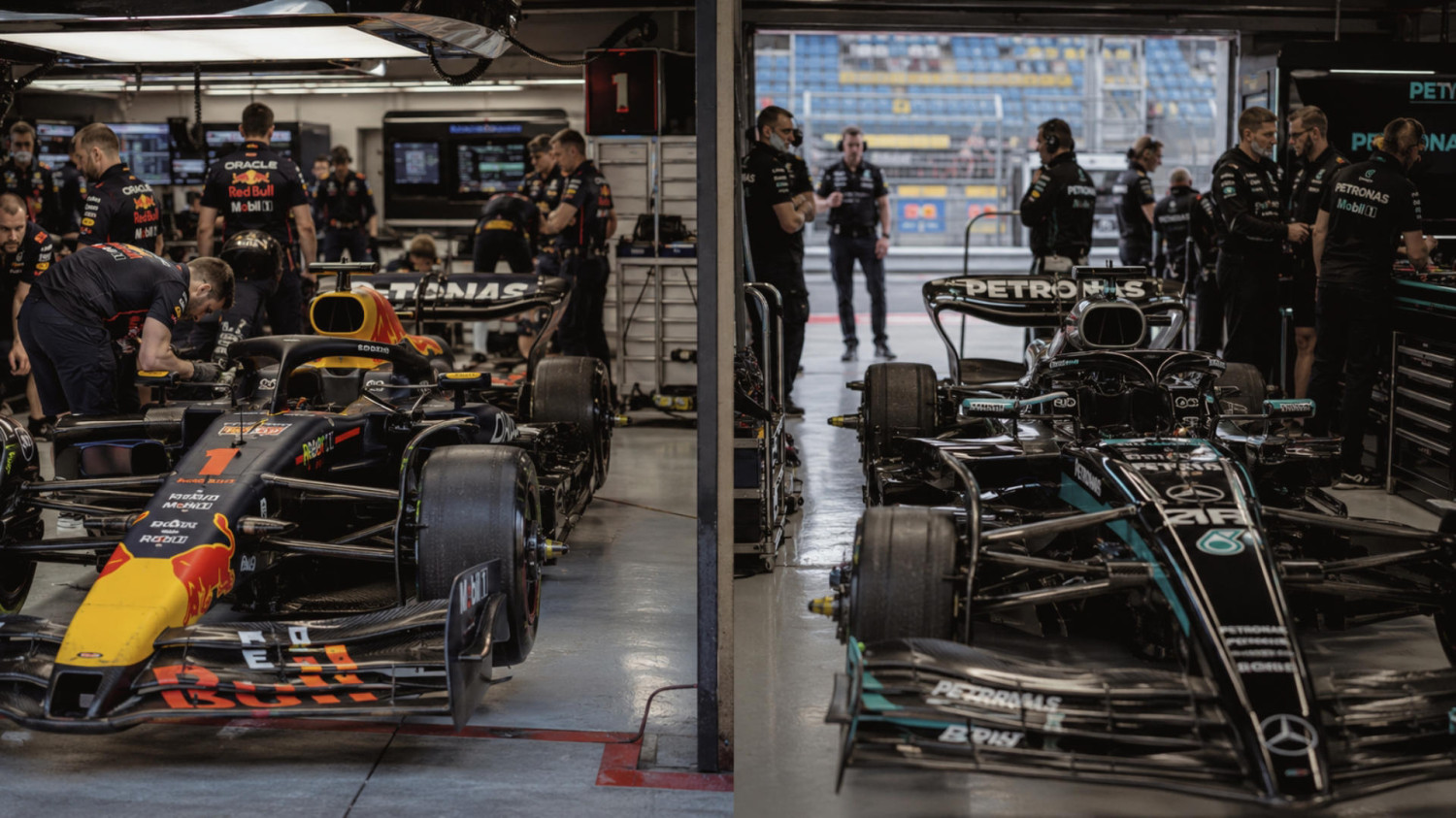



















Red Bull and Mercedes Are Already Taking Different Routes Through F1’s 2026 Packaging PuzzleRed Bull and Mercedes Are Not Solving 2026 the Same WayThe first images of the 2026 Formula 1 cars show something important.The field has not immediately converged.Mercedes and Red Bull are already showing different answers to the same packaging problem. Mercedes has displayed details such as a visible opening linked to diffuser airflow, while Red Bull has gone toward very tight sidepod tapering that creates space for airflow over the floor edges toward the rear of the car.That difference matters because early regulation cycles are often decided by the first correct concept.The question is not who has the prettiest sidepods. It is who has understood the relationship between cooling, drag, floor performance and hybrid efficiency best.The 2026 Rules Have Made Packaging More ValuablePackaging has always mattered in Formula 1.Under the 2026 rules, it may matter even more.The cars have to manage active aerodynamics, new power-unit demands, energy deployment and simplified floors that generate less downforce than the previous ground-effect generation. That forces teams to search for performance around the margins: diffuser support, cleaner flow to the rear, reduced drag and better cooling solutions.A tight bodywork concept can be powerful if it frees airflow.It can also be dangerous if it compromises cooling or makes the car too sensitive. That is why Red Bull’s compact solution is so interesting. It suggests confidence in the way the team and Red Bull-Ford have packaged the car’s internal systems.Mercedes’ approach looks different, but no less deliberate.Diffuser Airflow Has Become a Key BattlegroundThe diffuser has quickly become one of the most important visible areas of the 2026 cars.Because the FIA simplified the floors, teams have had to find new ways to strengthen airflow toward the diffuser and recover downforce. Motorsport.com noted a Mercedes-style opening in the diffuser wall working with undercut sidepods, with similar solutions also visible on Ferrari, Aston Martin and Red Bull.That tells us where teams believe performance still lives.The floor may be less powerful than before, but it is not irrelevant. Teams are now fighting to rebuild its effectiveness through supporting airflow. That makes sidepod shape, floor edge treatment and rear-body packaging part of the same argument.Red Bull’s Tight Rear Shows Its Old InstinctRed Bull’s early 2026 packaging reflects a familiar instinct.The team has often placed enormous value on rear-end airflow quality, compact bodywork and aerodynamic efficiency. Even with a new power-unit partner and a new regulatory environment, that philosophy appears to remain visible.That is not automatically an advantage.The new engine formula places different demands on cooling and energy management, and the risk of over-tight packaging is always that the car becomes difficult to run across different circuits. But if Red Bull has found a way to keep the bodywork tight without overheating or compromising reliability, the aero reward could be significant.The design says Red Bull is still thinking like Red Bull.Mercedes Is Playing a Different Kind of Efficiency GameMercedes’ visible diffuser opening points toward another route.Rather than simply shrinking everything aggressively, Mercedes appears to be using bodywork and floor-edge interaction to strengthen the diffuser’s working conditions. That is a subtle but important distinction. It suggests the team is thinking carefully about how to guide airflow around the simplified floor architecture.Mercedes does not need to win the packaging beauty contest.It needs a car that produces consistent downforce, manageable drag and strong platform stability while supporting what appears to be a very competitive power unit. If that combination works, the package may be brutally effective even if it looks less dramatic than a tightly tapered Red Bull.The First Images Are Only the Opening MoveThere is an important caution.Early images do not reveal the full truth. Teams hide details, run launch-spec bodywork, change parts rapidly and hold back developments before the first serious races. What appears decisive in one image can become outdated within weeks.But early concepts still matter.They show what each team believes the problem is. Red Bull and Mercedes appear to be emphasizing different parts of the same 2026 puzzle, and that makes the development race more interesting. Convergence may come later. For now, there is still real variation.The Packaging Fight Could Decide the First Half of the SeasonThe 2026 Formula 1 season will not be settled by engines alone.Packaging will decide how effectively teams can use their power units, manage energy, reduce drag and protect tires. Red Bull and Mercedes are already showing that there is no single obvious answer to the new rules.That is why the first car images matter.They are not just technical curiosities. They are the first visible signs of the competitive argument that will shape the season. In 2026, the fastest car may be the one that solved the hidden packaging compromise before anyone else knew which compromise mattered most.This article was created by an external editorial team for the Misha Charoudin brand. It was not personally written by Misha Charoudin.