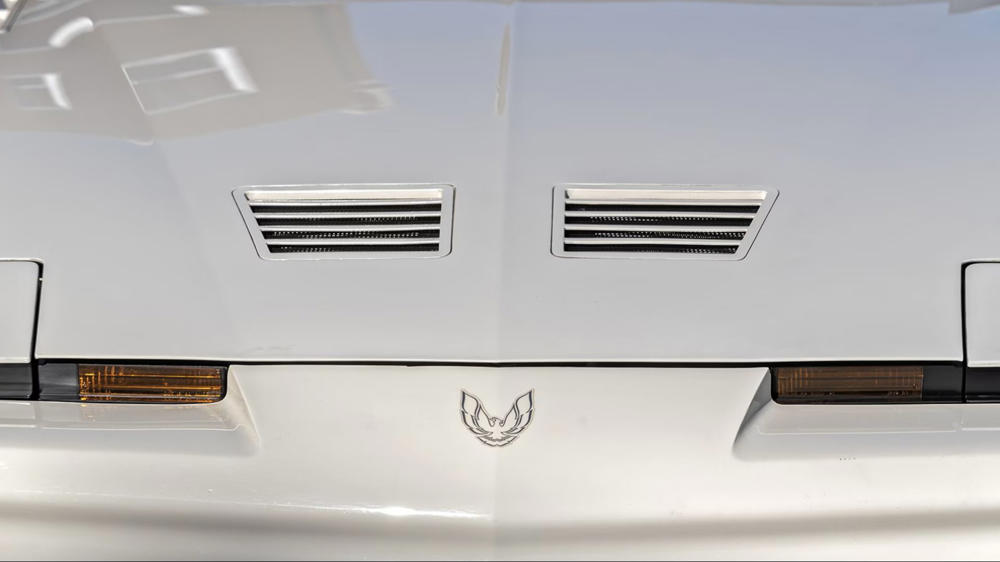
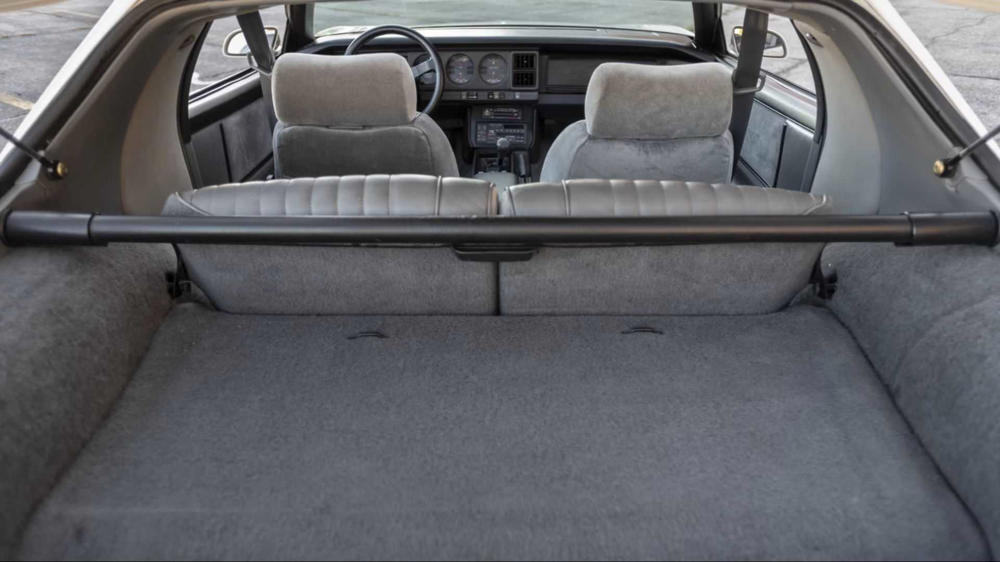
It's easy to think the muscle car segment in America had run out of ideas in the '80s. This class of two-door car with a huge V8 up front had taken off in the '60s, but sadly died a death in the following decade, with an oil crisis and emissions regulations curtailing the horsepower war. By the early '80s, the Malaise Era had kicked in, and foreign cars had started to steal sales. With the world seemingly accelerating down the quarter mile, muscle cars seemed to have stalled at a green light. What were US carmakers going to do? American Muscle Was Being Overtaken In The '80s Whereas muscle cars rode a wave of patriotism and homegrown pride in the '60s, the later years saw consumers looking overseas. The early Japanese imports like the Celica offered the looks of Muscle Cars with smaller, more frugal engines and high-tech manufacturing techniques. The Audi Quattro of 1980 was a blocky coupe in the same mold as an early '70s muscle car, but it had turbocharging and four-wheel drive that put a scare into supercars. Tastes were changing, and the tamed muscle cars on offer, which had V8s that struggled to match a boosted four-pot, were starting to go out of fashion. Pontiac Wasn't Content To Sit Still It might have seemed easy to snigger at Pontiac during this time, but this was a company that was brimming with ideas — and not afraid to try something new. True, the Trans Am had become somewhat of a disappointment with its Iron Duke 2.5-liter inline-four pumping out a paltry 90 hp, but the company was trying a lot of new things. The Fiero may be best remembered as the basis for far too many knock-off Ferraris, but it was actually something of a success story. The Grand Prix 2+2 is one of the most underrated muscle cars of the 1980s. Then there was the Trans Am line itself. A throwback to the '60s it may have been, but that didn't mean Pontiac didn't have plans to drag it into the modern day. The 1985 Pontiac Trans Am Kammback Concept Was A New Way Of Thinking Well, kind of. GM had been playing with the idea of a sportwagon, shooting brake-type model for years; the Nomad Motorama show car, the 1970 Camaro Kammback concept, and the second-gen Pontiac Firebird "Type K" aero study all suggested what form this might take. It made good sense. Take a sports car and add practicality for those buyers who had moved on from a compromising two-door car but weren't quite ready for a sedan. In 1985, GM built four Trans Am Kammback Concepts to test the idea of a wagon version of the venerable muscle car. The most famous (and surviving) car, Experimental Prototype EX4796, was lent out to the press, as well as acting as a test mule and demonstrator. The Trans Am Kammback Concept even made the cover of the August 1985 issue of “Motor Trend” magazine. It looked great, and the Kammback rear deck seemed like an easy addition to the car without requiring drastic changes to the structure. The Kammback Concept Blended Power, Luxury And Practicality The Trans Am sportswagon was designed to be positioned at the upper end of the range. The white car had a 5.0-liter H.O. V8 mill connected to a 5-speed manual transmission. That unit would have been good for 190 hp and 240 lb-ft of torque, which was about as spicy as things got in a mid-'80s muscle car. It also came with an abundance of extras. There was power steering and power brakes, power windows and door locks, factory A/C, padded Formula steering wheel on a tilt column, AM/FM stereo, and, naturally, a glass T-top. How The Kammback Could Have Changed The Game The Kammback didn't get past the concept stage, but on paper it stood a real chance. The cars of that era were more practical takes on the sports car philosophy, with Volkswagen offering the sensible yet fun Scirocco to buyers wanting something racier than a Golf. The Lotus Eclat and Ferrari Mondial also hoped to reimagine the supercar concept for customers seeking a bit more practicality. Then, in the '90s, the fast wagon really took off with the likes of Audi's RS2 and Volvo's T-5R. Many buyers are still choosing the quirky shapes of wagons over the more conservative sedan shape even today. In Europe, the 1985 Volvo 480 was proving that a sporty shooting brake could be mass-produced. Just imagine if Pontiac had managed to make a production Kammback version of the 1989 Trans Am Anniversary with its turbocharged V6 — the result would have been one of the fastest wagons ever made. Now that would have stolen a few front pages for the company. Why The Kammback Was Canceled — And The One You Could Actually Buy Ultimately, GM leadership got cold feet about the Kammback project and quietly canceled it. While the concept was pretty straightforward, it was thought that the hatch would have been costly and complicated to manufacture, and that the market might not be there to make a decent profit. It is reported that three of the four concepts were crushed, but EX4796 was used as a pace vehicle for the 1985 PPG and IMSA race series before being retired to the Pontiac Engineering Collection for 13 years. Detroit-area Pontiac dealer and collector John McMullen managed to buy it from Pontiac for his private collection, commissioning Pontiac specialist Scott Tiemann's Supercar Specialties to carry out a complete restoration. In 2007, EX4796 was then sold to the John O’Quinn Collection, and in 2019 it went up for sale through Mecum at a Kissimmee sale. The car fetched $40,700, which seems quite reasonable for a Trans Am that will undoubtedly turn heads wherever it goes. Sources: Mecum

 Liked by Mia Leblanc, Jackson Hill



 Liked by Mia Leblanc, Jackson Hill