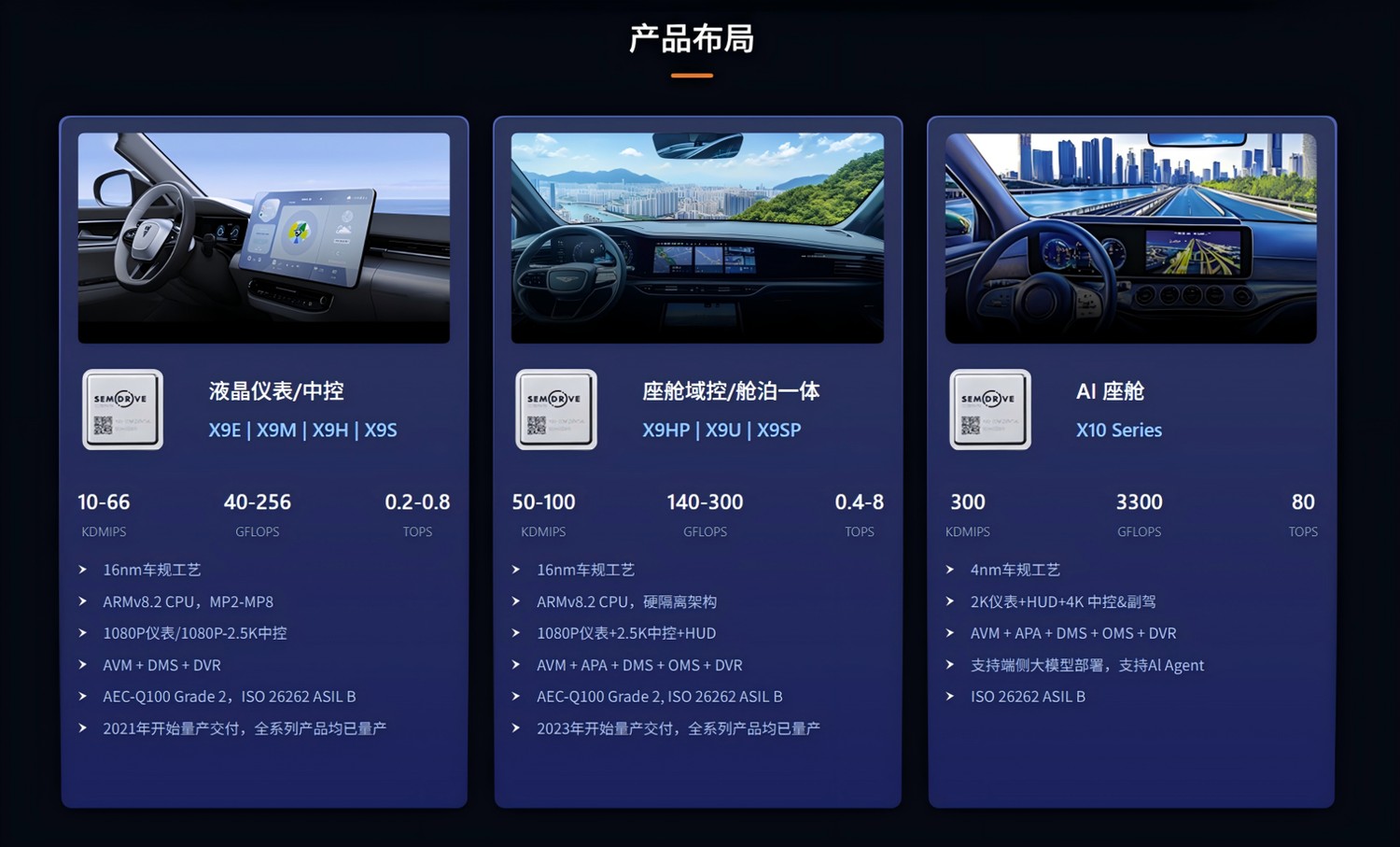
Gasgoo Munich- On November 12, NVIDIA's board announced that Jensen Huang has resigned as president, chief executive officer, and board member, effective immediately. Chief Financial Officer Colette Kress has been appointed interim CEO, while the board has launched a formal search for a permanent successor, considering both internal and external candidates. Following the news, NVIDIA shares opened nearly 14% lower. Of course, NVIDIA is a behemoth, and local chipmakers can't shake its dominance overnight. But as NVIDIA enters a period of management transition, the ripple effects remain to be seen. Does this create a slightly bigger window for domestic chips to close the gap? Local players are already claiming spots at the top of the charts First, look at actual installations in the domestic market. According to data from Gasgoo Institute's ADAS configuration database, domestic passenger vehicle smart driving domain controllers (including cabin-driving integrated chips) saw the Huawei Ascend 610 top the list for individual units from January to September 2026. It recorded 860,300 installations, capturing a 14.4% share. The Horizon Journey 6M followed with 785,000 units and a 13.2% share, while NVIDIA's Thor-U took third with 776,700 units and 13%. The gap among the top three is less than 1.4 percentage points — a remarkably tight race. Consolidated by vendor, NVIDIA still holds 30.5% across its Orin and Thor series, making it the largest international supplier by volume. On the other side of the list, Qualcomm, Tesla's in-house FSD solution, and NIO's self-developed Shenzhou NX9031 all appear. This paints a picture of a domestic ADAS supplier landscape composed of three pillars — international giants, local chipmakers, and automaker in-house development — with no single player able to dominate the entire market. However, ranking high doesn't mean a breakthrough across all segments. Looking at installation structures, local chips and in-house solutions have entered the rosters of mainstream models, though they are concentrated more in mid-range vehicles and specific platforms. For flagship models requiring high-level smart driving and massive computing power, international vendors and in-house development remain key options. In the short term, automakers have already designated chips for models under development, which involves chip adaptation, algorithm verification, and vehicle testing. It is difficult to switch technical plans simply because of management shuffles at a supplier. NVIDIA's board also stated in its announcement that business operations, customer commitments, and product roadmaps will continue without interruption. For Chinese automakers, the most direct variables still come from product supply, export controls, and technology iteration — not personnel changes at any single company. This opportunity isn't born from a personnel shuffle Where do opportunities for domestic chips come from? Semidrive told Gasgoo that the opportunity stems not from a single event, but from structural industry trends driving China's automotive-grade chip sector, rather than a short-term window with an expiration date. In its view, the rise of local automotive-grade chips rests on three pillars: China's auto industry is leading the charge in electrification and intelligence, creating robust demand and fertile ground for iteration; automakers are prioritizing supply chain security, making diversification and regionalization a consensus, which opens doors for domestic chips on mainstream platforms; and local companies are steadily accumulating technical investment and mass-production capabilities, with performance, reliability, and delivery gradually meeting automotive-grade standards. Layered on top of this is the architectural transition. Central computing and zone control are replacing traditional distributed architectures. With every generational switch, the electrical and electronic component list gets reshuffled, giving local vendors another chance. This is a continuous process, not a one-time window. The opportunity for domestic chips depends on how many new architecture switches and installation demands the Chinese market generates each year. The chances don't come just once — they come repeatedly, and each time, more maturely than the last. Image Source: Semidrive So, how far has domestic chip substitution progressed? If we divide it into three stages: "can do," "can deliver at scale," and "can be the automaker's preferred platform." Semidrive's assessment is that domestic chips as a whole have already stepped into the second box, while the third box is beginning to happen in multiple directions, including smart cockpits and high-performance automotive-grade MCUs. The trust structure within OEM decision-making is also loosening. In the past, leading overseas vendors carried an almost automatic halo of trust, and international brands were the default starting point. Now, OEMs are shifting their focus to track records: who has run in mass production, how they close the loop when issues arise, and whether they dare to place another order for the next-generation platform. This trust is earned through batches of mass-production projects. Once established, it doesn't just apply to a single price segment or one group of customers. In terms of mass production progress, local vendors have already achieved scale across different tracks. The Horizon Journey family has cumulatively surpassed 15 million units in mass production, empowering 8 million car owners. It has partnered with over 40 brands, including all of China's top ten automakers, and secured design wins for 500 models. Semidrive has expanded its front beyond the cockpit. Its full series of chips has cumulatively shipped over 15 million pieces, carried in more than 170 models. According to Semidrive, it is currently the only domestic chip enterprise to achieve mass production across all five major domain control scenarios: smart cockpit, smart vehicle control, zone control, assisted driving, and chassis. Its customers cover China's top ten OEM groups and leading global OEMs. In the next stage, the homework for domestic chips is specific: toolchains and development experience, long-term reliability data, and service systems for global customers. These must be honed slowly through mass-production projects. There are no shortcuts for automotive-grade chips. Reliability verification, safety certification, long-term testing after installation, and coordination with operating systems, algorithm frameworks, and domain controllers — none of these steps can be skipped. Therefore, because automakers differ greatly in R&D capability, brand positioning, and cost requirements, the same automaker might adopt different solutions for different models. The parallel existence of external procurement, in-house chips, and domestic suppliers will persist for a long time. The tangible change brought by domestic chips is that automakers have gained more agency in component selection. This agency is accumulated through mass production, verification, and iteration — it doesn't suddenly appear because of a single personnel change. The opportunity is hidden in every architecture switch, every new model designation, and every mass-production project. The process continues.