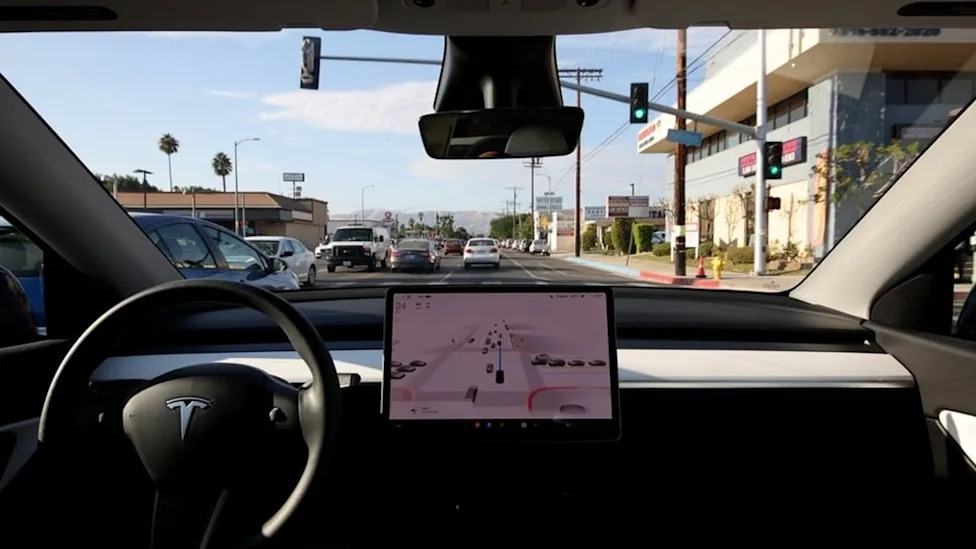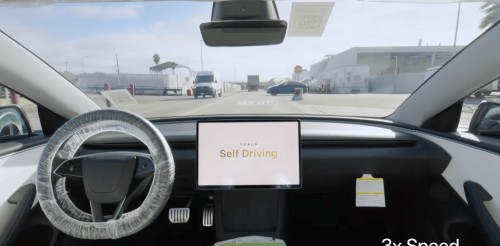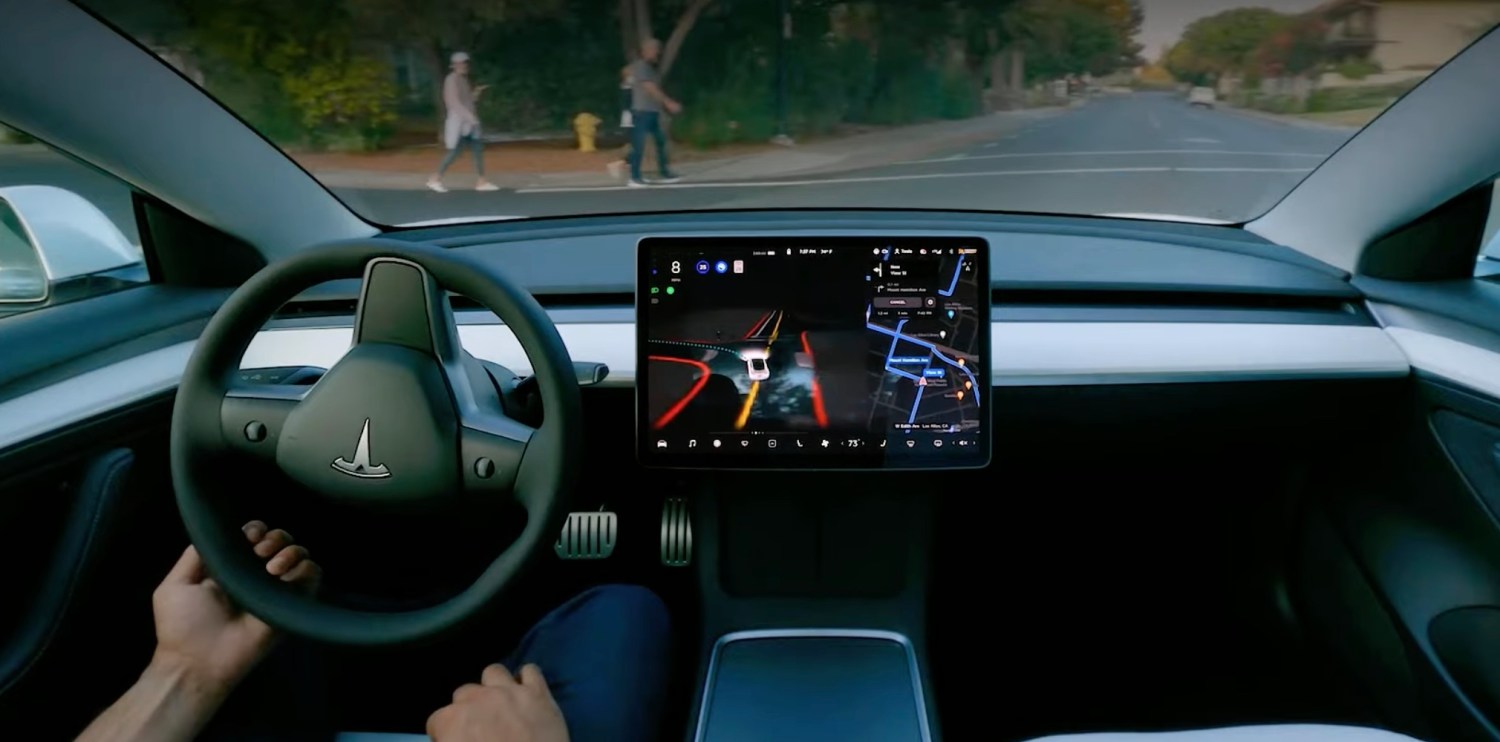




A new proposed class action accuses Tesla of selling “Full Self-Driving” on millions of vehicles that are physically incapable of delivering it — and to make its case, the 51-page complaint repeatedly cites Electrek’s own reporting. The suit, Waller v. Tesla (No. 4:26-cv-05350-KAW), was filed June 4 in the Northern District of California and covers cars built with Tesla’s Hardware 1, 2, 2.5, and 3 computers — effectively every Tesla sold with the FSD option from 2017 through early 2023. What the lawsuit claims The complaint, brought by Migliaccio & Rathod LLP, alleges that Tesla and CEO Elon Musk have “deceptively and misleadingly” marketed vehicles with HW1 through HW3 as having all the hardware needed for fully autonomous driving — including the “coast-to-coast” trips Musk promised back in 2016. In reality, the suit says, those cars are “incapable of safely and reliably traveling without human intervention,” and Tesla’s system has “never” advanced beyond SAE Level 2 — driver assistance that requires constant human supervision — despite years of claims that the cars were one software update away from Level 4 or 5 autonomy. Advertisement - scroll for more content The named plaintiff is David Waller, a Frankfort, Kentucky resident who bought a 2020 Model S on June 29, 2020 — six years ago to the day — for $81,790, plus $7,000 for the “Full Self-Driving Capability” add-on. He opted out of Tesla’s arbitration agreement weeks later, on July 6, 2020. Tesla’s FSD package has sold for as much as $15,000. The complaint lays out five counts — breach of express warranty, violation of the Kentucky Consumer Protection Act, fraud by misrepresentation, fraud by omission, and unjust enrichment — and demands a jury trial, seeking damages, punitive damages, civil penalties, restitution, and disgorgement. The full 51-page complaint is available here. The smoking gun: Tesla’s own admission What makes this filing different from earlier ones is timing. It’s the first major class action built on top of Tesla’s own admission. As we reported in April, Tesla confirmed on its Q1 2026 earnings call that HW3 vehicles “simply do not have the capability to achieve unsupervised FSD,” blaming the chip’s memory bandwidth — one-eighth that of Hardware 4. Musk has since pushed the consumer unsupervised FSD timeline to Q4 2026 at the earliest, and Tesla now plans to physically retrofit computers and cameras on millions of cars. The complaint frames Musk’s April 22 statement — “Hardware 3 simply does not have the capability to achieve unsupervised FSD” — as the moment Tesla “finally admitted the truth” after nearly a decade of contrary claims. It also pins the start of the limitations period there, arguing class members had no way of knowing the hardware was inadequate until that admission. A decade of fatal crashes The complaint also catalogs the human cost. It cites the May 2016 death of Joshua Brown, killed when his Model S on Autopilot failed to recognize a tractor-trailer crossing the highway and passed under it at 74 mph. Nearly three years later, in March 2019, Jeremy Banner was killed in an “eerily similar” crash — his Model 3 on Autopilot drove under a tractor-trailer in Florida — which the suit argues shows Tesla never fixed the flaw it claimed to have addressed in 2016. It also points to the March 2018 death of Apple engineer Walter Huang, whose Model X on Autopilot veered into a concrete highway barrier in Mountain View, California; the December 2019 death of Jenna Monet, whose Model 3 struck a parked fire truck in Indiana with Autopilot engaged; and an August 2020 crash that killed a couple in Saratoga, California after their Tesla veered off a highway on Autopilot. The filing ties these to a long record of regulatory alarm — NTSB Chair Jennifer Homendy calling Tesla’s “Full Self-Driving” branding “misleading and irresponsible,” and NHTSA escalating its Autopilot probe to a full engineering analysis after at least 11 crashes into parked emergency vehicles that killed one person and injured 17. Why Electrek is in the complaint — twice To establish that the FSD shortfall was well documented, the complaint cites this publication directly. In paragraph 103, it quotes “the editor-in-chief of Electrek,” yours truly, who, after testing FSD Beta over two months, concluded its “decision-making is still the equivalent of a 14-year-old who has been learning to drive for the last week and sometimes appears to consume hard drugs.” The byline in the footnote is mine. This is from an article of mine in 2022. The full quote is: The computer vision system is impressive and extremely good at detecting its environment, but the decision-making is still the equivalent of a 14-year-old who has been learning to drive for the last week and sometimes appears to consume hard drugs. But that’s not the only place Electrek shows up. In the plaintiff’s reliance section, the complaint lists roughly a dozen Electrek articles — most under my byline — that Waller reviewed before his 2020 purchase, from “Tesla prepares to increase the price of ‘Full Self-Driving’ again” to “Tesla to increase ‘Full Self-Driving’ price as Elon Musk sees value rise to >$100K.” In other words, the same outlet’s enthusiastic 2020 coverage of Tesla’s FSD promises is offered as part of the marketing record the buyer relied on, while its skeptical 2022 review is offered as proof the technology never delivered. It’s an unusual thing to see your own work cited on both sides of a federal complaint. An end-run around arbitration The suit is also carefully constructed to get around the wall that has blocked many FSD claims. It’s anchored in Kentucky law, excludes California, and defines a “Nationwide Ex-California Arbitration Opt-Out Class” across 27 enumerated states — limited to owners who, like Waller, opted out of Tesla’s arbitration agreement, the same clause that has let Tesla force most FSD disputes out of open court. The case is formally related to the ongoing In re Tesla Advanced Driver Assistance Systems Litigation. It’s not an isolated effort. We’ve covered the thousands of owners pursuing Tesla in Australia, and the discovery that Tesla retroactively added “Supervised” to FSD contracts owners had already signed. Tesla is now facing up to $14.5 billion in combined lawsuit exposure, and the complaint stacks the regulatory record on top: a California DMV administrative ruling in December 2025 that “Autopilot” and “Full Self-Driving” are misleading, two DMV enforcement actions, and a U.S. Department of Justice criminal probe into Tesla’s self-driving claims. Electrek’s Take We’ve been documenting the distance between Tesla’s self-driving claims and reality for the better part of a decade, so it’s strange — and a little uncomfortable — to see that reporting cited back on both sides of a complaint. The 2020 articles were accurate reporting on what Tesla was promising; the 2022 review was an honest account of what FSD Beta actually did. The plaintiff’s lawyers are using the gap between the two as their case, and that gap is real. The substance is what matters. This is one of the more complete lawsuits on Tesla’s false claims regarding FSD that we have seen to date. For years, Tesla’s defense was that FSD was an evolving feature and every car already had the hardware to get there. Musk’s April admission detonated that argument. Once the company concedes that HW3 “does not have the capability” and starts planning physical retrofits, it becomes very hard to argue that owners who paid thousands of dollars got what they were sold. The arbitration carve-out is the part to watch. Tesla has leaned heavily on forced arbitration to keep these disputes contained, and this suit deliberately targets the buyers who opted out. If it survives a motion to dismiss, it hands every other opt-out owner a template — with Tesla’s own earnings-call words as the centerpiece. After years of moving the goalposts, the company may finally be litigating this on the plaintiffs’ terms. If you’re a Tesla owner, powering your EV with home solar is one of the smartest ways to lock in low fuel costs. With electricity rates climbing nearly 10% last year, home solar protects you against future rate increases. And with lease and PPA options, you can go solar with zero upfront cost and start saving immediately. If you want to find the best deal, check out EnergySage. It’s a free service with hundreds of pre-vetted installers competing for your business, so you save 20 to 30% compared to going it alone. No sales calls until you pick an installer. Get your free quotes here. Stay up to date with the latest content by subscribing to Electrek on Google News. You’re reading Electrek— experts who break news about Tesla, electric vehicles, and green energy, day after day. Be sure to check out our homepage for all the latest news, and follow Electrek on Twitter, Facebook, and LinkedIn to stay in the loop. Don’t know where to start? Check out our YouTube channel for the latest reviews.