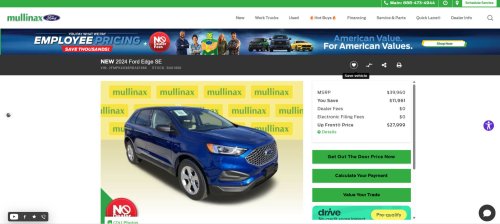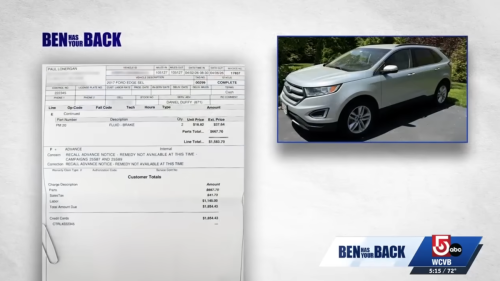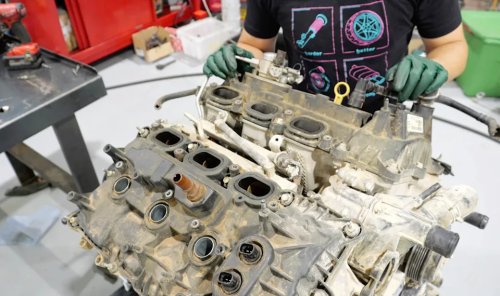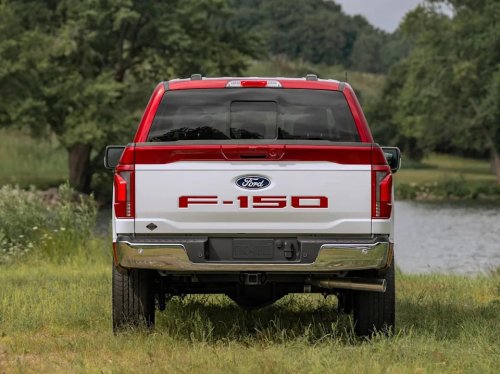



















ToplineThe National Highway Traffic Safety Administration opened an investigation into whether a defect in the engine's coolant can lead to sudden engine power loss, which the NHTSA has said concerns nearly 500,000 vehicles.The investigation impacts nearly 500,000 Ford Edge vehicles. AFP PHOTO/Karen BLEIER (Photo credit should read KAREN BLEIER/AFP via Getty Images)Key FactsThe NHTSA said the investigation covers 2015-2018 Ford Edge models, totaling an estimated 499,603 vehicles.The agency received a petition last month requesting an investigation into the vehicles' 2.0 Liter EcoBoost engine, alleging engine coolant intrusion causes a "significant loss of engine power" and an "Engine Coolant Over Temperature" warning message.AdvertisementAdvertisementThe NHTSA also said the petition alleges after the vehicle has cooled down, the engine "runs roughly and generates a check engine light for a cylinder misfire."what to watch forThe outcome of the NHTSA's investigation. The agency says it probes vehicles for defects and evaluates whether there is an "unreasonable risk to safety" that may warrant a recall.surprising factFord has previously faced consumer complaints about the function of its EcoBoost engines, including a class action lawsuit filed in 2020 that is playing out in California federal court. Like the NHTSA's investigation, the lawsuit covers 2015-2018 Ford Edge models, as well as several other Ford vehicles, including 2013-2019 Ford Fusions and 2017-2019 Lincoln MKCs. The lawsuit claims the EcoBoost engines contain a "critical defect" that causes engine coolant to leak, which can allegedly lead to "overheating" and possible "total engine failures and engine fires." The lawsuit accuses Ford of failing to effectively address the problem, accusing it of implementing "Band-Aid" solutions like installing coolant level sensors, which the suit says does not do anything to "prevent the coolant from seeping into the engine cylinders."key backgroundFord has issued recalls impacting millions of vehicles this year. In February, the company announced a recall of 4.4 million vehicles due to a software problem that could cause tail lights, turn signals and brakes to fail. The recall impacted several models, including 2021-2026 Ford F-150 and F-250 trucks. The NHTSA said the software issues raised the risk of crashes, but Ford said it was not aware of any accidents or injuries related to the software issue. Ford also recalled nearly 150,000 Mustang vehicles manufactured between 2024 and 2026 in August because of a defect that can cause vehicles to "suddenly stall and lose their ability to accelerate or maintain speed, drastically increasing the risk of a crash."further readingFord recalls 4.4 million vehicles over faulty software. See which models are affected. (CBS News)This article was originally published on Forbes.com