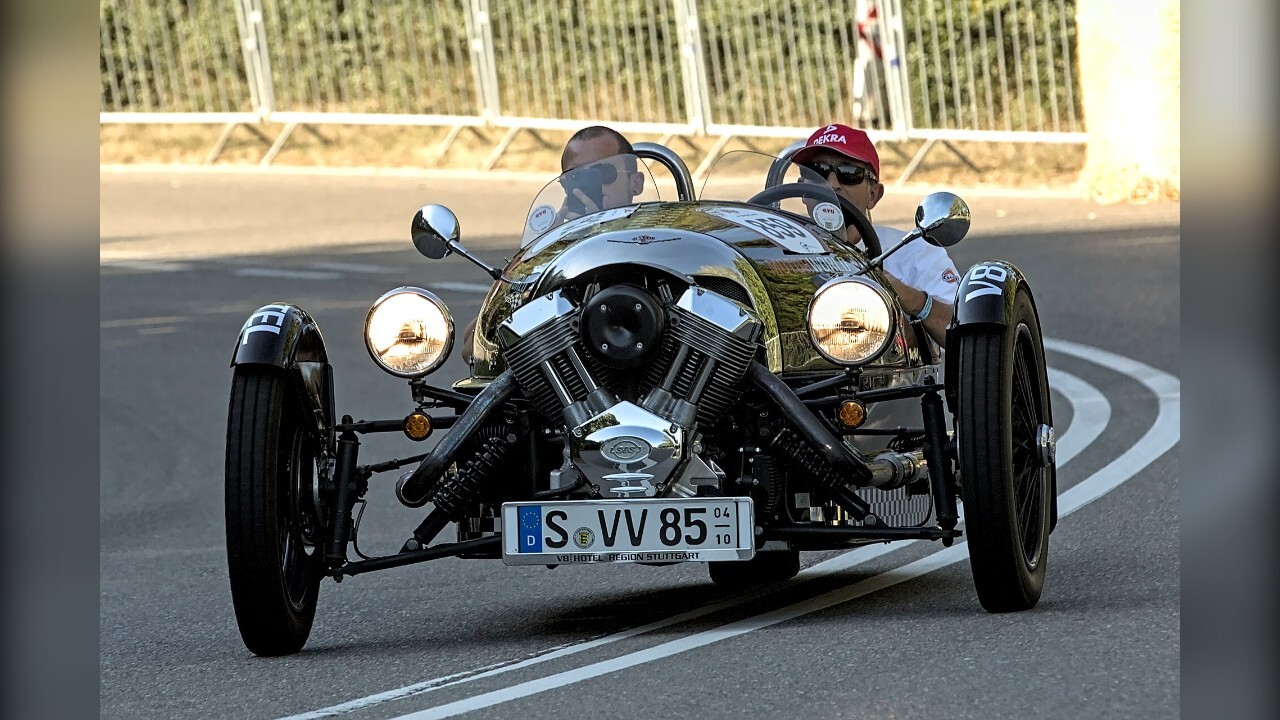
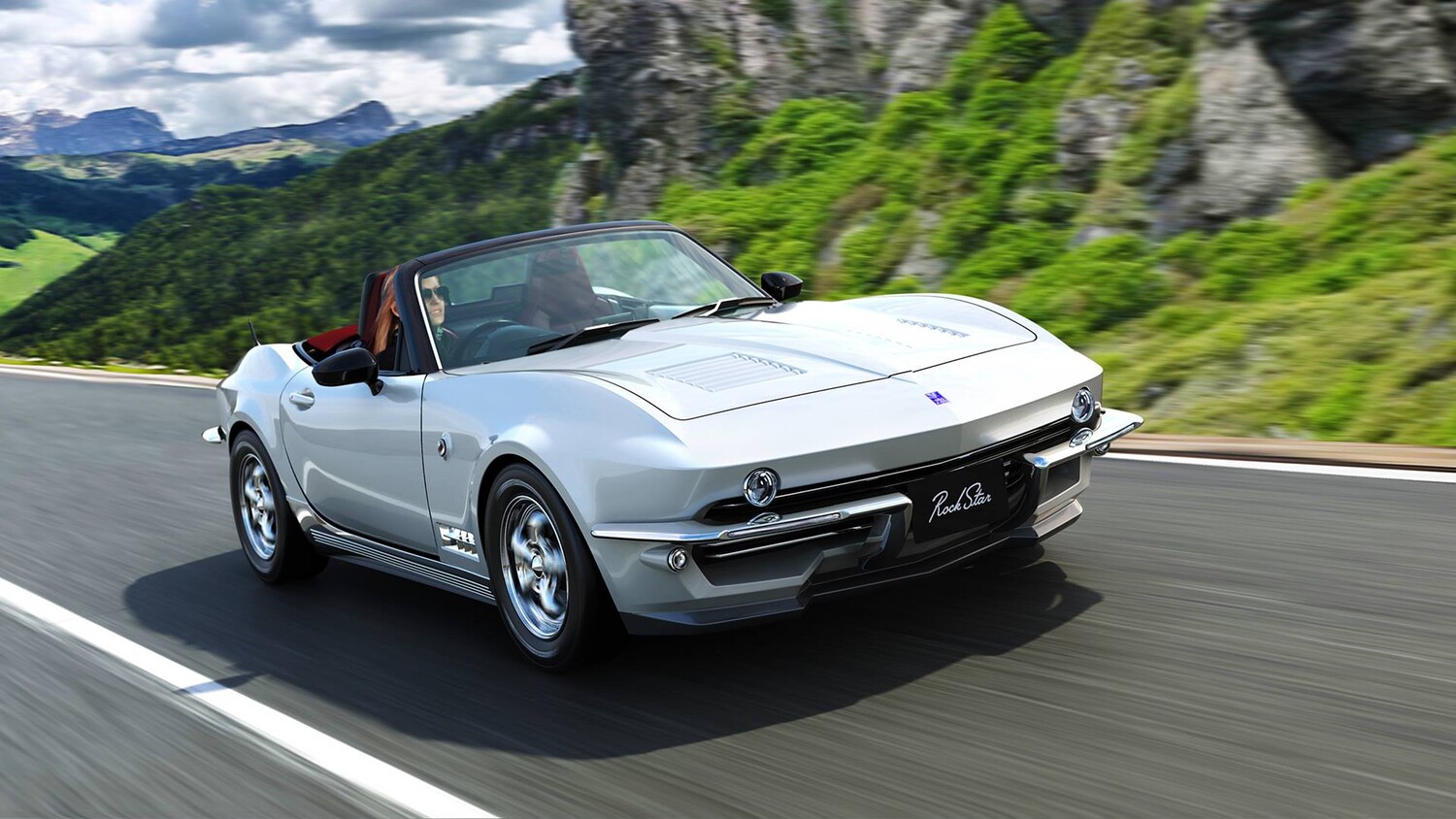
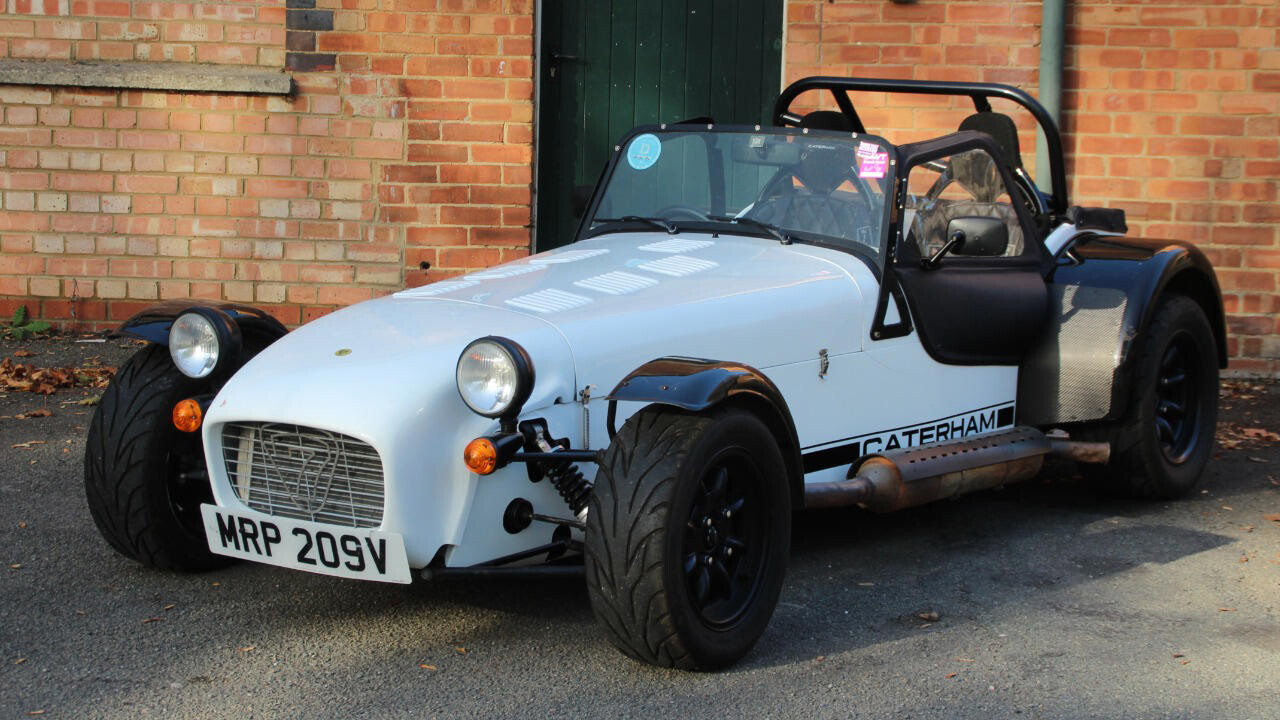
The Morgan 3-Wheeler made its debut at the 2011 Geneva Motor Show with a V-twin engine hanging out front, two seats and a single wheel at the back. It looked like a visitor from the years before World War II. Yet Morgan built it for modern buyers, and European customers began taking delivery in February 2012. A small group of carmakers has always worked this way. Instead of chasing touchscreens and crossover sales, they keep building cars that look and feel like they belong to another decade. Some use wood in the body frame. Others barely offer a roof, a door or a heater worth mentioning. These are our picks, ten sports cars that we think feel completely frozen in another era, whether they left the factory in 1970 or 2020. Several come from Britain’s cottage industry of small makers, and one comes from Japan. The facts come from our sources. However, the verdicts are our opinion. 1. 2011 Morgan 3-Wheeler Morgan’s founder, H.F.S. Morgan, built his first namesake vehicle in 1909, and Morgan’s early cars were three-wheelers. The 2011 3-Wheeler revived that layout with an S&S V-twin of 1,983 cc, rated at 81 horsepower. A Mazda-sourced five-speed manual sent power to the single rear wheel. Meanwhile, the car weighed 550 kg in testing, and Morgan estimated 0–60 mph in 4.5 seconds. In the United States, it registered as a motorcycle. Morgan said it took 850 deposits after the 2011 announcement. Production of this generation ended in the summer of 2021 with a run-out version called the P101, and the Super 3 replaced it in 2022. In short, the Morgan 3-Wheeler brought back a body style most buyers had long forgotten. Our take: no modern car feels more like a 1930s machine than the Morgan 3-Wheeler. You sit low, the engine thumps in front of you and the wind does whatever it wants. In our view, the Morgan 3-Wheeler is pure theater on public roads. Bring goggles, pack light and accept that every stop then turns into a photo session. 2. 2020 Caterham Seven 620R Caterham’s Seven traces straight back to the Lotus Seven of 1957. Lotus sold the rights in 1973, and Caterham later built its own version based on the Lotus Series 3. The 620R takes that 1950s recipe and adds a supercharged 1,999 cc Ford Duratec four rated at 311 bhp. The numbers are wild for a car this simple. According to evo’s 620R review, Caterham claimed 580 bhp per tonne, 0–60 mph in 2.8 seconds and a top speed of 155 mph. Power went through a six-speed sequential gearbox. The 620R was also evo’s Track Car of the Year champion for 2013. Even so, the basic layout of a front engine, two seats and cycle wings stays faithful to the original. Our take: the 620R is a 1950s shape with modern lightning inside it. There is no sound deadening to speak of and almost no luggage space. We think that is exactly why it feels so alive. In our opinion, few new cars at any price deliver this kind of raw connection. If you buy one, budget for track days, because that is where it makes sense. 3. Lotus Elan S4 drophead coupe The original Lotus Elan ran from 1962 to 1975, and it set a pattern Lotus used for decades. A steel backbone chassis carried a fibreglass body bolted on at 16 points. Power came from the Lotus TwinCam, a 1,558 cc engine based on the Ford Kent, which made 90 bhp in standard form. As a result of that light construction, the original design weighed about 1,500 lb. Lotus introduced the S4 in 1968 with flared wheel arches for 155×13 tyres. Some markets got a new cylinder head for Stromberg carburettors. The Type 45 drophead coupe, which arrived in 1966, came in S3, S4 and Sprint form. One historian’s estimate puts S4 production at 2,976 cars. Mazda later evaluated two Elans while developing the MX-5. We think the Elan feels frozen in time because it never needed updating. Light weight, sharp steering and a rev-happy twin-cam are as satisfying now as they were in 1968. In our view, the S4 drophead is the most charming way to enjoy it. Have a Lotus specialist inspect the chassis before anything else. 4. 2018 Westfield Seven Westfield began in 1982, when Chris Smith started building kits styled much like the Lotus Seven. That put the company in direct competition with Caterham. In the late 1980s, Caterham threatened legal action over design rights. The two sides settled out of court, and Westfield changed and improved its design. Westfield sold its cars both as kits and fully built. Over the years, it offered versions built around donor parts from the Mazda MX-5 and Ford Sierra. Its MegaS2000, meanwhile, used the Honda S2000 engine and gearbox. In other words, a Westfield could be as simple or as exotic as its builder wanted. In 2018, the company worked out of Kingswinford in the West Midlands, before a 2022 buyout moved it to Bicester. Our take: a 2018 Westfield Seven looks like it rolled out of a 1960s club-racing paddock. The cycle wings, tiny windscreen and exposed suspension refuse to acknowledge modern design trends. We think that makes it a brilliant alternative to the usual Seven choices. Ask about the donor parts and build quality before you buy a kit-built example. 5. Panther Kallista Bob Jankel started Panther in 1972 to build cars with a prewar look. After the original company ran into trouble, Jindo Industries bought it from the receivers in late 1980. Young C. Kim led the revamp, and the business became the Panther Car Company. The Kallista followed in late 1982 with an aluminium body. According to the Panther Car Club’s history of the marque, it used Ford engines of 1.6 or 2.8 liters, later the 2.8i and 2.9i as Ford updated its range. Panther built approximately 1,437 Kallistas between 1982 and 1990. Unlike the earlier J72, which used Jaguar power, the Kallista relied on mass-market Ford engines. As a result, it reached a far wider audience, with nearly four times the J72’s production. In our view, the Kallista is one of the cleverest retro cars ever sold. It looks like a 1930s roadster, yet everyday Ford mechanicals make it easy to live with. We think that combination makes it a smart buy for anyone who wants vintage style without vintage headaches. Check the aluminium panels and the chassis carefully, since repairs can get fiddly. 6. 1970 Lotus Super Seven Colin Chapman’s Lotus Seven debuted at the 1957 Earl’s Court Motor Show in London. It cost £1,036 with purchase tax, or £536 as a kit, and weighed just 725 lb. In fact, the original Series 1 used a 1,172 cc Ford sidevalve engine that made 36 bhp. Kit sales avoided the purchase tax on assembled cars, an advantage that lasted until Britain adopted VAT on January 1, 1973. A 1970 car sits right at a turning point. The Series 3 arrived in 1968, usually with a 1,599 cc crossflow Kent engine. Then, in 1970, the Series 4 replaced most of the aluminium bodywork with a fibreglass shell. Lotus sold the rights to the design in 1973, so the original Lotus-built era had only a few years left. Our take: the Lotus Seven is the template for nearly every car on this list. It is light, simple and stripped of anything that does not make it faster. We think a 1970 example captures that idea at its most honest. Original paperwork matters a great deal here, so verify the chassis history before you commit. 7. Morgan Roadster V6 Morgan launched its V6 Roadster in 2004 with a Ford engine, and it kept the company’s traditional look. In 2011 and 2012, the car switched to a 3.7-liter Ford Duratec rated at 280 bhp. Meanwhile, that output gave the old-school body genuinely modern pace, in our view. Underneath, the classic Morgan line used sliding-pillar front suspension, a design first seen on H.F.S. Morgan’s 1909 runabout. The bodies, however, tell the same story. According to Gear Patrol’s visit to the Morgan factory, workers cut, join, glue and sand ash wood frames by hand at Malvern Link. Some of the woodworking tools are about a century old. At the time, roughly 180 workers built about 800 cars a year, with each car taking about eight weeks of labor. Our take: the Roadster V6 pairs a modern engine with a body that could have come from the 1950s. The long louvered hood and separate fenders look wonderfully out of step with today’s traffic. We think it delivers old-world charm with real pace. Morgan ended its classic line in 2019, so a well-kept Roadster is worth seeking out. 8. Morgan Plus Six Morgan showed the Plus Six at the Geneva Motor Show in March 2019. It uses a BMW B58 turbocharged inline-six rated at 335 bhp, paired with an eight-speed ZF automatic. Underneath sits a bonded aluminium chassis with all-independent suspension, which replaced the old ladder frame. As a result, the Plus Six marked the biggest engineering change for Morgan’s traditional-looking cars in decades, in our opinion. Even so, the car keeps the shape Morgan buyers expect. The company has used ash wood in its body framing for about a century, and it continues to do so. Morgan builds about 630 cars a year, as of 2025, which keeps every one rare by industry standards. By comparison, Gear Patrol counted about 800 a year during its factory visit. In our opinion, the Plus Six is the most convincing time machine on sale. From the outside, it looks like a classic British roadster. Behind the wheel, however, it delivers modern turbocharged pace. We think it is the best choice for anyone who wants the look without the old-car compromises. With output that small, be ready to shop patiently for the right car. 9. 2014 Mitsuoka Himiko Roadster Japan’s Mitsuoka launched the Himiko in 2008 on the Mazda MX-5. To create a long, old-fashioned bonnet, it stretched the wheelbase ahead of the windscreen pillars. The look borrows from English roadsters such as the Jaguar XK120 and Morgan Aero 8. In addition, the long nose changes the proportions so much that few people guess what lies underneath. A 2014 car belongs to the first generation, built on the NC-series MX-5. Each Himiko comes together by hand, made by 45 craftsmen at Mitsuoka’s factory in Toyama City. The name comes from Himiko, a shaman queen of ancient Japan. In Britain, the car went on sale as the Mitsuoka Roadster, and a second generation on the newer MX-5 arrived in 2018. Our take: the Himiko looks like a 1950s British sports car that somehow learned Japanese manners. Underneath sits a modern MX-5, so it should be far easier to live with than a real 1950s roadster. We think that makes it one of the most surprising cars you could park at a show. Import paperwork and parts sourcing need research before you buy. 10. 1976 Panther J72 Panther’s first model arrived in 1972 as the J72, styled on the prewar Jaguar SS100. It was a two-seat convertible with an aluminium body. Under the long hood, buyers got a Jaguar engine in 3.8- or 4.2-liter form, or the 5.3-liter V12. That mix gave the J72 an odd double life, because the engines were real Jaguar units. It looked like a car from the 1930s, yet it carried the same engines as contemporary Jaguars. At the same time, the aluminium body kept the hand-finished feel of a prewar car, in our view. By 1976, the J72 had become the car that defined Panther, and the company kept it in production for more than a decade. Our take: the J72 is the purest example of a car deliberately frozen in another era. It made no attempt to look modern, and that is the whole appeal. We think a V12 car is the most memorable version to drive, because it pairs prewar looks with a 1970s Jaguar powerplant. Still, any solid J72 makes a striking sight. Panther built approximately 376 J72s between 1972 and 1986, according to the Panther Car Club.

 Liked by Lauren Poirier, Amelia Pelletier
 Liked by Lauren Poirier, Amelia Pelletier