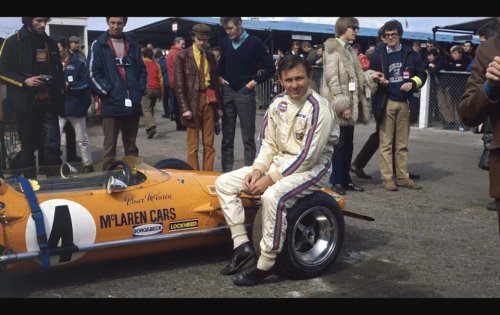
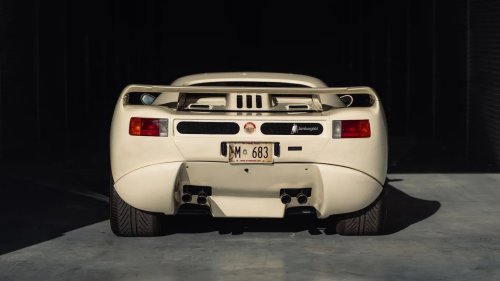
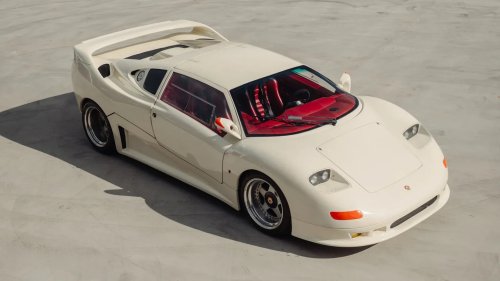
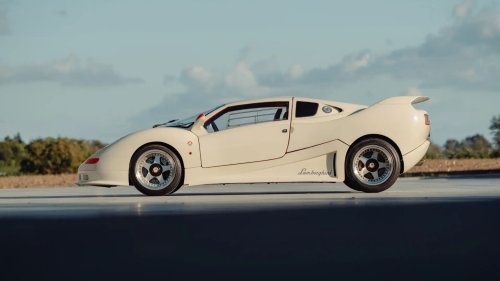
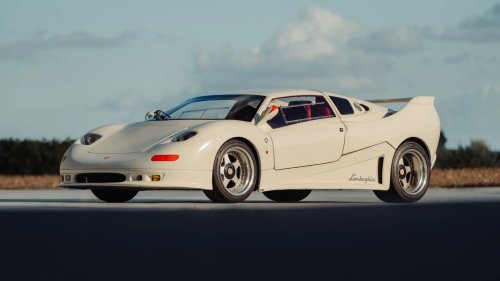
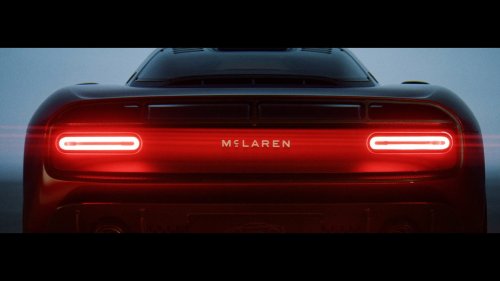
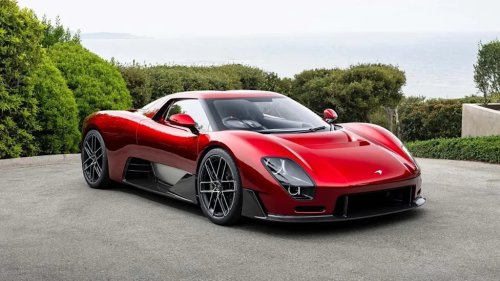
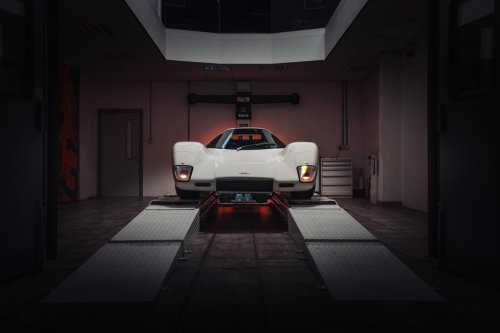
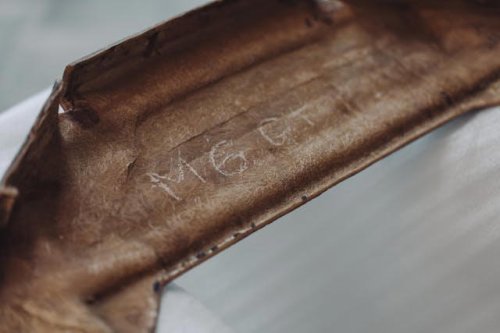
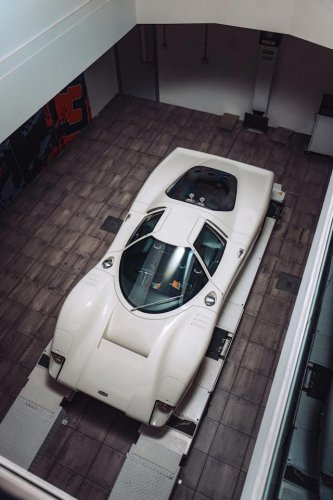
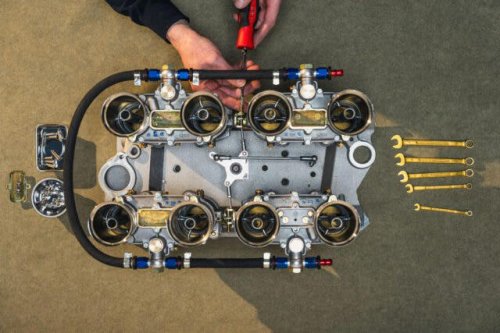
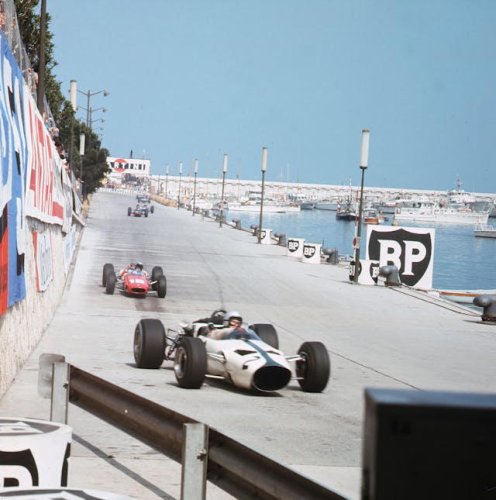
McLaren Builds Its First Road Car … Again The past year has been a wild one for McLaren, whose automotive division was officially taken over by Abu Dhabi-based investment firm CYVN Holdings last spring. McLaren debuted its Le Mans–bound race car, started McLaren Golf (“an exciting new venture”), and unveiled a new range-topping supercar called the W1. With the latest project from McLaren Special Operations (MSO), the manufacturer would like to remind you that it hasn’t forgotten about its roots. Ahead of the 2026 Goodwood Festival of Speed (July 9–12), the annual hill climb in West Sussex, England, that attracts significant race cars new and old, McLaren Special Operations has built an example of its very first road car, the M6GT of the 1960s. Officially known as The M6GT: Restored by MSO, the car is a mix of new and (restored) in-period components draped in a new fiberglass body pulled from the original molds. You may not recognize the name “M6GT,” and that’s okay. Unlike the F1, McLaren’s most famous road car, the M6GT never went into production as planned. McLaren hoped to build 25 to homologate the car for Group 4 competition, but only a handful were made, either by McLaren or by Trojan Cars, a shop that built all of McLaren’s customer cars. If you McLaren aficionados notice slight differences between MSO’s M6GT and the original ones, you’re spot on: “Examination revealed evidence of historical modification within the molds themselves—a quiet record of the design’s evolution during the original program—allowing MSO to preserve the evolution of the form.” While MSO crafted a new body from the old molds for the M6GT, the chassis is from its race-car sibling, the M6A. (Yes, McLaren has checked that the chassis is the real deal.) MSO specialists fabricated additional structural elements by hand to support the M6A’s cockpit, including the roll hoop, rear frame support structure, and the internal clam reinforcement. The suspension is original M6GT hardware, “painstakingly restored.” The gearbox and small-block V-8, with its “camel hump” cylinder heads, are period-correct as well, though McLaren doesn’t say exactly where it sourced them. As you’d expect, some components simply had to be built anew. The windshield is one—McLaren scanned the original and sent the specs off to a supplier. The aluminum rivets are also new, though they are in the original closed style. The shift knob was turned by hand from walnut. Oh, and the wiring harness had to be built from scratch, because that’s not exactly something you’re going to find on Rock Auto. McLaren is synonymous with Papaya Orange, but MSO created a new cream-based white for its M6GT “in homage to the factory where Bruce developed his road car thinking,” in Colnbrook. Paired with the green interior, the color combo is meant to recall the livery of Bruce’s first F1 car, the 1966 M2B, which was finished in white with a green stripe. MSO’s reconstructed M6GT “forms the genesis” of the department’s heritage collection. We’re curious to see what else joins it, and even more curious to see the project in the fiberglass when it makes its public debut at the Goodwood Estate this weekend. It will be joined by two other historically significant McLaren race cars of two very different breeds: A 1968 M8A Can-Am car and the comparatively prehistoric 1929 Austin 7 in which Bruce learned to drive and with which he won his first race. That’s not all you’ll see from McLaren at Goodwood: As you’d expect, it’s using this nostalgic backdrop to publicly debut its MCL-HY race car that will compete next year in the 24 Hours of Le Mans as part of the World Endurance Championship (WEC), plus the race car’s “exclusive client track car” sibling. McLaren’s also teasing a new Super Series replacement, and you can watch the trailer here ahead of its reveal tomorrow:
















 +68 others