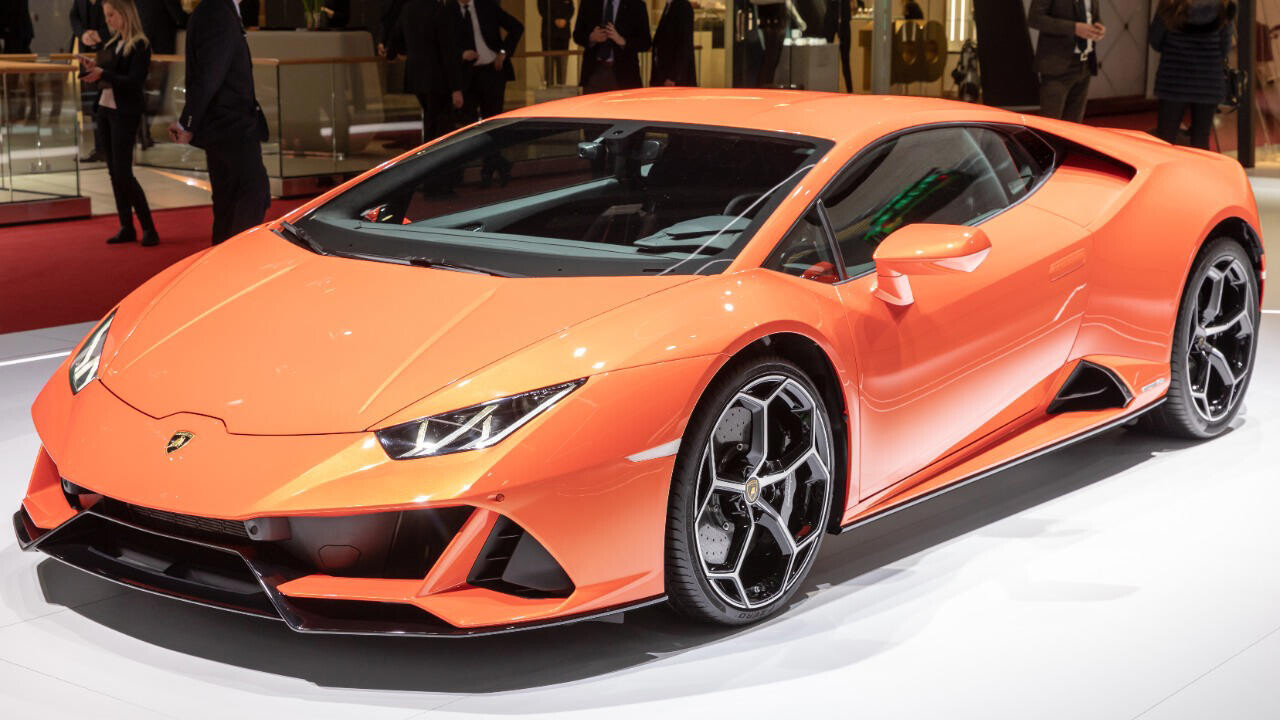
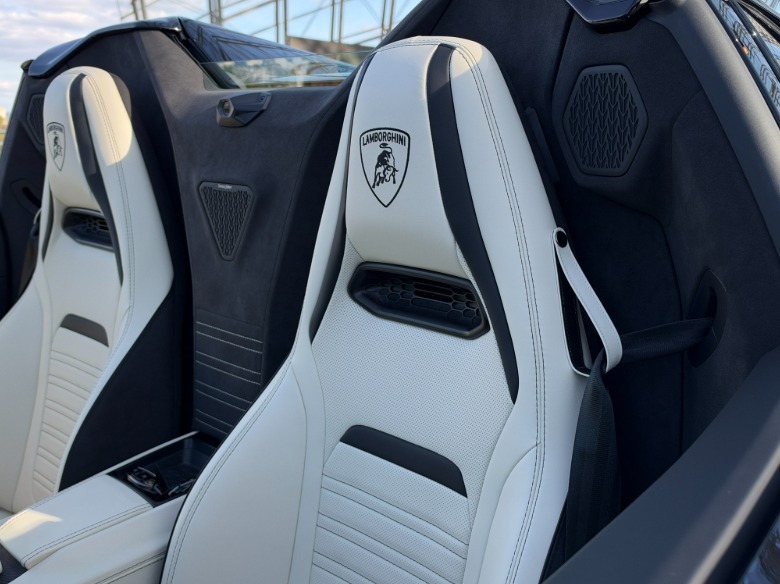
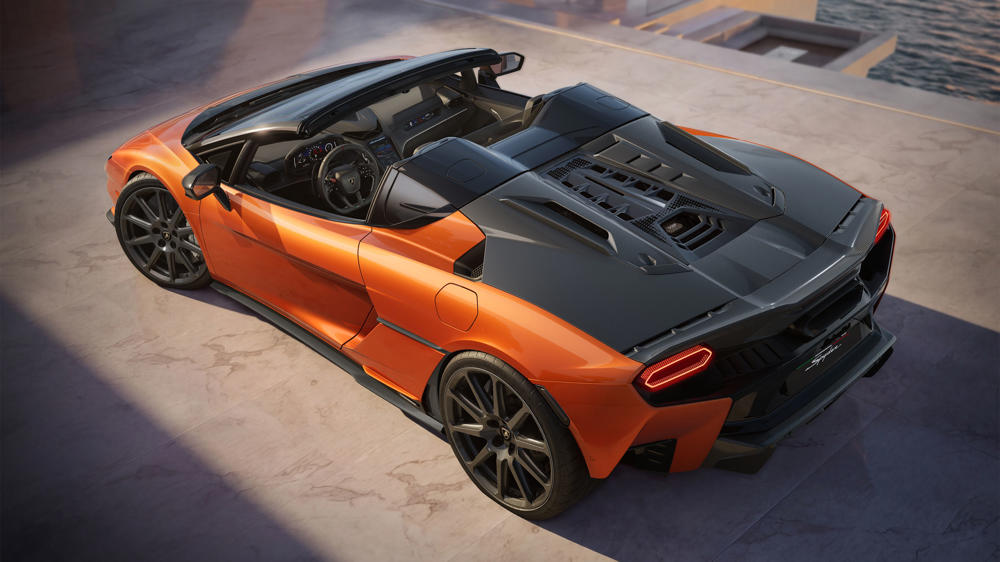
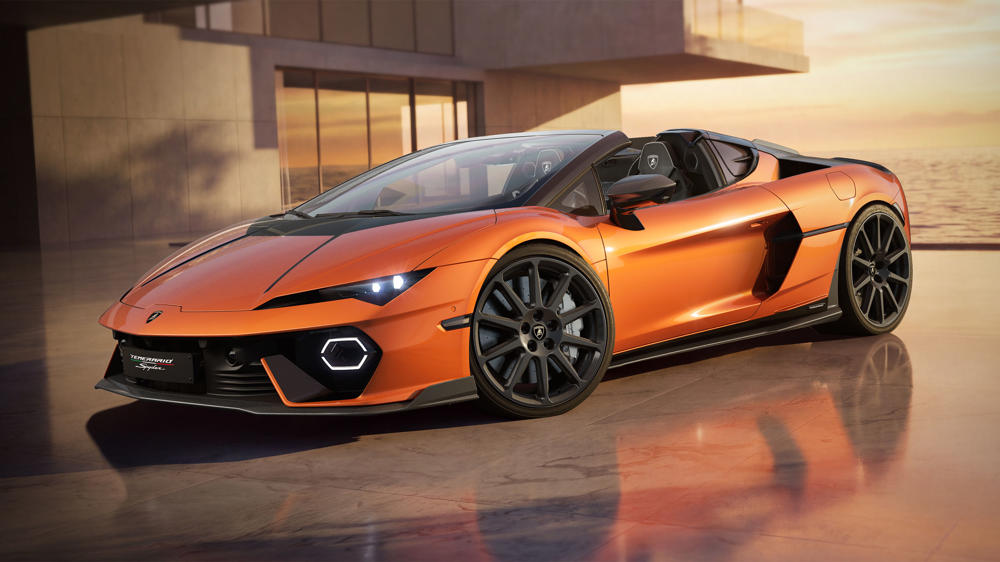
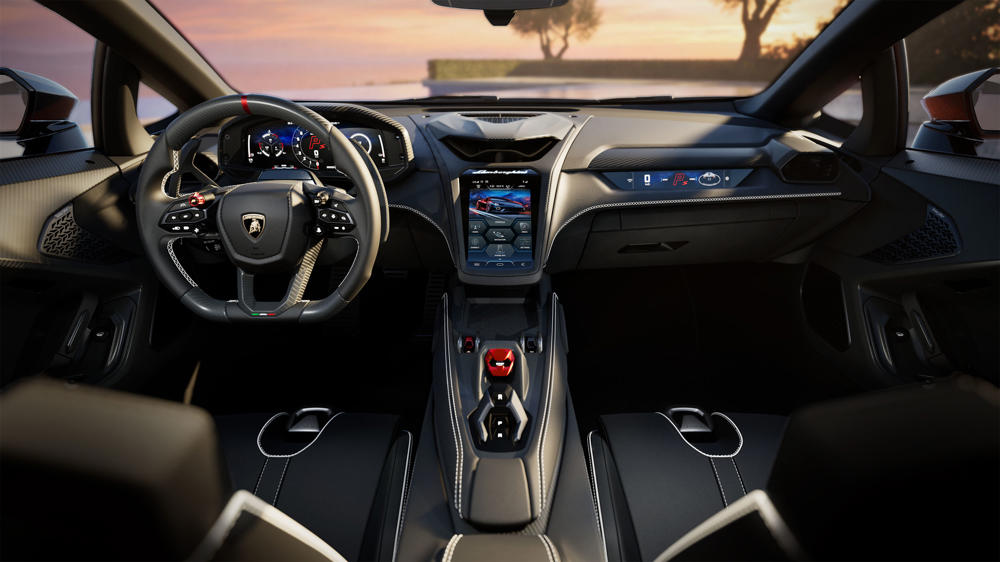
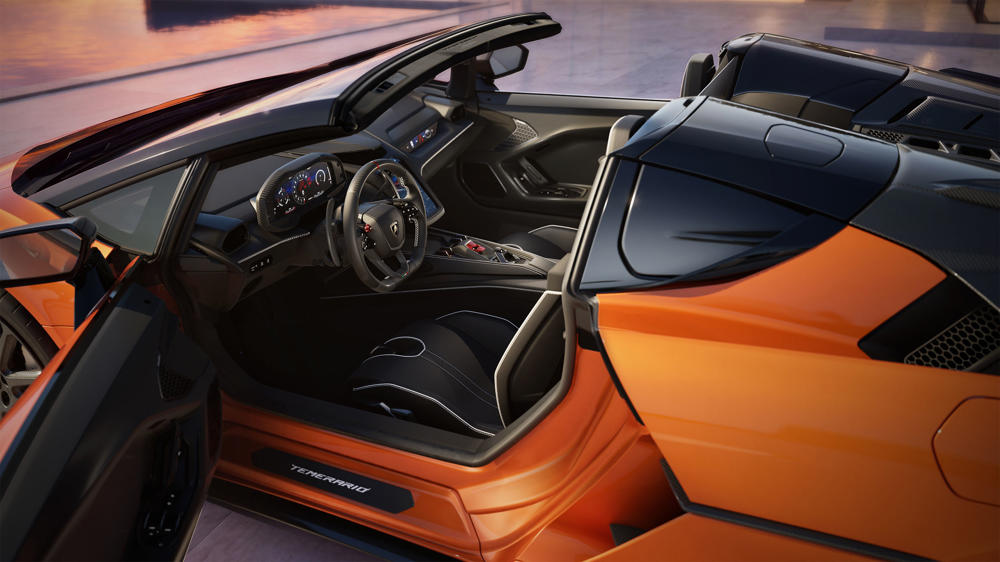
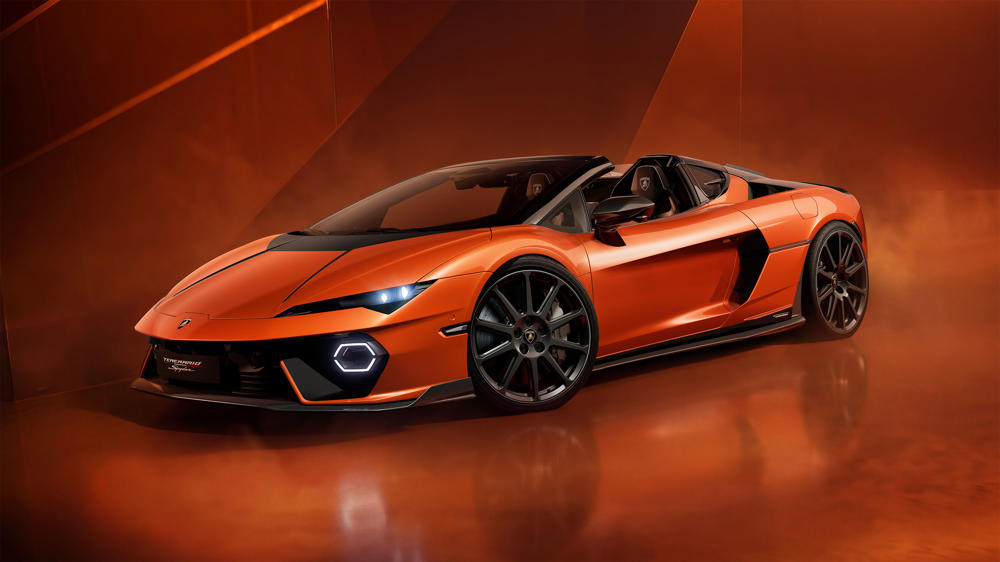
Lamborghini ups the drama while preserving performance as it turns its hybrid supercar into a convertible. In the supercar world, Lamborghini has long been synonymous with drama and excess, and the Temerario has done an excellent job maintaining that reputation since its introduction. Not only is the mid-engine hybrid the quickest gas car we’ve ever tested, but you can now experience the thrill of its ballistic acceleration without a pesky roof getting in the way of all the sound and fury. The 2027 Lamborghini Temerario Spyder is here with a different approach to open-air driving from any of its predecessors. Rather than using a folding soft top or a manually removable roof panel, the Temerario Spyder has a mechanically folding hardtop that tucks away behind the passenger compartment when you want unlimited headroom. The result is a convertible supercar that gives up next to nothing to its coupe counterpart. Structure, Aero, and Space Instead of an electro-hydraulic system, the Temerario Spyder’s top deploys with 10 electric actuators that tuck the roof behind the seats vertically instead of stacking the panel over the engine. This has the benefit of lowering the car’s center of gravity by 0.12 inch when the top is down, all while maintaining the car’s longitudinal position, thereby not upsetting its weight distribution. For comparison, a design where the roof is stored horizontally would raise the center of gravity by 0.28 inch and shuffle the longitudinal point back by 0.43 inch toward the rear of the car, effectively moving more weight over the rear axle. Lamborghini says this decision helps reduce roll movement and maintains the Temerario’s sharp handling. The top takes 17 seconds to lower and can be operated at speeds just below 32 mph. Key to Lamborghini’s goal of maintaining the coupe’s performance, the convertible top and mechanisms only add about 220 pounds to the Temerario’s curb weight, which means the Spyder should tip the scales around 4,400 pounds. Several considerations were made to ready the Temerario for open-top motoring. Unlike the coupe, it has two streamlined rear cowls behind the driver and passenger with the brand’s signature hexagonal geometry, giving it a racy profile. There’s also a new engine cover that shows off its 4.0-liter twin-turbo V-8 engine. Hiding the top also makes the Temerario look even lower to the ground without the visual mass of the roofline. Lamborghini calls out a number of improvements over the Temerario Spyder’s predecessor, the Huracán Evo Spyder, resulting from the new model’s bespoke architecture. Static torsional rigidity rises by 6 percent, dynamic bending stiffness is up by 9 percent, and dynamic torsional rigidity is better by 6 percent. The automaker has achieved these numbers through Spyder-specific structural work. Open-top Temerarios have redesigned main structural nodes, focusing on the central structuring ring of the cabin. If you want to keep the sun off your face while still indulging in the sound of the Temerario’s engine, the Spyder has a power-adjustable rear window that lets you choose how much sound makes its way into the closed cabin. All the while, Lamborghini has made manufacturing efficiencies such as reducing the number of structural components by 50 percent and heat-input welds by 80 percent. In addition to improving production efficiency, these changes benefit the Temerario Spyder’s weight and structural performance. Lamborghini has also retuned the Temerario Spyder’s suspension to reduce secondary vibrations over uneven surfaces by 20 percent. Since many buyers will use this convertible as a cruiser rather than a track weapon, the goal was to improve roadgoing comfort. However, Lamborghini says the revisions do not sacrifice the supercar’s overall handling acumen as the adaptive dampers compensate for the softer springs when the Temerario Spyder is set to one of its sportier drive modes. With a new silhouette comes new aerodynamics, and as such Lamborghini reworked the Temerario’s windscreen cross-member and the aerodynamic elements integrated into the rear roof structure to channel airflow over the cabin and toward the rear spoiler. With the roof closed, the hardtop’s exterior surfaces should keep things quiet for passengers. When the cabin is exposed to the elements, turbulent flow should be minimal. Lamborghini says the Temerario Spyder has a far more spacious interior than its predecessor. Compared to the Huracán Evo Spyder, legroom grows by 1.81 inches and headroom improves by 0.86 inch. There’s 0.35 inch more shoulder room and elbow room as well. Upward visibility also increases by 4.7 degrees. The frunk is a little under 4.0 cubic feet, a bit smaller than a Porsche 911’s 4.8 cubic feet but still enough for two small carry-on suitcases. Another comfort-oriented feature: Lamborghini has implemented a three-level neck warmer for those who want to drive in the colder months.

 Liked by Jackson Girard, Emma Harris
 Liked by Jackson Girard, Emma Harris