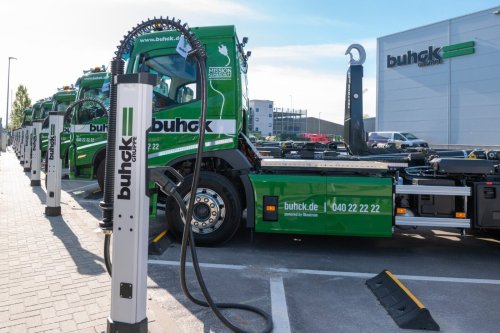
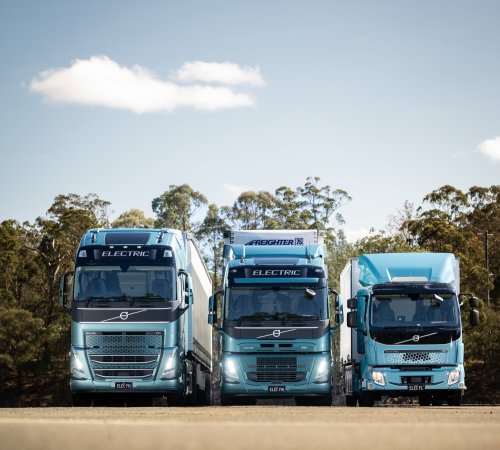
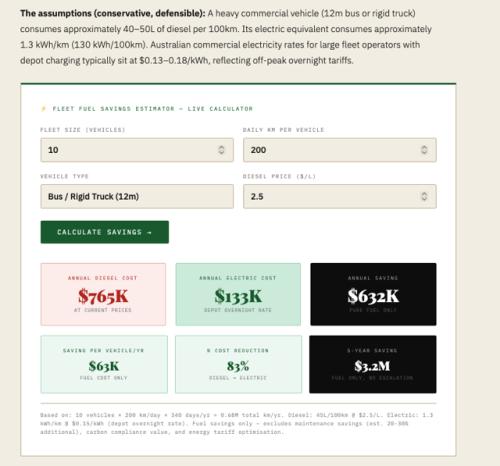
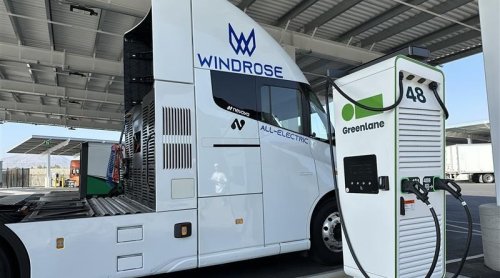
JET charge is facilitating heavy vehicle fleet transition in Australia. “At current diesel prices, the fuel cost savings of switching a commercial fleet to electric are not marginal. They are transformational,” said Tim Washington, Co-Founder and CEO of JET Charge, in a recent press release. “The question for Australian fleet operators is no longer if they should electrify. It’s whether their charging infrastructure will be ready when the vehicles arrive.” CleanTechnica has previously interviewed JET Charge here. After reading this provocative press release intro, I had the opportunity to chat with Tim on the electric telephone to clarify some issues. “What do you mean by heavy vehicles?” I asked. As I expected, he was referring to prime movers. He predicts massive savings for these as diesel prices continue to rise. He did concede that there are not many on the roads in Australia, yet. “A few Volvos, Janus Electric, the eActros, Windrose. It’s early days.” However, his valid point was that many factors are coming together and fleets need to prepare by getting their charging infrastructure in place. “The economics have turned against diesel led fleets. Transitioning to EVs now makes financial sense for both businesses and consumers.” Volvo Electric Trucks on the road in Australia. Photo courtesy Volvo. At present, he believes the action is in the “last mile delivery rigid space.” However, a look at what Europe and China are doing shows us the imminent future. Indeed, two Windrose electric semis have just been delivered in Melbourne. “Diesel has powered Australia’s heavy vehicle sector for over 70 years, but for the first time ever, a perfect storm of conditions — ongoing oil price volatility due to geopolitical uncertainty, government-backed transition programs and 2035 emissions targets — means that heavy vehicle fleet operators will be financially better off transitioning to EV.” If your fleet has 100 heavy vehicles, that could make a difference of up to AU$4.5 million. Or even more, as prices seem to be constantly rising. Another factor will be fuel availability. But, I questioned, what about some figures for smaller fleets? Tim has provided the projections below. JET Charge calculator, courtesy JET Charge JET Charge calculator, courtesy JET Charge. These are not just numbers from the accountant’s bean machine. JET Charge has already been working with large operators like furniture giant IKEA and grocery chain Woolworths. Admittedly, this data refers to medium rigid and smaller delivery trucks, not semi-trailers. You can check out Jet Charge’s Fleet Fuel Calculator here. Since I received this link, diesel has increased to $2.60 a litre, far beyond the AU$1.90 used for the initial calculations. “Fleet electrification is no longer a future consideration; it is an active procurement decision.” Smart CleanTechnica readers would also point out further cost savings on vehicle maintenance. Tim assures me that: ”for most operators, the payback period on charging infrastructure is measured in months, not years. As geopolitical pressures sustain oil price volatility at Australian depots, operators already contending with thin logistics margins are facing compounding pressure.” Tim says that JET Charge is already seeing five-year fleet electrification plans being compressed into 18 months. This is being driven by the current lease cycle arrangements. “If a company makes the decisions to stick with diesel, they will run the truck for 5–6 years. By that time, the market will have moved further and I anticipate congestion in the electrification process. It will be ‘first come best dressed’ regarding grid access and power availability. Logistics companies will be competing with an ever-growing number of well-funded data centres for power and access. Planning takes time. Upgrading takes time. JET Charge will be able scale up ahead of market needs,” he says. “This surge in demand means fleets that do not commit to infrastructure now are effectively locked out until 2027, or even 2028, at which point tightening emissions standards make delay increasingly costly.” Tim sees fleet electrification as a “risk mitigation strategy for supply chain cost issues,” because “diesel fleet operators cannot continue to absorb diesel costs at current levels.” In Australia, the cost of diesel affects every part of the economy and is feeding into inflation, which in turn will add to the pressure to increase interest rates. One of Australia’s largest grocery chains states “it is actively managing supplier cost price increase requests and attempting to mitigate impacts where possible.” But this is not sustainable long term. It should be noted that cost increases are squeezing suppliers, and consumers are worried about the cost of living. The reduction of fossil fuel use in the supply chain will benefit all. Tim points out that private charging infrastructure needs to provide 70% of charging needs. He cites JET Charge’s recent partnership with NewVolt to electrify key freight corridors in Australia. Charging availability is the key, he told me, and shared the story of IKEA’s ploy to help their contractors change to electric vehicles. IKEA wanted their subcontracted delivery fleet to go electric, and so provided the infrastructure to facilitate it. “When IKEA Australia committed to 100% zero-emission deliveries, the barrier wasn’t the vehicles — it was the charging. Delivery partners operating on thin margins couldn’t fund depot infrastructure. JET Charge’s deployment of 59 chargers across 7 locations provided the essential infrastructure that enables these partners to shift to zero-emission vehicles at scale. IKEA’s EV charging network now supports 100+ electric delivery vehicles operating nationwide by ANC Delivers, Kings Transport, and All-Purpose Transport, with integrated Chargefox billing for cost recovery. IKEA went from 5% zero-emission deliveries in 2022 to 83% in October 2025. JET Charge’s deployment de-risked the transition for every delivery partner in the network.” “This is the playbook for every major Australian retailer and logistics operator,” said Washington. “If you move the infrastructure barrier, the transition follows. By building intelligent, fit-for-purpose infrastructure, delivery partners have the reliability they need on the road, and IKEA has the visibility to lead real emissions reductions across its supply chains.” What are the current roadblocks, I asked. “People think charging is hard. We need more education. We need a process to reimburse for power use by drivers. Jet Charge already has a system. Corporate structures need a budget for electric infrastructure.” Tim is working hard to make sure that the future for Australian trucking in metro, regional, and remote areas is bright and electric.




















 +15 others