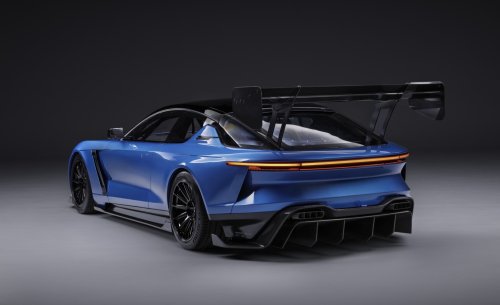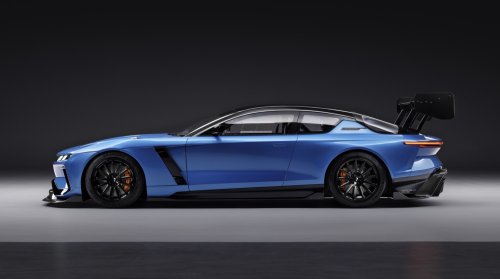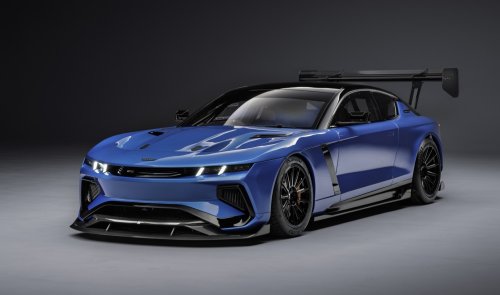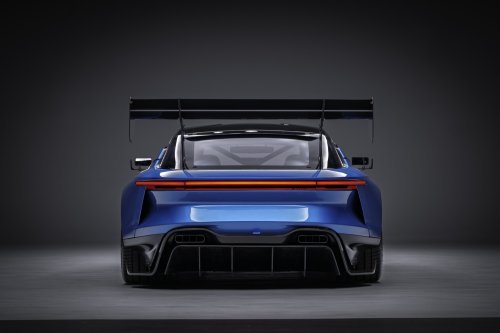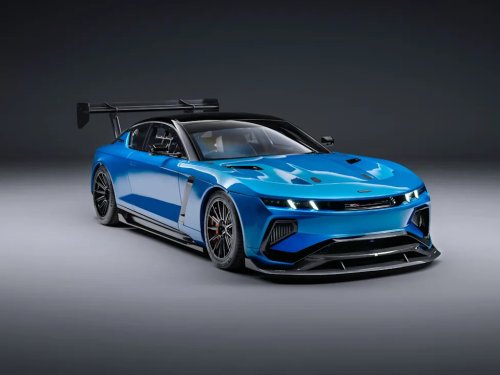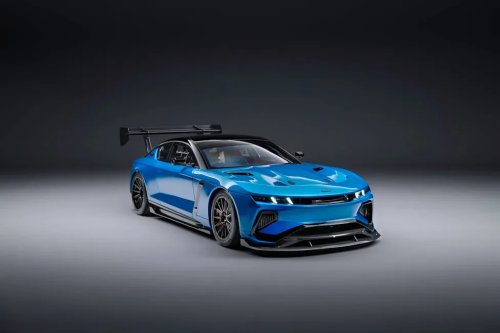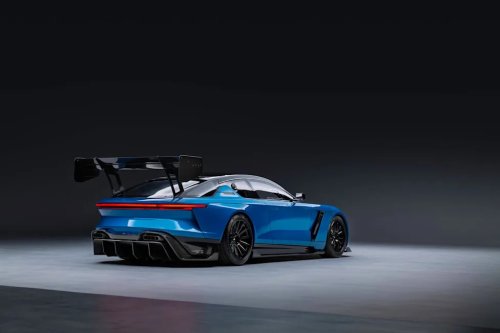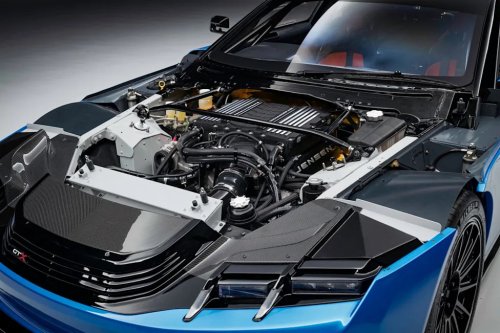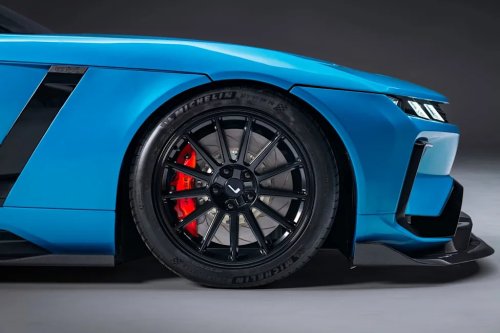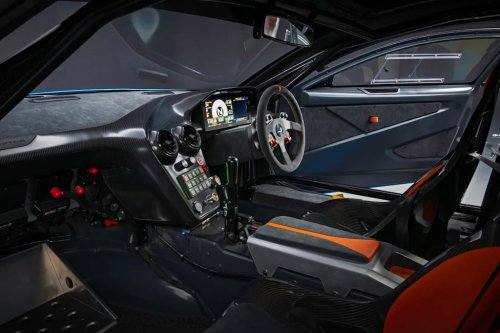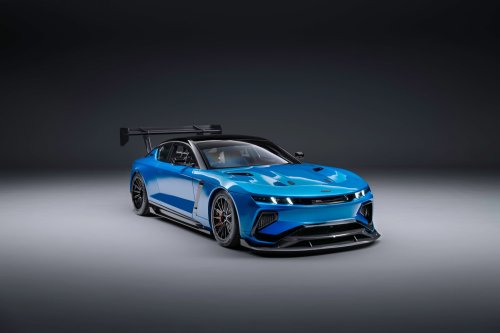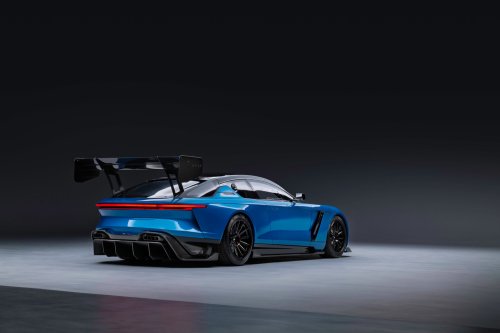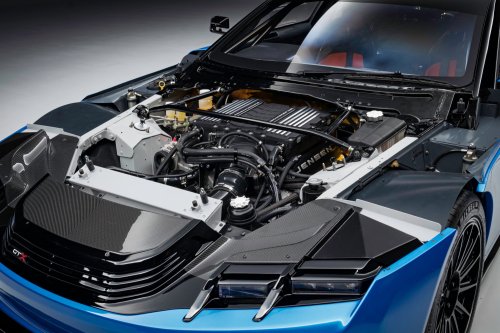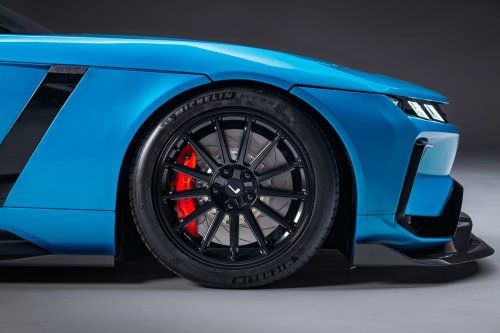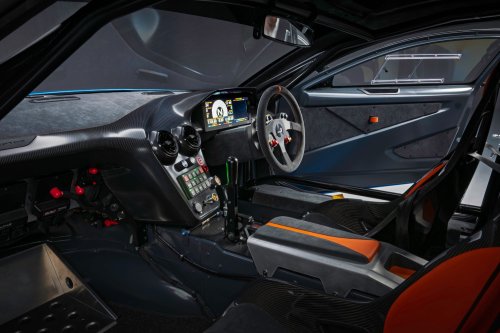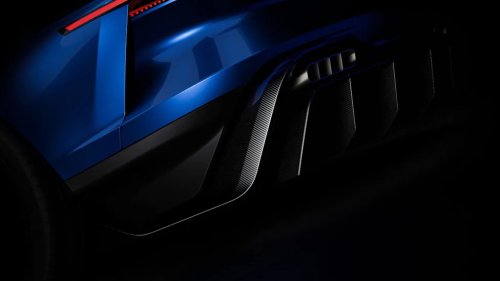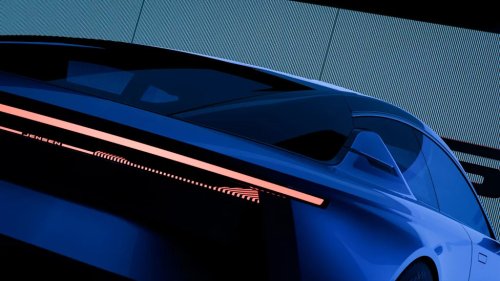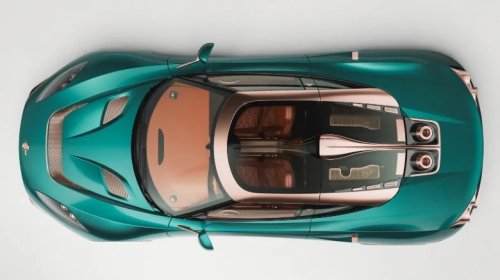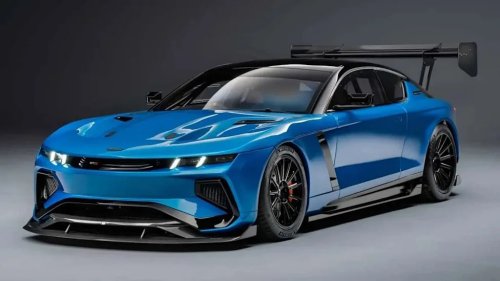
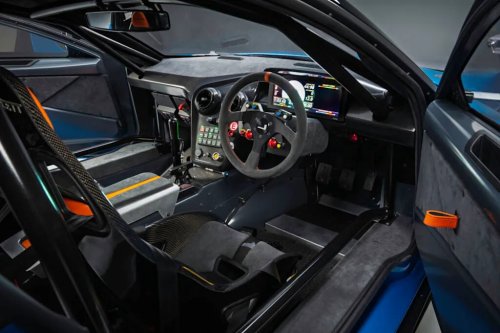
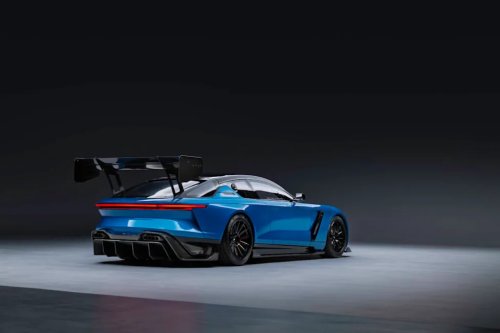




















Jensen is back with a new Interceptor, but not with a polished revival of an old car. Revealed in Banbury, Oxfordshire, on September 4, 2026, the Jensen Interceptor GTX is a front-engined, rear-wheel-drive, track-only development car powered by a supercharged 6.8-liter V8. It is also the company's first clean-sheet model, and its real job is to prove that future Jensens can move beyond restoration work.Jensen International describes the GTX as an "enhanced prototype." That means it is both a functioning engineering demonstrator and a template for the next Interceptor family. Jensen has initiated a comprehensive development program aimed at refining its design, chassis, powertrain, and partnerships for suppliers.The GTX Is More Than a 960-HP Track SpecialThe headline figures are properly serious. The Houston-based Late Model Engines built the V8, which is based on GM's supercharged LT5 architecture but retains only about 20 percent GM carryover components. Its fully forged internals, CNC-machined cylinder heads, titanium valves, revised variable valve timing and direct-injection systems, and 2.65-liter Roots-style supercharger give the GTX a stated 960 hp.AdvertisementAdvertisementThe engine can rev to 7,000 rpm and has the hardware to support up to 1,200 hp, depending on its application. Jensen chose the positive-displacement blower for sharp response and substantial low- and mid-range torque rather than chasing a peaky dyno number. Power travels through a carbon-fiber propshaft inside a steel torque tube to a rear-mounted Samsonas Motorsport six-speed sequential transaxle, then through a Wavetrac differential to the rear wheels.The driveline remains intentionally physical. A transmission-tunnel lever or steering-wheel paddles controls the straight-cut dog gears, while adjustable traction control, launch control, and motorsport ABS provide assistance without turning the driver into a passenger. AP Racing brakes, developed with British specialist BG Developments, use floating steel discs instead of carbon-ceramics for repeatable track performance and cockpit-adjustable brake bias."It shows what we can actually do," David Duerden, managing director of Jensen International Automotive, told MotorTrend. He also described the car as "It's a live concept model." Evo reported a starting price of £850,000 for a customer-built GTX.The foundation of the vehicle features a chassis made entirely of aluminum, utilizing a bonded and riveted construction. It incorporates aluminum suspension components, double wishbone setups at both the front and rear, Nitron dampers that offer three-way adjustability, and hydraulic steering. Reported figures put the car at 1,660 kilograms, or 3,660 pounds, with a 49:51 front-to-rear weight split. It rolls on 20-inch forged Vossen wheels wrapped in Michelin Pilot Sport tires.Its body is hand-formed aluminum, produced by Coventry Metalcraft after Avant Design created the styling. Coventry's more than 30 artisans use 10 English Wheels and traditional forming tools alongside digital design data and mixed-reality checks. Artiglio Automotive Studio supplied the structural carbon-fiber aerodynamic parts and their molds.AdvertisementAdvertisementIncluded in the aerodynamic design are a front splitter, a smooth underbody, a rear diffuser, and a dual-plane adjustable wing. According to Jensen, the rear wing is capable of generating over 350 kilograms, or 772 pounds, of downforce. The exterior preserves the long hood, rear-set cabin, muscular rear quarters, and wraparound glasshouse associated with the 1966–1976 Interceptor, but the execution is deliberately modern rather than retro.The Road Cars Are the PointApproximately 80 percent of the GTX's outer design, encompassing key body panels and manufacturing tools, is planned for use in upcoming road models. The blue body and black roof reference a period Interceptor color combination, while the cabin combines Alcantara trim and orange detailing with a proper race-car safety package: an FIA-approved cage, Tillett carbon-fiber seats, six-point harnesses, Lifeline fire equipment, polycarbonate glazing, and a configurable MoTeC display.Jensen's next planned step is the road-legal Interceptor GTR, essentially the GTX's high-performance philosophy adapted for the street. After that comes the luxury-oriented Interceptor GT, a grand tourer designed to sit closer to the character of the original car. Duerden said, "It's the most efficient way of showing people 'we're going to do this' rather than 'we want to do this.'"The project grows from Jensen International Automotive's nearly two decades of restoring and re-engineering classic Interceptors, including the Interceptor R. Duerden, Client Relations Manager Durran Heslop, and Technical Director Jack Glennon bring that marque experience to the new program. Jeff Qvale, whose father Kjell Qvale was a major shareholder in Jensen Motors during the 1970s, is also involved after spending time at the Jensen factory as a teenager.AdvertisementAdvertisement"What excites me about the Interceptor GTX is that it isn't trying to recreate the past or compete with the most extreme modern hypercars," Qvale said.That is the correct lane for Jensen. The GTX does not pretend to be a continuation car, and it does not need to beat every carbon-fiber hypercar on a circuit. It is a rolling proof that the company can build something new, fast, distinctive, and deeply mechanical. If the upcoming GTR and GT follow its engineering direction, the Interceptor name may finally have a future rather than merely an excellent past.