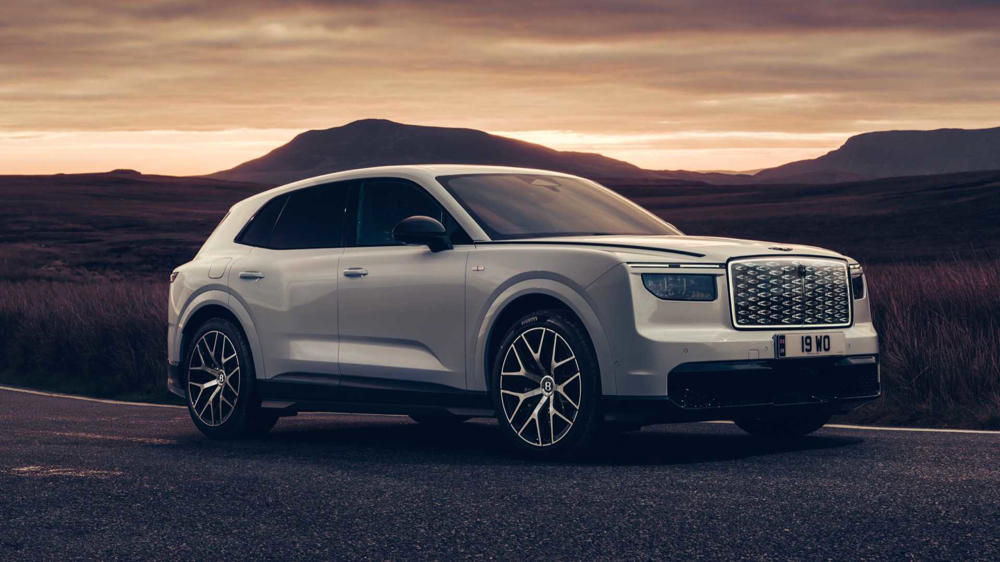
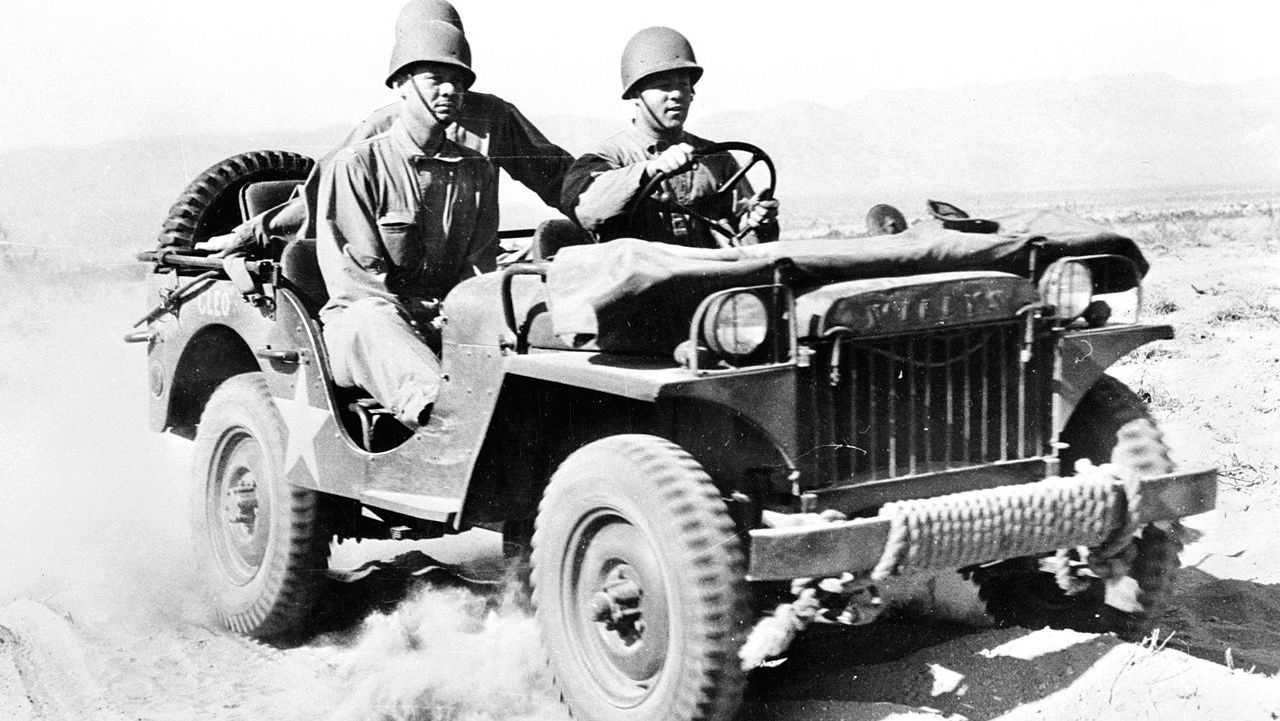
Off-road SUVs are having a genuine cultural moment. Whether it's the reborn Ford Bronco, the perennially beloved Toyota 4Runner, the Jeep Wrangler's endless variants, or the luxurious Mercedes G-Wagen, the market has never offered more choices. But buyers today want more than lifted ride heights and aggressive tires — they're seeking authentic capability rooted in mechanical simplicity, robust drivetrains, and the pedigree of a genuinely utilitarian past. Many modern off-roaders promise adventure yet lean heavily on electronics and terrain management modes. Despite their impressive specs, these SUVs can feel more like rolling tech showcases than true tools. That tension has pushed a growing number of enthusiasts to look further back, searching for vehicles that deliver real-world toughness without the digital frills. What those buyers often discover is that the blueprint for today's most capable machines wasn't drawn up recently. The design DNA of today's most capable SUVs traces all the way back to the early 1940s — to a vehicle built for war, adapted for peace, and eventually refined into a civilian icon that laid the groundwork for every trail-ready off-roader that followed. That original off-road legend was once essential for remote travel and military deployment. Today, it can be had for less than the price of a new compact crossover. It offers solid axles, body-on-frame construction, and an engine engineered for durability over outright power. For drivers chasing real capability and timeless design, this icon might just be the best value in the 4x4 world. World’s First Off-Road SUV: The 1942 Willys MB Is Worth $24,913 The Willys MB, commonly referred to as the original “Jeep,” was never built for comfort or status — it was designed for war. Introduced in 1941 and mass-produced by 1942, the Willys MB (and its nearly identical twin, the Ford GPW) formed the mechanical backbone of the Allied forces during World War II. Lightweight, dependable, and simple to repair in the field, it quickly became the world's first true off-road SUV. Today, it remains a utilitarian icon and is surprisingly affordable. Despite its historic significance and capable design, the Willys MB remains a relative bargain. According to Classic.com, the average sale price currently sits at $24,913. Lower-mileage or fully restored examples can reach $40,000 to $46,000, while project vehicles have sold for as little as $3,800. Most recent sales hover around the $22,000 mark, offering excellent value for buyers interested in functional history. Used 1942 Willys Jeep / Ford GPW Market Value - Classic.com Average Used Value: $24,913 Lowest Recorded Sale: $3,800 Highest Recorded Sale: $46,200 Most Recent Sale: $21,902 Engine Specs Displacement 2.2-liter Configuration Inline-4 (L-head / flathead) Forced Induction Naturally Aspirated Transmission 3-speed manual Power 60 hp @ 4,000 rpm Torque 105 lb-ft @ 2,000 rpm Top Speed 65 mph Driven Wheels 4x4 At its heart is the 2.2-liter “Go-Devil” inline-4, an L-head design that produces 60 hp at 4,000 rpm and 105 lb-ft of torque at just 2,000 rpm. A 3-speed manual gearbox connects to a part-time 4x4 system with a low-range transfer case. Leaf springs at all four corners and a curb weight of around 2,450 pounds give it legitimate trail capability, even by today's standards. Collectors prize these vehicles for their military lineage and raw mechanical character, as much as for their battlefield significance. Vintage 4x4 enthusiasts appreciate their simplicity and direct engagement. Restoration shops and re-creators often seek original Ford GPWs for their period-correct details and interchangeable parts with Willys models. For anyone looking to own a piece of automotive and military history without breaking the bank, the 1942 Willys MB offers unmatched heritage and mechanical purity at a genuinely accessible price. The WWII Off-Road Warrior That Helped Win The War In 1940, as global tensions escalated, the U.S. Army issued a call for a light reconnaissance vehicle that could handle any terrain, be easy to repair, and move troops quickly across the battlefield. The original bid went to American Bantam, a small company that delivered a working prototype on an incredibly short deadline. Although Bantam's design of the "Bantam Reconnaissance Car" met the Army's requirements, military officials doubted the company's production capacity. As a result, the government shared the design with Willys-Overland and Ford, both of which were far better equipped for mass manufacturing. Willys refined the Bantam design, fitting it with its own 2.2-liter engine. This version became the Willys MB. Ford followed with the GPW, a nearly identical version built from Willys blueprints with fully interchangeable parts. Between 1941 and 1945, the two companies produced more than 640,000 units combined. The Jeep served on every major front of World War II — from the deserts of North Africa to the jungles of the Pacific and the muddy roads of Europe. Its four-wheel-drive system, 3-speed manual transmission, and lightweight 2,450-pound body allowed it to climb steep hills, ford rivers, and navigate terrain that stopped other vehicles cold. Troops used it to move supplies, tow artillery, carry wounded soldiers, and serve as mobile command units. Pivotal Moments Of The Willys MB / Ford GPW From WWII Deployment in North Africa (1942): The Jeep proved its toughness in the harsh desert terrain during Operation Torch, transporting troops and supplies where trucks could not go. D-Day and the European Theater (1944): Willys MBs and Ford GPWs landed with Allied forces in Normandy, supporting infantry, towing equipment, and even serving as mobile radio units. Use in the Pacific Campaign: The Jeep navigated jungles and island terrain across the Pacific, from Guadalcanal to the Philippines, helping maintain supply lines in remote areas. End of War Production Milestone (1945): By the war’s end, over 640,000 units had been built, cementing the Jeep as a symbol of American military innovation and mobility. Known by servicemen as “the GI’s best friend,” the Jeep earned its reputation not just through versatility, but through sheer reliability. It started in sub-zero temperatures, ran through mud, and kept moving even when damaged. U.S. Army Chief of Staff George Marshall once called it “America’s greatest contribution to modern warfare.” Its influence stretched well beyond combat. After the war, surplus Jeeps were sold to civilians and foreign governments, helping rebuild infrastructure and agriculture around the world. The Willys MB didn't just help win the war — it laid the foundation for every off-road vehicle that followed. Legend From The Battlefield Now An Off-Road Icon After World War II, Willys wasted no time adapting its battle-proven 4x4 for civilian life. In 1945, it launched the CJ-2A, short for “Civilian Jeep.” It retained the 2.2-liter “Go-Devil” engine, 4x4 drivetrain, and flat-fender silhouette, while adding practical civilian touches like a tailgate and side-mounted spare tire. Farmers, builders, and outdoorsmen quickly embraced it as a go-anywhere workhorse. That model kicked off the long-running CJ series, which spanned decades — from the CJ-2A and CJ-3B through to the CJ-5 and CJ-7. By the 1980s, the Jeep brand had evolved again with the launch of the Wrangler YJ in 1986, a model that introduced coil springs and updated styling while preserving the core character of its ancestors. Globally, the Willys MB influenced nearly every major off-road vehicle. The 1948 Land Rover Series I followed the same formula with a steel frame and aluminum body. Toyota developed the Land Cruiser BJ in 1951, initially for military and police use. Mercedes built the G-Wagen in the 1970s, also starting as a military vehicle before entering civilian production in 1979. From India’s Mahindra to Russia’s UAZ, countries around the world produced Jeep-like 4x4s based on the Willys MB blueprint, and its impact remains unmatched in the history of off-road SUVs.

 Liked by Lucas Harris, Lauren Rogers












 Liked by Lucas Harris, Lauren Rogers