For close to four decades, the solid front axle has defined the Wrangler about as much as the seven-slot grille. On November 2 in Las Vegas, Stellantis's SRT Performance division rolled out a Wrangler that doesn't have one.
SRT's press release calls the Jeep Wrangler Scrambler SRT Concept a reworked take on the CJ-8 Scrambler. It also calls it the first high-speed desert-performance Jeep concept to wear an SRT badge. That's a narrow category. Fine by me: this truck is built for speed over rough ground, not for crawling up Moab slickrock at walking pace.
What's actually there
Designers kept a Wrangler chassis and rebuilt everything from the A-pillar back. The truck gets longer doors, custom rear bodywork, an integrated pickup bed with a spray-on liner, a redesigned tailgate, its own fender flares and a structural roll cage. The front wears the sharknose treatment Jeep first showed at this year's Easter Jeep Safari. The paint is a color Jeep calls Punk'n orange, and it sits on bronze beadlock wheels with oversized tires.
The rear seats clip into floor-mounted hooks. You can pull them out or turn them 180 degrees to face backward, which opens the whole bed for cargo. Inside are Dark Graphite leather, orange inserts, bronze accents and SRT embroidery.
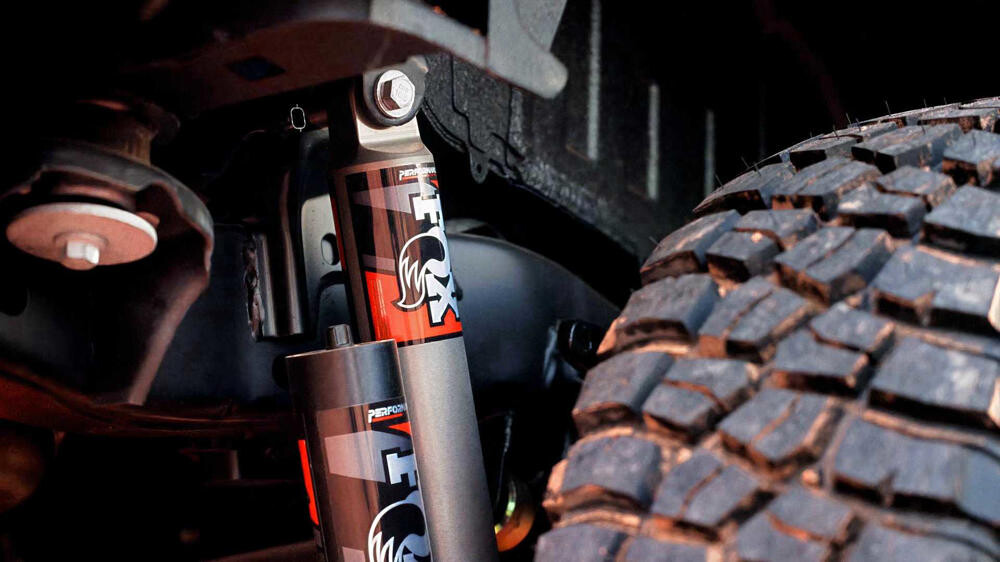
The big news is underneath. Jeep describes a high-travel independent front suspension developed with off-road racer Casey Currie, building on hardware from the Striker concept. Jeep calls it a first for the Wrangler. The rear uses what SRT describes as a trophy-truck-inspired axle.
Why the front end matters
A solid axle ties the two front wheels together. When one wheel climbs a rock, the other gets pushed into the ground, and that's great for traction at 3 mph. It's also simple and strong, and lifting one is easy. The downside is weight that the springs don't carry. At speed, a hit on one side jolts the whole assembly, and some of that comes back through the steering wheel. Worn steering parts on solid-axle trucks can also produce a violent shimmy at highway speed.
Independent suspension lets each wheel move on its own, with less of that unsprung weight. That's why serious desert racers use it. Hitting whoops at 60 mph needs controlled wheel travel more than maximum flex.
Owners would pay for that in other ways. IFS adds CV joints, boots, ball joints and more tie-rod ends, all of which wear out. Lifting an IFS truck usually means either cheap spacers that put extra strain on the CV joints or expensive long-travel kits. The huge aftermarket built around the current Wrangler's solid front axle wouldn't carry over, so early owners of any production version would be waiting on new parts.
The blank spec sheet
SRT didn't give an engine, displacement, horsepower or torque figure. V8 power comes up only in the release's closing paragraph, as part of what SRT imagines when its engineers are left alone. The company also says the concept was conceived "far beyond the boundaries of a production Jeep vehicle." That's about as clear a disclaimer as a press office writes.
Tim Kuniskis, who runs Stellantis's American brands and SRT Performance, said of the truck: "It is unapologetic by design." What he and SRT didn't announce was a production date, a price or a build commitment.
The name isn't pure fantasy, though. A Wrangler Scrambler showed up on Stellantis's Investor Day roadmap in May. So the name has a planned production slot even if this hardware doesn't yet.
Then and now
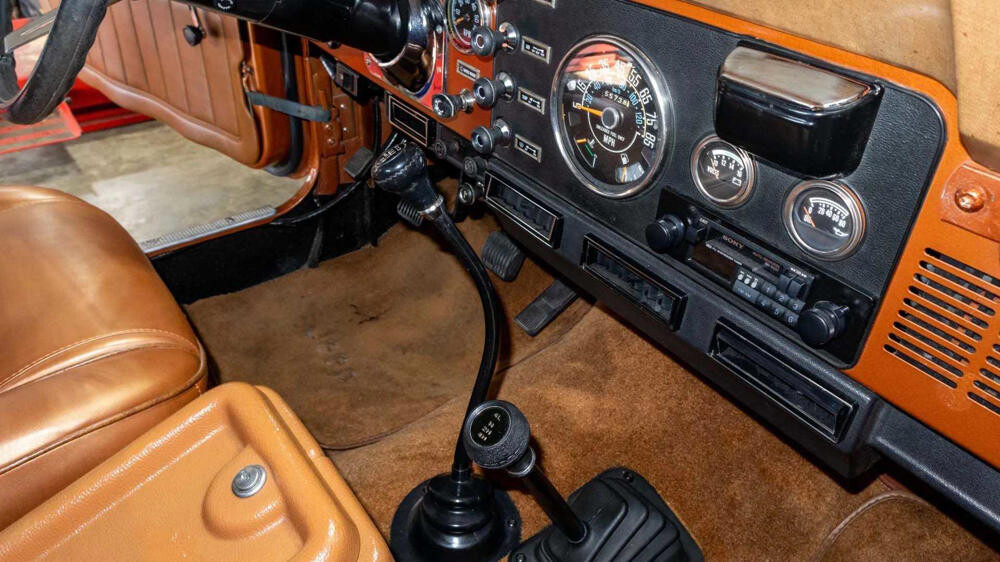
The original CJ-8 put a pickup bed on a long-wheelbase CJ. In 1981 its base engine was a 151-cubic-inch four rated at 82 horsepower, according to Hagerty's valuation data. Hagerty notes that weak sales and the arrival of the Comanche pickup ended its run.
Concept hype isn't a build order. SRT gave no engine, no price and no production date, and its own wording points away from the showroom.
A fender-bender would turn into a parts hunt: custom bed, low-volume panels, specialty suspension. Many true beadlock wheels are sold for off-road use only, so don't expect them in a showroom.
Rear seats that clip in and face backward would have to meet federal seating and belt-anchorage standards in a production truck. A show car doesn't have to prove that.
And if independent front suspension reaches a production Scrambler, that, not the badge, would be the biggest engineering change in Wrangler history.
Would you give up the solid axle for a Wrangler built to hit whoops at 60?