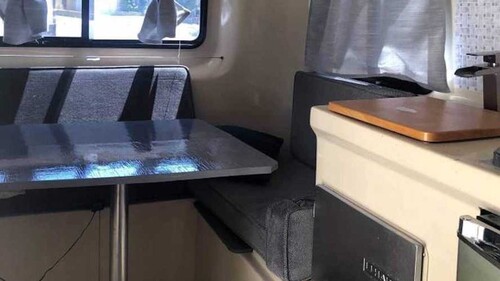
Before you winterize your van or head south for the season, take a look under the mattress. In a small living space, moisture can build up where your mattress meets a plywood platform. Limited airflow can make it harder for that area to dry. The most common result? Mold. That is obviously not ideal for sleeping, and it’s something you should be keenly aware of if you are a #vanlifer or RVer.
All About Mold
Mold is a sneaky problem that requires you to regularly inspect for damage, especially in a van or RV. Mold grows when moisture builds up and has nowhere to go. The EPA’s advice is simple: “The key to mold control is moisture control.” That can be harder in a compact space, where cooking, showering, limited airflow, and condensation can all add moisture. Your mattress is especially vulnerable if it sits against a wall or has little room to air out.
You should inspect your mattress, the walls, and really your entire vehicle at least once a month but preferably as part of your weekly routine. Mold can take hold quickly, so it’s important to be not only preventative but also diligent in detection.
How to Mitigate Mold in Your Camper
This is what to do if you find mold, and here are a few products I’ve used to mitigate the issue.
A small hygrometer gives you a clearer picture of indoor humidity; the EPA recommends keeping it below 60 percent, ideally between 30 and 50 percent.
Moisture-absorbing packets can help as a supplement, but check them often. In humid conditions, they can fill up quickly, and they won’t solve a persistent moisture problem.
Any fan can help keep air moving through your cabin and dry damp surfaces. Ideally, one fan exhausts stale, moist air while another brings fresh air in. The best setup depends on your layout, power capacity, and preferences, but the key is maintaining airflow, especially at night, when moisture from your breath can build up and condense on cool surfaces.
If you have reliable power to run a dehumidifier, it can be a great way to manage moisture. But many van-life electrical systems can’t support one, and we know that’s not a realistic option for everyone.
If you find visible mold on a mattress, replacing it is usually the safest practical choice. If you’re shopping for a replacement, we’re fans of Nectar mattresses for their range of sizes and relatively accessible prices. Measure your space carefully before buying.
Breathable bedding can move the needle in terms of not holding onto moisture, but fabric choice alone won’t prevent mold. We like natural-fiber options such as linen, and I’m a personal fan of Brooklyn Bedding’s TENCEL sheets.
Limited airflow beneath the mattress can let moisture linger. Adding a ventilated layer can help lift the mattress up and add airflow beneath it. Roll-out under-mattress mats provide a simple, low-profile layer between the platform and mattress. The Hypervent Underlay has a raised, waffle-like surface that creates space for air to move underneath. Make sure you buy the correct size for your mattress.
The Froli Travel Bed System takes a more structured approach. Its individual plastic spring elements clip onto a grid, creating a raised, open support under the mattress. It’s a more substantial solution than a roll-out mat, though it is more expensive.
I know how easy it is to focus on the big upgrades and overlook what’s happening under the bed. A quick inspection, better airflow, and attention to moisture can help you catch a problem early. Good luck out there, van lifers.
Why Trust Us?
The Gear Team helps readers make informed purchasing choices about automotive gear, tools, and accessories through hands-on product evaluations and comprehensive testing. Car and Driver’s renowned testing standards mandate that we use all products we feature, and that our findings and recommendations are based on personal experience and knowledge—not hype.
The Gear Team’s product selections are editorially independent; Car and Driver has a strict policy against accepting payment for placement in articles. We won’t claim to have tested something we haven’t, and we’ll never recommend a product we wouldn’t buy ourselves.
We’ve evaluated dozens of product categories, including car vacuums, electric scooters, and tonneau covers. Visit our Tested & Trusted page to see the very best in automotive gear, and learn more about our testing process here.
Katherine Keeler is Associate Testing Editor at Hearst Autos. By day she evaluates tools for your enjoyment; by night, she Frankensteins her ever-changing fleet of rustbucket oddities back to repair. Her dream is to open a roadside attraction where the public can view, drive, and learn repairs at her emporium of curious cars.