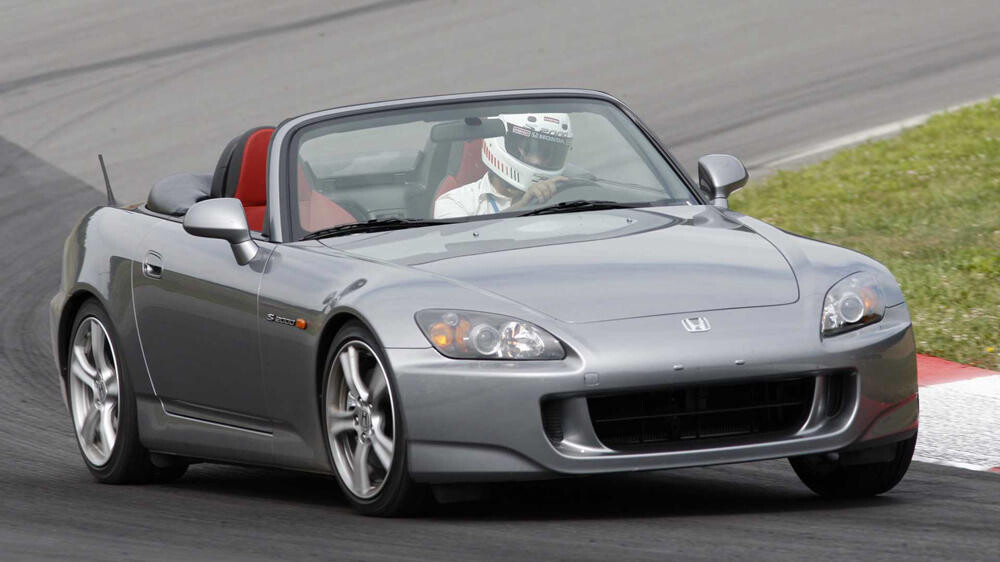
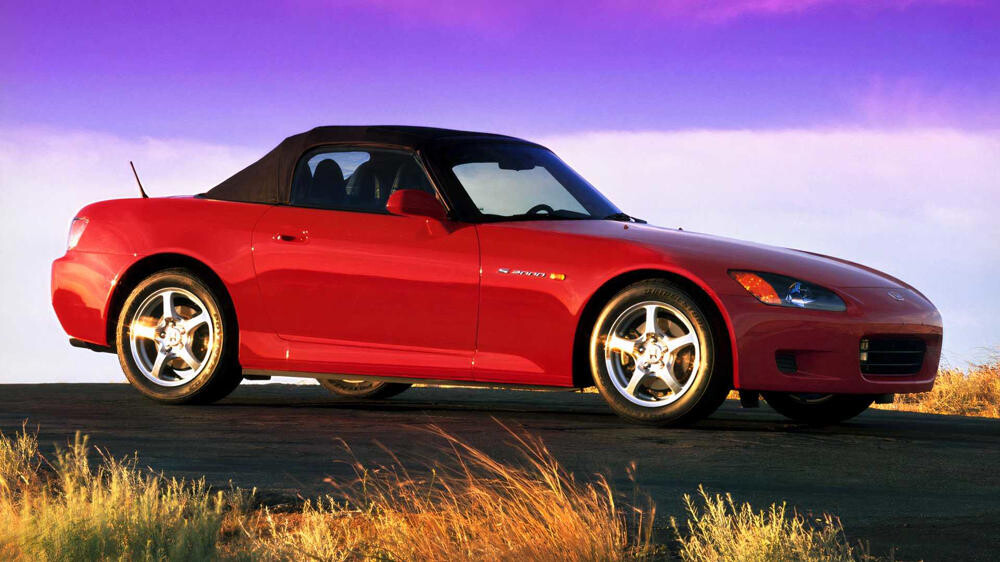
Honda has repeatedly teased enthusiasts with striking sports car concepts, yet its lineup still lacks a direct successor to one of its most celebrated roadsters. For drivers who value a compact, lightweight sports car, the absence is particularly noticeable. Naturally aspirated engines, six-speed manual transmissions, and rear-wheel drive layouts have become increasingly rare as modern performance cars grow heavier and more complex. The enduring appeal of a high-revving engine and a chassis designed around driver engagement highlights just how difficult it is to recreate this winning formula. Honda Has Teased Several Sports Cars, But None Has Replaced The S2000 Honda has repeatedly explored new sports car ideas, but none has become a direct successor to the S2000. The 1995 Sports Study Model (SSM) previewed the original roadster, which launched in 1999. Since then, concepts such as the 2007 Small Hybrid Sports Concept, the 2015 Project 2&4 and the 2017 Sports EV Concept have offered different interpretations of sporty Honda engineering. In 2017, then Honda president Takahiro Hachigo addressed the possibility of reviving the model, saying, “As of today, I cannot say clearly that S2000 will be reinvented as further studies are necessary.” More recently, Prelude chief engineer Tomoyuki Yamagami reportedly described the S2000 as a car “every Honda employee loves.” To understand why no concept has made it to production, you have to understand what made the original so difficult to engineer in the first place. The S2000's 9,000-rpm Engine Remains Its Greatest Selling Point 2000 Honda S2000 cutaway image At the heart of the S2000 was Honda's F20C, a 2.0-liter four-cylinder engineproducing 240 hp at 8,300 rpm and 153 lb-ft of torque at 7,500 rpm. Its 9,000-rpm redline encouraged drivers to explore the upper reaches of the rev range, while its 120 hp per liter specific output was exceptional for a naturally aspirated production engine at the time. A close-ratio six-speed manual transmission sent power to the rear wheels. With a curb weight of just under 2,800 lbs, the original model could reach a tested top speed of 146 mph (tested by Car and Driver), demonstrating that its performance extended beyond its headline engine figures. For the 2004 model year, US-market cars received a larger 2.2-liter F22C1 engine. Torque increased to 162 lb-ft and arrived at 6,800 rpm rather than the original engine's 7,500 rpm. The later engine also had an 8,000-rpm redline. These changes made the car more flexible at lower engine speeds while retaining the manual transmission and rear-wheel-drive layout that defined its driving experience.But the engine alone doesn't explain why the S2000 still commands $35,000 on the used market. The chassis is the other half of the story. The S2000 Was Engineered Around The Driver, Not Just Straight-Line Speed Shigeru Uehara, the S2000's chief engineer, helped shape several celebrated Honda performance cars, including the original Acura NSX and Integra Type R. His development philosophy for the roadster was captured in the phrase “New Generation Real Open Sports,” reflecting Honda's aim to deliver an involving driving experience while meeting contemporary safety, emissions, and comfort requirements. The engineering extended well beyond the powertrain. Honda positioned the engine behind the front axle, helping achieve near 50:50 weight distribution. Independent double-wishbone suspension at all four corners and a limited-slip differential further contributed to the car's precise responses and ability to put its power down when exiting corners. However, the S2000's sharp handling was not without drawbacks. Its short wheelbase and responsive chassis could make the car demanding when driven hard, particularly in early models. A sudden lift of the throttle or poorly judged steering input mid-corner could unsettle the rear end, requiring quick and measured corrections. From The Fast And The Furious To Tuning Shops, The S2000 Became An Icon The Honda S2000 reached a much wider audience through2 Fast 2 Furious(2003), in which Devon Aoki's character, Suki, drove a distinctive pink example. Its bright paint, body kit, and oversized rear wing made it one of the film's memorable cars, helping cement the roadster's place in tuner culture. Its appeal to enthusiasts also extended beyond its movie-star looks. The engine's willingness to rev, rear-wheel-drive configuration, and manual transmission made it an appealing foundation for modifications aimed at street driving, autocross, drifting, and track use. The aftermarket responded with suspension upgrades, engine tuning, forced-induction conversions, aerodynamic parts, and extensive wheel choices. However, modifications do not automatically improve a car. Poorly installed upgrades, aggressive engine tuning, or neglected maintenance can compromise reliability and handling. Buyers considering a modified S2000 should therefore examine the quality of the work. The S2000 Has Real Flaws, From Modest Low-End Torque To Twitchy Handling Despite its appeal, the Honda S2000 was not without compromises. The original engine delivered its best performance high in the rev range, meaning drivers had to work the six-speed gearbox to extract its potential. Its compact cabin can feel cramped for taller occupants, while the firm ride and limited storage make it less suitable for everyday use than some rivals. Age brings further considerations for used-car buyers. The transmission should be checked for worn synchronizers, particularly if gear changes feel difficult, while wheel bearings, the convertible soft top, and evidence of accident repairs deserve attention. Running costs also extend beyond the purchase price. Replacement tires, suspension components, and age-related repairs can become expensive. A well-maintained, largely original example is generally a more reassuring purchase than a heavily modified car with an uncertain service history. Careful inspection is essential before committing to one. Rising Used Prices Show Why The S2000 Still Has No Direct Replacement The Honda S2000 remains a sought-after modern classic, and US market data reflects its enduring appeal. According toAuto Collective, recent sales put the median price at $35,420, with the middle half of recorded transactions falling between $25,500 and $44,500. Higher-mileage examples can cost less, while clean, low-mileage cars command a premium. The more collectible S2000 CR is another proposition altogether, with Hagerty valuing a 2008 example in good condition at around $55,700. Exceptional, low-mileage cars can sell for considerably more. Part of the roadster's appeal is how difficult its specification would be to replicate today. Its compact two-seat body, naturally aspirated engine, six-speed manual transmission, and relatively low weight deliver a focused experience that differs from many modern performance cars. With manufacturers increasingly adopting turbocharging and electrification, the S2000's distinctive character remains compelling. Honda has explored various sports car concepts and discussed the possibility of a successor, but it has not confirmed a direct production replacement. For enthusiasts, the original therefore remains a particularly appealing way to experience Honda's driver-focused engineering.