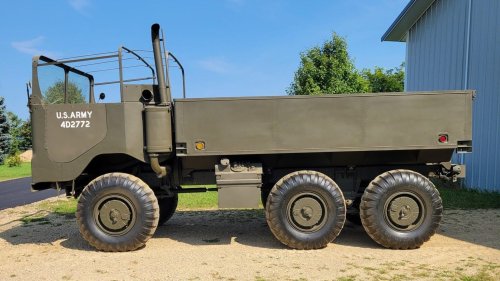
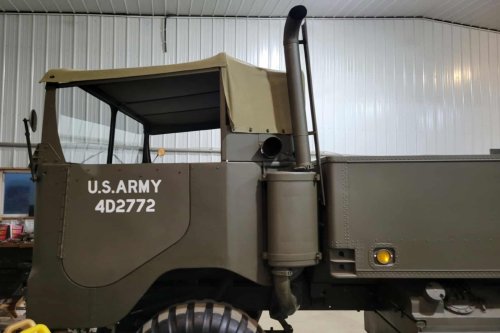
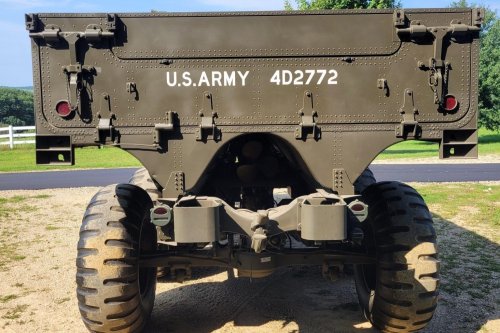
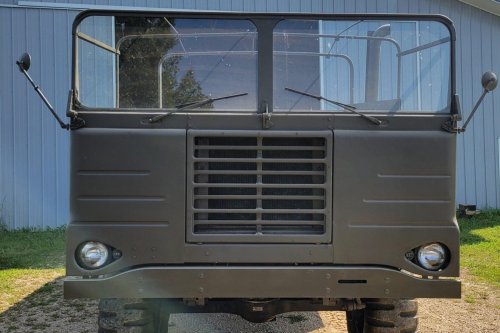
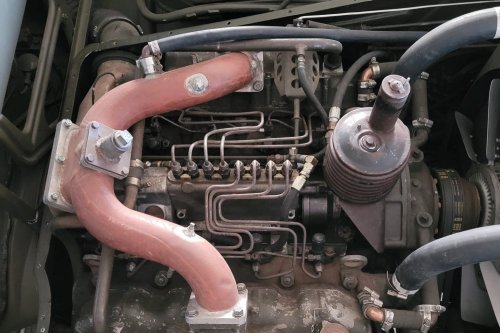
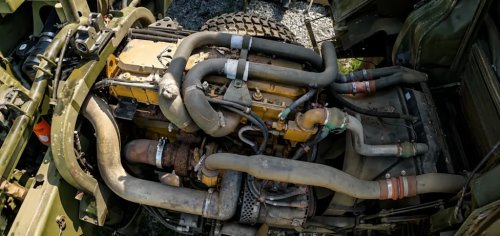
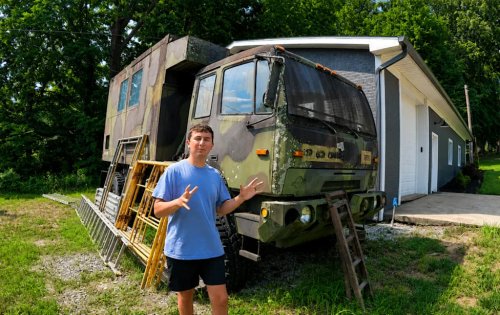
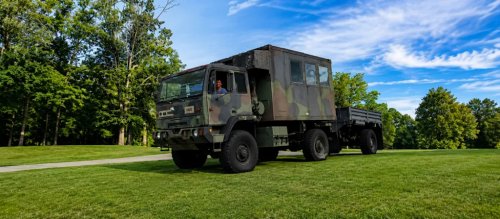
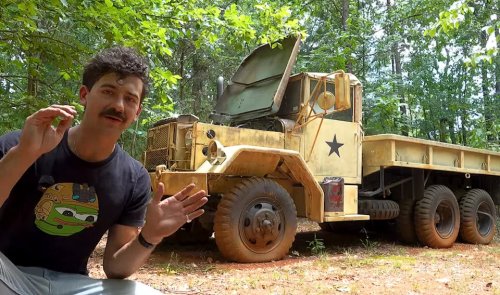
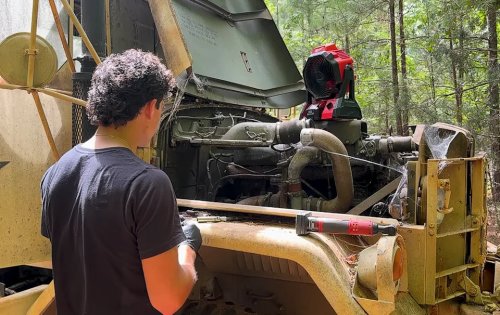
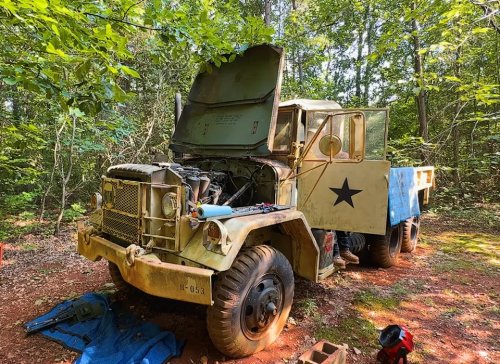
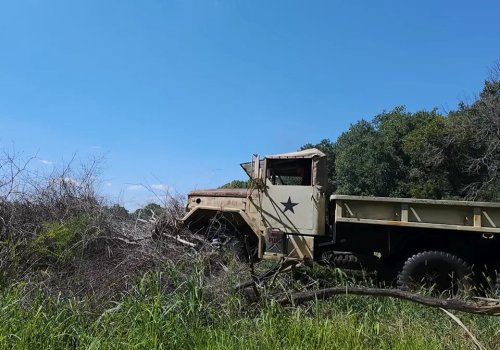
He Bought an Abandoned Military Truck for $2,500—and Ran It on Actual Jet FuelMotorBiscuitRahaan MazumderThu, September 17, 2026 at 2:30 PM UTCAdd us on GoogleWhen most people go shopping for a capable off-road rig, they look for a clean Toyota 4Runner or a used Jeep Wrangler. They want something comfortable, reliable, and reasonably practical.Then there's Austin from the YouTube channel Oversteer., who bypassed sensible 4x4s entirely and picked up an enormous, 13,000-pound military 6×6 that had been abandoned in the woods for a decade—all for just $2,500.His plan wasn't to tow it home on a flatbed trailer. Instead, he decided to revive the beast right where it sat in the dirt, feed it straight aviation jet fuel (Jet-A), and attempt to drive the colossal rig home with practically non-existent brakes.The truck in question is an M35A2, universally known among soldiers, collectors, and truck lovers as the "Deuce and a Half".AdvertisementAdvertisementUnder the massive hood sits an inline-six turbodiesel built by White/Continental, stamped with an iconic plate that simply reads: MULTIFUEL. Back in the 1950s and Cold War era, NATO engineers designed these engines with a singular, paranoid survival mandate: they had to run on whatever flammable liquid soldiers could scavenge in a warzone."This thing was designed in the '50s to run diesel primarily, gasoline in emergencies, kerosene, heater fuel, jet fuel, just about anything that'll burn," Austin explained. "McDonald's fryer oil you can put in this thing, and it will run on it".The mechanical brain behind this trick is an ingenious component called the fuel density compensator. Mounted to the injection pump governor, it measures the density (thickness) of whatever liquid is entering the system. If you pour in thin gasoline or aviation jet fuel, the compensator automatically adjusts fuel delivery so the engine produces consistent power without blowing itself to pieces.Armed with a vintage jerry can filled with genuine Jet-A fuel, Austin set out to test the 70-year-old engineering theory.Clay Sludge and Black WidowsGetting a 10-year-abandoned military rig to drink jet fuel wasn't as simple as turning a key.AdvertisementAdvertisementFor starters, Austin had to evict multiple generations of rodents who had built massive nests inside the air cleaner housing and cab. Then came the spiders. While picking up the jet fuel the day before, he nearly grabbed a live black widow hanging off the pump hose.Once he got to the truck's fuel system, things got downright gross. When he pulled the in-tank electric fuel pump out, he found the pickup totally seized with a mysterious, tar-like substance. "When I tell you the consistency of this is like clay but insanely sticky, I'm not kidding, it's like gum," he said, scraping black sludge off the pump with a screwdriver. "I have never seen anything like that in my life, and I have been working on cars for at least 10 years".After hours of blasting the pump with brake cleaner, soaking the primary fuel filter in an ultrasonic bath, and blowing out the lines with compressed air, he finally got clean Jet-A pumping to the injectors.The moment of truth arrived when he cranked the engine over with the injector lines cracked. The multi-fuel inline-six fired up with a roar, catching Austin completely off guard: "Injectors are loose, and it just ran! It scared the crap out of me because I hit the fuel shut-off and it wouldn't shut off because, well, it's not connected!"No Brakes, Screaming Turbo, and Bug IngestionWhile the engine was happily purring on jet fuel, the rest of the truck was an absolute rolling hazard.AdvertisementAdvertisementAccording to the previous owner, the truck was parked a decade ago because the brakes abruptly failed on the highway, sending the 13,000-pound brute flying completely over a roundabout. The M35A2 uses an air-assisted hydraulic single-circuit drum brake system—meaning if you blow one line or wheel cylinder, every single wheel loses hydraulic braking pressure.To make matters worse, someone had previously dumped DOT 3 brake fluid into the master cylinder. These military trucks strictly require silicone-based DOT 5; mixing the two creates a jelly-like reaction that destroys the wheel cylinder seals.After feverishly bleeding the air out of the cylinders and packing the rusted brake booster with air tool oil, Austin got just enough pedal pressure to risk the drive.Steering the massive 6×6 down two-lane country roads was pure sensory overload. The canvas top flapped violently, the manual transmission protested every downshift into second gear, and the iconic "Whistler" turbocharger screamed like a jet turbine down the highway.AdvertisementAdvertisementWith the split windshield kicked wide open, Austin also suffered through an open-air bug onslaught. "We're in top gear in high, and we're topped out at 40 mph and 2,000 RPM… Ah dude, another bug!" he yelled, squinting through the wind as bugs pelted his face.Despite a completely shot turning radius—which Austin joked requires you to "plan out four business days before you do it"—and headlights that immediately gave out (forcing him to slap a magnetic flashlight to the front bumper), the 1960s war machine made it to the shop under its own power.To cap off the test, he locked the truck into full 6-wheel drive and plowed it straight through a dense brush wall of felled trees taller than the cab itself, proving that 70-year-old military engineering really was built to outlast civilization.



















 +69 others