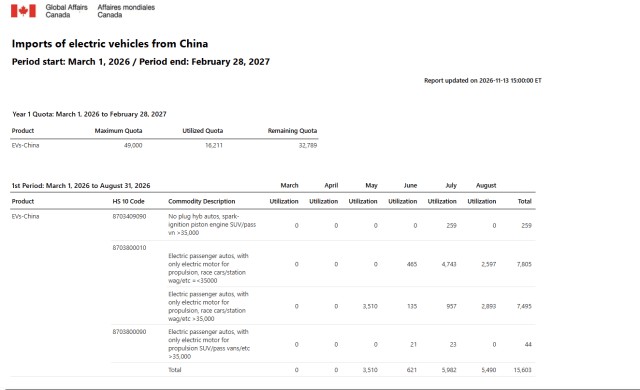
Chinese automakers are getting increasingly creative when it comes to showing the world what their vehicles can do. Geely-owned Lynk & Co recently subjected its 07 GT station wagon to an extreme durability demonstration, sending it tumbling off a cliff at 70 km/h (46.50 mph). Despite the considerable damage, the car reportedly came to rest with all four doors still functional. Lynk & Co’s 07 GT Faced An Unusual Safety Test The video posted by Inside China Auto demonstrates the 07 GT being launched off a mountainside before tumbling repeatedly down the slope. While the wagon sustained considerable exterior damage, footage from the event shows that its passenger compartment remained largely intact. All four doors could still be opened after the car came to rest. Even the panoramic glass roof remained in place, although it was cracked. Geely’s Global Communications chief, Chen Qu, subsequently shared the footage on X, declaring that the company had “the safest car in the world.” That’s a bold claim, especially considering that a manufacturer-organized demonstration like this is no substitute for an official crash test. Thereafter, he implied the only carmaker that offers safer cars than theirs is Volvo, also conveniently owned by Geely. Chinese Automakers Are Desperate To Stand Out Chinese car exports are approaching 10 million vehicles annually, yet the companies behind this expansion have lost around $270 billion in the process. Domestic demand is declining, making international markets increasingly important for Chinese carmakers. BYD, for example, now expects to sell 1.8 million vehicles overseas this year. Speaking of BYD, they too have had their own absurd publicity stunt recently, using a Denza B5 PHEV to tow a 180-ton Boeing 747, while riding on just two wheels. Of course, it’s impressive, but rather an elaborate way to showcase its 560 lb-ft of torque. Once upon a time, Chinese cars’ long list of standard features, strong value proposition, and technical innovations were enough to win over buyers. But convincing buyers to choose unfamiliar brands over established manufacturers remains a challenge. Apparently, two ways to get their attention are to send your latest product down a mountainside or have it tow a gargantuan airplane. Canada Could Become A New Battleground For Chinese Cars Canada has already eased restrictions on Chinese EVs, replacing its previous 100% tariff with a 6.1% tariff and increasing its initial annual import quota to 49,000 vehicles. Prime Minister Mark Carney has also suggested that Canada could explore partnerships with Chinese automakers if trade negotiations with U.S. President Donald Trump fail to preserve the country’s automotive industry. All things considered, Chinese carmakers would still need to conduct vehicle manufacturing in Canada, rather than simply importing finished products. Lynk & Co’s unusual demonstration is another reminder that Chinese automakers are determined to make themselves noticed, even if it means throwing themselves off a hill.

 Liked by Hannah Côté, Oliver Macdonald










 Liked by Hannah Côté, Oliver Macdonald