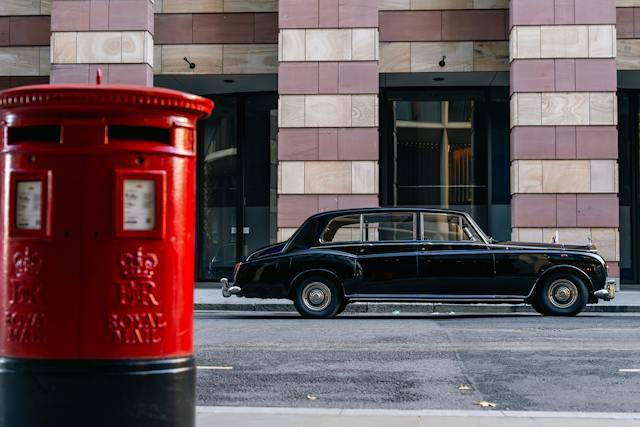
It remains a point of contention for many enthusiasts, but the business of retrofitting electric motors to classic cars is booming. What’s sacrilege for some is, for converts, a way of making classics more usable and reliable. An opportunity to get them out of garages and onto the roads. The first EV swaps appeared around a decade ago, in many cases simply repurposing the powertrains from existing electric cars. The drivetrains of accident-damaged Teslas and Nissan Leafs were given second lives in cars designed long before the EVolution. Whether by coincidence or design, rear-engined classics were often the first targets. The first vehicle from Everrati was a Porsche 911; Electrogenic opted for a VW Karmann Ghia, while at Retro Electric it was the VW Beetle. “The Beetle just had a lot of things going for it. It’s one of those cars that people universally recognize, and so it made sense to be the first vehicle we tried, and it just kind of grew from there,” says Tim Hustwayte, Commercial Director at Kent, U.K.-based Retro Electric. “The VW Beetle is a car we’ve known very well, and we’ve probably done 35-plus over the years. It’s where the whole business premise began. There are some nice advantages in that you can build a transverse system that fits in the rear, so packaging-wise, it’s nice.” Retro Electric’s earliest cars kept the original transmission (and this is still an option), while at Everrati, the 911 used a Tesla motor and a single-speed transmission. Over time, the technology has progressed significantly and electromodded cars are increasingly being built with all-new components, designed to the same standards as mass-produced EVs. “More and more so with the OE systems that you can get access to now, you’re getting built-in combined gearbox and motor systems,” explains Hustwayte. “Running an all-new transmission will of course be a smoother, more refined experience than using some of the old technology, and that’s cool if you want just refinement. But if you want to have the ability to change gear for a more classic feel, then there’s room for both in our view. So we still can offer both options.” “We do a lot more direct drive systems now, so that’s a big change,” adds Hustwayte. “And batteries are probably the other big difference. When we started the company, we were using reclaimed modules, but more and more so, it’s brand-new OE spec modules. Grade one automotive battery tech, with smaller, more power-dense packs.” Unlike the mainstream EV market, costs haven’t really come down, largely due to the amount of labor required in these builds. Retro Electric charges around £30,000 ($40,000) to convert a VW Beetle, while its latest Porsche 912 build ran to £70,000 ($92,000). From the outside, it looks stock, with only a missing exhaust pipe indicating what’s gone on. Open the engine bay, however, and all you see is a battery box. Inside, there’s a small center display to indicate charge and gear selection, and the original shifter is retained. There are only two pedals, however. Hidden in the glovebox is the control panel for the adaptive Tractive suspension, which allows for five different settings to suit road conditions or driving preference. There’s a 42 kWh battery pack split between the rear, where the engine was, and up front where the fuel tank used to be. This keeps the car’s original weight balance, but, surprisingly, it’s over 100 pounds lighter than before. The single motor delivers 160 kW, or 214 hp, and a range of approximately 150 miles. Despite the advanced suspension and all-electric powertrain, a lot of the 912’s character is retained. There’s no assistance for steering or brakes (except for a bit of regeneration), which makes for a more engaging driving experience, even if you’re not shifting gears or revving an engine to the redline. It’s certainly got enough go, with an estimated 0-60 time of under five seconds, and plenty of torque to spin up the rear wheels from a standstill or exiting a slow-speed corner. Although this example is for sale at £150,000 ($197,000), there’s potential to build one for less than the cost of the upcoming Cayman/Boxster EV; something for potential Porsche EVangelists to think about. On the subject of money, the City of London recently commissioned Electrogenic to electrify the Lord Mayor’s 1973 Rolls-Royce Phantom limousine, reasoning that switching from oil to electrons would make fiscal sense. “The Rolls-Royces have been part of the City’s ceremonial life for generations. Rather than replace them, we have an opportunity to give them a new purpose, using modern technology to reduce their environmental impact while preserving their character,” says The Lord Mayor of the City of London, Bronek Masojada. “It is an imaginative and pragmatic solution that makes good financial sense. I hope it will also demonstrate that even our oldest institutions can find new ways of doing things, without losing what makes them special.” Fiscal policies aside, few cars are as ripe for electromodding as a Rolls-Royce. Charles Rolls was always a champion of electric drive. In an interview with The Motor-Car Journal in April 1900, he said, “The electric car is perfectly noiseless and clean. There is no smell or vibration, and they should become very useful when fixed charging stations can be arranged. But for now, I do not anticipate that they will be very serviceable—at least for many years to come.” Now that time has come, not only does Rolls-Royce make its Spectre EV, but companies such as Evice and Lunaz have gone back in time to electrify historic Rollers. None, however, have gone back further than Electrogenic, which converted a 1929 Phantom II for Jason Momoa as part of his On the Roam show. This is the firm that also went Back to the Future, by creating an EV kit for a DeLorean. OEMs have also moved in on the E-classic market, with both Ford and GM offering electric crate motors. Chevrolet’s eCrate uses a 400-volt system and a 66 kWh battery to deliver up to 200 hp. It’s designed to mate directly to a GM four-speed auto transmission, opening up a range of cult classics to electrification. Ford’s Eluminator motor, meanwhile, offers 281 horsepower and 317 lb-ft of torque, although batteries aren’t included. It’s even possible to buy a completely new classic electric car. Britain’s RBW builds its MGBs out of new British Motor Heritage body shells, equipping them not just with a 150-mile range EV powertrain, but with new suspension and modern luxury features. On a smaller scale, Voltura is looking to remanufacture the Fiat 500 with electric power. There’s no stopping the charge to electrify cars of the past—this niche truly has matured—but whether this is positive or negative is a very personal choice. Where do you side? Looking to purchase a car? Find your match on the MSN Autos Marketplace

 Liked by Jacob Morgan, Emma Campbell
 Liked by Jacob Morgan, Emma Campbell