From the February 1997 issue of Car and Driver.
Let’s say your corporate star is rising. Your cozy cubicle has been swapped for an office with floor-to-ceiling walls and a door. Your annual salary just achieved that magic sixth digit. The paint is drying on your first personalized parking space. Now the question is, what are you going to park on that providential piece of pavement?
You’ve worked hard and earned the right to drive something special. You want to make a statement about who you are and where you’re headed, but you must choose wisely. From time to time, you’ll be the designated driver shuttling your foursome from the three-martini lunch to the links, so a sports car is out. Your spouse already drives a sport-utility vehicle, so a sedan it must be. It would be impolitic to outzoot the boss with a flashier car, so you’ll be shopping in the “near luxury” segment.
Prepare to spend more than the cost of the fanciest family cars that top out around $28,000 but don’t cross the luxury-tax threshold of $34,000. This way you’ll send the message that you’re a good ol' fiscal conservative, anti-tax type.
Our Buyers Guide lists 17 sedans in that price range. We eliminated five of those based on prior comparison-test standings and road-test results. We excluded
the BMW 3-series and the Mercedes C-class because reasonably equipped models only evade the luxury tax in four-cylinder guise and their subcompact interior dimensions make them less suitable transportation for four corporate execs. That last argument also ruled out the lovely Audi A4. The remaining nine cars are the cream of this crop. Each should easily satisfy the middle manager’s needs and caprices.
Since we last evaluated this class in August 1994, the Acura TL, the Cadillac Catera, and the Infiniti I30 have joined the segment. The Ford Taurus SHO sprouted a V-8, lost its manual transmission, and was recast as—in Ford’s words—an “executive express.” The Lexus ES300 and the Mitsubishi Diamante have been redesigned, the Volvo 850GLT has been given a new light-pressure turbocharged engine, and the Saab 900SE V-6 was promoted into our price range. The Mazda Millenia S, with its supercharged Miller-cycle engine, has drifted up in price, so we invited the normally aspirated L model instead.
The field includes seven 24-valve V-6 engines, one turbocharged five-cylinder, and a 32-valve V-8. Each spins through a four-speed automatic transmission (only Infiniti offers a stick). There are two Swedes, one true Yank, one German/Yank (the Opel-derived Cadillac), and five Japanese in the bunch. Each speaks with a slightly different accent of luxury, style, and class.
In straight-line acceleration, the pack is remarkably tight—seven of the nine cars perform within 0.3 second of the average 0-to-60-mph and quarter-mile times. Handling behavior varies more widely, as does each manufacturer’s interpretation of luxury equipment.
Although none of these cars is spartan, none is fully loaded, either. For example, not one car in this group is equipped with all four of these less-than-exotic items: traction control, a CD player, remote keyless entry, and variable intermittent wipers. Only three have heated seats. Just two have dual-zone climate controls. The Saab alone has a trip computer.
To fully appreciate the subtle personality traits of these nine middle-management-grade luxo-cruisers, we headed for the Hocking Hills of southeast Ohio. Here's how the cars stacked up.
9th Place: Saab 900SE
For those climbing the corporate ladder at an avant-garde corporation, the Saab 900SE is a must-have. It fairly screams “I’m different and proud of it” to parking lot passersby. From its quirky ignition switch on the floor to its unmistakable shape to its tall-dining-room-chair front seats, this is the car with its baseball cap on backward.
Some of the 900’s quirks are quite useful, like the rear hatch and the split-folding back seat (with armrest passthrough) that, when folded, allows this car to swallow more than 50 cubic feet of cargo or a box measuring, in inches, 62 by 34 by 25. Other quirks are less endearing, like the upright, far-away, 747-style windshield that limits the view of overhead traffic lights.
The 900SE also has one of the smallest and least comfortable rear seats. Its low cushion provides Viking-scale headroom at the expense of thigh support and legroom. On the upside, there are three shoulder belts in back, each of which has a lever on the latch that allows the lap belt to be cinched tight for child-seat installation or for restraining riders during exuberant driving.
Our Saab cast the smallest shadow of any car in this group, and it racked up the highest skidpad grip (0.81 g, tied with the Mazda) and the best braking performance (168 feet from 70 mph). But a lack of road feel through the steering and considerable understeer conspired with the 2.5-liter V-6’s lack of low-end grunt to limit the Saab’s ability to generate grins out in the twisties.
The 900SE comes equipped with creature comforts like heated power seats with three-position memory, rear-seat air vents, an eight-function trip computer, and a sporting traction-control system that doesn’t slow the car down as much as other systems do. But the interior looks plasticky, and noise levels are the highest of the bunch. Its jiggly, coarse ride ranks just above that of the roughrider Taurus.
HIGHS: High-capacity hatchback design, superb brakes, bags of character.
LOWS: Lack of low-end punch, cramped back seat.
VERDICT: The round peg in a square-hole segment.
Saab’s near-luxury formula is harder edged and less refined than its competitors’. We think that approach better suits those 900 models priced in the twenties.
6th Place (tie): Acura 3.2TL
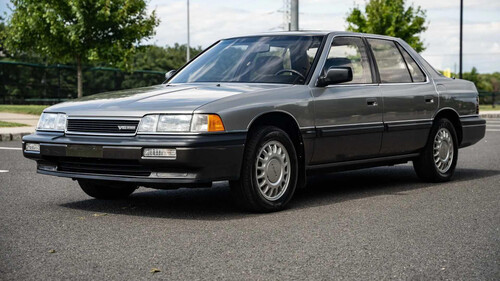
From the backward baseball cap, we turn to the navy pinstripe suit. The Acura 3.2TL is the corporate yes man of this bunch. From its anonymous but handsome exterior to its midpack-performing engine and chassis to its well-appointed, conservative interior, this car meets, but never exceeds, the minimal requirements spelled out in its job description.
The TL drew its loudest praise during the highway slog down to southern Ohio. Editors lauded its low-cowl visibility, its smooth ride on the freeway, its rich-looking gathered leather and reasonably convincing fake-wood interior trim, and its impeccable Japanese build quality. There was some grumbling about the coarseness of its aging 3.2-liter V-6 and the transmission’s tendency to hunt for gears and select them sharply, but there was unanimous praise for the slalom-gate shifter.
Unfortunately, that Germanic shifter suggests a sporting demeanor that the rest of the car doesn’t support. For starters, it seemed impossible to get completely comfortable in the driver’s seat because there is no place to rest one’s left foot. The plastic dead pedal is positioned more than four inches farther away than the accelerator, which puts it out of reach. The steering feels numb on center and then turns in sharply without delivering much road feel. The tires offer just 0.76 g of grip, the lowest of the group (tied with the Lexus). The TL’s smooth ride is offset by a lack of rebound control when the going gets rough. “Wow, I start driving like a little old lady in this car,” said one ordinarily enthusiastic driver.
Super-slab cruising is the TL’s forte, but it’s not the class leader in that category, either. Rear-seat comfort is compromised by a low cushion and uncomfortable armrests. Engine noise is on the high end of the range in this class, and the 14- cubic-foot trunk is narrow in back with many intrusions to pack around.
HIGHS: Smooth, syrupy freeway ride; gated shifter; rich interior appointments.
LOWS Legs-akimbo driving position, coarse engine, underdamped chassis.
VERDICT: The Waylon Smithers of the group—eager to please, unable to excite.
We prefer cars that show a bit more initiative. Acura’s agreeable, play-it-safe TL sends the wrong message from our parking space.
6th Place (tie): Ford Taurus SHO
This burly brute in its athletic-cut Armani seems just a bit out of place in this group—as if its rise to power may have involved a little rough stuff. The Taurus SHO is the longest and widest car here, and it’s motivated by the only V-8 engine.
That engine is largely responsible for transforming the purebred, hard-nosed sport-sedan SHO of old into today’s gentrified “executive express.” Trouble is, that transformation is not complete. The smooth and sonorous V-8, although less potent than the old V-6, is quite competitive in this class. It’s the interior and chassis that need a promotion to executive grade.
Five fit comfortably on-board, but the stark monochrome interior offers no suggestions that the car is at all special. The texture of the plastic dash-and-door trim resembles, well, plastic. New leather bucket seats provide good lateral support, especially at shoulder level, but they look inexpensive.
The chassis tuning is classic American sporty—lots of roll control with rock-hard bushings that telegraph small-bump harshness, and softened springs to swallow the big stuff. “I didn’t know the road was so bumpy until I drove this car,” wrote one of us, who later lamented a Rice Krispies-like chorus of interior squeaks and creaks elicited by the harsh ride. Sadly, that harshness doesn’t pay off in superlative handling. Although it corners flatly with 0.80 g of grip, the SHO’s large size makes it a bit unwieldy on winding roads and in our emergency lane-change maneuver.
The engine, despite its eager note, is peaky by nature. There’s too little torque on tap at low revs, and overly tall gearing makes it slow to rev. In almost every acceleration test, the five-cylinder Volvo 850GLT trounced the SHO. And yet, predictably, the SHO’s fuel economy on this trip—18 mpg—was the group’s worst.
HIGHS: Unmistakable V-8 burble, big interior, lots of car for the money.
LOWS: Low-buck interior, peaky engine, punishing ride.
VERDICT: A ruffian among Rhode scholars.
The SHO sports the most fiscally prudent price in the group ($30,585), but it needs a Dale Carnegie course to round out its personality before it earns true “exec express” status.
6th Place (tie): Infiniti I30
Just beneath the chrome façade of this luxo-cruiser lies the honest middle-class values of a two-time Ten Best-winning Nissan Maxima. We’ve always been fond of Nissan’s lively 3.0-liter V-6 and its crisp, responsive steering, so we expected the I30 to impress us in this comparison.
In the corporate climb from family car to near-luxo status symbol, the Maxima gains a number of standard power accessories, a terrific Bose audio system with CD player, a softened suspension, and styling upgrades inside and out.
Parked alongside its competitors, the I30’s exterior looks gussied up and lacks the cohesive and clean beauty of the ES300 and the Diamante. The interior upgrades are more successful. Gathered leather on the seats and doors and respectable-looking faux-wood trim befit a car competing in this class. The seats are quite comfortable, although the rear seatback is reclined a bit more than we like.
The V-6 achieves average acceleration and above-average fuel economy with the tallest gearing in this group. The softened suspension smooths out one-wheel bumps admirably, but when two wheels thwack an expansion joint at the same time, the seat and the steering wheel reverberate, revealing this Infiniti’s humble family-car roots. Increased pitch, dive, and roll combine with howling tires to sap the fun out of twisty-road running (and they drop the I30 to last place in our lane-change test).
A $2200 Touring package buys traction control, a limited-slip differential, bigger tires, and sport-suspension tuning. So equipped, an I30 might have fared better in this test, but none was available at test time.
HIGHS: Quiet, comfortable interior; low price.
LOWS: Overly gussied-up exterior, weak-kneed suspension.
VERDICT: A middle-of-the-road middle-manager’s machine.
At $30,795, our I30 was equipped with heated seats, an integrated garage-door opener, and remote-control one-touch lowering of all four windows. But the I30’s jack-of-all-trades, master-of-none demeanor makes a loaded Maxima SE look like the better buy. We wonder then, was the Maxima’s promotion to this class a textbook example of the Peter Principle at work?
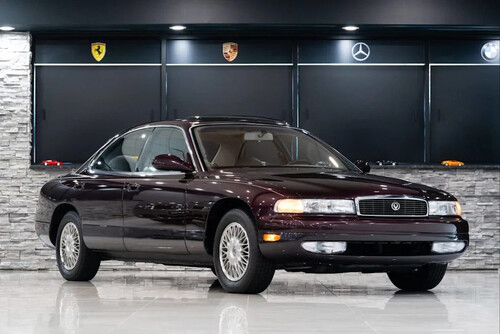
5th Place: Mazda Millenia
Mazda’s Millenia has an “old money” patrician feel about it. Originally intended to spearhead Mazda’s aborted Amati line of high-end cars, its build quality, panel fits, and freedom from vibration, squeaks, and rattles are world-class. The body has a graceful and balanced look with a low, broad stance on the road. Such presence!
Inside, some editors carped about the almost military appearance of the dark-colored dash, but the material quality and the attention to detail are nonpareil. To wit: Carpeting lines the sides of the front seat cushions where leather might otherwise chafe against plastic to make noise. It’s well equipped, too, with traction control and heated seats and the group’s only infinitely adjustable electric tilting steering wheel. Of course, with a price that tiptoes into luxo-tax land at $34,049, it should be loaded. The rear seat, however, offers too little thigh support, no toe room, and uncomfortable armrests.
Ride and handling are balanced expertly. The Millenia’s steering provides a strong sense of straight-ahead and excellent road feel. The chassis clings to the road with 0.81 g of grip, which ties with the Saab for top honors. Best of all, the ride quality doesn’t suffer—most road imperfections are heard more than they are felt.
So why is this limber aristocrat warming the fifth-place podium? Mainly because its 170-horse 2.5-liter engine is hopelessly outgunned here. “Definitely works overtime to make power, and it still comes up short,” said one tester. Its 9.2-second acceleration to 60 mph was almost a second slower than every other car, and its 6.1-second 50-to-70-mph passing time kept the Millenia trapped behind trucks on two-lane highways, while its driver waited impatiently for extra-wide passing gaps.
HIGHS: Build quality, chassis dynamics, Mazda rarity.
LOWS: Overworked, underfed engine; uncomfortable rear-seat cushion.
VERDICT: A charm-school graduate that needs to head for the gym.
Those who are smitten by the Millenia’s chassis charms and its low-volume cachet might want to wait for another promotion and buy the $37,289 Miller-engined Millenia S (unless the boss already drives one).
4th Place: Cadillac Catera
Cadillac’s near-luxo nominee comes with a fresh green card and a thick German accent, although it’s gone shopping at Men’s Wearhouse for a Yankee wardrobe. We think it should have kept the Deutsche duds, but beneath the cluttered and cliched exterior lies a true autobahn stormer.
Editors filled the logbook with glowing praise about the Catera’s secure, stable, and well-weighted steering, its firm brakes, and the neutral handling demeanor of this group’s only rear-drive entrant. Classic Teutonic body rigidity helps this Cadillac absorb bumps with a single audible thunk and no reverberations. It has a Euro-firm but supple ride.
The Catera weighs in at 3794 pounds—the heaviest car here by 264 pounds—so it was not the quickest car on our handling loop. But its superb chassis control inspired a level of confidence that few of these cars could match.
A variable-resonance intake system broadens the 3.0-liter V-6’s torque curve substantially, so the Catera runs rings around the Millenia (with which it shares a disadvantageous weight-to-power ratio of 19 pounds per horsepower), despite having taller gearing.
Inside, the tall, chair-like seats—front and back—drew praise for their lateral support and, again, Teutonic headroom. The Catera’s continental switchgear was viewed by many as subpar in refinement and ergonomic functionality, however, and the European cigarette-lighter socket is too large to fit American accessory plugs. Our Volvo has an American lighter—why doesn’t the Cadillac?
The two-tone-gray dash is busy and button-encrusted, but then our $33,635 base Catera was adorned with more features and amenities than any of its competitors, including dual-zone climate controls with rear-seat vents, automatic headlamps, one-touch-down windows all around, and steering-wheel radio controls.
HIGHS: Stable, confident ride and handling on the autobahn as well as on our “Hockingheim” circuit.
LOWS: Out-of-fashion exterior, excessive avoirdupois, low-grade Euro-switchgear.
VERDICT A German athlete in need of a diet and a makeover.
The Catera is a strong contender in this class. Its eccentricities are mostly charming. To reach the head of this class, it needs to lose some weight and update its wardrobe.
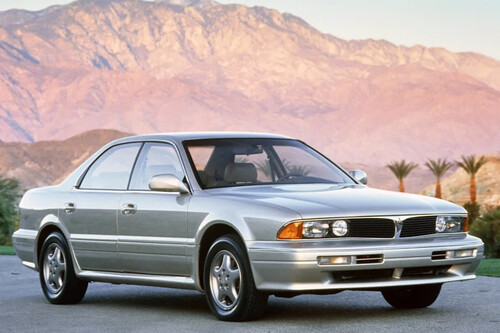
3rd Place: Mitsubishi Diamante LS
This multinational player was conceived in Japan and born in Australia, but it speaks fluent Luxury with a perfect American accent. Check the stats: biggest interior with the most comfortable back seat, biggest-displacement engine making the most torque. Now check the ratings sheet: top marks in the ride and comfort—and styling—categories.
The interior trim, in rich contrasting hues of butterscotch and mocha, also suggests an American heritage, especially the center console, which is slathered with too much fake wood. Still, the front and rear seats afford stretch-out room that only the Taurus can match, and the Diamante’s seat cushions are a model for the class. The armrests are all properly positioned and comfortable—it’s a little thing, but one that none of the others managed to get right. In back, there is ample room for toes knees, heads, and three sets of shoulders combined with a better view out than in the SHO. Throw in adjustable rear-seat headrests, front and rear reading lamps, and a comfortable shoulder belt for the center rear seat, and it’s easy to see why we deemed this the only true New York-to-L.A. back seat of the bunch.
Those who set out on such a journey will appreciate the Diamante’s class-leading interior quietness and its ride-tuned suspension, which fairly smothers all manner of road imperfections.
The driver will also appreciate the Diamante V-6’s 231 pound-feet of torque, which propel this big boy off the line, out of tight corners, and around slower traffic quickly and without breathing hard.
But when the road turns twisty, get out the Dramamine. That smooth-riding suspension rolls over and plays dead when pushed. Howling understeer on the handling loop brought sweat to the brow of one editor, prompting this logbook entry: “It’s like the steering and the suspension haven’t been introduced.”
HIGHS: Pressed and creased styling; gorgeous, cavernous interior; torquey V-6.
LOWS: Floats and corners like a traditional Yankee land yacht.
VERDICT: The long-haul cruiser of this bunch.
The globe-trotting Diamante needs to spend some time studying road manners in Europe. For now, it’s a terrific luxo-cruiser on the American plan.
2nd Place: Volvo 850GLT
Meet the come-from-behind go-getter of the group. Volvo’s new light-pressure turbocharger transforms the 850 from a coarse, unrefined, and underpowered also-ran to the bullet-train of this class. Five cars can best its 190 horsepower, and six can out-twist its 191 pound-feet of torque, but a tiny turbo that spools up instantly provides max torque at a low, low 1800 rpm.
Mounted in a 3188-pound box, that translates to range-topping scoot: 0 to 60 mph in 7.0 seconds, the quarter-mile in 15.4 seconds at 91 mph, and passing times that are roughly a half-second ahead of the pack. And this acceleration arrives smoothly, without the neck-snapping boost of the full-blown Volvo turbos.
But this is no one-trick pony. It also squirts around twisty roads with elan. Its scrappy little Michelin MXV4s hang on with stoic silence right up to their 0.79-g limit, while the cloth seats grip the driver. The steering and the brakes are linear and communicative, and that mighty-mite motor champs at the bit at every apex.
Ride quality suffers little in the name of handling. The tires and the bushings absorb most sharp impacts, and the body structure—it exceeds the rigidity of any other 850 we’ve driven, although no structural enhancements have been publicized for 1997—absorbs the big bumps with minimal fuss.
The passenger cube provides reasonable space and comfort for four or five occupants, each of whom gets a shoulder belt and a headrest, and there are side airbags in front. The rear seats fold independently, and the front passenger seat also folds forward for carrying long objects. The interior is not as rich-looking as some, although leather seats ($1195) and a wood dash ($810) are options. Still, our $32,330 850GLT was equipped with most of what a midgrade exec needs—except traction control, which adds $325.
HIGHS: Bullet-train performance and handling; safe, comfortable interior.
LOWS: Even the exhaust pipe is square.
VERDICT: The Norse god of executive transport, with a face only a Swede could love.
Two things kept this performance champ from grabbing the brass ring: Its Eighties cubist styling (“Goes like stink, with looks to match,” quipped one smart aleck) and past experience with far less robust 850s, which concerned us that this one might be a ringer.
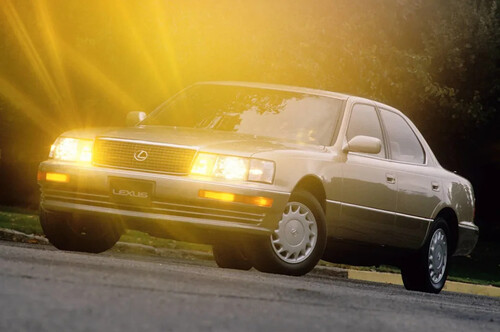
1st Place: Lexus ES300
You know the fair-haired, golden-boy Dudley Doright type at the office that everyone loves to hate? The ES300 is that guy. Cultured, athletic, suave, goodlooking—the Lexus won top marks in eight of our 13 voting categories. We suspect the other cars were sneering at this one when no one was looking.
Every inch of the ES300 looks expensive, from its wind-chiseled, two-tone exterior to its leather- and genuine-wood-trimmed interior. Even the plastic panels look and feel like leather.
At $33,822, our test car lacked traction control, heated seats, and a CD player, but the entry-level Lexus’s ability to do everything well so impressed us that it took top honors in the value category.
The ES300’s 200-horse 3.0-liter V-6 and four-speed automatic transmission established the class benchmark for smoothness and delivered 60-mph, quarter-mile, and passing acceleration times within a couple tenths of the V-8-powered SHO’s.
In the chassis department, a new, cockpit-adjustable suspension allowed the ES300 to tie the Diamante’s top score in ride and match the Volvo’s winning scores in the handling and fun-to-drive categories. Set to “Sport,” the shocks help limit body roll and maintain optimal tire contact with the road in quick maneuvers like our emergency lane change. The ES300 took a 4-mph lead over the Volvo in that test, despite wearing the least-grippy tires in the group.
Set to “Comfort,” the chassis absorbs large bumps and dips gracefully, with a bit more float. Firmer bushings in the Lexus give the Diamante an advantage over small irregularities, however.
A two-inch wheelbase stretch for 1997 has improved rear-seat comfort, especially with three passengers in back, by reducing wheelhouse intrusion. But the new, slimmer sunroof design still compromises headroom somewhat.
HIGHS: Dream Whip drivetrain, Ritz-Carlton interior, Swiss-Army suspension.
LOWS: Missing a few key features.
VERDICT: An overachiever that does almost everything well.
Is the ES300 the perfect car in this segment? No. For that we’d need to hold the price and add the Cadillac’s features, the Diamante’s back seat, and the Volvo’s turbo. But its comprehensive competence sends the message we’d want delivered from our personalized parking spot.
Specifications
Specifications
1997 Acura 3.2TL
Vehicle Type: front-engine, front-wheel-drive, 5-passenger, 4-door sedan
PRICE
Base/As Tested: $33,385/$33,385
ENGINE
SOHC 24-valve V-6, aluminum block and heads, port fuel injection
Displacement: 196 in3, 3206 cm3
Power: 200 hp @ 5300 rpm
Torque: 210 lb-ft @ 4500 rpm
TRANSMISSION
4-speed automatic
CHASSIS
Suspension, F/R: control arms/multilink
Brakes, F/R: vented disc/disc
Tires: Michelin Energy MXV4
F: 205/65VR-15
DIMENSIONS
Wheelbase: 111.8 in
Length: 191.7 in
Width: 70.9 in
Height: 55.7 in
Passenger Volume, F/R: 54/41 ft3
Trunk Volume: 14 ft3
Curb Weight: 3482 lb
C/D TEST RESULTS
60 mph: 8.1 sec
1/4-Mile: 16.3 sec @ 86 mph
100 mph: 21.9 sec
120 mph: 41.1 sec
Rolling Start, 5–60 mph: 8.4 sec
Top Gear, 30–50 mph: 4.5 sec
Top Gear, 50–70 mph: 5.4 sec
Top Speed: 134 mph
Braking, 70–0 mph: 181 ft
Roadholding, 300-ft Skidpad: 0.76 g
Interior Sound
Idle: 42 dBA
Full Throttle: 74 dBA
70-mph Cruising: 70 dBA
C/D FUEL ECONOMY
Observed: 19 mpg
EPA FUEL ECONOMY
City/Highway: 19/24 mpg
--
1997 Cadillac Catera
Vehicle Type: front-engine, rear-wheel-drive, 5-passenger, 4-door sedan
PRICE
Base/As Tested: $33,635/$33,635
ENGINE
DOHC 24-valve V-6, iron block and aluminum heads, port fuel injection
Displacement: 181 in3, 2962 cm3
Power: 200 hp @ 6000 rpm
Torque: 192 lb-ft @ 3600 rpm
TRANSMISSION
4-speed automatic
CHASSIS
Suspension, F/R: struts/multilink
Brakes, F/R: vented disc/disc
Tires: Goodyear Eagle RS-A
P225/55HR-16
DIMENSIONS
Wheelbase: 107.4 in
Length: 194.0 in
Width: 70.3 in
Height: 56.3 in
Passenger Volume, F/R: 51/46 ft3
Trunk Volume: 15 ft3
Curb Weight: 3794 lb
C/D TEST RESULTS
60 mph: 8.2 sec
1/4-Mile: 16.3 sec @ 86 mph
100 mph: 22.9 sec
120 mph: 35.9 sec
Rolling Start, 5–60 mph: 8.4 sec
Top Gear, 30–50 mph: 4.6 sec
Top Gear, 50–70 mph: 5.1 sec
Top Speed (gov ltd): 128 mph
Braking, 70–0 mph: 177 ft
Roadholding, 300-ft Skidpad: 0.79 g
Interior Sound
Idle: 42 dBA
Full Throttle: 73 dBA
70-mph Cruising: 71 dBA
C/D FUEL ECONOMY
Observed: 21 mpg
EPA FUEL ECONOMY
City/Highway: 18/25 mpg
--
1997 Ford Taurus SHO
Vehicle Type: front-engine, front-wheel-drive, 5-passenger, 4-door sedan
PRICE
Base/As Tested: $28,220/$30,585
ENGINE
DOHC 32-valve V-6, aluminum block and heads, port fuel injection
Displacement: 207 in3, 3392 cm3
Power: 235 hp @ 6100 rpm
Torque: 230 lb-ft @ 4800 rpm
TRANSMISSION
4-speed automatic
CHASSIS
Suspension, F/R: struts/multilink
Brakes, F/R: vented disc/disc
Tires: Goodyear Eagle RS-A
P225/55ZR-16
DIMENSIONS
Wheelbase: 108.5 in
Length: 198.3 in
Width: 73.1 in
Height: 55.7 in
Passenger Volume, F/R: 51/46 ft3
Trunk Volume: 16 ft3
Curb Weight: 3398 lb
C/D TEST RESULTS
60 mph: 7.7 sec
1/4-Mile: 15.9 sec @ 88 mph
100 mph: 20.8 sec
120 mph: 33.1 sec
Rolling Start, 5–60 mph: 7.8 sec
Top Gear, 30–50 mph: 3.9 sec
Top Gear, 50–70 mph: 5.1 sec
Top Speed: 139 mph
Braking, 70–0 mph: 177 ft
Roadholding, 300-ft Skidpad: 0.80 g
Interior Sound
Idle: 45 dBA
Full Throttle: 74 dBA
70-mph Cruising: 71 dBA
C/D FUEL ECONOMY
Observed: 18 mpg
EPA FUEL ECONOMY
City/Highway: 17/26 mpg
--
1997 Infiniti I30
Vehicle Type: front-engine, front-wheel-drive, 5-passenger, 4-door sedan
PRICE
Base/As Tested: $29,295/$30,795
ENGINE
DOHC 24-valve V-6, aluminum block and heads, port fuel injection
Displacement: 182 in3, 2988 cm3
Power: 190 hp @ 5600 rpm
Torque: 205 lb-ft @ 4000 rpm
TRANSMISSION
4-speed automatic
CHASSIS
Suspension, F/R: struts/torsion beam
Brakes, F/R: vented disc/disc
Tires: Yokohama Radial 376
P205/65HR-15
DIMENSIONS
Wheelbase: 106.3 in
Length: 189.6 in
Width: 69.7 in
Height: 55.7 in
Passenger Volume, F/R: 58/42 ft3
Trunk Volume: 14 ft3
Curb Weight: 3166 lb
C/D TEST RESULTS
60 mph: 8.0 sec
1/4-Mile: 16.3 sec @ 86 mph
100 mph: 23.2 sec
120 mph: 44.2 sec
Rolling Start, 5–60 mph: 8.2 sec
Top Gear, 30–50 mph: 3.9 sec
Top Gear, 50–70 mph: 5.4 sec
Top Speed: 127 mph
Braking, 70–0 mph: 184 ft
Roadholding, 300-ft Skidpad: 0.78 g
Interior Sound
Idle: 43 dBA
Full Throttle: 70 dBA
70-mph Cruising: 69 dBA
C/D FUEL ECONOMY
Observed: 22 mpg
EPA FUEL ECONOMY
City/Highway: 21/28 mpg
--
1997 Lexus ES300
Vehicle Type: front-engine, front-wheel-drive, 5-passenger, 4-door sedan
PRICE
Base/As Tested: $29,375/$33,822
ENGINE
DOHC 24-valve V-6, aluminum block and heads, port fuel injection
Displacement: 183 in3, 2995 cm3
Power: 200 hp @ 5200 rpm
Torque: 214 lb-ft @ 4400 rpm
TRANSMISSION
4-speed automatic
CHASSIS
Suspension, F/R: struts/multilink
Brakes, F/R: vented disc/disc
Tires: Goodyear Eagle GA Touring
P205/65VR-15
DIMENSIONS
Wheelbase: 105.1 in
Length: 190.2 in
Width: 70.5 in
Height: 54.9 in
Passenger Volume, F/R: 52/39 ft3
Trunk Volume: 13 ft3
Curb Weight: 3390 lb
C/D TEST RESULTS
60 mph: 7.8 sec
1/4-Mile: 16.1 sec @ 87 mph
100 mph: 22.0 sec
120 mph: 40.5 sec
Rolling Start, 5–60 mph: 8.3 sec
Top Gear, 30–50 mph: 4.1 sec
Top Gear, 50–70 mph: 5.2 sec
Top Speed: 135 mph
Braking, 70–0 mph: 179 ft
Roadholding, 300-ft Skidpad: 0.76 g
Interior Sound
Idle: 40 dBA
Full Throttle: 73 dBA
70-mph Cruising: 71 dBA
C/D FUEL ECONOMY
Observed: 21 mpg
EPA FUEL ECONOMY
City/Highway: 19/26 mpg
--
1997 Mazda Millenia L
Vehicle Type: front-engine, front-wheel-drive, 5-passenger, 4-door sedan
PRICE
Base/As Tested: $32,595/$34,049
ENGINE
DOHC 24-valve V-6, aluminum block and heads, port fuel injection
Displacement: 152 in3, 2497 cm3
Power: 170 hp @ 5800 rpm
Torque: 160 lb-ft @ 4800 rpm
TRANSMISSION
4-speed automatic
CHASSIS
Suspension, F/R: multilink/multilink
Brakes, F/R: vented disc/disc
Tires: Michelin XGT V4
P215/55VR-16
DIMENSIONS
Wheelbase: 108.3 in
Length: 189.8 in
Width: 69.7 in
Height: 54.9 in
Passenger Volume, F/R: 52/39 ft3
Trunk Volume: 13 ft3
Curb Weight: 3228 lb
C/D TEST RESULTS
60 mph: 9.2 sec
1/4-Mile: 17.0 sec @ 83 mph
100 mph: 25.1 sec
120 mph: 52.4 sec
Rolling Start, 5–60 mph: 9.5 sec
Top Gear, 30–50 mph: 4.9 sec
Top Gear, 50–70 mph: 6.1 sec
Top Speed: 129 mph
Braking, 70–0 mph: 195 ft
Roadholding, 300-ft Skidpad: 0.81 g
Interior Sound
Idle: 44 dBA
Full Throttle: 72 dBA
70-mph Cruising: 70 dBA
C/D FUEL ECONOMY
Observed: 23 mpg
EPA FUEL ECONOMY
City/Highway: 20/27 mpg
--
1997 Mitsubishi Diamante LS
Vehicle Type: front-engine, front-wheel-drive, 5-passenger, 4-door sedan
PRICE
Base/As Tested: $30,460/$32,355
ENGINE
SOHC 24-valve V-6, iron block and aluminum heads, port fuel injection
Displacement: 213 in3, 3498 cm3
Power: 210 hp @ 5000 rpm
Torque: 231 lb-ft @ 4000 rpm
TRANSMISSION
4-speed automatic
CHASSIS
Suspension, F/R: struts/multilink
Brakes, F/R: vented disc/disc
Tires: Michelin Energy MXV4
P215/60VR-16
DIMENSIONS
Wheelbase: 107.1 in
Length: 194.1 in
Width: 70.3 in
Height: 56.5 in
Passenger Volume, F/R: 57/45 ft3
Trunk Volume: 14 ft3
Curb Weight: 3530 lb
C/D TEST RESULTS
60 mph: 8.1 sec
1/4-Mile: 16.3 sec @ 86 mph
100 mph: 22.6 sec
120 mph: 37.8 sec
Rolling Start, 5–60 mph: 8.3 sec
Top Gear, 30–50 mph: 4.7 sec
Top Gear, 50–70 mph: 5.1 sec
Top Speed (gov ltd): 131 mph
Braking, 70–0 mph: 176 ft
Roadholding, 300-ft Skidpad: 0.78 g
Interior Sound
Idle: 42 dBA
Full Throttle: 70 dBA
70-mph Cruising: 69 dBA
C/D FUEL ECONOMY
Observed: 20 mpg
EPA FUEL ECONOMY
City/Highway: 18/26 mpg
--
1997 Saab 900SE
Vehicle Type: front-engine, front-wheel-drive, 5-passenger, 4-door sedan
PRICE
Base/As Tested: $33,020/$33,200
ENGINE
DOHC 24-valve V-6, iron block and aluminum heads, port fuel injection
Displacement: 152 in3, 2498 cm3
Power: 170 hp @ 5900 rpm
Torque: 167 lb-ft @ 4200 rpm
TRANSMISSION
4-speed automatic
CHASSIS
Suspension, F/R: struts/trailing arms
Brakes, F/R: vented disc/disc
Tires: Michelin Pilot HX
205/50ZR-16
DIMENSIONS
Wheelbase: 102.4 in
Length: 182.6 in
Width: 67.4 in
Height: 56.6 in
Passenger Volume, F/R: 50/39 ft3
Trunk Volume: 24 ft3
Curb Weight: 3226 lb
C/D TEST RESULTS
60 mph: 8.3 sec
1/4-Mile: 16.4 sec @ 87 mph
100 mph: 22.3sec
120 mph: 40.2 sec
Rolling Start, 5–60 mph: 8.7 sec
Top Gear, 30–50 mph: 4.2 sec
Top Gear, 50–70 mph: 5.3 sec
Top Speed: 168 mph
Braking, 70–0 mph: 137 ft
Roadholding, 300-ft Skidpad: 0.81 g
Interior Sound
Idle: 51 dBA
Full Throttle: 75 dBA
70-mph Cruising: 71 dBA
C/D FUEL ECONOMY
Observed: 23 mpg
EPA FUEL ECONOMY
City/Highway: 19/25 mpg
--
1997 Volvo 850GLT
Vehicle Type: front-engine, front-wheel-drive, 5-passenger, 4-door sedan
PRICE
Base/As Tested: $32,330/$32,330
ENGINE
turbocharged and intercooled DOHC 20-valve inline-5, aluminum block and head, port fuel injection
Displacement: 149 in3, 2435 cm3
Power: 190 hp @ 5200 rpm
Torque: 191 lb-ft @ 1800 rpm
TRANSMISSION
4-speed automatic
CHASSIS
Suspension, F/R: struts/semi-trailing arms
Brakes, F/R: vented disc/disc
Tires: Michelin MXV4
195/60VR-15
DIMENSIONS
Wheelbase: 104.9 in
Length: 183.5 in
Width: 69.3 in
Height: 55.7 in
Passenger Volume, F/R: 52/43 ft3
Trunk Volume: 15 ft3
Curb Weight: 3188 lb
C/D TEST RESULTS
60 mph: 7.0 sec
1/4-Mile: 15.4 sec @ 91 mph
100 mph: 18.8 sec
120 mph: 33.2 sec
Rolling Start, 5–60 mph: 7.3 sec
Top Gear, 30–50 mph: 3.5 sec
Top Gear, 50–70 mph: 4.5 sec
Top Speed: 138 mph
Braking, 70–0 mph: 175 ft
Roadholding, 300-ft Skidpad: 0.79 g
Interior Sound
Idle: 42 dBA
Full Throttle: 74 dBA
70-mph Cruising: 68 dBA
C/D FUEL ECONOMY
Observed: 21 mpg
EPA FUEL ECONOMY
City/Highway: 20/29 mpg