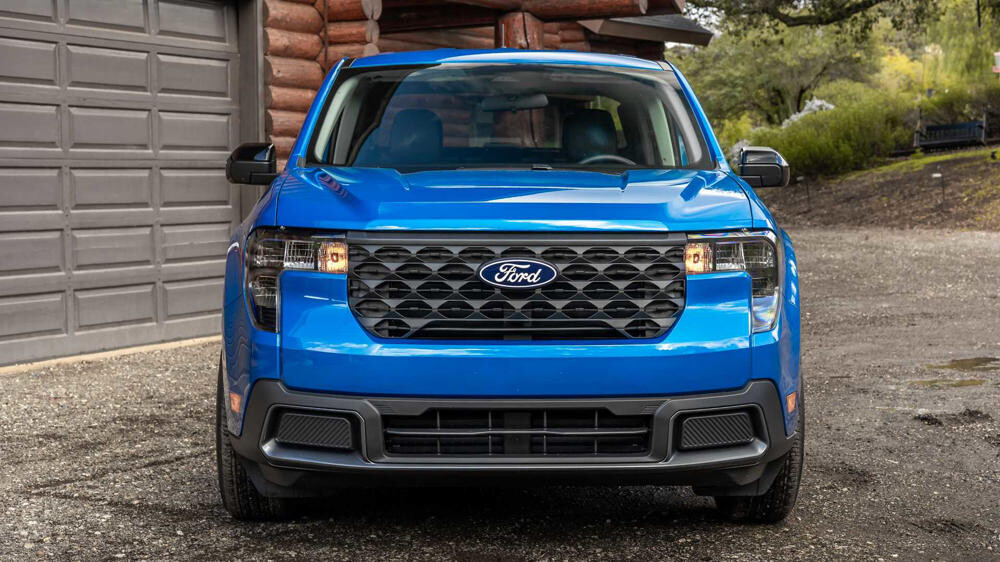
When President Donald Trump visited Tokyo last October for a summit with Japanese Prime Minister Sanae Takaichi, he caused quite a stir by randomly announcing that Japan was buying the Ford F-150. At the time, the initial presidential claims caused massive confusion, as the Blue Oval had officially abandoned the Japanese domestic market a decade prior. Seeing an F-150 parked outside the Akasaka Palace was initially viewed as a calculated diplomatic flex during the state visit. However, it turns out there was serious fire behind that political smoke. Behind the scenes, a massive commercial backdoor was being quietly kicked open. Global Fleet Sales, a massive subsidiary of the RMA Group, has officially appointed Yokohama-based Space Factory as an authorized channel partner to sell specialty Ford vehicles in Japan. Rather than attempting to push basic hatchbacks or relying on legacy passenger models to woo everyday Tokyo commuters, this new partnership strictly targets high-level institutional buyers. The demographic includes national ministries, local governments, humanitarian non-governmental organizations, and the Japan Self-Defense Forces. Heavy-Duty Hardware For Disaster Relief By entirely avoiding the brutal retail market, Ford skips the massive overhead of setting up a traditional dealership network. Instead, Space Factory will serve as the single point of contact for these B2B clients, coordinating everything from vehicle importation and strict Japanese registration to local after-sales support. Personnel at Space Factory have already completed official Ford service training, ensuring these specialized fleets stay operational during extreme emergencies. It is a highly streamlined operation designed to keep critical vehicles on the road. The hardware being imported is no joke. The proposed portfolio includes the Ford Transit, regular Ranger, the massive Super Duty F-Series, and the iconic F-150. Most notably, the lineup features the highly specialized Ford Ranger Super Duty. This mid-size workhorse boasts a staggering 9,900-pound braked towing capacity and a 4,360-pound payload. Because these vehicles are destined for humanitarian aid, they won’t arrive stock. Space Factory will leverage RMA’s engineering facilities in Thailand to build fully outfitted ambulances and extreme off-road rescue rigs. Building A Tough Base While Toyota’s top brass previously offered support to American automakers trying to gain a foothold, Ford realized the smartest play was to avoid competing for retail driveway space entirely. It is essentially impossible to break the domestic loyalty of the Japanese consumer market. However, institutional buyers simply need the most capable, heavy-duty hardware available, and Ford builds some of the best commercial trucks on the planet. By utilizing RMA Group’s global logistics network and Space Factory’s local expertise, Ford gets to sell its highest-margin, most capable trucks directly to the Japanese government without the retail headache. This bypasses the very obstacles that forced their exit a decade ago. It is a massive win-win that finally puts the Blue Oval back on the island in a highly profitable way, even if you won’t be able to buy an F-150 at a local Tokyo dealership anytime soon.

 Liked by Carter Anderson, Amelia Hill
 Liked by Carter Anderson, Amelia Hill