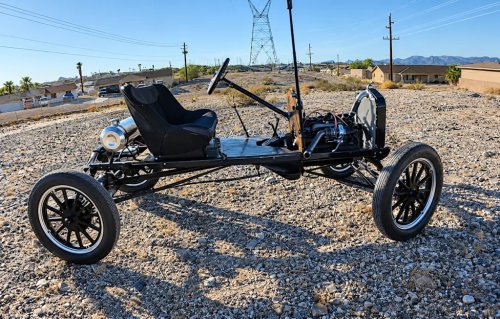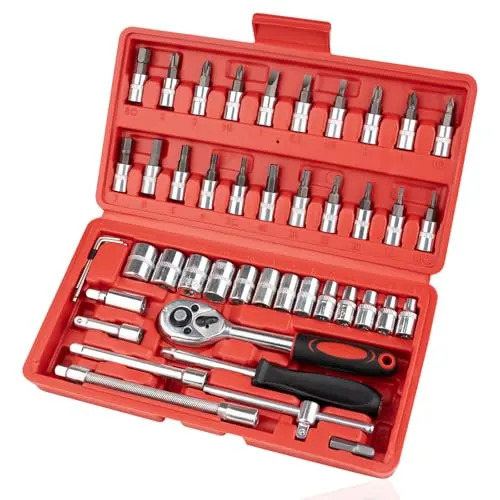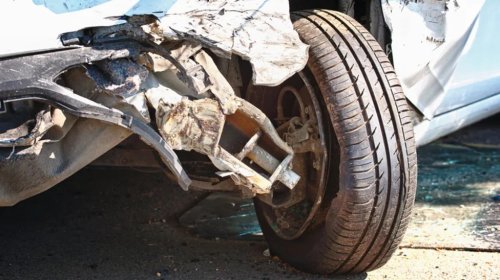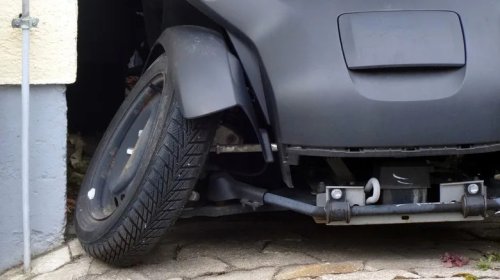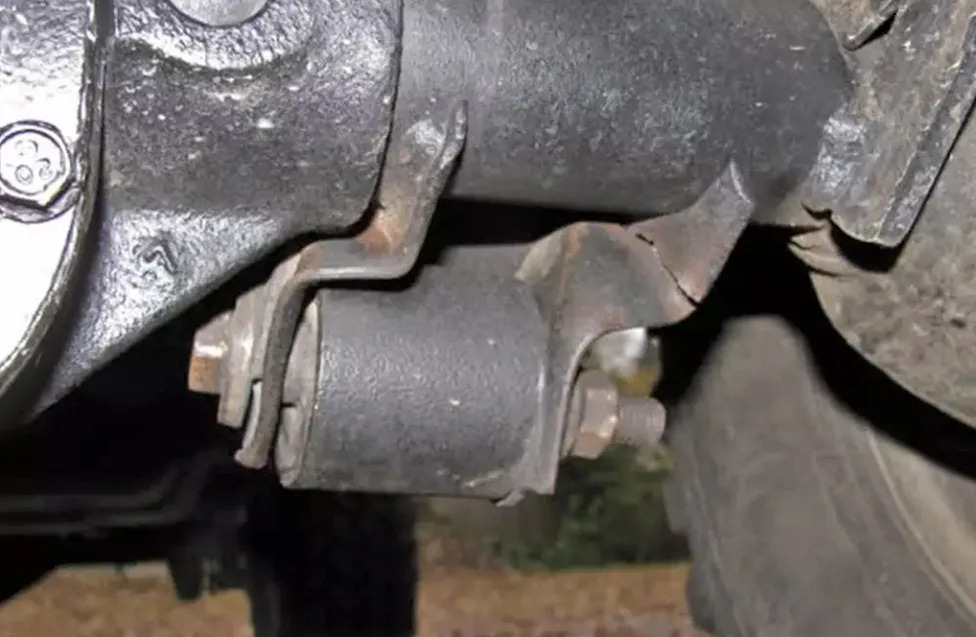
















Axle bracketWhen Tyler Fennheard a loud clunk from under his 1994 Jeep Grand Cherokee ZJ on a Moab trail, the problem was not a rock strike he could shrug off. The driver's-side bracket had torn away completely. That one bracket anchored both the upper control arm and the rear track bar to the axle, so its failure took out the parts that hold the axle in place laterally and control axle wrap. It left him unable to drive the 3.5 hours back home without an on-trail fix. If you wheel a solid-axle Jeep hard enough, you will eventually face a broken suspension link or a sheared bracket. This guide walks through what failed on Fenn's ZJ, how the axle-location hardware works, and how to improvise a repair with the tools and straps a well-stocked trail kit already carries. What you need is a way to relocate and hold the axle, something to reinforce a bent or loose steering link, and the patience to limp home at reduced speed.Understand what the bracket does before you fix itThe ZJ uses the Quadra Coil rear suspension, which pairs a track bar and coil springs with a pair of upper arms, a pair of lower arms, and shocks. Each piece has a job. The lower arms handle fore-and-aft location, the track bar handles lateral location, and the upper arms fight axle wrap under braking and acceleration. That layout matters because the bracket that failed on Fenn's Jeep did double duty. It anchored an upper control arm and the rear track bar at once. Lose it and the axle can shift both laterally and rotationally, which is why a broken bracket makes the vehicle undrivable rather than merely rough. This failure is not rare on the Dana 35 rear axle, whose stock brackets are only 1/8-inch steel.Diagnose the failure and stop movingThe first step after a loud clunk is to get under the vehicle and find the source. On Fenn's ZJ the tear was obvious once he looked at the rear axle. A sheared or loose track bar bolt on its own leaves a Jeep undrivable, and that bolt backs itself out more often than owners expect, so inspect the hardware whenever the rear end starts wandering or clunking. This is not a Grand Cherokee quirk. Jeep issued a recall and stop-sale on the Wrangler JL after finding failing track bar mount brackets, citing the risk of a "vehicle crash without prior warning." Do not try to drive out on a shifting axle. A rear axle that can move laterally will steer the vehicle unpredictably, and continuing will tear up more sheet metal and bracketry. Stop, chock the wheels, and plan a repair that holds the axle in position well enough to crawl off the trail.Strap the axle back into positionThis is where ratchet straps earn their place in the kit. A trail bag should carry two 1-inch and one 2-inch ratchet strap precisely because they hold bumpers, doors, and suspension arms in place when brackets give up. With the bracket gone, the straps become your temporary control arm and track bar mount. You cinch the axle back to its correct position relative to the frame and tension the straps to keep it there. Ratchet straps are the improvised answer, but the same failure can also be addressed with the right spare hardware if you carry it. A spare shock, or just the hardware needed to strap a dead one clear, is a tier-two spare for the same reason: you often cannot replace a suspension component on the trail, so you secure it and move on. For bolted-on fixes, Grade 8 bolts in 3/8, 7/16, and 1/2 inch with nuts and washers and a fastener assortment give you something to reattach with when a bracket or mount only partly fails. To do this you need a way to lift and support the corner. A bottle jack rated for the vehicle's weight, set on a scrap board, handles most trail lifts, since the flimsy scissor jack from the factory sinks and folds on soft ground. Keep the vehicle stable while you work the straps, then let it back down and check that the axle sits where it should before you test-move.Reinforce steering if it took damage tooSuspension failures often come paired with steering damage, because both take the same hits when a wheel drops into rocks. Factory tie rod ends and drag link ends bend and pull apart when steering hits rocks, and a bent tie rod is common enough that off-roaders call it a "smiley face tie rod." You can straighten one on the trail by levering it over rocks and putting your weight into it to bend the rod back. The catch is that a straightened tie rod is weakened by the bending and benefits from being sleeved for reinforcement. The trail trick is a Hi-Lift jack handle, which is about the right length and width to slide over a stock Jeep tie rod. One Jeep with a Hi-Lift handle sleeved over its tie rod was driven off the trail and home after that repair. Keep two sizes of vise grips on hand as well, since nothing beats them when a fastener is stripped or sheared.Limp out and confirm the repairA correct result is an axle that stays located under load and a vehicle that tracks straight enough to drive slowly and safely off the trail. Test it at crawling speed first. If the rear end no longer wanders and the straps hold tension, you have a repair that will get you to pavement. The goal is never a permanent fix on the trail; it is enough integrity to reach a place where you can weld or replace the bracket properly. For any of this to work you must actually carry the gear. A 3/8 drive socket set from 8mm to 19mm and 5/16 to 3/4 inch, combination wrenches in the same range, a 2 to 3 pound hammer and a prybar for brackets, and baling or mechanic's wire for securing parts near heat all belong in the bag. So do the ratchet straps that make an axle repair possible in the first place.Common mistakes to avoidThe biggest error is driving on after the first clunk instead of stopping to inspect. A shifting axle worsens fast and can tear off more than one bracket. The second is assuming zip ties will hold structural loads. Heavy UV-rated zip ties in three sizes have their place, but suspension and steering loads call for straps, wire, or bolts. The third is skipping the reinforcement step on a straightened tie rod; a bent-back rod that is not sleeved can fail again under steering load. Finally, respect what the geometry demands. The ZJ's rear links locate the axle in two directions at once, and a field fix has to restore both. Strap the axle to its correct position, hold it under tension, sleeve any bent steering, and drive out slow.