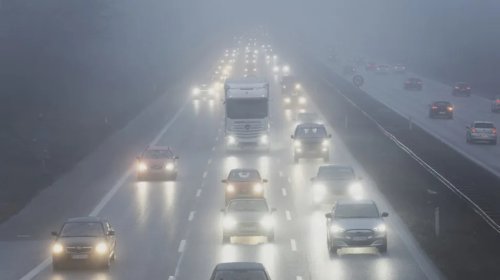
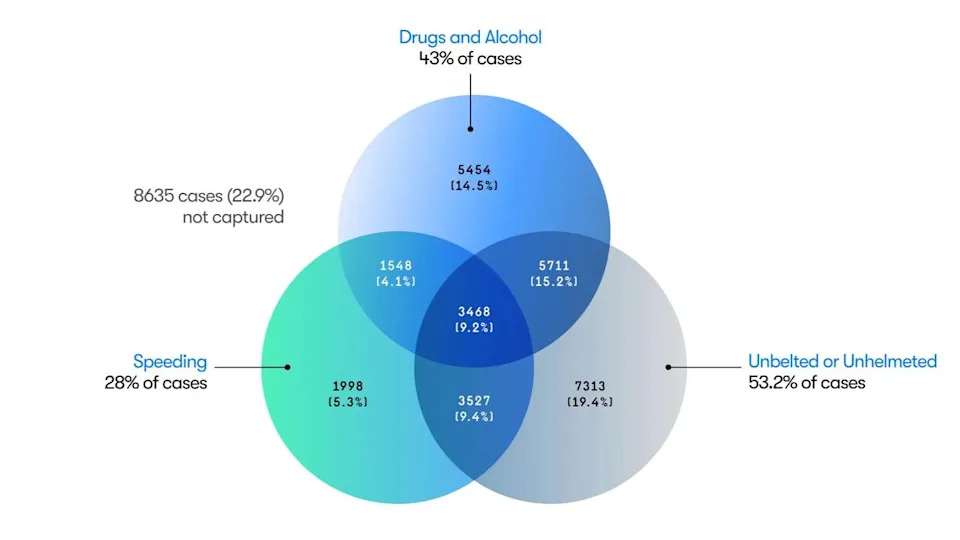



















even without drunks night time is 4x more deadly for sober driversRemoving every drunk driver from public roads would mark a monumental victory for public safety. Yet fresh peer-reviewed research published by autonomous tech giant Waymo reveals a sobering reality: even if human drivers were 100 percent sober, nighttime fatal crash risk remains nearly four times higher than during the day.The findings, published across two new studies in the Journal of Safety Research and the International Research Council on the Biomechanics of Injury (IRCOBI), highlight why eliminating alcohol impairment alone will not fix the ongoing traffic fatality crisis."Fatal crashes typically result from compounding factors-like low visibility, high speeds, and poor road design-that even sober drivers cannot always overcome," said Mauricio Pena, Waymo's Chief Safety Officer.even without drunks night time is 4x more deadly for sober driversEstablishing the "Zero BAC" BaselineNational traffic databases do not track vehicle miles traveled based on a driver's blood alcohol concentration (BAC). To determine how human drivers perform when completely sober, Waymo researchers built an "exposure reconstruction" model using data from the Fatality Analysis Reporting System (FARS) cross-referenced with real-world telematics across the 50 most populous U.S. urban areas.The data shows that removing alcohol-involved drivers reduces average urban fatal crash involvement by 23 percent-dropping from 1.42 to 1.10 fatal incidents per 100 million miles.However, the safety impact of alcohol varies wildly depending on local geography:Houston, TX: Removing impaired drivers reduces the fatal crash rate by a staggering 31 percent.Minneapolis, MN: Removing impaired drivers reduces the fatal crash rate by just 13 percent.In some major metropolitan areas, more than 2 percent of nighttime drivers-or 1 out of every 50 vehicles on the road after dark-are operating over the legal blood alcohol limit.Why Nighttime Remains Deadly for Sober DriversEven when isolating drivers with zero blood alcohol content, the research found that nighttime fatal crash risk remains 3.1 to 3.9 times higher than daytime driving risk.While part of that spike stems from sober motorists reacting to other impaired drivers on the road, researchers point to systemic environmental hazards that sobriety alone cannot fix. Poor street lighting, reduced driver reaction times due to fatigue, roads engineered for high speed, and unexpected vehicle size mismatches create a volatile ecosystem after dark.Waymo's second study analyzed 37,654 real-world fatal cases from the 2023 FARS database using the U.S. Department of Transportation's "Safe System Approach." The data revealed that only 8.2 percent of fatal crashes were caused strictly by human behavior alone. Instead, the vast majority represented a fatal convergence of human error, poor visibility, and unforgiving infrastructure.Waymo estimates that fully autonomous systems-which operate with constant 360-degree sensor vision, strict speed limit adherence, zero fatigue, and zero impairment-could address up to 83 percent of the systemic failures contributing to passenger vehicle fatalities nationwide.This article was written using AI and was then edited and optimized by our editorial team.Become an AutoGuide insider. Get the latest from the automotive world first by subscribing to our newsletter.