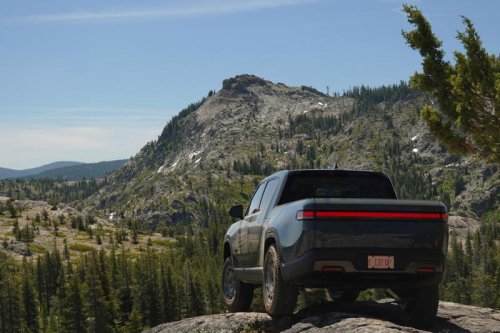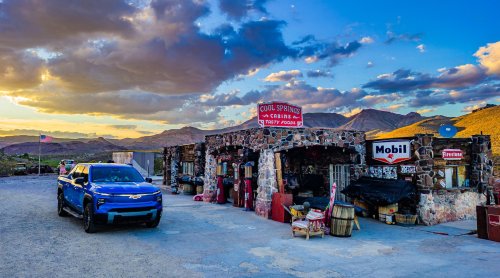
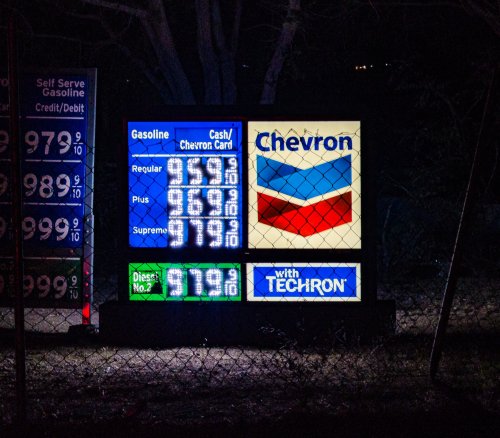
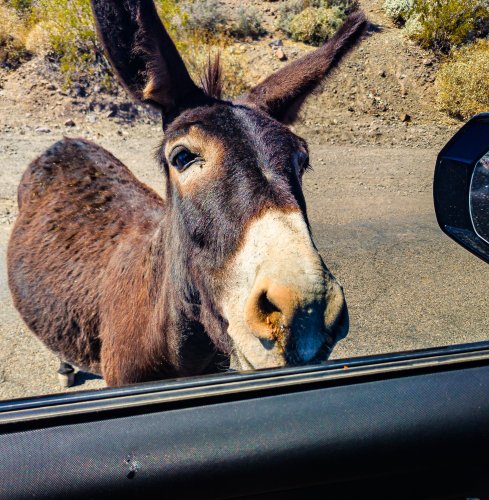
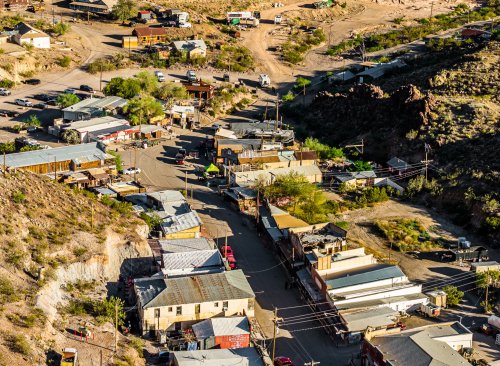
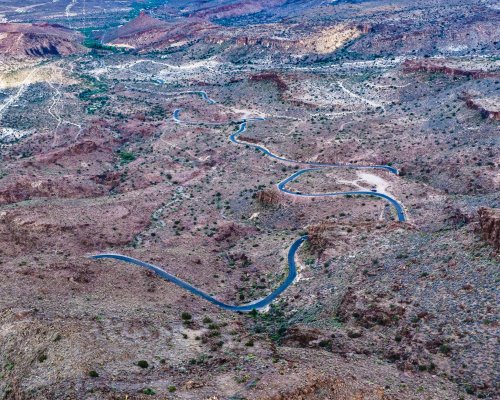
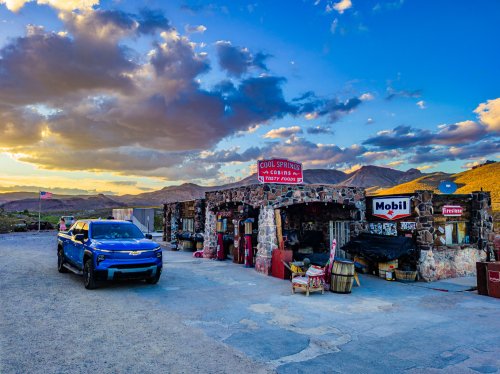
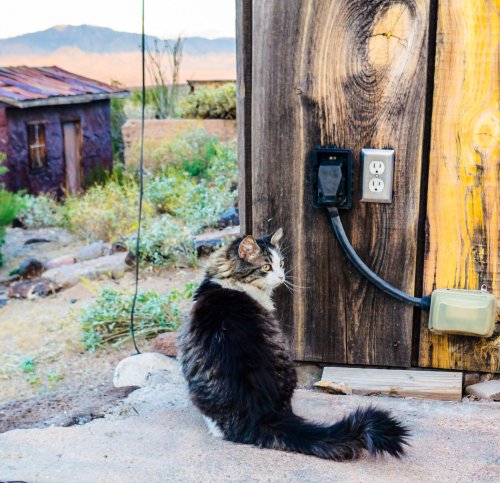










In my last article, I shared the story of our journey just to get started on Route 66 in California. As I mentioned in that article, we ran into plenty of problems, but none of them were caused by pulling a travel trailer with an electric truck. Now, let’s get into what came next! Dodging Highway Robbery Sadly, when we left the Mojave Desert behind and headed toward Arizona, we couldn’t stay on old Route 66 for very long. Some of the bridges along the old route had been washed away multiple times by major rain events, some from just the last year. California’s DOT wants to repair them all, but it’s a process that’s going to take time. So, we got on I-40. I know this is one of those “highway robbery” stations that prey upon people who forgot to fill up in Barstow or across from Needles, but I got cheap electrons here from Electrify America. At our next charging stop, there was plenty of room for the trailer, even if Electrify America didn’t have EV towing in mind when building the station. On the way out, I figured out just how good it can be to be charging up our truck instead of pumping gas or diesel into it. Meeting the Jackasses of Oatman Crossing the Colorado River into Arizona, the next major stop on the Mother Road is Oatman. It’s a famous old gold mining town tucked right into the Black Mountains. If you’ve ever seen pictures of Route 66 with donkeys just wandering down the middle of the street, this is the place. The burros are descendants of the pack animals the miners set loose decades ago, and they’ll walk right up to your window looking for a snack. It’s a cool, quirky slice of the old West. Donkeys will come to your car begging for food. It’s best (and legal) to not feed them on the roadways, as they should be more afraid of cars for their own safety. The town has one restaurant and hotel, and the rest of the businesses sell things like T-shirts, donkey feed, and other tourist items. If you go, plan to spend at least 2–3 hours seeing most of what’s there to see. The pulse of the town is synchronized to the donkeys. At about 5 o’clock, they head out of town to find a sleeping spot, mate, etc. And the tourists who went there to see the donkeys pack up and leave, too. After 5:00–6:00 PM, the whole place becomes a ghost town again. But, getting out of town heading east brings up one of the biggest challenges on the entire route. Tackling the Sidewinder Right after Oatman, Route 66 climbs up Sitgreaves Pass. This stretch is known as the Oatman Highway, or, more accurately, the Arizona Sidewinder. We’re talking about eight miles of narrow, steep, two-lane road with zero shoulders and 191 hairpin curves. One of the less severe stretches of the Arizona Sidewinder segment of old Route 66. The Bureau of Land Management strongly discourages taking vehicles over 40 feet long (including truck and trailer) up there. And, as you can see in the picture, they’re right! This was a road that I would hesitate to take an 8-foot trailer on. There are simply too many places where you’d have to drive into the opposing lane or even off the side to get a trailer through. I made the smart call and unhooked the trailer for this section, leaving it behind at an RV park west of the town. Taking the truck up bare let me actually enjoy the incredible views instead of sweating over whether the trailer tires were going to hang off and drag my whole rig over the edge! Cool Springs Once you conquer the pass and start dropping down the eastern slope, the road levels and straightens out, and you hit Cool Springs. It’s an old 1920s stone service station that sat in ruins for decades before being totally rebuilt in the early 2000s. It was the perfect place to pull the truck over, grab a cold drink, and look back at the mountains we just crawled over. However, we arrived after closing time, so all we could do was walk around outside and check the buildings out. There are no gas pumps or EV chargers there, but it’s a classic piece of Americana that makes you appreciate the history of the highway. One cool and unexpected find was Misty, Cool Springs’ mascot. A sign on the door notifies visitors that Misty isn’t a feral cat and indeed has her home at Cool Springs. Not only was she in great health, but she was one of the friendliest cats we’ve ever encountered around a tourist stop. If you ever stop in there, give Misty a hug and tell her Jenn says hello! Electricity Is Everywhere, Gas & Diesel Are Not One thing I was really happy with on this stretch of road was the ability to charge up at RV parks. I have a portable EVSE that I keep in the eTrunk (Chevy doesn’t like to call it a frunk), and it has come in handy majorly along this trip. At just about every RV park that had electricity, I was able to add 30–40% of a battery overnight, including the one near Oatman, where two nights got me to 100%. Early on in the resurgence of EVs in the 2010s, RV parks were the lifeblood of EV road trips, before DC fast charging stations became common. Like most other longtime EV drivers, I was grateful to not need to plug a Nissan LEAF or Chevy Bolt in for hours just to get to the next town. Towing a travel trailer, the benefits of RV park charging are coming back. If I’m going to already be someplace sleeping, having EV charging just like I do at home is a great benefit. At every RV park, I offered to pay for my electricity, but nobody took me up on it. So, I got to do a lot of free driving and have a more convenient time when staying somewhere multiple nights. The only “gotcha” to this is that you have to be very careful to not stress out RV charging pedestals. They can only handle 40 amps of continuous power draw, and less is better. If you start by subtracting heat or air conditioning while you sleep and leaving some room to run a microwave and fridge, you’re best to keep the EV power draw at 16 or 24 amps. Having to do the math and charge slower than I would at home is worth it, though. No RV park I’ve ever heard of or seen offers free gas or diesel. Once again, this proves the value that an EV adds. Instead of being reliant on expensive and potentially spotty fuel availability (especially in rural areas), you can get electricity basically anywhere there’s a plug. All images by Jennifer Sensiba.