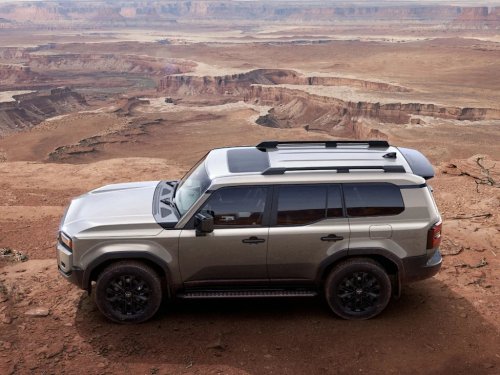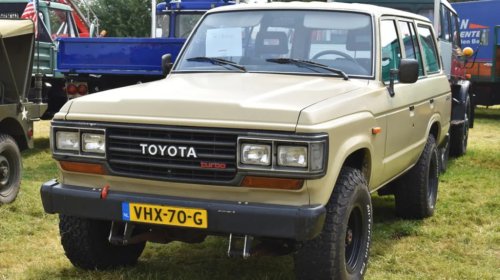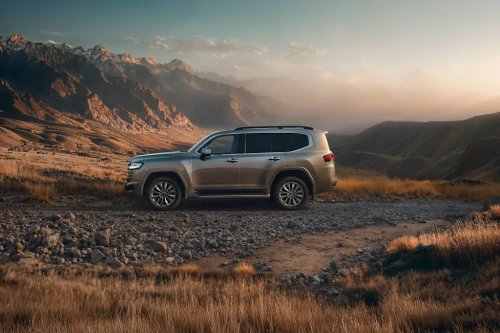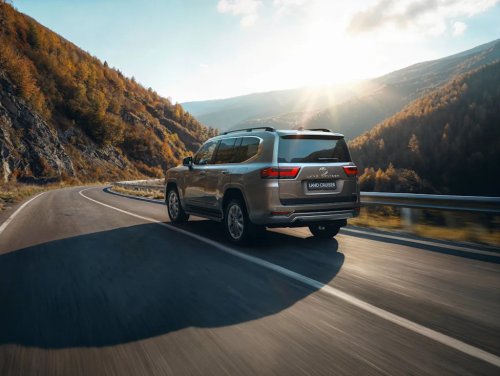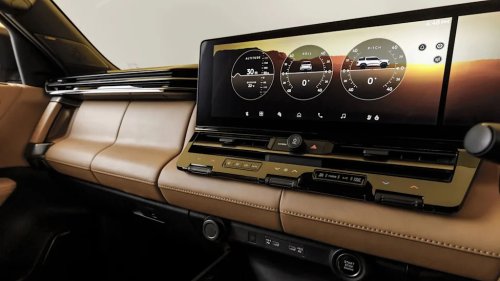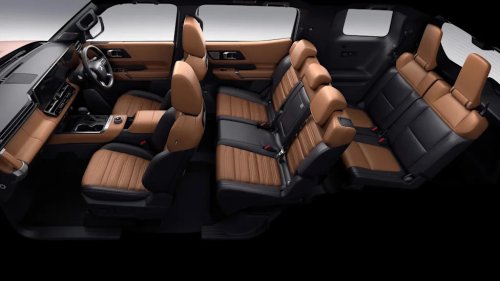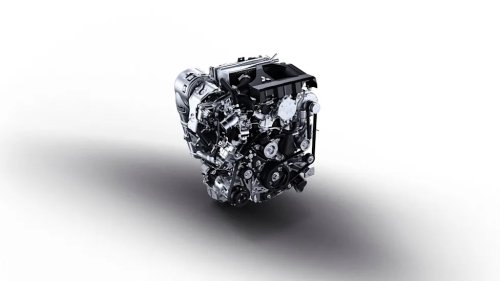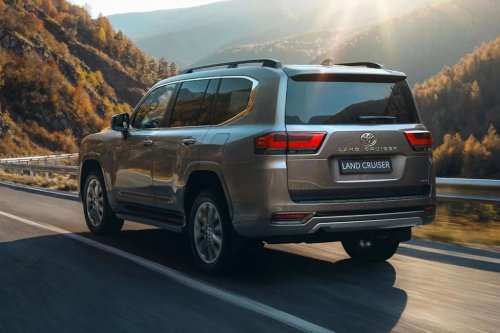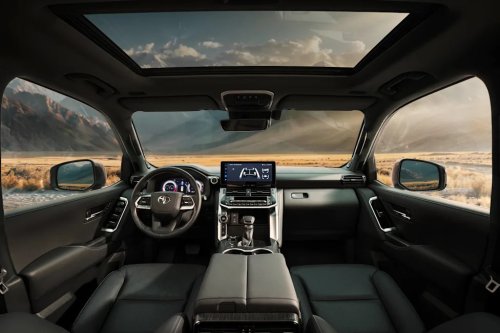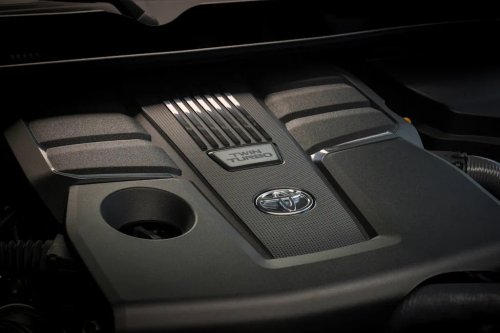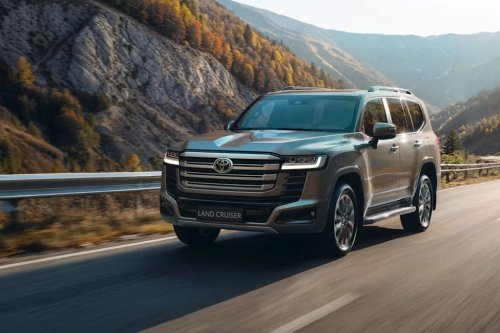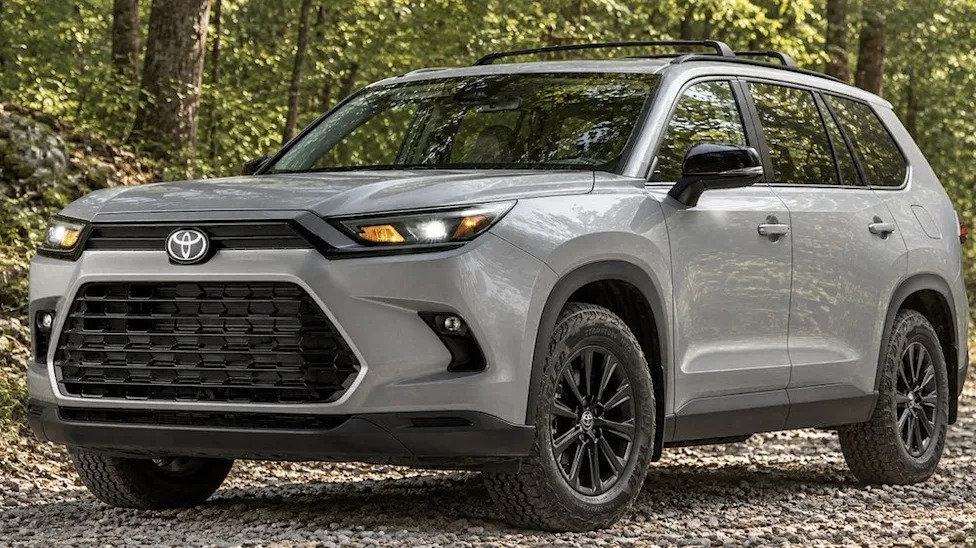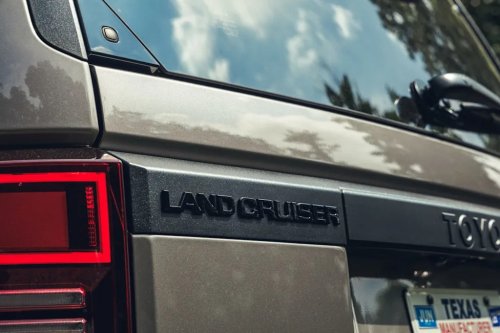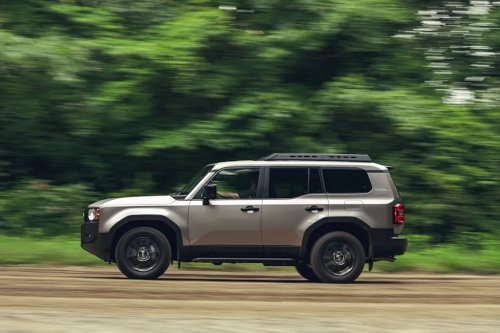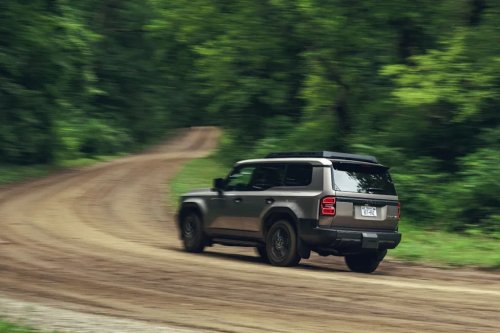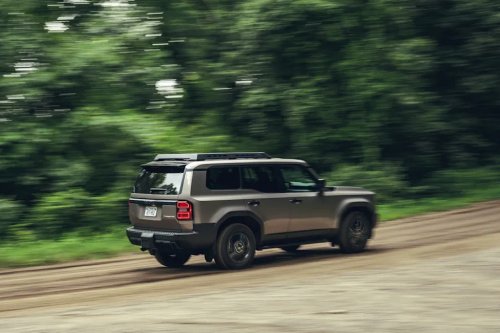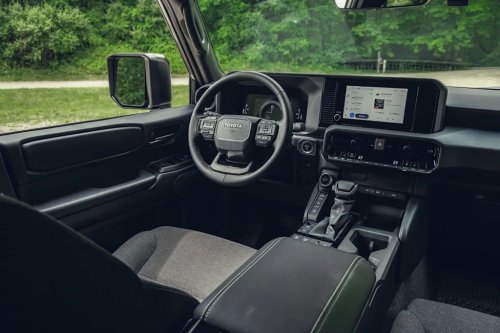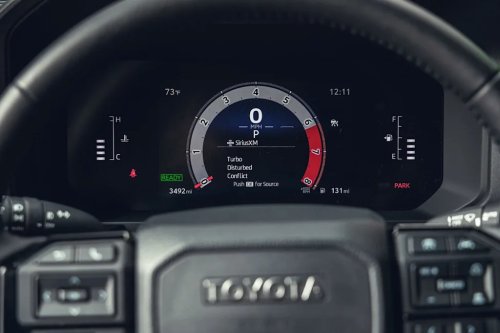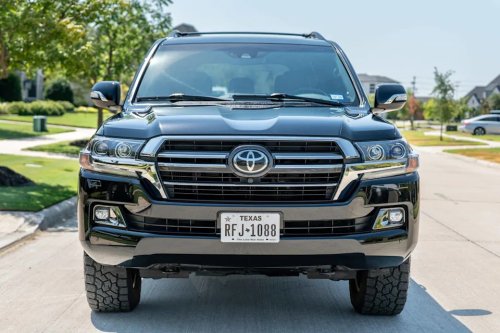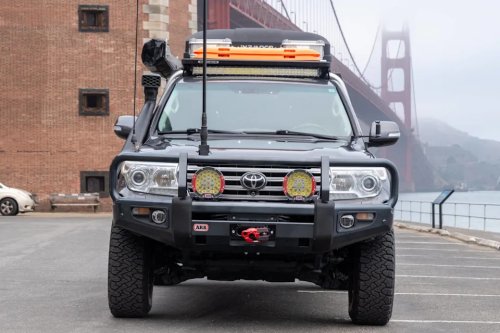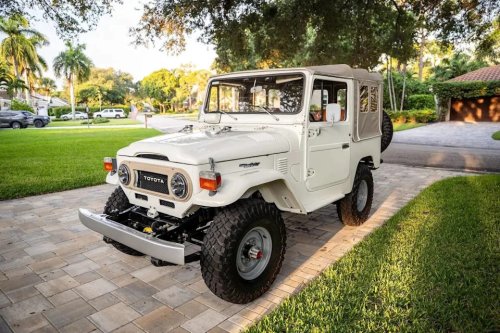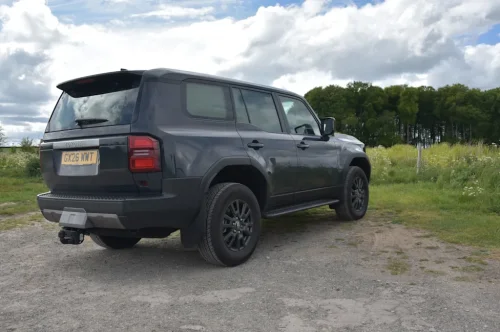
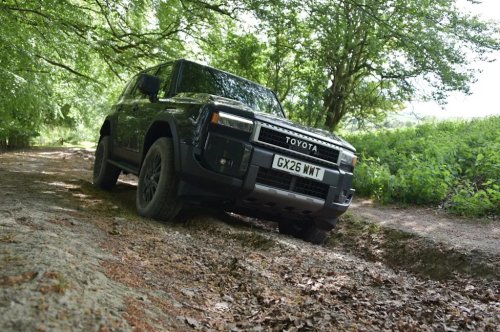
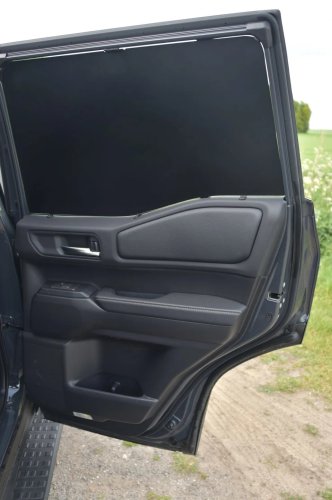



















Driving Europe's Toyota Land Cruiser CommercialMike DuffTravel to the emptier and more rugged parts of the planet, and you quickly realize that the Toyota Land Cruiser remains supreme in the wilderness. Strength and reliability have given it legendary status in places where breaking down brings a substantial risk of dying, from the Australian Outback to the Sahara Desert. The point was emphasized when Road & Track recently traveled to Morocco to drive the Polestar 5 and saw dozens of trail-ready Land Cruisers of different generations.But this is an oddball offshoot from the dynasty: a Land Cruiser van. This is the Land Cruiser Commercial, a cargo conversion of the "J250" version, which is sold in some parts of Europe with its second- and third-row seats replaced by a sizable load area. Stranger yet, it doesn't leave the factory in Japan like this; rather, it arrives in Britain as a regular passenger-carrying Land Cruiser which is adapted by the company's factory in Derbyshire, the same place Toyota makes U.S.-bound GR Corollas. The Commercial is sold in the U.K., the Republic of Ireland, and other European countries that give financial incentives for choosing van conversions.Mike DuffBecause, while the Land Cruiser Commercial can haul bigger and more awkwardly shaped loads than the standard SUV, the changes are primarily to save tax rather than increase utility. In Britain, drivers of vans provided for work purposes pay significantly less tax for "private" use than they do with a conventional car, and vans are also subject to much lower purchase taxes. In the case of the Land Cruiser Commercial, that means a £345 Vehicle Excise Duty charge ($460 at current prices), while the regular Land Cruiser buyer has to pay £5490 ($7340) in VED. Which is why van conversions of SUVs are a growing niche: Land Rover and Ineos also offer similar conversions of the Defender and the Grenadier.Rear doors keep glass but gain protector screens insideMike DuffUp close, it's obvious this Land Cruiser was never meant to be a cargo truck. The Commercial still has glass in its rear doors, but the windows are fixed and no longer operate, with hard covers positioned behind them to give protection from shifting cargo. Inside the side doors, the window motors are still in place, but blanking plates have been positioned over the switches to inhibit their operation. Similarly, the rear window controls on the driver's door are covered by a piece of plastic. In back, grab handles and seatbelts have been removed, but—incongruously—the Commercial keeps what were previously the third-row cupholders in the rear side moldings.AdvertisementAdvertisementMindful that some less law-abiding buyers might choose the Commercial and then try to convert it back into a passenger car, the mounting points for the rear seats have been physically cut away, with this now covered by the new flat load floor. There are also several lashing points to allow cargo to be secured safely, as well as a full-height mesh bulkhead to separate it from the front seats.Being based on the well-equipped European-spec Land Cruiser, the Commercial brings some anomalies. The van keeps a power-operated tailgate, with this also featuring a separately opening upper glass section. The disappearance of the regular trunk means this feature isn't much use given the height; anything now drops to the new floor. The Commercial also keeps power-operated front seats with both heating and cooling, plus the regular LC's high-spec audio system and radar cruise control. It's a very luxurious van.Driving a European-market Cruiser also gives the chance to experience its forbidden-fruit powertrain: the turbocharged inline-four diesel engine that is still offered outside the U.S. and which seems to be the most popular option for those venturing into the true wilderness. This displaces 2.8 liters and makes peaks of 202 hp and 369 lb-ft of torque, with a small amount of this coming from an onboard 48-volt hybrid system. Those figures don't look too impressive next to the Commercial's staged 5200-pound unladen mass. But, with maximum torque available from just 1600 rpm and the eight-speed automatic gearbox shifting intelligently, the van rarely felt short of urge.The gruff diesel definitely isn't a refined companion, especially when compared with the six-cylinder diesels offered in European versions of both the Grenadier and the Defender. The Land Cruiser had vibration at idle and lots of noise under full throttle—also an aversion to revs, even by diesel standards. Left in drive, the transmission never went past 3800 rpm before upshifting, even with the accelerator pinned. The only way to get the digital tach to its marked 4400-rpm redline was using the gearbox's manual mode.AdvertisementAdvertisementBut once the van is up to cruising speeds, refinement was acceptable—and certainly better than a regular panel van. Toyota's claimed 10.2-second sprint to 62 mph is a benchmark few drivers will ever feel the need to verify, not least as the Commercial squats on its haunches under hard acceleration and adopts a definite nose-up attitude. It's not intended for high speeds, with some wandering within highway lanes on its Dunlop AT23 Grandtrek tires, and the wipers also starting to struggle beyond 75 mph.Mike DuffLike many trucks, the Land Cruiser Commercial rides better with a load in the bed. Unladen, it felt underdamped over broken surfaces, becoming a little jagged over rougher terrain. But once there was a 220-pound historic fire pump strapped into the cargo space—borrowed for a future R&T magazine feature—the Toyota tackled bumps and undulations with much better composure. Conditions were too dry during my time with the Commercial to find any off-road terrain to challenge it seriously, but it was happy to scramble its way through deep sunbaked ruts on dried-out mud tracks. The Commercial keeps exactly the same off-road gear as the regular Land Cruiser, with a two-speed transfer case, a manually locking center differential, and a traction-management system designed to keep it rolling when grip runs short.The Land Cruiser Commercial's obvious weakness is that it isn't an especially good van. The load space is 66.4 inches long, 50.6 inches wide, and 42.9 inches tall, but the height of the floor above the ground makes it hard to get heavy or awkwardly shaped cargo in or out, despite the ability to improve access by opening the rear side doors. The length of the top-hinged tailgate also limits practicality, requiring more space to open near any obstruction than a pair of shorter side-hinged doors would.Useful if you need to haul a historic fire pumpMike DuffOf course, nobody is likely to be choosing the Land Cruiser Commercial as a direct alternative to a conventional panel van like a Ford Transit. And it is rated to haul considerably more than a regular Land Cruiser with its seats folded. Toyota claims a cargo weighing up to 1780 pounds can be carried on the rear bed, and it can also tow up to 7700 pounds—the maximum permissible for a vehicle this size under European rules.AdvertisementAdvertisementI loved the Land Cruiser Commercial as an oddball version of what remains one of my favorite vehicles. But I wasn't blind to its faults, and I suspect ownership would come with plenty of frustration over the lack of seats. But it is usefully cheaper than the regular Land Cruiser in Britain, with the Commercial's £50,640 ($67,800) pre-tax price undercutting the least expensive passenger-carrying Land Cruiser Invincible by nearly £9000 ($12,000). That's a useful savings for a seriously useful Land Cruiser, albeit one that can't carry more than two people at a time.Mike DuffYou Might Also LikeIf You Can Only Own One Car, Make It One of TheseThese Are the Most Popular Cars by State