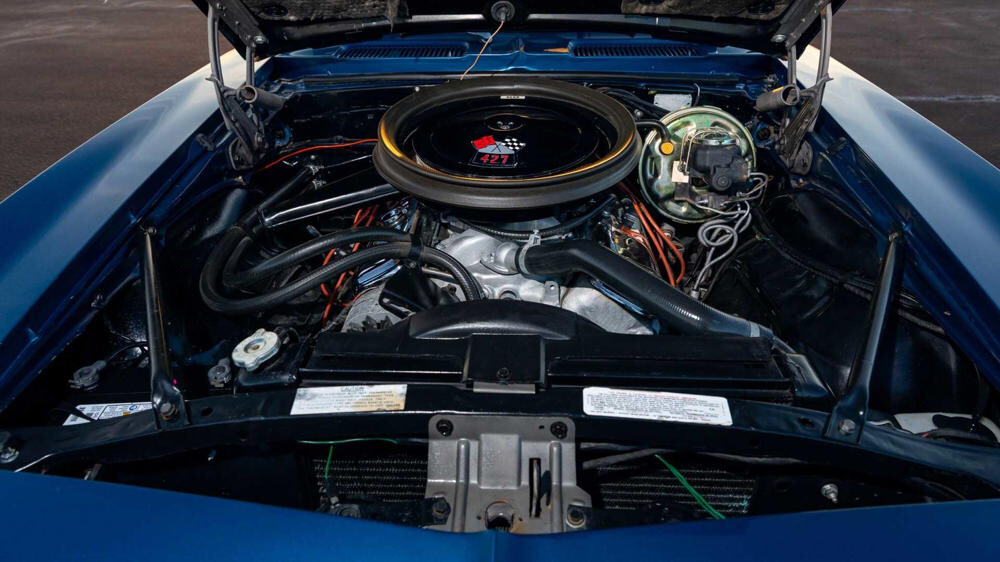
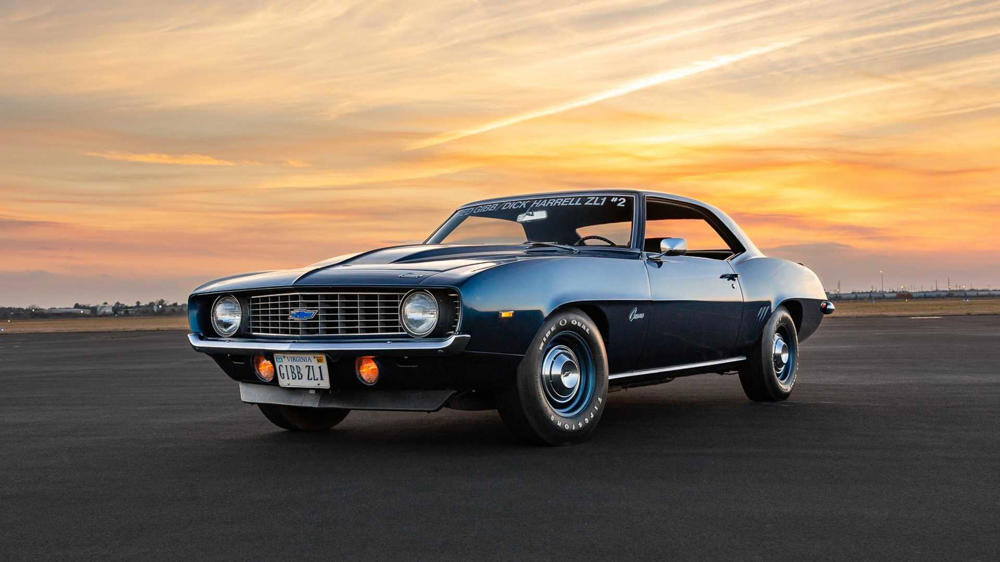
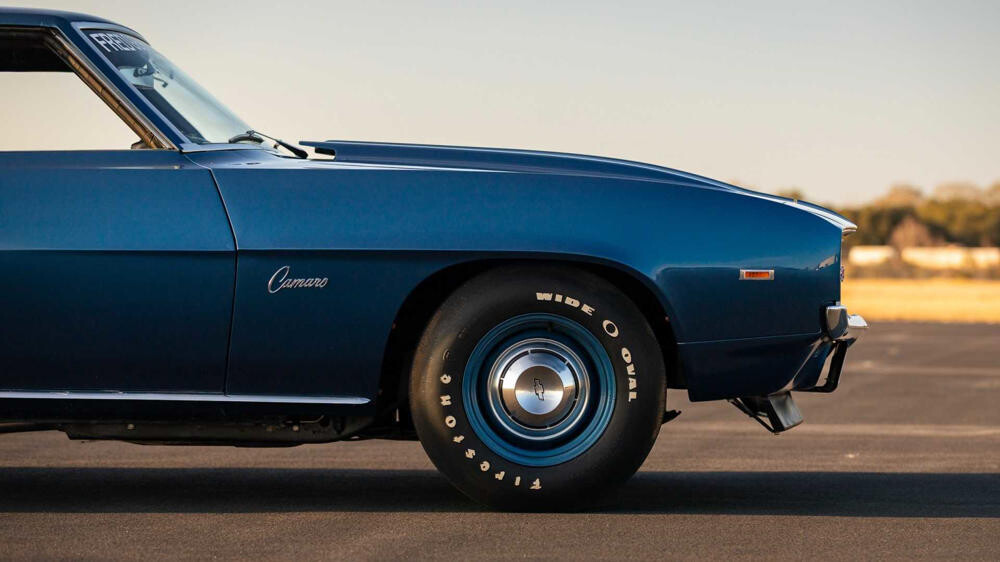
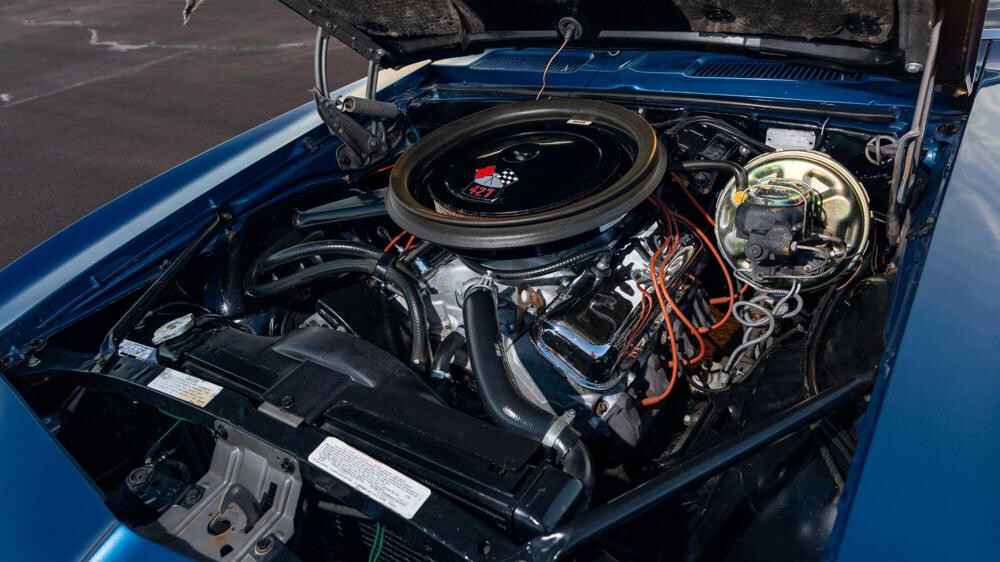
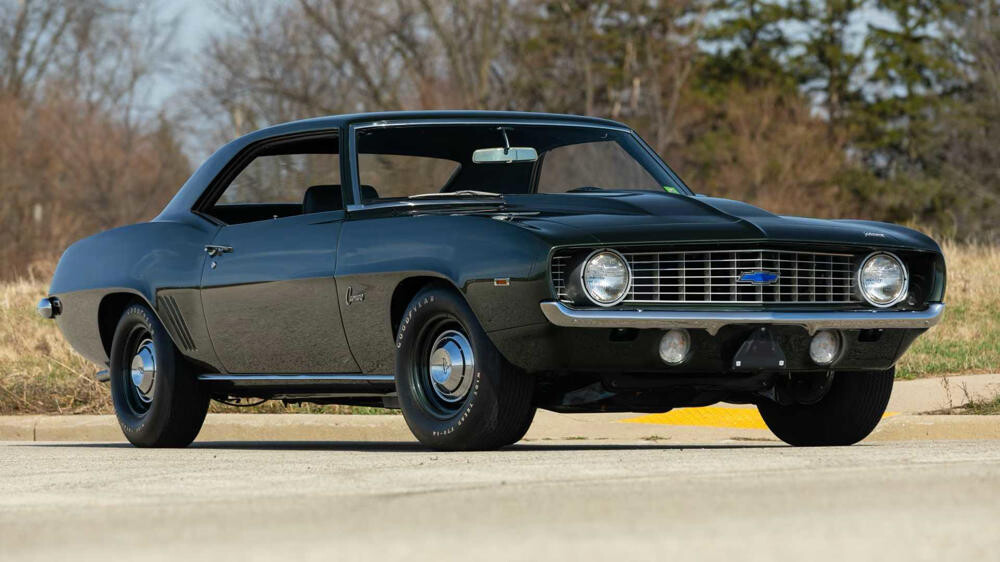
Coming up on 60 years ago, the Central Office Production Order, or COPO, as it is better known, was supposed to be a little-known dealer's trick to upfit ordinary cars with slightly out-of-the-ordinary hardware. Think fitting fleet trucks with oddball paint colors, or taxi and police vehicles with heavy-duty suspension. Well, it ended up birthing some of Chevrolet’s most beloved muscle cars of the period. At least, for a brief period, it did, before corporate leadership clamped down on it, not to be seen again for half a century. The End of COPO, a Tragic Story After the 1969 model year,the same year that dealers like Don Yenko and Fred Gibb used the COPO system to slip 427-cubic-inch L72 iron-block and all-aluminum ZL1 big-blocks into factory Camaros and Chevelles, General Motors took notice of the kind of misuse the system was being put to. The rules were clear, no engines over 400 cubic inches in anything below a full-sized platform, and GM was about to enforce that rule harder than ever. Over subsequent years, corporate brass tightened oversight on special-order codes, emissions regulations began squeezing high-compression engines, and the golden era of factory loophole muscle vanished almost overnight. It left those 1969 specials with a small spillover into 1970 to appreciate into million-dollar collector unicorns while the first great muscle car renaissance sputtered into nothingness. The Chevelle wouldn’t last much past those years, ending production in 1977. Meanwhile, the Camaro would soldier on, losing more and more of what made it special until Chevy pulled the plug on the F-body altogether after 2002. For most of the rest of the 2000s, Chevy simply didn’t have an answer to the pony car equation championed by the resurgent Mustang, fresh off a 2005 redesign that made it a household name again. That was, until the spring of 2009, when a vessel for a potential future COPO product hit the scene. The Perfect Vessel to Revive COPO Arriving for the 2010 model year with retro-inspired zeal and a Zeta platform designed by Holden in Australia, the fifth-generation Camaro immediately brought the fight back to Ford and Dodge on the street after a half-decade hiatus. Quietly, it gave Chevrolet Performance the exact clean-slate chassis it needed to go drag racing again. Production Camaros packed plenty of punch on their own, cranking out 426 horsepower in the LS3-powered SS and 580 in the LSA-engined ZL1. Still, turning a production, independent-rear-suspension street car into a legit NHRA Stock and Super Stock quarter-mile weapon required the modern equivalent of a COPO order. It meant taking that lovable retro-styled body and stripping away every ounce of street-car compromise it needed to stay road-legal. Engineers ditched the independent rear suspension that was a hallmark of the street car and replaced it with a drag-optimized solid rear axle and four-link rear suspension; power steering was swapped for a manual rack. Frankly, this was a car that was not going to be taking many corners anyway. From there, an NHRA-certified chromoly roll cage was added, and every ounce of weight that wasn’t necessary to keep the car from falling apart was removed. That included the rear seats, the sound deadening, the air conditioning, and the infotainment system, leaving behind nothing more than a single racing bucket, a harness with HANS device compatibility, a steering wheel, and not much else. The cherry on top was, of course, the engine: a choice of a 327-cubic-inch V8 with a 2.9-liter or a 4.0-liter supercharger rated at 500 and 550 hp respectively, or an LS7-based 427-cubic-inch block rated at 425 hp. The gearbox was a two-speed ATI automatic unit, because, once again, not much gear shifting was going on here. In the end, the result was, well, super quick. Revived COPO Camaro: Drag Racing Perfection Returns For Two Generations Debuting in concept form at SEMA in 2011, the modern COPO Camaro immediately lived up to the 1960s legend stamped on its fender. Chevy capped production at 69 units at first, not-so-subtly alluding to the year the COPO ordering system reached its zenith. Each example was assembled by hand as a non-VIN, track-only race car at a bespoke factory in Oxford, Michigan. Unsurprisingly, demand from professional racing teams was so intense, a lottery system was instituted to decide who was given the opportunity to own the first COPO Camaro in decades. Depending on the engine chosen, a 2012 COPO Camaro could sprint to 60 in around 2.4 seconds, and on to a quarter-mile blitz in the low nines. When the Camaro transitioned to the lighter Alpha architecture for the sixth generation in 2016, the COPO program evolved right alongside it, trading the early 327s for supercharged 350-cubic-inch small-blocks alongside the 427s. By 2022, a 632-cubic-inch block, that is 10.35 liters, was added, pushing 1,004 hp to the rear tires and 876 lb-ft of torque on pump gas. In its most overkill configuration, a COPO Camaro ZZ632 could run the quarter-mile in the low eights at well over 160 mph, all to the tune of a $135,900 price tag. It was as fast as a factory Camaro had ever run in a straight line. As it turned out, it would probably be the fastest a factory Camaro would ever go, because right afterward, the whole COPO program ended. The End of COPO, Again When General Motors announced that sixth-generation Camaro production would wind down following the 2024 model year, it sealed the fate of the modern COPO program as well. After twelve years and more than 700 hand-built factory drag racers spanning two generations, Chevrolet proved definitively that the COPO program was tied to the Camaro platform in a way it simply was not in the '60s. As of late 2026, the COPO program is still dormant, and is liable to stay that way unless GM decides the Camaro deserves another. Until then, the modern COPO Camaro stands as the ultimate swan song for factory-backed GM drag cars, and what wonderful swan songs they were. Source: Chevrolet

 Liked by Jackson Leblanc, Owen Pelletier
 Liked by Jackson Leblanc, Owen Pelletier