The central question in Chery Auto Malaysia’s expanded rear-axle campaign is how its 2026 findings relate to the welding issue identified in 2024. At the time, Chery attributed the problem to an automated welding tip being replaced without proper recalibration. Its October 2026 campaign covers 8,878 pre-facelift Omoda 5 vehicles, but the company has not publicly explained the difference in campaign scope or how the technical findings relate.
Scope of the VTA Suspension
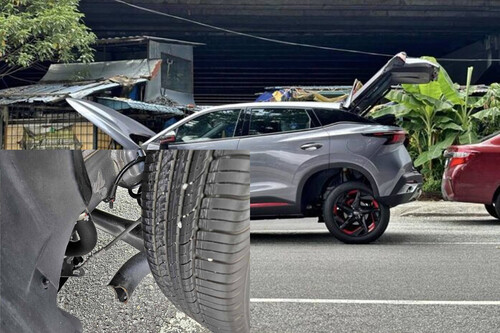
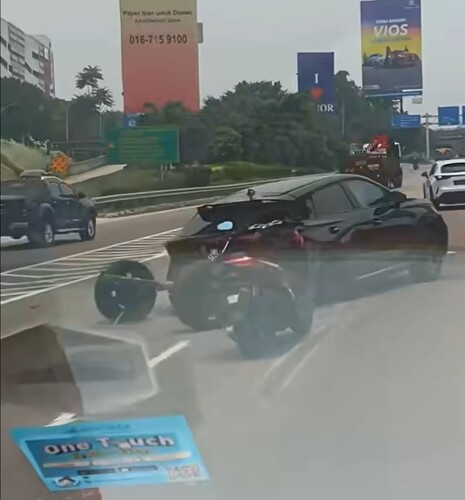
Malaysia’s Road Transport Department (JPJ) temporarily suspended Vehicle Type Approval (VTA) for the affected pre-facelift petrol Omoda 5, preventing new registrations under that approval pending an investigation and safety assessment. The measure is not a blanket ban on Chery vehicles. We reported the October 6 axle detachment involving vehicle JWL 2862 in Johor Bahru earlier.
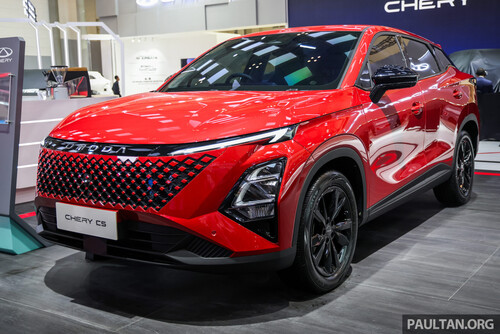
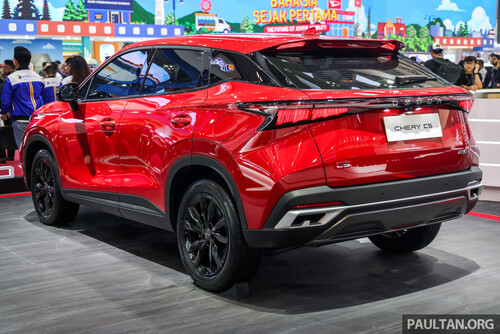
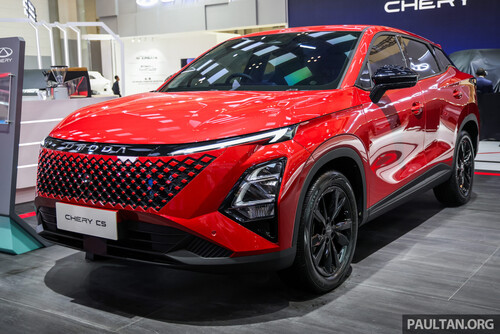
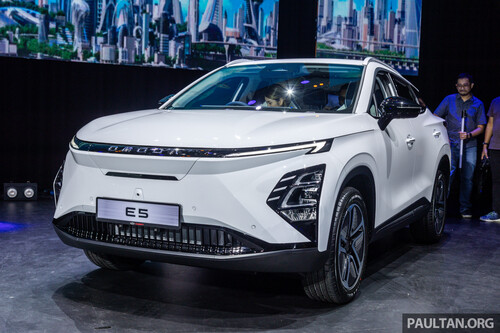
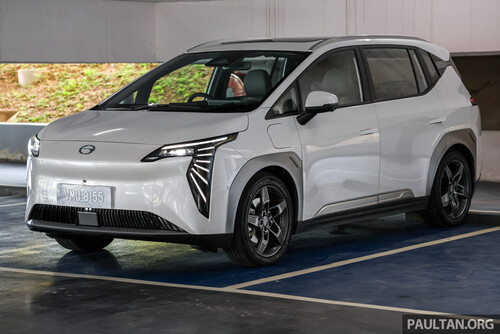
Chery Malaysia phased out the original Omoda 5 in September 2025. It introduced the facelifted Chery O5, which uses independent multi-link rear suspension and a six-speed dual-clutch transmission (DCT), replacing the earlier model’s torsion beam and continuously variable transmission (CVT). The electric Omoda E5 also uses multi-link rear suspension. Neither model is included in the announced 8,878-vehicle campaign.
Expansion from the 2024 Inspection Campaign
Following a reported rear-axle failure involving an Omoda 5 in Malaysia in April 2024, Chery arranged a precautionary inspection campaign covering 600 vehicles assembled at the Inokom plant between August 14 and 17, 2023.
In a May 4, 2024 statement, Chery said 60 vehicles had received affected components produced on August 15. The company attributed the welding issue to a supplier replacing an automated welding tip without recalibrating the equipment, resulting in incomplete weld penetration. The August 14–17 dates refer to the vehicle assembly window, while August 15 refers to the affected component production date.
Indonesia ran a separate campaign in 2024. Chery Sales Indonesia identified 420 potentially affected Omoda 5 1.5T Z and RZ vehicles assembled for that market. The company used vehicle identification numbers (VINs) to identify vehicles for inspection and offered free replacement if a problem was found. These figures are separate from Malaysia’s campaigns.
For the October 2026 campaign, Chery said a technical review found potentially insufficient weld strength at rear-axle trailing-arm joints in affected production batches, creating a risk of weld failure under operating stress. This description differs from the 2024 account of incomplete weld penetration, but the available statements do not establish whether the findings share the same underlying cause.
The 2026 campaign covers 8,878 Malaysian Omoda 5 C and H variants. Owners are eligible for free inspections and replacement where necessary; Chery has not said every vehicle will receive a new axle. We also covered the campaign in its recall report.
Chery said it would contact owners and had dispatched the first shipment of replacement components to authorised service centres. Owners can check their VIN through Chery Malaysia’s product-update website.
Chassis Configurations and Export-Market Variations
The recalled Malaysian pre-facelift Omoda 5 uses a 1.5-litre turbocharged four-cylinder engine, a CVT, and a welded torsion-beam rear axle.
Other market versions have different configurations:
- Australia: The updated Chery C5 introduced in May 2025 uses independent multi-link rear suspension and a six-speed DCT.
- Europe: Published specifications for petrol-powered Omoda 5 models list a 1.6-litre turbocharged engine and independent multi-link rear suspension.
- Malaysia: The facelifted Chery O5 and electric Omoda E5 use multi-link rear suspension.
These differences distinguish the versions described above from the recalled configuration, but they do not independently establish recall eligibility.
Chery has said it is screening vehicles in other export markets that share components from affected production runs. Applicability depends on the specific vehicles and components identified, rather than the model name or market alone.
Fact box: Chery Omoda 5 axle campaigns
Malaysia, 2024 | Indonesia, 2024 | Malaysia, 2026 | |
| Campaign population | 600 vehicles targeted in the inspection campaign | 420 potentially affected vehicles identified | 8,878 vehicles covered by the campaign |
| Affected units identified | 60 vehicles identified with affected components | Vehicles subject to VIN-based inspection | Affected production batches identified by Chery |
| Reported finding | Incomplete weld penetration following an uncalibrated tip replacement | Campaign-specific technical findings not detailed here | Potentially insufficient weld strength at trailing-arm joints |
| Remedy | Inspection campaign; replacement status should be stated only as confirmed by the original campaign records | Inspection and free replacement if a problem was found | Free inspection and replacement where necessary |
| Vehicle scope | Malaysian pre-facelift Omoda 5; vehicle assembly window of August 14–17, 2023 | Omoda 5 1.5T Z and RZ | Malaysian pre-facelift Omoda 5 C and H variants |