Contemporary Amperex Technology’s (CATL) new batteries are ready to be used in extreme cold areas like Antarctica, according to a top engineer, as the Chinese giant eyes untapped markets amid keen electric vehicle (EV) competition.
CATL’s Naxtra sodium-ion battery, which will be applied in mass-produced passenger cars for the first time globally this year, is undergoing winter testing in vehicles in chilly Inner Mongolia, the firm and its partner China Changan Automobile Group announced last week.
“The Naxtra batteries are capable of working in extreme cold areas such as Antarctica, with tests done in -50 degrees Celsius (-58 Fahrenheit),” said Ouyang Xiaolong, the leading engineer for passenger car technology at the world’s largest power-battery supplier, in a recent interview with the South China Morning Post.
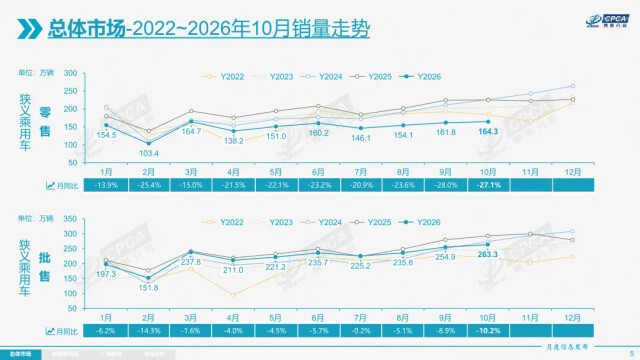
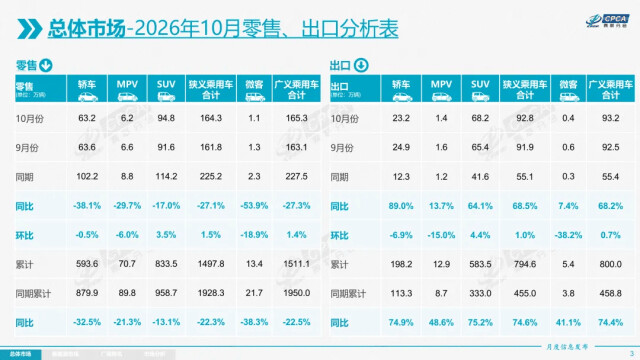
The tests in extreme conditions come as China’s penetration of EVs in total new car retail sales logged the slowest growth in the past five years in 2025 of 6.3 percentage points, data from the China Passenger Car Association showed.
EV sales in mainland China have concentrated in coastal areas or developed cities, where the temperature is usually mild. Among the top 100 cities in terms of EV sales volume in 2025, only four cities were in Heilongjiang, Xinjiang and Inner Mongolia, where the temperature could be as low as -40 degrees Celsius in winter.
The limitation partly results from dominant lithium-ion batteries, as their performance sharply degrades at temperatures below 0 degrees Celsius.
Sodium-ion batteries were better in low-temperature performance, safety and materials availability, but they were less competitive in energy density and cycle life, according to Ethan Zhang, an analyst at Nomura.
The sodium-ion batteries might offer an EV solution in cold regions, though they would not be able to replace lithium batteries within two to three years, said David Zhang, general secretary of the Shanghai-based International Intelligent Vehicle Engineering Association (IIVEA).
CATL’s Ouyang also said it expected the sodium technology to complement the lithium, echoing the firm’s strategy of a dual energy ecosystem.
The engineer added that the firm would continue to improve the performance of the sodium-ion battery technology, eyeing a longer range after achieving 400km (248 miles).
CATL is stepping up efforts to promote the sodium alternative. Ouyang said the new battery could be installed in over 10,000 passenger vehicles this year and the volume could surge to “hundreds of thousands” in 2027, in addition to the adoption in some energy storage projects.
While the batteries were ready, Ouyang said other EV components also needed to work on frozen land. The engineer added that production would be subject to the demand there.
Avatr – a brand backed by Changan, CATL and Huawei – said it would test a model in Antarctica for 18 months to gather data under strong magnetic fields and various complex road conditions on the continent, where the average daily temperature is close to -65 degrees Celsius near the centre.
But IIVEA’s Zhang cautioned that the deeper commercialisation of sodium-ion batteries still needed the “proactive adoption” of EV makers and the supply chain, given that the technology was not yet mature enough.
Sodium-ion technology has long been a card up the sleeve of battery makers. While CATL, BYD and HiNa Battery have been gearing up for the alternative for years, mass vehicle adoption has not yet been realised.
CATL initially bet on sodium-ion batteries by starting research and development a decade ago, unveiling the first generation in 2021, though it did not kick off commercialisation then. Notably, the prices of lithium carbonate – a key material for lithium-ion batteries – surged sharply in 2021.
Before being installed in Changan’s mass-produced models this year, the battery giant has invested around 10 billion yuan (US$1.4 billion) in the technology.