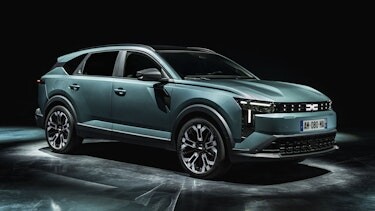
Chongqing Changan Automobile’s electric vehicle (EV) brand Deepal became the latest mainland Chinese carmaker to use Hong Kong as a test market when it launched its S07 SUV on Thursday.
The Chongqing-based company said it would partner with Dah Chong Hong Holdings, a leading Hong Kong car distributor, to sell the right-hand drive version of the S07 starting on Thursday.
The S07 is available for sale under the Hong Kong government’s “one-for-one replacement scheme”, a subsidy for car owners to switch to zero-emission vehicles, at HK$248,880 (US$32,000) and HK$266,880 for a longer-range version, Deepal said. Buyers can also enjoy an early bird discount of up to HK$16,000.
Deepal said the first batch of deliveries would be available in the second quarter, adding that it planned to introduce more EV models in Hong Kong, including its S05 SUV and E07, a multipurpose SUV.
Shen Xinghua, the general manager of Changan’s business in Southeast Asia – which includes Hong Kong – said the city was a good launch pad for the company.
“With the government’s supportive measures, the pace of replacing internal combustion engine vehicles with EVs will accelerate,” he said.
Shen also said the company would establish a spare part supply chain in Hong Kong and step up technician training.
Deepal sold about 12,000 cars in Thailand last year, Shen said, most of which were S07s. The model was launched in Singapore and Australia from late 2024 to early this year, he said, adding that the company would debut in Europe in the first quarter of 2025.
Alex Pan, the CEO of Dah Chong Hong, said mainland Chinese brands like Deepal would be competitive in Hong Kong because of their technological advancement. He also said his company would launch a premium brand from Changan soon.
With carmakers in China embroiled in a cutthroat price war and heightened curbs from the US and Europe, Hong Kong has become a bridge for mainland EV makers that are seeking to enter global markets.
In 2021, the Hong Kong government outlined plans to encourage the uptake of EVs, with a goal to stop registering new petrol and petrol-electric hybrid vehicles by 2035, part of the city’s 2050 carbon-neutrality plan.
Guangzhou-based EV giant Xpeng entered the Hong Kong market last year with its G6 SUV and X9 MPV. GAC Aion, the EV unit of state-owned Guangzhou Automobile Group, launched its fourth model in the city in December. It planned to sell 1,000 to 2,000 cars in Hong Kong and Macau in 2025, adding that it would launch at least one new model in Hong Kong this year.
Mainland Chinese EV brands nearly doubled their market share to 30 per cent in Hong Kong in the first six months of last year, according to London-based car distributor Inchcape, based on data from the Transport Department.
At the end of last year, the city had more than 110,000 EVs, accounting for around 12 per cent of total vehicles, according to data from the Environmental Protection Department. In total, 387 EV models from 18 countries or regions have been approved by the Transport Department.
Beijing also believes in Hong Kong’s role as a bridge between the mainland and the rest of the world. In November, the China Association of Automobile Manufacturers (CAAM) hosted its first automotive industry supply chain summit in Hong Kong, which attracted dozens of EV makers and government officials to discuss how the city can help mainland carmakers to expand overseas.
“Hong Kong as an international finance centre, trade centre, and innovation centre has its natural advantages and can play a crucial role in supporting Chinese enterprises’ path to globalisation,” said Fu Bingfeng, CAAM’s secretary general at the event.
“It can act as a two-way gateway for Chinese EV makers to go overseas and bring in new technologies.”