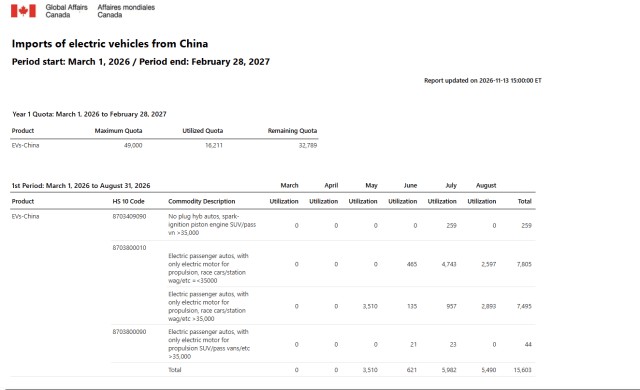
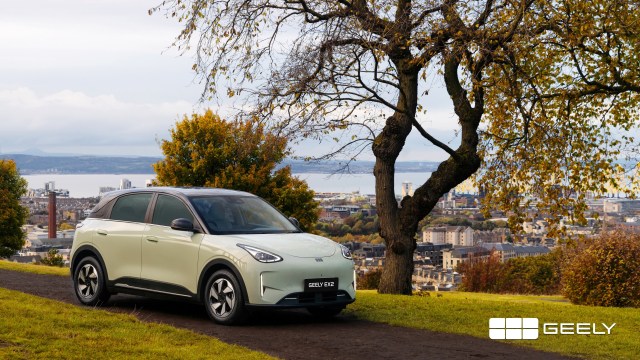
Carney floats Chinese carmakers for Canada For decades, Canada’s auto industry has relied on open trade with the United States — a relationship that supports both the vehicles Canadians drive and the jobs of those who build them. Over the last 18 months, that relationship has been under significant strain. It’s why Prime Minister Mark Carney has been casting Canada’s net further afield — in an effort to shore up business opportunities to keep Canada’s automotive industry running on all cylinders. On Nov. 16, Carney clearly indicated that if current trade talks with U.S. President Donald Trump failed to protect an integrated North American auto industry, Canada could turn to Chinese automakers. Carney’s comments came just days before a planned meeting with Chinese President Xi Jinping. For most Canadians this tariff issue could shape what your next car costs, which rebates you qualify for and how secure jobs are in Ontario’s auto towns. Don't Miss A single line on your car insurance policy could be inflating your premium by up to 30% — here's what to change I’m 65, tired of working and have very little savings — is it possible to live off CPP alone? Yes, but you'll need to make these 3 big sacrifices Buying ETFs regularly? Get unlimited commission-free trades on select ETFs with GoSmart by RBC Direct Investing. See how to get started What did Carney actually say about Chinese carmakers? While on a cross-country visit that took Carney to Cambodia, he told reporters that U.S. negotiations remain his priority, but their outcome could decide whether Canada pursues partnerships with European, Chinese or Japanese automakers. Asked whether Chinese investment was a bargaining chip, he replied: “It’s not leverage. But action, reaction.” But Carney isn’t willing to take scraps — and set a condition for any deal, where a Chinese investment would need real manufacturing in Canada, not just the assembly of imported parts. His comments build on a January 2026 deal with China, when Canada removed tariffs to allow up to 49,000 Chinese-made electric vehicles (EVs) into the country each year at a 6.1% tariff. Prior to this updated agreement, the tariff for Chinese EV imports was 100%, imposed in 2024. But not everyone is on board with China becoming the alternative partner for Canada’s automotive industry. Ontario Premier Doug Ford criticized the plan and warned that Chinese EVs could threaten Canadian jobs and jeopardize access to the U.S. market. Why is Canada’s auto sector so exposed to U.S. trade? Carney is looking for alternative partners because most automotives built by Canada are sold south of the border. Statistics Canada found that U.S. demand accounted for 76.4% of payroll jobs in automobile and light-duty vehicle manufacturing in 2024 — roughly 27,000 jobs. Due to tariffs between the countries, motor vehicle exports to the U.S. fell 9.6% in 2025 — and this impacted automotive sector jobs. DesRosiers Automotive Consultants, an automotive research firm, reports that parts manufacturing employment fell 8.7% year over year in February — a loss of 6,200 jobs. And the impact of the U.S. trade war continues to spread. Will Chinese EVs make cars cheaper for Canadians? For consumers — and those not directly tied to the auto manufacturing sector — the question that comes to mind is whether Chinese EVs could make cars cheaper to purchase for Canadians? There is the potential for lower purchase prices, but it won’t happen overnight. The first Chinese-built EV to arrive under the deal, the Lotus Eletre, has a starting sale price of $119,000. More affordable models may follow, but with no concrete timeline, Canadians looking for moderately priced cars will just have to wait. To put this in perspective, the 10 lowest-priced EVs in Canada each sold for an average of $45,000 last year, after manufacturer rebates. If China were to release lower-priced models, they could undercut those prices by 10% to 15%, explains one industry analyst in an interview with The Globe and Mail. Concerns, however, are dampened given the amount of Chinese EVs that could hit the Canadian market. According to the trade quota, less than 3% of Canada’s annual new-vehicle market could come from China. This is enough to put pressure on competitors’ prices, but not enough to flood the market. Do Chinese-made EVs qualify for the federal EV rebate? One key factor with an EV purchase is the federal government’s rebate. For those shopping for a new EV, be aware: Chinese-made EVs don’t qualify for the federal EV rebate. Ottawa’s rebate, worth up to $5,000 on a battery-electric vehicle in 2026, only applies to vehicles built in Canada or in countries with which Canada has a free-trade agreement, and China isn’t one of them. For example, a $40,000 Chinese-built EV gets no federal rebate. While, a $44,000 EV built in South Korea that qualifies for the full $5,000 would cost $39,000 before taxes, making it the cheaper EV. What to do now If you’re shopping for an EV, compare the final price after rebates, not the sticker price. Before you sign, check: Where the vehicle is assembled, since that decides rebate eligibility Whether the province you live in offers its own incentive How the federal rebate amount will change if you buy in 2027 instead Whether Chinese automakers end up building in Canada depends on talks that are still underway. But Carney has been clear: These trade talks are about keeping an industry moving and jobs on Canadian soil. As he stated: “There has to be a manufacturing aspect involved.” What To Read Next Stop letting your cash rot — here are 4 places to grow your cash in 2026 (without touching the stock market) Warren Buffett used these 4 solid, repeatable money rules to turn $9,800 into a $150B fortune. Here’s how to apply them to your own life Here are the 5 biggest differences between rich and poor Canadians — which side do you fall on? Millionaires under 45 keep two-thirds of their wealth out of stocks. Here’s where their money is actually going Join 20,000+ readers and get Money.ca’s best stories and exclusive interviews first — clear insights curated and delivered weekly. Subscribe now. This article provides information only and should not be construed as advice. It is provided without warranty of any kind.