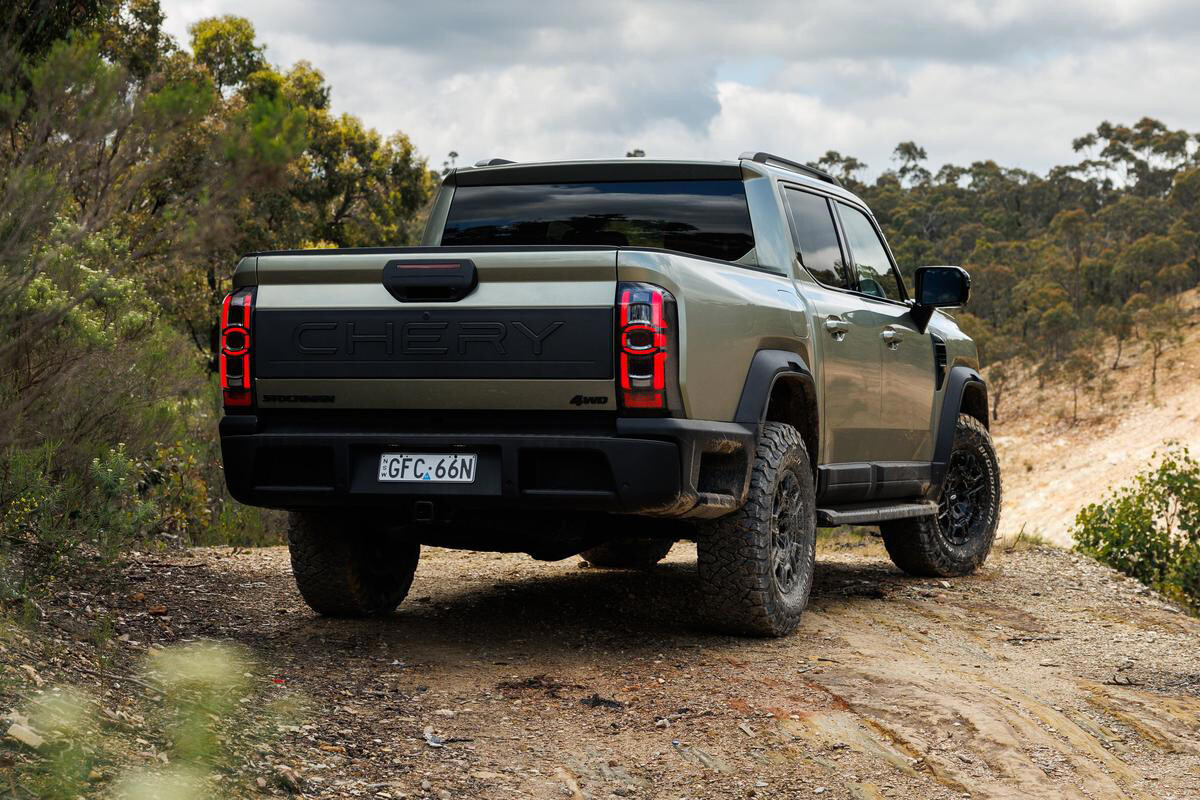
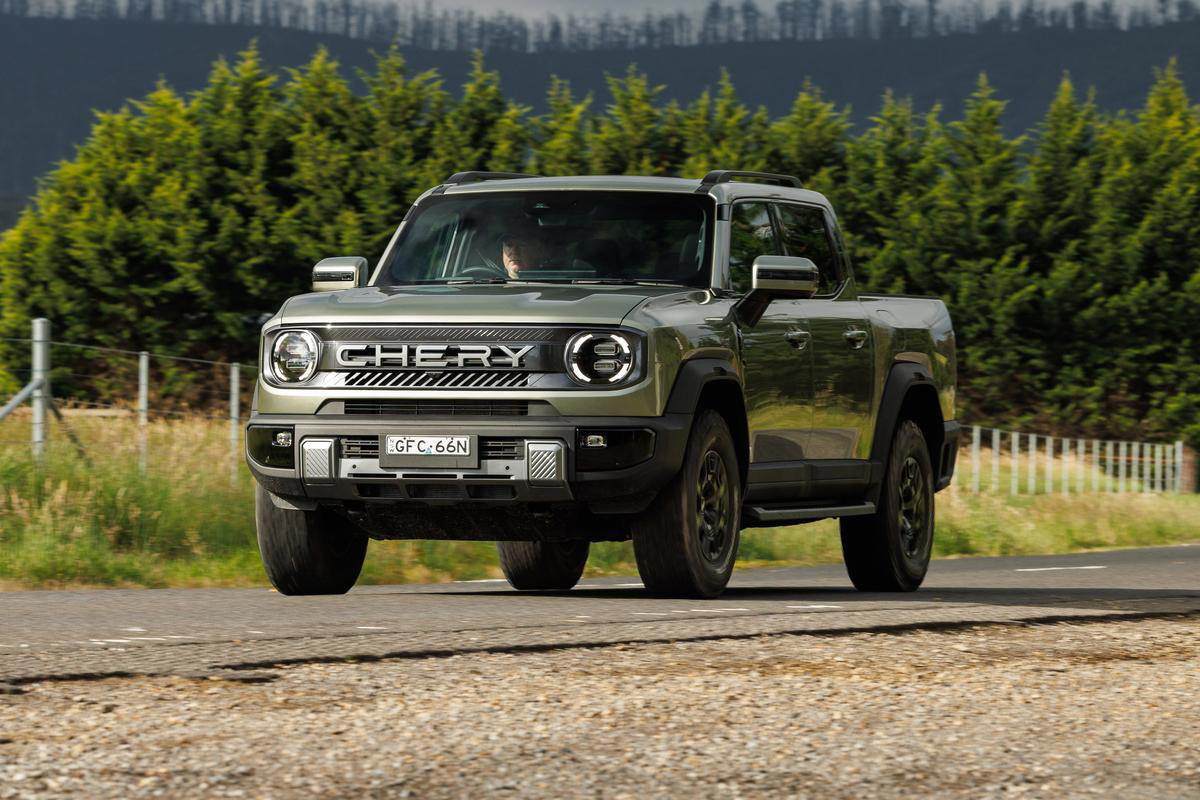
Canada’s search for an automotive future beyond Washington has met resistance from the very companies that supply its factories. After Prime Minister Mark Carney suggested Chinese, European or Japanese automakers could become alternatives if trade talks with U.S. President Donald Trump fail, Flavio Volpe, head of Canada’s Automotive Parts Manufacturers’ Association, described the prospect of full-scale Chinese production in Canada as “absurd.”
The dispute is about more than which badges appear on Canadian roads. It raises questions about whether foreign investment would preserve skilled manufacturing jobs, give domestic suppliers meaningful contracts and protect an industry built around the U.S. market. With tariff uncertainty growing and an Ontario assembly plant’s future contested, those questions are becoming increasingly difficult to postpone.
Canadian Auto Suppliers Question Whether Chinese Factories Could Replace U.S. Production
Flavio Volpe’s objection goes to the economics of building cars, not simply their country of origin. In remarks published November 16 by iPolitics, the president of the Automotive Parts Manufacturers’ Association argued that Chinese automakers already have enormous production capacity at home and little incentive to reproduce a comprehensive manufacturing network in Canada. He called the expectation of substantial new Chinese assembly investment “absurd.” In his view, the risk is that a promise of Canadian manufacturing could amount to little more than putting together vehicles whose expensive components were made elsewhere. A plant might be busy without generating the depth of work that established Canadian suppliers need.
That distinction matters for businesses that make metal stampings, powertrain components, electronics or production tooling. An assembly line provides employment, but its economic footprint is larger when it buys Canadian-made parts and commissions work from nearby firms. Volpe’s challenge therefore sets a test for any proposed replacement investment: would it bring long-term purchasing contracts, equipment spending and engineering work, or mostly imported parts ready for final assembly? His comments do not establish that future Chinese investment is impossible. They show why industry leaders are asking Ottawa to demonstrate the scale and substance of a factory commitment before treating it as a substitute for North American production.
Carney Says Canada Cannot Depend Entirely on Trump’s Trade Decisions
Carney’s proposal was conditional. Speaking in Phnom Penh on November 16, he said an integrated North American auto market remained his preferred outcome and that negotiations with the Trump administration were still the priority. But he argued that U.S. trade actions had weakened that integration and left Canada needing other options. He named European, Japanese and Chinese automakers as potential partners if Canadian workers and factories cannot be fully used within the existing continental system. Asked whether the possibility of Chinese investment was negotiating leverage, he characterized it instead as “action, reaction” — a response to changed circumstances, rather than an announced decision to replace U.S. manufacturers.
The prime minister also drew an important line between importing vehicles and making them. He said Chinese companies would have to undertake meaningful production in Canada, meet appropriate labour standards and develop domestic supply chains, including opportunities connected to Canadian critical minerals. Simply assembling imported kits would not satisfy that vision. Two days earlier, in Manila, he had said an agreement with Washington must leave Canada with a viable automotive industry. Those conditions put Carney closer to his critics than the political clash initially suggests: both sides say Canadian workers need more than a showroom full of imported cars. Their disagreement concerns whether Chinese manufacturers would make the necessary investment.
More Than 90% of Canadian-Made Vehicles Are Exported to the United States
The scale of Canada’s dependence on the United States explains why supplier executives are uneasy. Federal figures show that more than 90% of vehicles built in Canada and 60% of Canadian-made auto parts are exported to the U.S. Statistics Canada calculated that American demand accounted for 76.4% of payroll jobs in Canadian automobile and light-duty vehicle manufacturing in 2024, equivalent to roughly 27,000 jobs. Those numbers describe an industry in which production planning, parts deliveries and customer relationships have developed across a border that car companies once treated almost as an internal shipping route.
The Canadian footprint is still substantial. Government industry briefings put automotive manufacturing employment at about 121,600 in 2025, with nearly 700 parts manufacturers supporting the sector; automotive manufacturing contributed $17.1 billion to GDP that year. A factory decision in Michigan can consequently affect a toolmaker in Windsor, a parts producer in the Greater Toronto Area and a logistics company moving components across the Ambassador Bridge. Replacing that network would require more than securing one new assembly contract. It would mean building customer demand, supplier relationships and export channels large enough to sustain repeated production runs over many years.
Chinese Automakers’ Overseas Factories Raise Questions About How Much Is Actually Built Locally
Volpe’s concern draws attention to the difference between complete production and so-called knocked-down vehicle kits. Under semi-knocked-down or completely knocked-down arrangements, cars or major components are shipped from one country for assembly in another. The International Energy Agency says such kits have become a significant feature of Chinese automakers’ overseas expansion, allowing companies to increase sales while their local supply chains develop. It estimated Chinese-owned overseas vehicle manufacturing capacity at roughly 1.7 million units in 2025, compared with about 29 million units of capacity inside China. Those figures help explain both the appeal of exporting and the challenge of establishing deep domestic manufacturing abroad.
The international record is more nuanced than a claim that Chinese firms never manufacture beyond China. The IEA documents overseas plants, while BYD’s facility in Camaçari, Brazil, illustrates how gradually local production can evolve. That site began with imported kits and, according to BYD’s October 2026 update, was testing welding and painting operations as it prepared a transition toward more localized production in 2027. Such investments are real, but assembly volume alone does not establish how many parts are sourced domestically. For Canada, the crucial question is whether any investor would commit to comparable local processes, purchasing and training — and on what timetable.
Canada Has Already Opened Its Market to Thousands of Chinese Electric Vehicles
The debate is no longer entirely hypothetical for Canadian car buyers. Under an agreement reached with China in January 2026, Canada removed its previous 100% surtax on eligible Chinese-made electric vehicles and created an initial annual quota of 49,000 vehicles at the normal 6.1% tariff, effective March 1. The federal government’s import-control data showed 16,211 vehicles had been counted against that quota as of November 13, leaving 32,789 places available for the quota year. The arrangement is designed to widen market access while keeping overall imports limited; its initial volume represented less than 3% of Canada’s new-vehicle market.
Ottawa also expects the agreement to expand access to more affordable electric vehicles. The quota is scheduled to grow by 6.5% annually, with half reserved by 2030 for vehicles whose free-on-board price is C$35,000 or less — a customs value, not necessarily the dealership sticker price. China, meanwhile, lowered barriers on Canadian agricultural exports as part of the broader arrangement. These trade concessions can create choices for consumers and opportunities for exporters, but neither a reduced vehicle tariff nor a shipment quota obliges an automaker to build a Canadian factory. That is the gap suppliers want Carney to close before calling the arrangement an industrial answer.
Trump’s Auto Tariffs Have Made Canada’s Manufacturing Future Less Certain
Trump’s tariff policy is the reason Carney is weighing options that would once have seemed unlikely. Since 2025, the United States has imposed a 25% automotive tariff framework affecting vehicles and parts, although the rules distinguish between products that meet the Canada–United States–Mexico Agreement and those that do not. Under current provisions, the U.S. content of qualifying Canadian-built vehicles is exempt from the vehicle tariff, and qualifying automotive parts are not subject to the 25% levy. Those exceptions matter enormously for manufacturers whose components routinely cross the border before a finished vehicle reaches a buyer.
Uncertainty extends beyond the tariff rate. At the agreement’s mandatory July 1, 2026 joint review, the United States declined to renew the trade deal in its existing form. Crucially, that did not terminate it: the agreement remains in force while negotiations continue. Washington has also raised automotive rules of origin as an area for possible change. A more demanding requirement could alter which models and components qualify for preferential treatment, affecting investment decisions on both sides of the border. For a manufacturer planning equipment purchases years in advance, unresolved rules may be as damaging to confidence as tariffs already being collected. Carney’s search for alternatives reflects that uncertainty, even if those alternatives present challenges of their own.
The Stellantis Brampton Dispute Shows What Canadian Workers Stand to Lose
The dispute over Stellantis’s Brampton, Ontario, assembly plant shows why the political argument has immediate consequences. On November 9, Stellantis announced an agreement to sell the facility and its equipment to Canadian defence manufacturer Roshel. The plant had been idled during retooling, and planned Jeep Compass production was redirected to Illinois. Ottawa responded by issuing a notice of default under a federal funding agreement, arguing that Stellantis had failed to meet manufacturing commitments. The company says the proposed sale would restore industrial use to the site and create possibilities for future defence-related work, but that is not the same as returning an automotive assembly line to service.
By November 13, federal Industry Minister Mélanie Joly said Ottawa and Ontario had offered Stellantis an “aggressive package” aimed at preventing the sale and preserving the possibility of vehicle production. The terms had not been disclosed. Stellantis offered to repay C$24 million in federal support associated with Brampton, while Ottawa maintained that the company could be responsible for hundreds of millions under its wider commitments. Workers and suppliers are left confronting a practical question: what kind of production, and how many durable jobs, will ultimately occupy the site? Brampton is an example of the industrial capacity Carney says Canada cannot afford to lose.
Ford, U.S. Officials and Industry Leaders Warn That China Could Complicate Trade Relations
Resistance to Carney’s China option has come from several directions, although the objections are not identical. Brian Kingston, president of the Canadian Vehicle Manufacturers’ Association, warned that Canada cannot maintain its auto industry without access to American customers. Ontario Premier Doug Ford has argued that opening the market to Chinese electric vehicles could put Canadian jobs and U.S. market access at risk. From Washington, White House trade adviser Peter Navarro called Carney’s suggestion “offensive in the extreme” and warned that China could overwhelm Canada economically. These reactions show how a proposed trade diversification strategy can also become a new source of friction.
There are technical and regulatory obstacles beyond the rhetoric. U.S. connected-vehicle rules restrict sales by certain China-linked manufacturers beginning with model year 2027, even if the vehicles are manufactured in North America. Restrictions on covered software and later hardware create additional complications. That does not mean every Chinese-backed automotive investment in Canada would be prohibited; ownership, technology, sourcing and the applicable rules would matter. Equally, warnings about job losses in other countries do not prove that every Chinese investment destroys local employment. The more useful question is whether a proposed Canadian plant could meet trade requirements, protect domestic suppliers and remain commercially viable without assuming unrestricted access to U.S. buyers.
Carney’s New China Agreement Brings Trade Relief, but a Canadian Auto Factory Remains Unconfirmed
Carney’s November 17 meeting with Chinese President Xi Jinping produced tangible trade measures, but not a publicly announced Canadian automobile factory. The prime minister’s office said China would provide additional tariff relief for approximately C$400 million in Canadian exports, including pork and seafood, while Canada would extend relief for specified Chinese steel and aluminum products. The leaders also welcomed plans for a business roundtable and a Canadian trade mission to China in 2027. These are concrete steps in the broader relationship, yet the official announcements did not identify an automaker, Canadian plant location, investment value or binding local-content plan for vehicle production.
Ottawa already has domestic automotive tools it can use while those possibilities are explored. Its February 2026 strategy set aside up to C$3 billion through the Strategic Response Fund and C$100 million through a regional tariff-response initiative to support automotive investment and diversification. The challenge is to make such support translate into production orders, skilled employment and supplier contracts rather than declarations of intent. Chinese investment might eventually form part of that future, alongside European, Japanese and existing North American manufacturers. For now, Volpe’s criticism highlights a demanding but reasonable benchmark: an alternative to the U.S. auto system must be capable of supporting Canadian factories, not merely selling more vehicles in Canada.