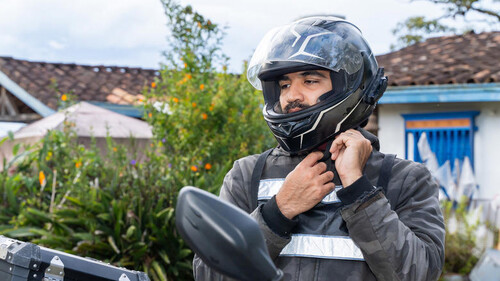
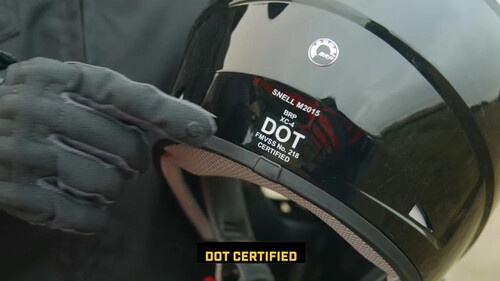
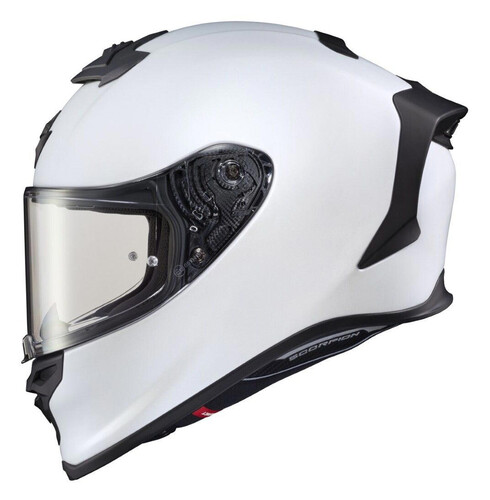
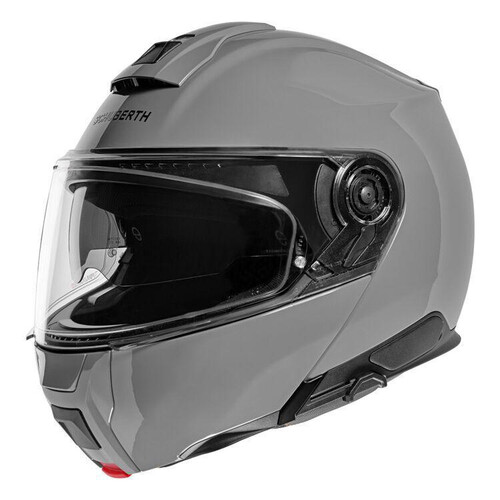
Katarzynabialasiewicz/Getty ImagesMotorcycling will always be a balancing act between freedom and risk. Every ride asks you to trust your machine, your skill, the road surface, the weather, and everyone else you are sharing the road with. While jackets, gloves, and boots all help to ensure you're dressed for a possible slide, no piece of protective equipment carries more responsibility than your helmet. A cursory glance at crash statistics makes it clear why. According to the U.S. National Highway Traffic Safety Administration (NHTSA), helmets can reduce the risk of rider fatalities by between 22 and 42 percent, while reducing the risk of traumatic brain injury by up to 69 percent. In 2024 , more than 6,200 motorcyclists lost their lives on American roads, accounting for around 16 percent of traffic fatalities, despite motorcycles only representing approximately 3 percent of vehicles on the road. The numbers alone illustrate why a quality helmet is such a critical piece of equipment, and why riders place such a high value on the reliability of their lid.That reliance is built on trust. Modern helmets are subjected to rigorous testing before they ever reach store shelves, be it DOT, Snell , Europe's ECE 22.06 or any other recognized certification standard. That confidence, however, only endures if a rider can reasonably assume the helmet remains in the same condition it was in when it passed those tests. A signifcant drop can alter that condition, undermining the helmet's reliability, and turning it into something any capable and competent rider would do well to avoid. AdvertisementAdvertisementLike any piece of personal protective equipment, a motorcycle helmet demands care and preventive maintenance. Keeping it clean and dry, storing and handling it correctly, and tracking potential damage are all part of ensuring it can and will perform correctly during your next unplanned get-off.Read more: The Best And Worst Motorcycles Made By Major BrandsHow one drop can change everythingFerda Demir/Getty ImagesReplacing a dropped motorcycle helmet has become a widely accepted rule of thumb. But that rule draws on that most critical aspect of riding: trust in your gear. The concern isn't that every helmet that rolls off a seat or slips off a handlebar is instantly unsafe. The problem is that even a minor impact creates uncertainty.A motorcycle helmet is a layered system. The hard outer shell spreads impact forces across a larger area, while an expanded polystyrene liner crushes in a controlled way, absorbing energy before it reaches your head. Once that liner has compressed, it cannot spring back to provide the same level of protection in a second impact. Worse still, damage to the liner can occur beneath the shell, leaving little or no visible evidence.AdvertisementAdvertisementVariations of this rule have attempted to quantify accidental drops. For example, the 4-foot rule attempts to provide a specific threshold, suggesting that a helmet needs to be dropped from 4 feet, around seat height, before caution is required. Similarly, the 5-year replacement rule reflects a means of addressing gradual aging. Adhesives, comfort liners, and materials all degrade through regular use, sweat, UV exposure, and environmental wear. That material degradation over time can create as much uncertainty as a sudden heavy impact.This mindset can be seen beyond motorcycles. Industrial hard hats and climbing helmets are treated with a similarly stringent level of assurance. Military body armor plates are removed from service after even minor impacts because of how dramatically micro-fracturing can weaken ceramic armor. The NHTSA recommends that car seats be replaced following a moderate crash. Ultimately, the principle is the same. In industries and activities where effective PPE is a genuine life-or-death concern; complacency, apathy, or temerity can have dire consequences.You don't have to buy a new lid, but you do have to rebuild the trustMark Fann/ShutterstockReplacing a dropped helmet isn't an admission that the helmet is definitively unsafe. It's an acknowledgment that there is now uncertainty, and that uncertainty represents an unacceptable level of risk when there is a non-zero likelihood that the next ride might end up in a highside.Fortunately, replacement isn't always the only option. A good helmet, after all, can be very expensive. Some premium manufacturers, including Shoei and Bell, offer inspection services for helmets involved in minor impacts or crashes while still under warranty. These services recognize that not every incident automatically condemns a helmet, providing riders with direct access to insight by professionals who understand helmet construction. The now-defunct Helmet Inspection Company attempted to take that concept even further by using industrial X-ray imaging to inspect dropped helmets. Unfortunately, the business struggled to overcome decades of safety messaging and the prevalent belief in replacement before closing in 2025.AdvertisementAdvertisementUltimately, no two helmet drops are the same, and even wearing a dropped helmet is better than nothing. But when it comes to deciding whether to continue trusting a dropped helmet, consider the severity of the drop. Height, impact velocity, impact surface, angle of impact, direction of travel and whether the helmet was empty or being worn all matter. An empty helmet tumbling from a stationary motorcycle onto grass is a very different event from one striking concrete at highway speed.Riding already involves enough variables that no rider can completely control. Riding with protective equipment that you don't fully trust simply introduces one more potential vector of disaster. So when the stakes are set that high, it's better to have peace of mind than to end up with your mind in pieces.Want the latest in tech and auto trends? Subscribe to our free newsletter for the latest headlines, expert guides, and how-to tips, one email at a time. You can also add us as a preferred search source on Google.Read the original article on SlashGear.