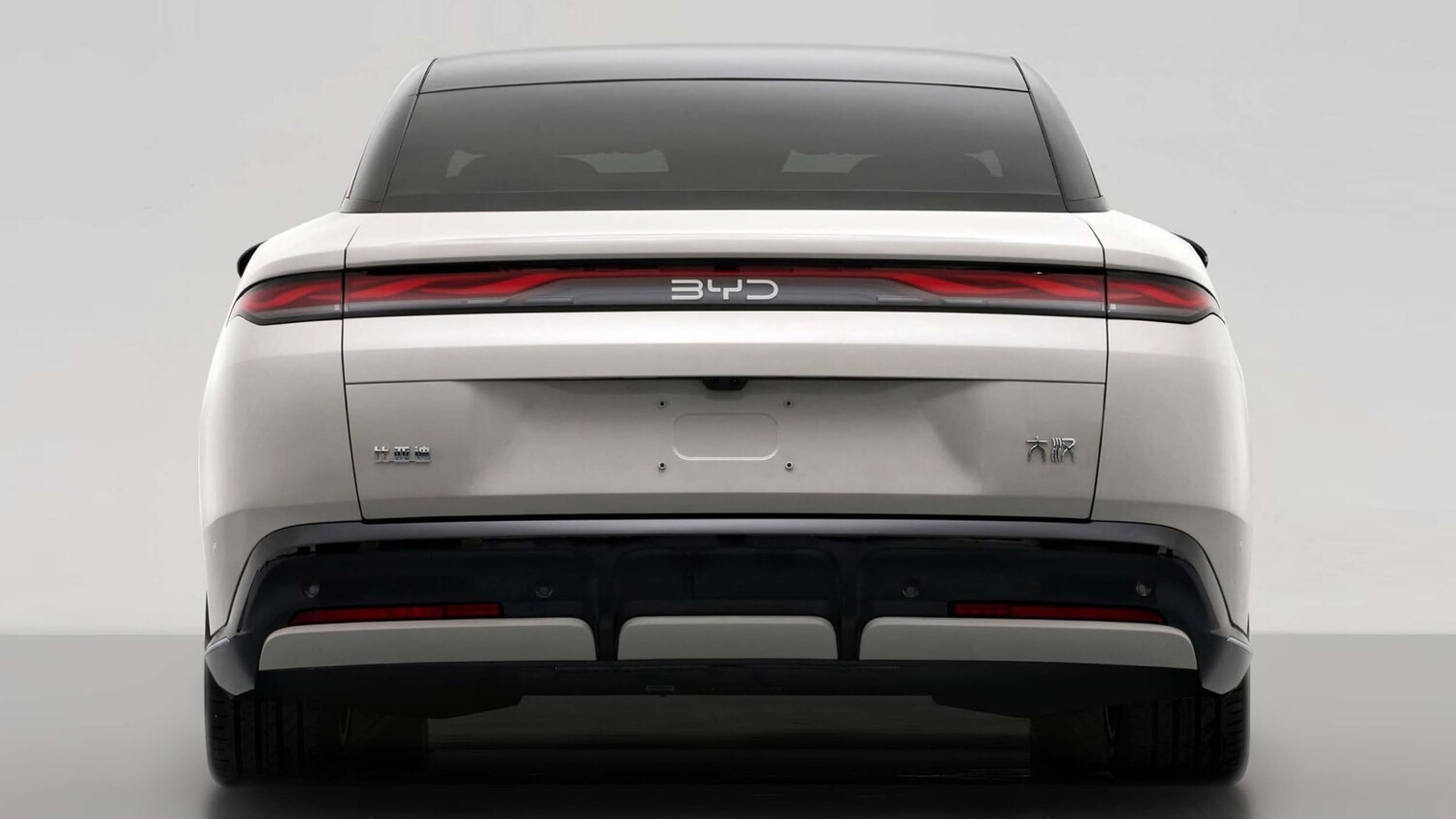
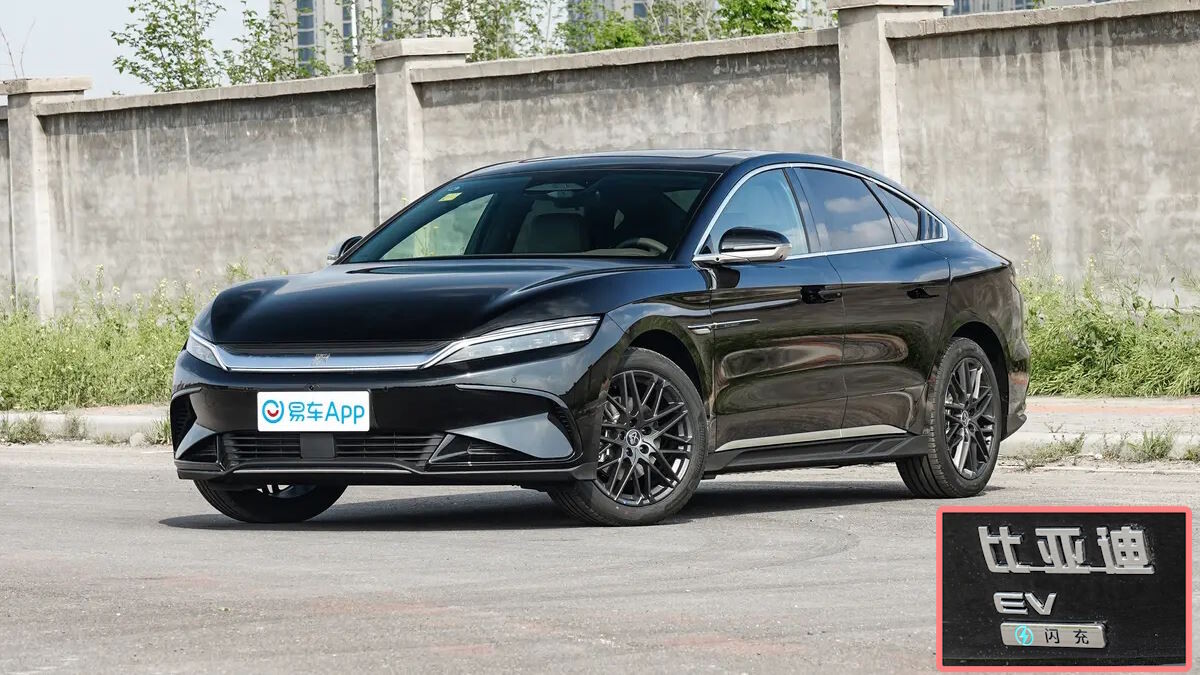
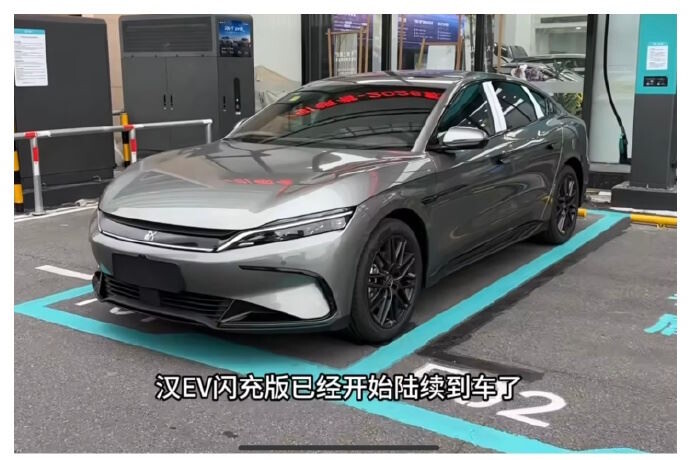
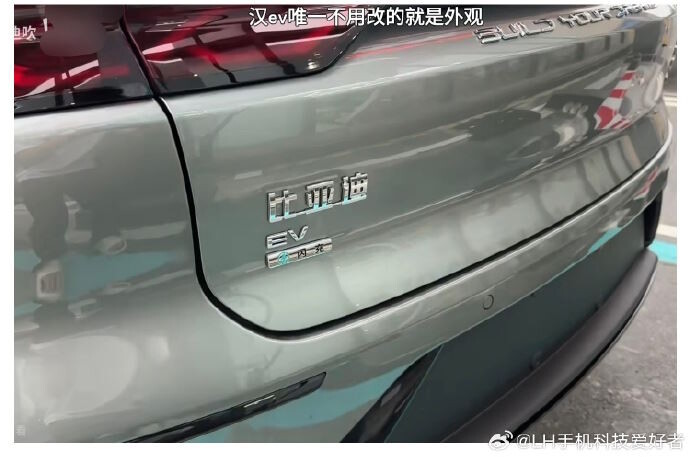
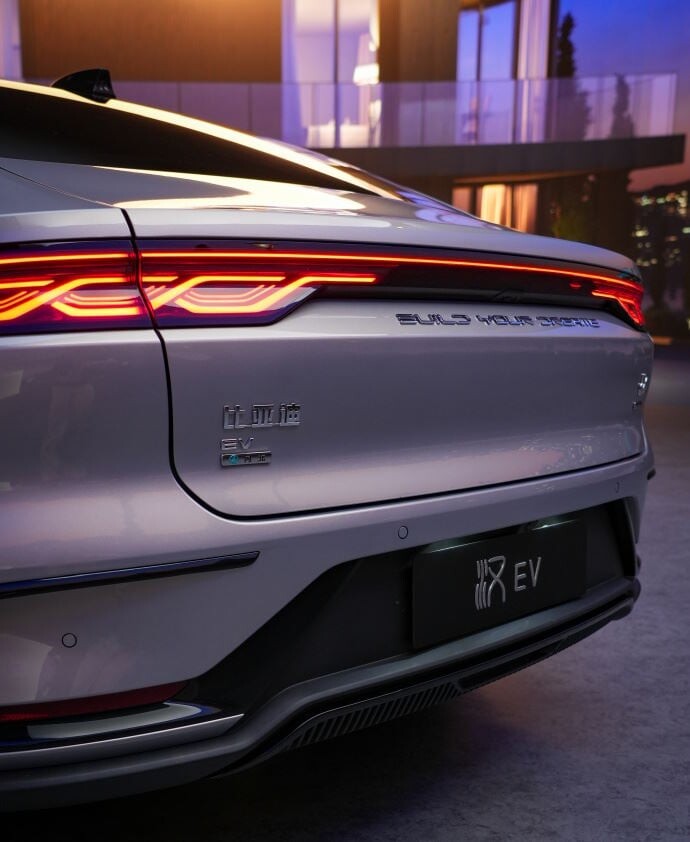
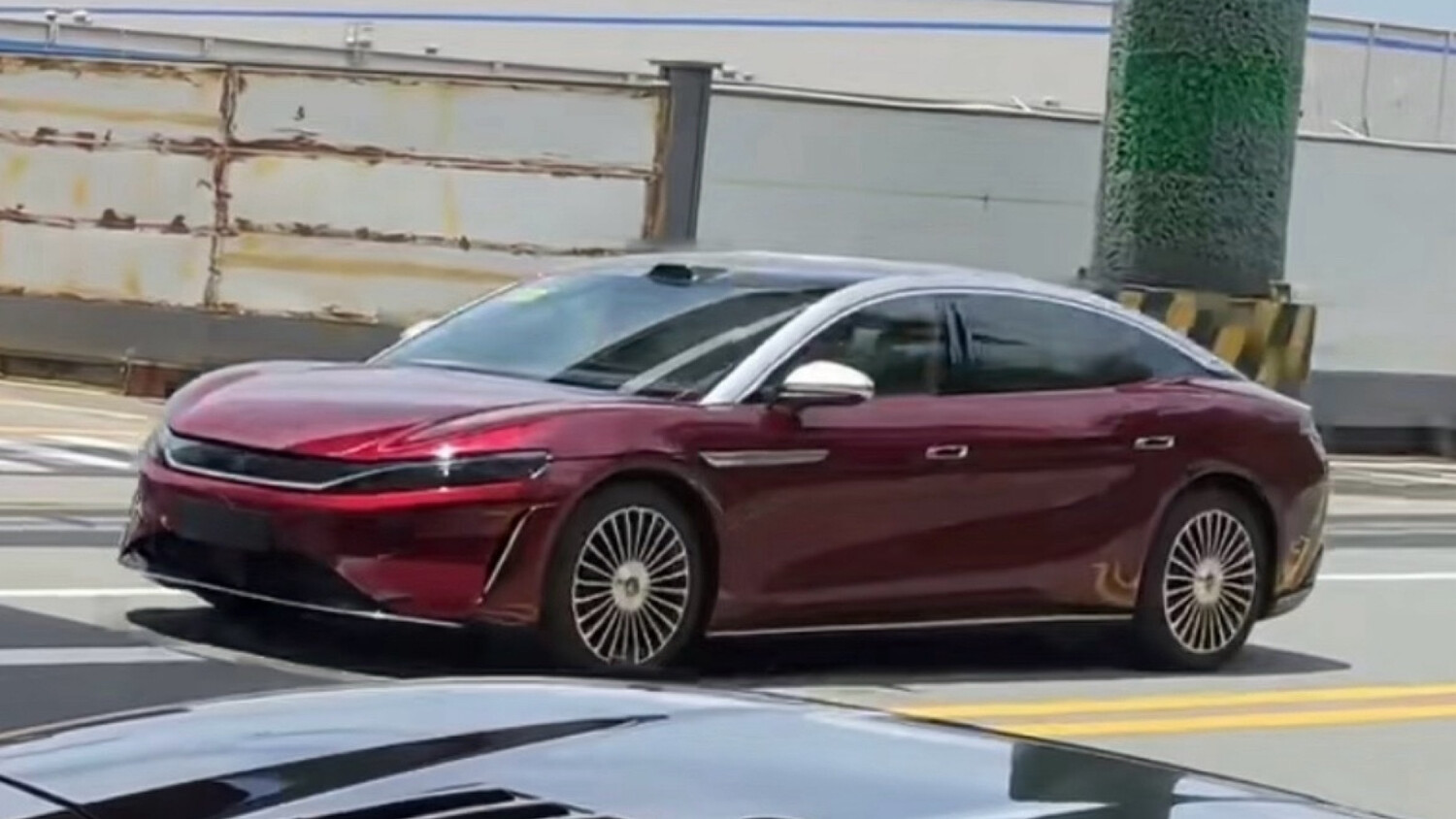
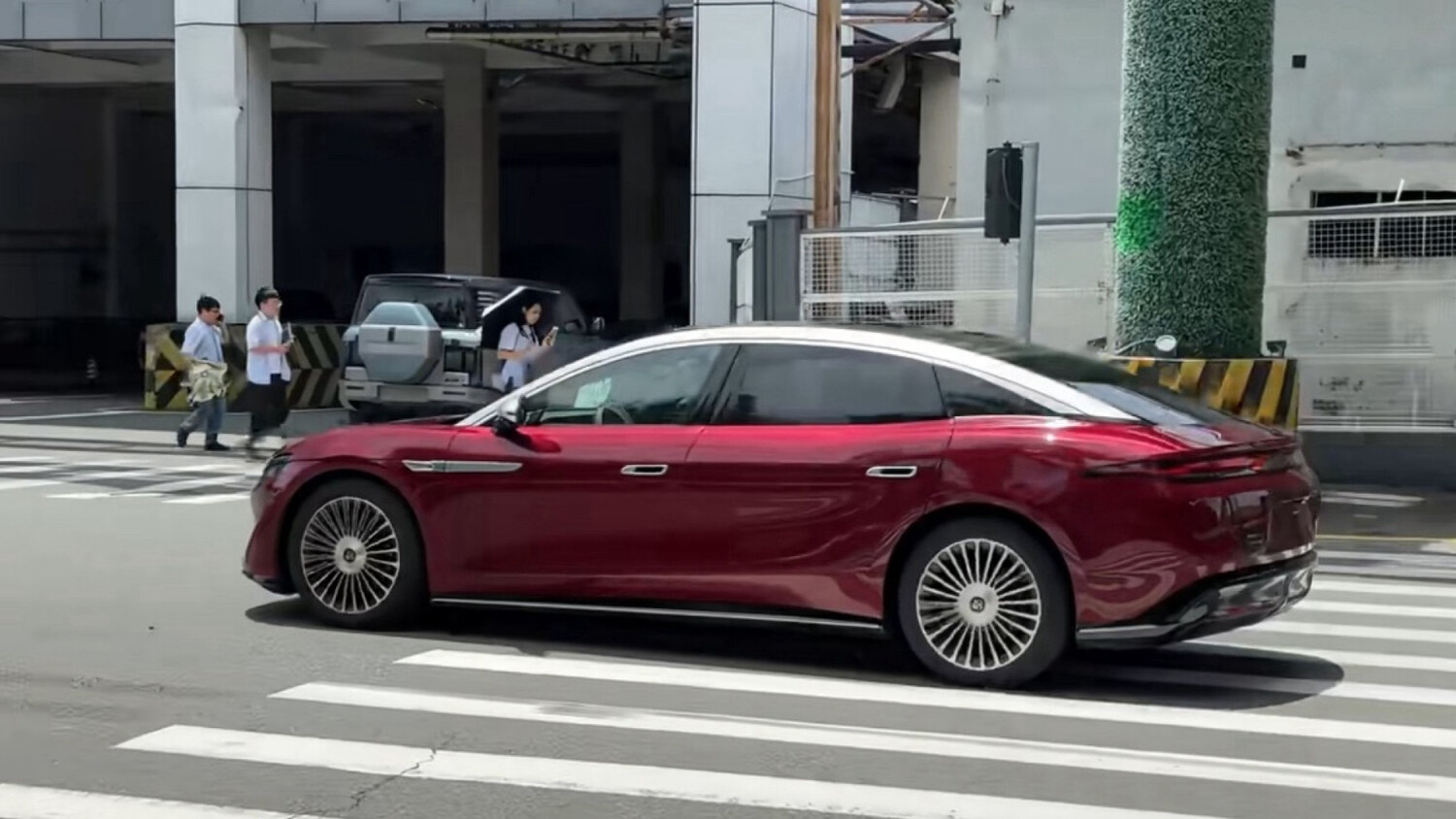
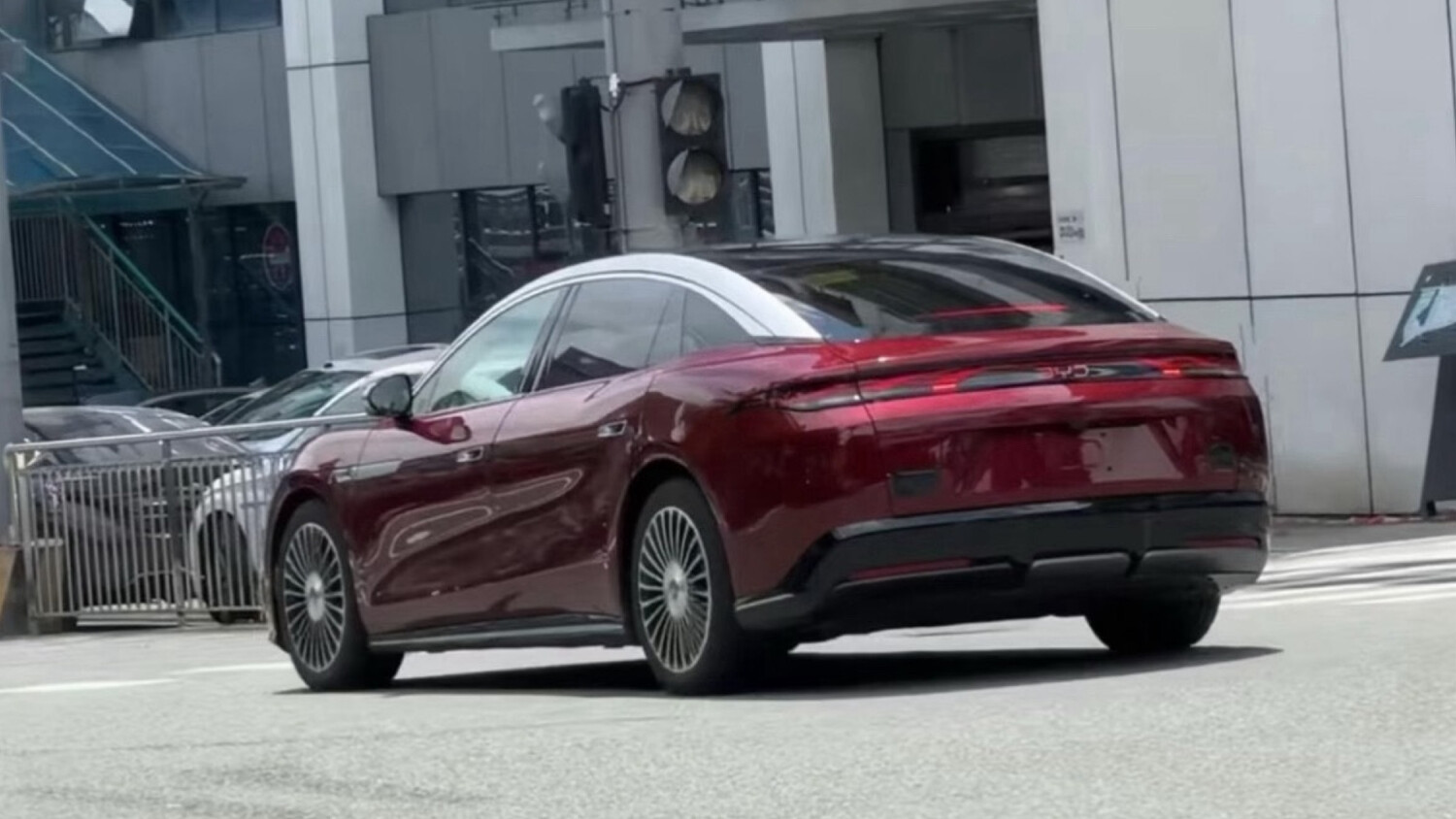
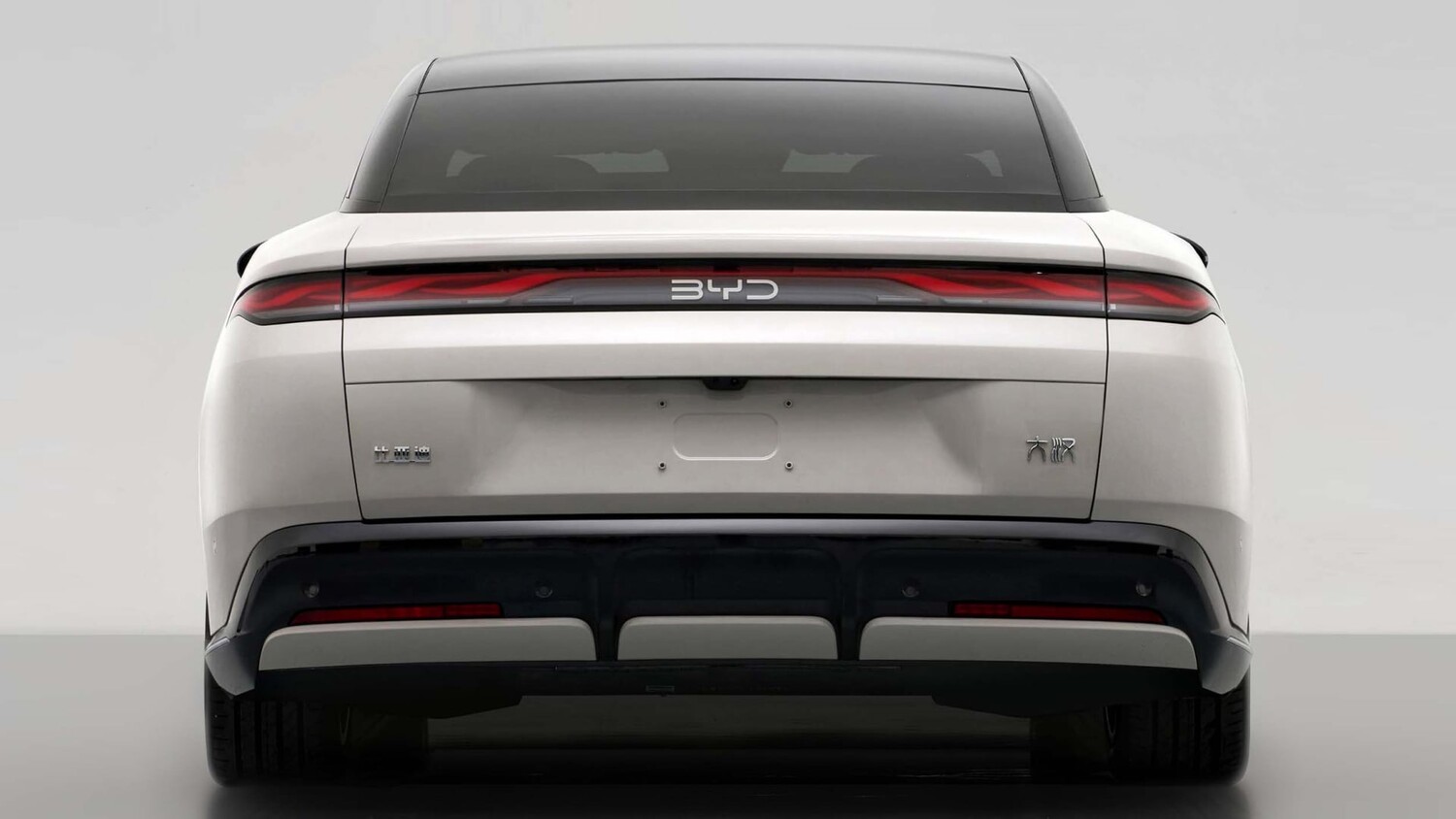
BYD’s next-generation Han will offer up to 875 km of CLTC range (approximately 718 km WLTP estimated), while its most powerful electric version delivers 520 kW (697 hp). The new sedan is expected to debut at the Guangzhou Auto Show on November 27. It arrives as October domestic deliveries of the outgoing Han fell 68.9% year-on-year to 2,236 units. Three electric versions and a 400 km PHEV The new Han EV comes in three versions, with outputs ranging from 245 kW (329 hp) to 520 kW (697 hp). All three EV versions use LFP Blade batteries supplied by BYD’s FinDreams subsidiary. The entry-level rear-wheel-drive version has a 76.744 kWh battery and a 245 kW (329 hp) rear motor. It delivers 775 km of CLTC range (approximately 635 km WLTP estimated). The Long-Range RWD increases battery capacity to 88.682 kWh and motor output to 300 kW (402 hp), taking the claimed range to 875 km CLTC (approximately 718 km WLTP estimated), according to iFeng. Rear three-quarter view of the new BYD Han with full-width Chinese knot taillight bar. At the top of the range, the Performance AWD uses the same 88.682 kWh battery but adds a 200 kW (268 hp) front motor to the 320 kW (429 hp) rear unit. Combined output reaches 520 kW (697 hp), with a CLTC range of 730 km (approximately 599 km WLTP estimated). It weighs 2,351 kg and has a listed top speed of 270 km/h, compared with 240 km/h for both RWD versions. The Han DM-i plug-in hybrid pairs a 1.5-litre turbocharged engine with a 200 kW (268 hp) electric motor. The engine produces 115 kW (154 hp) maximum power, or 110 kW (148 hp) maximum net power. A 45.36 kWh LFP battery provides 300 km of WLTC or 400 km of CLTC electric range (approximately 328 km WLTP estimated). Listed fuel consumption with the battery depleted is 4.6 L/100 km. The DM-i weighs 2,115 kg and has a top speed of 200 km/h. Chinese media also report that the new Han supports BYD Flash Charging. Compatible vehicles are claimed to charge from 10% to 97% in nine minutes. Side view of the 5,156 mm new BYD Han, highlighting its elongated fastback roofline and 3,030 mm wheelbase proportions. Larger body and redesigned exterior The new Han is 5,156 mm long and 1,969 mm wide, with a 3,030 mm wheelbase. That makes it 161 mm longer and 59 mm wider than the outgoing car, with 110 mm more between the axles. Depending on the version, height is either 1,507 mm or 1,492 mm. It is also longer than the 5,050 mm Han L, although the 5,256 mm BYD Da Han remains larger. Uncamouflaged photographs show a revised front end, led by a horizontal light bar, illuminated star-diamond elements and a Han emblem on the hood. Recessed door handles and multi-spoke wheels measuring 18, 19 or 20 inches feature along the sides, while the rear retains its full-width Chinese knot-style light bar. Roof-mounted LiDAR is standard on the 300 kW and 520 kW versions and optional on the entry-level EV and DM-i. It supports BYD’s God’s Eye B (DiPilot) driver-assistance system. Inside, photos show a floating central touchscreen, a digital instrument display, a column-mounted gear selector and two 50W wireless charging pads. Interior spy shots of the new Han. Sales decline puts pressure on the replacement The Han’s domestic deliveries fell 47.6% year-on-year to 119,821 units in 2025, down from a peak of 274,016 in 2022, according to China EV DataTracker. In October, its 2,236 deliveries represented 1.1% of BYD’s domestic volume. The Xiaomi SU7 sold 12,954 units that month, while the Xpeng P7+ managed 2,247, just 11 more than the Han. BYD has not announced pricing for the new model. The outgoing Han starts at 168,800 yuan (23,700 USD).

 Liked by Adam Scott, Benjamin Bouchard











 Liked by Adam Scott, Benjamin Bouchard