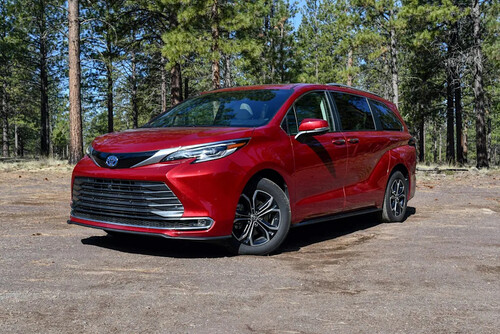
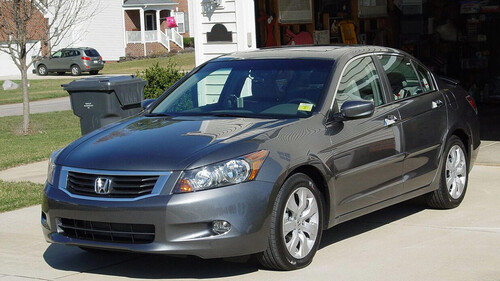
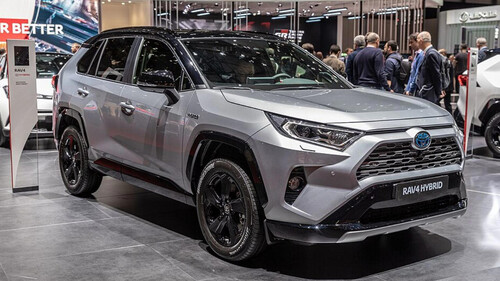
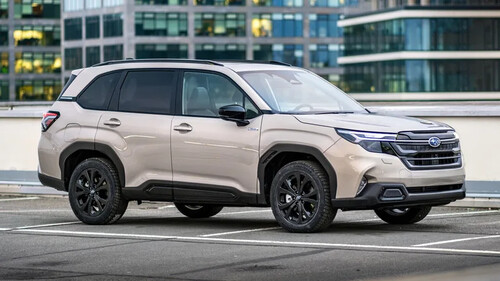
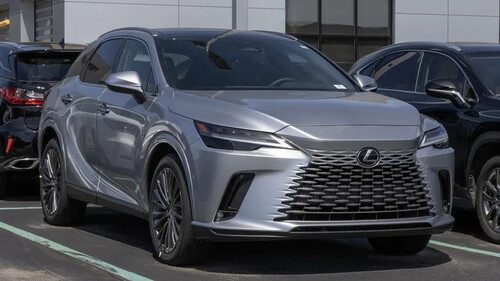
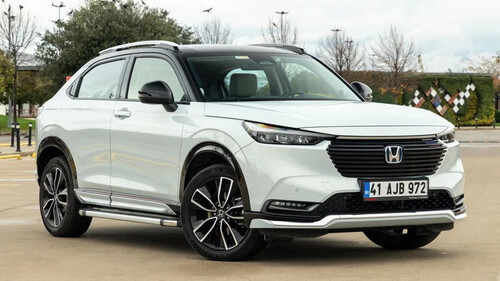
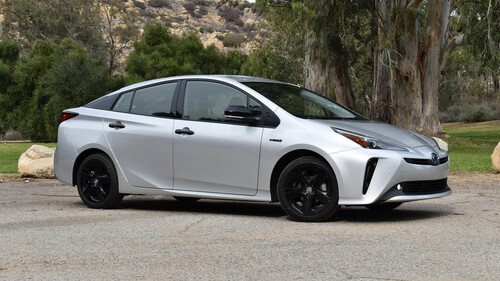
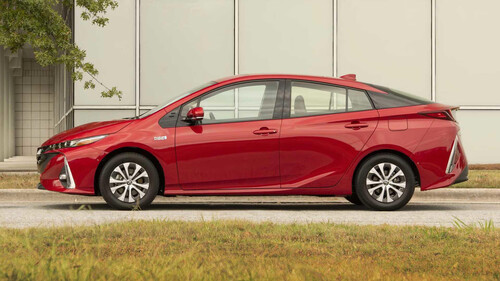
Buy This, Not That: America’s 7 Most Reliable Hybrids, New vs. UsedA Girls Guide to CarsKristen BrownThu, September 10, 2026 at 10:00 AM UTCAdd us on GoogleKristen BrownWe crunched the numbers on Consumer Reports' top-ranked hybrid SUVs to see if a 3-year-old model saves enough cash to justify skipping the new-car warranty.When mass-market hybrids first arrived on American soil in the early 2000s, driving one was a statement. Maximizing fuel economy meant paying a steep premium for the tech, often forcing buyers into pricier trims just to save at the pump. Owning a hybrid was an eco-status symbol—proof you were willing to pay upfront for the privilege of burning less fuel.Today, the hybrid tax has largely vanished, and automakers are leaning into hybrid-only philosophies. Toyota has already eliminated gas-only versions across high-volume models like the Prius, Camry, Sienna, and RAV4, with Lexus following suit on the NX and ES. Hybrids are no longer an expensive novelty, they're a lifeline for working families and commuters.AdvertisementAdvertisementBut there's an even bigger selling point driving the market today: reliability. With more than two decades of research and development, hybrids regularly surpass gas-only and PHEV models in terms of reliability. The question, then, transforms into how to buy one: is it smarter to pay for that new-car warranty, or should you save thousands by shopping three years back? Here is the math behind Consumer Reports' most reliable hybrids.This story is 100% human-researched and written based on actual first-person knowledge, extensive experience and expertise on the subject of cars and trucks.What Makes Hybrids So Reliable?The rear end of the 2026 Toyota RAV4 Limited AWD HybridDespite carrying both a gas engine and a battery pack, hybrids are actually the most reliable powertrains you can buy, according to Consumer Reports—pretty severely outperforming fully electric cars and plug-in hybrids. The brands dominating CR's top tier (Toyota, Lexus, and Honda) achieve this because the two power sources divide and conquer.In typical driving, the electric motor handles the most brutal, wear-heavy tasks—like getting thousands of pounds of steel moving from a dead stop and creeping through bumper-to-bumper traffic without the gas engine. That leaves the gas engine to step in only when it's most efficient, running under far less mechanical stress. There are other benefits from this symbiotic relationship, like:AdvertisementAdvertisementBrakes that last forever: Hybrids use regenerative braking, meaning the electric motor slows the vehicle down to recharge the battery before the physical brakes are ever used. Because the friction pads barely take any abuse, it's common for hybrid brake pads and rotors to last 80,000 to 100,000 miles without replacement.Less engine wear and tear: Even though standard synthetic oil changes still hover around 10,000 miles, the gas engine inside a hybrid spends far less time idling or straining under heavy loads, prolonging the life of engine seals and internal components.No failure-prone gearboxes: Traditional automatic transmissions rely on complex clutch packs, hydraulic valves, or friction belts that can slip and break. Toyota and Lexus hybrids replace all of that with an e-CVT that uses a simple, nearly indestructible set of planetary gears. Honda's system is even simpler: the electric motor drives the wheels directly most of the time, skipping a conventional transmission entirely.By removing the most fragile parts of a gas car and pairing what's left with simple electric assist, these brands built hybrids designed to rack up miles without visiting the service bay.Buy the Toyota RAV4 and Camry Hybrid New—It's So Worth ItWe love the Camry's new design, and you can't deny the RAV4's updated softwareFinding that Toyota makes the most reliable hybrids surprises, well, no one. They've always secured the top spot on Consumer Reports for reliability, even before hybrids were the company's bread and butter. The RAV4 and Camry hybrid tie as the two most reliable hybrids, and that's likely because they've been around for a long time. So, Toyota's had plenty of time to refine these systems.But there's quite the financial catch here: Toyotas, even used, are notorious for holding their value, and both models, when used, are only marginally less expensive than new models. For instance, a 2023 RAV4 Hybrid typically runs between $27,000–$34,000, especially if they happen to have low miles. The 2023 Camry, for comparison, is a little less expensive, with used prices running between $22,500–$28,000, depending on whether or not you went with all-wheel drive or a higher-level trim.AdvertisementAdvertisementNew, the 2026 RAV4 starts at $31,900 and maxes out at $43,300, while the Camry's range sits between $29,600 and $36,000. When you consider that the RAV4 comes with Toyota's new Arene software with a much more intelligent AI-powered voice assistant, a more reliable software setup, better mileage, and a new warranty, buying new is almost a no-brainer. And the same can be said for the Camry. The fifth-generation hybrid system means over 40 MPG even with all-wheel drive on the RAV4, a vastly improved interior layout and design, nicer colors, and up to 52 MPG if you go with front-wheel drive on the Camry. A 2023 wouldn't even come close.The Toyota Prius is Crowned for Its Reliability—But We'd Buy NewThe 2026 Toyota Prius Nightshade parked in a spotThe Toyota Prius has been a winner with Consumer Reports for over a decade. Today, it's still at the top of reliability charts, and it's still regarded as one of the most reliable hybrids (and the most efficient) on the market, next to the Kia Niro. Even in 2023, the wedge-shaped wonder regularly scored over 50 MPG, and the redesigned model does, too, as long as you stick with front-wheel drive.Today's Prius runs between $29,500 and $36,500, while used 2023 models average between $24,000 and $29,000 with low miles, thanks to the whole "Toyotas hold their value" mantra. And they're hybrids, and used hybrids are hot right now. So, as we said with the RAV4 and Camry, it's actually worth it to buy new.Why? The list is longer than I think I'm physically able to type, but everything that was a bummer about the 2023 model was improved with the 2026 version. You get a more enthusiast-style language, improved interior, better tech, equally fantastic mileage, more fun colors (including a blacked-out Nightshade edition), and Toyota's new hybrid system for only a few grand more.The Lexus ES 300h is a Luxurious Darling, Though We Recommend UsedNatalie standing with the 2026 Lexus ES 350hIn case you didn't know, Lexus is Toyota's luxury division, so the ES 300h shares a platform with none other than the one of the most reliable hybrids, the Toyota Camry. Which basically means you're getting the hybrid genius that comes from Toyota, with Lexus styling and sophistication. The entire ES lineup has been redesigned and overhauled for 2026, with improved technology, a redesigned and quite posh interior, heightened driving feel, and better mileage. The new model starts high, at $51,200, and goes as high as $57,400, so she's no cheap pony (it is a luxury car, after all). There's even an EV version now, too.AdvertisementAdvertisementUsed, the ES 300h gets a bit of a break away from the typical depreciation rates of most luxury cars. In fact, Kelley Blue Book says the ES 300h typically only depreciates at a rate of 21 to 26% in the first three years, which is noticeably lower than other hybrid luxury sedans. And, because a 2023 shares the same 2.5-liter hybrid setup we see in the same year of Camry, you can get up to 44 MPG and bulletproof reliability at near-Camry costs, as 2023 models typically cost between $31,000 and $38,000. Remarkably less than new.The Lexus NX 350h is a Great Buy Regardless, But We Recommend Buying NewThe Lexus NX 350h is a great buy new or used, but you can't beat a new-car warrantyThe Lexus NX 350h is one of our favorite hybrid luxury SUVs, because it has the same appeal as the SUV it shares a platform with: the Toyota RAV4. So, it has the same stellar score for reliability. Though because the NX 350h takes everything literally up by a few octaves in terms of interior design, color choices, ride quality, premium quality and luxurious materials, the starting prices are quite a bit higher than the Toyota version. And, since it has an emphasis on a sporty drive and power, it doesn't score as high in mileage. With that on the table, the price range starts at $46,570 and climbs to $56,595.Used, the NX 350h still fetches a pretty penny, with a typical range of about $34,000 to $41,000, depending on whether you pick all-wheel drive. In my area, I see some as high as $51,590 for the F SPORT Handling model. So, since the pricing for a used three-year-old model is almost identical to the new model's pricing, it doesn't really make sense to sacrifice a new-car warranty, no miles on the clock, better technology, and better mileage.The Honda CR-V Hybrid is Smarter to Buy UsedThere's very little difference between the 2023 and 2026 model, so save your moneyThe Honda CR-V is a newer hybrid for the company, becoming a hybrid back in 2020. For 2026, the CR-V uses a fourth-generation two-motor hybrid system, which, ironically, debuted in 2023. So, both the 2026 and 2023 models share an identical hybrid system. Pricing, though, is where it gets interesting. The Honda CR-V hybrid's pricing looks a lot like the RAV4's pricing history. Hondas are also known to retain their value, which is why typical costs of a used model average between $28,000 and $34,000, while new models start at $36,030 and $42,950.AdvertisementAdvertisementHondas aren't known for being the most tech-forward cars out there, and this is especially true for the CR-V. Because the CR-V was redesigned and overhauled in 2023, no major changes have come to the 2026 model in regard to available technology; there aren't any structural changes to note, and mechanically, they're essentially the same. So, unless you want a TrailSport hybrid, which is new for this year, there's no real reason to buy new except for a warranty (which, if you buy certified pre-owned, you still get).The Honda Accord Hybrid Drives a Hard Bargain UsedThe 2023 Honda Accord Hybrid Sport.Like the CR-V, the Honda Accord Hybrid was also heavily redesigned and technologically updated in 2023. So, there aren't many changes to the architecture between then and the 2026 model. They both have the same hybrid system, the same gas engine, the same safety suite, and earn the same miles per gallon. And, because sedans depreciate faster than SUVs, 2023 Accord Hybrids routinely trade for under $25,000 with less than 40,000 miles. For that price, you get 48 mpg, a cavernous rear seat, a modern 12.3-inch screen, and Honda's proven two-motor hybrid layout. Even if you pay a slightly higher interest rate on a used auto loan, saving ~$10,000 upfront easily keeps hundreds of dollars in your pocket every month.The only scenario where buying a new Accord Hybrid wins out is if you can secure an aggressive manufacturer-subsidized APR special (e.g., 1.9% or 2.9% on new inventory vs. 7–8% on a bank used-car loan) and you plan to drive the car for 10+ years, taking maximum advantage of the full 3-year/36k-mile bumper-to-bumper and 8-year/100k-mile factory hybrid battery warranties from day one.You Won't Be Judged for Either, By the WayNo matter what you pick, you're getting the best of the bestEvery single hybrid we mentioned we've tested and adored—and we're not at all surprised that they're at the top of Consumer Reports' list of most reliable cars. And while there are some great deals for used hybrid models we mentioned, we'd never judge you for getting the shinier, prettier, no-miles car over something used, and vice versa.AdvertisementAdvertisementIf you're a savvy shopper, now you know you have the option to go used if you want to, to save yourself on registration costs based on MSRP, insurance, monthly payments, and more. Whatever suits your budget, you're walking away with something invaluable: knowing that no matter which way you lean, you're buying one of the most reliable hybrids you can get.Related Headlines5 Ways the 2026 Mitsubishi Outlander Is New and Improved—PHEV Included!Buy This, Not That: Plug-in Hybrid vs. Hybrid Versions of 10 Popular SUVs, and Which Is the Better BuyThe Best 3-Row SUVs for Installing Kids Car Seats—And Starting Below $45K? Yup!Read more at A Girls Guide to Cars