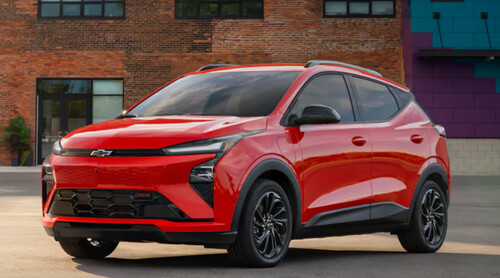
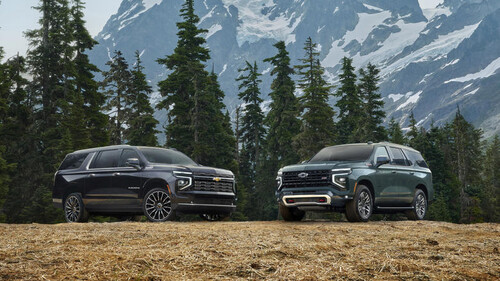
I've Seen This Movie Before It seems like these days, automakers from both the mainstream and high-end luxury spheres have been getting a lot of flack for introducing EVs into a market that never asked for them. To make matters worse, they're ruffling feathers of loyal longtime enthusiasts as they revive storied names from their brands' past. Ford slapped the Capri and Mustang Mach-e names onto separate crossover SUVs for the European and American markets, respectively, while Chevrolet named one of its electric crossover SUVs the Blazer.But as much as it seems like every automaker is making an electric vehicle these days, it is not like we have seen something like this before. If you rewind about fifteen years, you'll find the same playbook running on hybrids instead. Between roughly 2007 and 2010, gas prices climbed toward the unthinkable; the price of a barrel of crude oil spiked and prices at the pump in the U.S. flirted with $4 a gallon by the summer of 2008, which triggered a wave of consciousness toward fuel efficiency. Detroit's response wasn't just smaller, more fuel efficient cars, they also strapped electric motors and battery packs to some of the least aerodynamic, least efficient vehicles on the market. The results were fascinating, occasionally absurd, and almost entirely forgotten now that the conversation has moved on to kilowatt-hours and range anxiety.Bloomberg / Getty ImagesWhat Actually Makes a Hybrid a HybridBefore we actually dive into anything, we should talk about what a hybrid actually is, since these are completely different vehicles from fully electric vehicles. The words electric and electrified gets thrown around loosely by both consumers and industry insiders these days as a catch-all, but these things are all different things. A gasoline car is powered solely by a gas-burning internal combustion engine under the hood. An EV, or electric vehicle like a Tesla, Rivian or Hyundai Ioniq, has exactly one power source too, though it doesn't take gasoline, nor does it have an engine or exhaust system. In fact, its electric motor draws entirely from a battery pack that has to be plugged into a source of electricity to recharge. A hybrid, at least in the sense in the word meant throughout the 2000s, splits the difference without ever asking the driver to find an outlet. It pairs a small, efficient gas engine with one or more electric motors and a small battery pack, which recharges itself entirely through regenerative braking and the engine's own operation. It doesn't need to be plugged in, it doesn't need to be at a charging station, you just fill with gas.Cha già José via Wikimedia CommonsIt should be said that unlike today, the 2000s was not a time with a load of plug-in hybrids on the market. In this era, the majority of hybrids on offer were either mild hybrids, where the electric motor only assists the gas engine and can't move the car on its own, or full hybrids, where the electric motor can power the car by itself at low speeds and shut the gas engine off entirely at idle. Honda's early Integrated Motor Assist system was the standard-bearer for the mild-hybrid approach; Toyota's Hybrid Synergy Drive, and eventually GM's Two-Mode system, defined the full-hybrid side. The whole appeal, regardless of which architecture a given automaker chose, was that a hybrid asked nothing extra of the person buying it. Fill it up like always, though you'd probably be doing it less often.Najlah Feanny / Getty ImagesHybrids Were There, But Not "There" In The 00sBy the time gas prices hit its peak in 2008, hybrids had already been part of automakers' lineups for the better part of a decade, though they weren't as mainstream as today. Toyota's Prius, which reached the U.S. in 2000, and Honda's two-seat Insight from 1999 get the credit as the technology's proof of concept, but automakers spent the mid-2000s quietly hybridizing some of the best-selling nameplates in the country rather than confining the tech to standalone halo models. Honda went first, dropping the Insight's IMA mild-hybrid system into a Civic sedan for the 2003 model year. Its 1.3-liter engine was paired with a compact electric motor, which helped it achieve around 50 mpg combined, making it, by Honda's own claim at launch, the most fuel-efficient five-passenger sedan sold anywhere in the world.Ford followed in 2004, badged as an early 2005 model, with the Escape Hybrid, licensing key patents from Toyota to build a genuine full-hybrid system into a compact SUV — an industry first, rated at 34 city and 31 highway, and popular enough that Ford quadrupled its planned first-year production just to keep up with demand. It went on to power the hybrid taxi fleets that became a common sight on the streets of cities like New York by the middle of the decade. Honda pushed the format further with the Accord Hybrid for 2005, applying IMA to a V6 sedan and chasing performance as much as outright thriftiness. Toyota expanded its hybrid portfolio in 2006, adding a Camry Hybrid for the 2007 model year that used a scaled-down version of the same Hybrid Synergy Drive system underpinning the Prius, good for an EPA-estimated 40 mpg city out of America's best-selling sedan. None of these were fringe products aimed at early adopters. A Civic, an Escape, an Accord, and a Camry were four of the most recognizable nameplates on the road, and all four had a hybrid variant sitting on dealer lots years before gas ever got close to $4 a gallon. So when GM decided to apply the same basic idea to a Suburban-sized SUV, it wasn't inventing the hybrid mainstream; it was pushing the tech into a segment nobody thought it belonged in.Performative MotoringBut to put it into further context of the period, it is important to know that none of this happened without a healthy dose of public mockery. Hybrids got laughed at before Detroit started copying them. Prius owners in the mid-2000s occupied almost exactly the cultural slot EV owners get stuck with online today: the smug, self-satisfied evangelist more interested in being seen as virtuous than in the actual math of the fuel savings. South Park turned this stereotype into an entire episode in March 2006 called "Smug Alert!," renaming the car the "Pious" and imagining a literal toxic cloud of self-satisfaction rising off every hybrid owner in a newly converted South Park, thick enough to merge with San Francisco's own cloud and threaten the whole region. Family Guy still runs the same joke. To this day, Brian Griffin, the family's talking dog, drives a Prius to match his insufferable, faux-intellectual personality. If that's not all, Jeremy Clarkson, Richard Hammond and James May often used the Prius as the punchlines for bits and humor mocking environmental activism of the era. None of it was about the cars, rather the specific kind of person that pop culture had depicted drove one. The kind to trigger a reflexive eye-roll that shows up these days when someone randomly praises EVs in the comments section. The jokes didn't stop Toyota from building the Prius into a global sales phenomenon and it didn't stop its peers from adapting hybrid powertrains for mainstream models. If anything, it's a reminder that the most disruptive technologies rarely arrive without making some noise.Bryan Mitchell / Getty ImagesThe Full-Size SUV Arms RaceBut the cherry on top of this whole era were vehicles that used GM's Two-Mode Hybrid system, which was jointly created with BMW and DaimlerChrysler under a rare link-up called the Global Hybrid Cooperation. It debuted for the 2008 model year in the Chevrolet Tahoe Hybrid and the GMC Yukon Hybrid, pairing a 6-liter Vortec V8 with a pair of 60-kilowatt electric motors and a 300-volt nickel-metal hydride battery pack, all run through a special four-speed automatic that behaved like a CVT. Mode one let the truck creep solely on electric power alone at low speeds while the engine was at idle, while mode two enabled Active Fuel Management and cylinder deactivation for highway cruising. The payoff was a 21-mpg city rating; though not impressive by today's standards, was actually a 50% jump over a standard Tahoe.It actually worked well enough that the Green Car Journal named the Tahoe Hybrid its 2008 Green Car of the Year, a genuinely funny outcome that most enthusiasts would've dismissed on sight. GM leaned in hard, and dropped in the same hybrid hardware into the Cadillac Escalade for 2009. At $71,685 — a $3,600 premium over a loaded conventional Escalade — the Escalade Hybrid became the first hybrid to ever wear a Cadillac badge, rated at 20 city and 21 highway, up from the standard truck's 12 city. GM figured it could sell 5,000 to 6,000 of them a year, though the waiting list reportedly skewed toward celebrities and athletes rather than frugal commuters.Because DaimlerChrysler was a collaborator, Chrysler also got a shot with their own sport-utilities. The Dodge Durango Hybrid and its Chrysler Aspen Hybrid twin arrived for 2009 with essentially the same hardware as the Tahoe, though it had a 5.7-liter Hemi in place of the Vortec. Unlike the Tahoe, Yukon and Escalade, these were some of the rarest vehicles of the entire hybrid boom. Its production numbers were tiny, as the timing coincided with Chrysler's 2009 bankruptcy, and both nameplates were dead within the year, making them a footnote even within a chapter of automotive history that's already mostly forgotten.Why It Faded OutMost of these programs didn't survive the 2008-2009 financial crisis intact. After GM and Chrysler faced their fiscal demons, they killed the hybrid trucks once gas prices retreated back down to a state of normalcy. Hybrid technology became the option for volume sellers like the Civic and Camry, By 2011, automakers had become curious about full electrification, as breakthrough vehicles like the Chevy Volt and Nissan Leaf had made their impact among conscious buyers. While the industry's current EV scramble is something today's buyers are currently experiencing, it's something we have seen before. If there is something to take away from the hybrid renaissance, one should know that it isn't a new movement. Back in 2008, Detroit's mainstream automakers shoehorned hybrid powertrains into full-size trucks and SUVs to show off how it could physically go with this technology. Today, EVs come in all shapes and sizes. From GM alone, you could have them in various sizes from the ultra-compact Chevy Bolt, the Equinox EV crossover SUV and even the Silverado EV or the massive Hummer EV. Sometimes technology is too good not to pass up, and the hybrids and today's Detroit EVs are an attest to that idea.