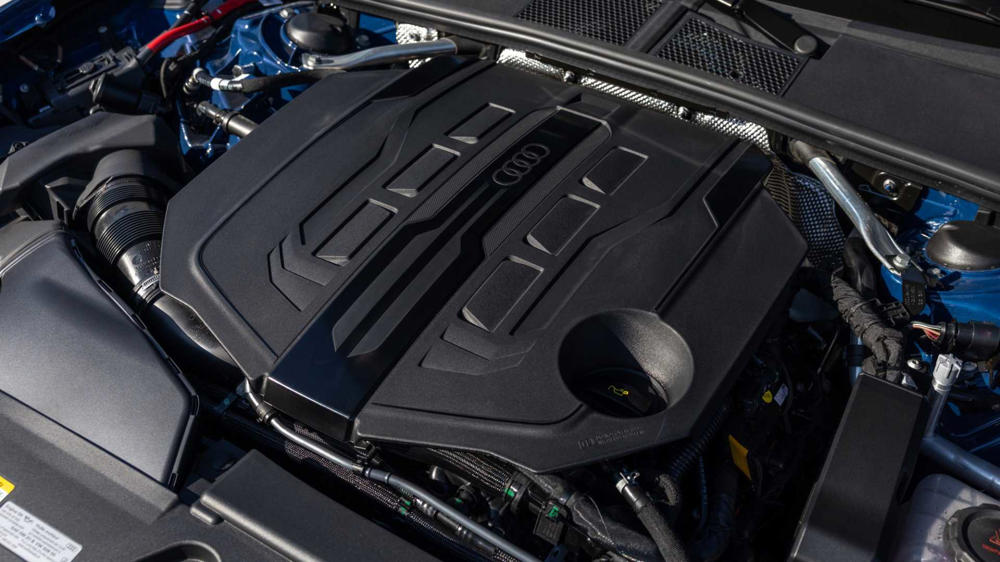
Everyone wants a luxury car, but not everyone is prepared for the expensive task of actually owning one; some say that living with an Audi is proof that haphazard maintenance is a great way to end up with a costly repair bill. Be it an Audi A3 or an Audi Q8, skipping or delaying scheduled servicing will punish an already strained wallet with pricey, unexpected trips to the shop, and one of the most vulnerable components is your Audi's beating heart: the engine. So, let's see if we can make your life a bit easier, and find out what the most reliable Audi engine is that you can buy brand-new going into 2027. This is a reliability analysis that breaks down the most reliable Audi engines you can get with the brand’s 2027 US lineup, with some carryover engines from the 2026 model year. All the Audi engine reliability data mentioned below is sourced from CarComplaints, the NHTSA, and RepairPal, and all the information and documented reports mentioned here are accurate as of publishing. The following list of the most reliable Audi engines going into 2027 is ranked in ascending order of reliability, from least to most dependable. A “Hot-Vee” Makes For Good Performance, But Excess Heat Is A Problem 3.0-Liter Turbo V6 (EA839) 3.0-Liter ‘TFSI’ Turbocharged V6 (EA839) Featured Models S5, A6, A8, SQ5, SQ5 Sportback, Q8 Bore 84.5 mm Stroke 89.0 mm Maximum Horsepower (Varies By Model) Up to 362 hp Maximum Torque (Varies By Model) Up to 406 lb-ft Top Speed (Varies By Model) Up to 155 mph 0-60 mph (Varies By Model) As quick as 4.3 seconds Drivetrain Quattro all-wheel drive Transmission 7-speed S-tronic dual-clutch automatic 8-speed Tiptronic automatic Maximum Fuel Economy (Varies By Model) Up to 22 mpg While Audi's entry-level cars are powered by raspy four-cylinder engines, their mid-range cars instead offer a smooth turbo V6. This is actually one of two V6 engines you’ll find in Audi’s 2027 US lineup, both part of the same EA839 family. Though Audi offers this as a gas-only engine or as a mild-hybrid in some markets, in the US, a 3.0-liter turbo V6 is your only choice. The EA839’s core design is based around a 90-degree spark ignition V6 with an aluminum block, and this engine also comes with a single twin-scroll turbo. Unlike most traditional V6s, the Audi EA839 V6 places the turbo within that 90-degree gap – a "hot-vee" design – directly between the cylinder banks. By placing the turbo there, Audi is able to shorten the exhaust path, which cuts turbo lag, allowing for near-instant throttle response. Even though this might be a proven design and these V6s are easily among the most reliable Audi engines ever made, especially with regular maintenance, there are some problems you might want to pay attention to. Audi Engine Problems & Reliability: 3.0-Liter Turbo V6 2027 Audi A6 Exterior (3) By far the most serious Audi EA839 3.0-liter V6 engine problem is excessive piston skirt wear and cylinder scoring, which can cause abnormal engine knock and mechanical tapping noises from under the hood. To mitigate this, many mechanics argue that you should change your motor oil more frequently than prescribed in the service schedule. Coolant migration from the water pump and thermal module is another common fault you need to keep an eye out for. The EA839 V6's mechanical water pump and vacuum slide valve module are exposed to extreme heat, causing them to wear prematurely. Over time, coolant can leak, or worse, get drawn into the vacuum lines and cause further damage. Another issue stemming from Audi's use of plastic components is the EA839 V6 engine's oil filter housing, which is also placed near the front of the engine. This composite plastic piece, after enough high-heat cycles, will inevitably warp and damage the inner rubber gasket. If you don’t fix this right away, motor oil can slowly seep through and leak out. Audi’s Flagship Engine Is Rock-Solid, So Long As You Don’t Miss A Service 4.0-liter Twin-Turbo V8 (EA825) 4.0-Liter ‘TFSI’ Twin-Turbocharged V8 (EA825) Featured Models S8, SQ7, SQ8, RS Q8, SQ9 Bore 86.0 mm Stroke 86.0 mm Maximum Horsepower (Varies By Model) Up to 631 hp Maximum Torque (Varies By Model) Up to 627 lb-ft Top Speed (Varies By Model) Up to 190 mph 0-60 mph (Varies By Model) As quick as 3.4 seconds Drivetrain Quattro all-wheel drive Transmission 8-speed Tiptronic automatic Maximum Fuel Economy (Varies By Model) Up to 18 mpg Powerful Audi engines have long been a feature reserved for their flagship models, from V10s to V12s and even W12 engines. Back then, Audi’s engineers weren’t afraid of experimenting with highly-strung engines, but today, they prefer to stick with something more practical. That's how we end up with a V8, and when mated to two twin-scroll turbochargers, this engine can be found outside of Audi as well, powering Volkswagen's other premium vehicles,from Porsche to Bentley, and even Lamborghini. Arguably one of the most reliable Audi engines in recent memory, the EA825 V8 has a great deal in common with the earlier EA839 V6 architecture. So, that includes the 90-degree spark ignition, an aluminum block, and even a “hot-vee” arrangement for the twin-scroll turbochargers, reducing turbo lag and improving both performance and drivability. On the whole, Audi's 2027 lineup of V8s is robust and durable, with a rock-solid mechanical core that should last a lifetime, but it is not without its challenges. Audi Engine Problems & Reliability: 4.0-Liter Twin-Turbo V8 2027 Audi A8 Exterior (1) Thanks to its complex design, dense packaging, and extreme heat loads under the hood, while the Audi EA825 V8 engine doesn't have many critical design flaws that undermine its inherent reliability, the upkeep can be quite demanding. You’ll have to adhere to a very strict maintenance regimen if you want to keep it running reliably. One consequence of missed services is thermal stress and coolant line seepage. Since the "hot-vee" arrangement places the two turbos tightly against the cooling lines, the system is subjected to intense ambient heat. With time, thermal cycling will wear out the cooling system’s O-rings, seals, gaskets, and plastic bits, allowing coolant to seep out. Cylinder on Demand (CoD) solenoid failures are another thing you’ll have to watch out for. Audi's Cylinder on Demand system shuts off some cylinders under light loads to save fuel. Though this is great, its electronic solenoids and mechanical locking pins can intermittently stick or fail, especially when you subject it to a lot of stop-and-go driving. Built For High Torque & Heavy Loads, Audi’s New V6 Is Mostly Very Reliable 2.9-Liter Twin-Turbo V6 (EA839) 2.9-Liter ‘TFSI’ Twin-Turbocharged V6 (EA839) Featured Models Q7, Q9 Bore 84.5 mm Stroke 86.0 mm Maximum Horsepower (Varies By Model) Up to 429 hp Maximum Torque (Varies By Model) Up to 442 lb-ft Top Speed (Varies By Model) Up to 130 mph 0-60 mph (Varies By Model) As quick as 4.8 seconds Drivetrain Quattro all-wheel drive Transmission 8-speed Tiptronic automatic Maximum Fuel Economy (Varies By Model) Up to 19 mpg Alongside Audi’s other EA839 V6 engines, the latest addition to their lineup is a 2.9-liter twin-turbo V6 engine, complementing the earlier 3.0-liter mill. Unlike the former, Audi's new 2.9-liter V6 is a bi-turbo, which makes it their go-to high-torque V6 for use in Audi's large three-row SUVs. This should be more than sufficient to handle the added stress of heavy payloads and towing, and both the new Audi Q7 and the upcoming Audi Q9 can tow up to 7,700 lbs. At its core, the EA839 2.9-liter V6 boasts a familiar “hot-vee” turbo layout, and there are lots of foundational similarities between this and the aforementioned 3.0-liter V6. Both engines share a near-identical cooling design, though there are noteworthy differences when it comes to their mechanical reliability. The fact that it's a twin-turbo helps, as the 2.9-liter power plant is equipped with heavy-duty forged components built from the ground up to handle higher boost pressures and higher engine temperatures. Audi Engine Problems & Reliability: 2.9-Liter Twin-Turbo V6 2027 Audi Q9 Exterior (1) One of the benefits of being built on a proven, tried-and-tested engine architecture is that Audi was able to rectify the early design flaws and reliability issues of the original EA839 V6s when it launched the 2.9-liter variant, even compared to the strong reliability of the Audi 3.0-liter turbocharged engine. Still, it’s not fault-free. You should be mindful of coolant pump and thermal management module leaks, since Audi installed these all-important components deep within the sweltering bowels of the engine. The intense heat generated by the engine and the turbos will eventually crack the coolant pump, causing a leak, or even allowing coolant to be drawn into the vacuum lines. On that note, carbon buildup from the direct-injection intake valves is another crucial line item on your maintenance checklist. After thousands of miles, carbon deposits will gradually build up at the intake valves. This isn't technically a problem per se, but you'll need to schedule a walnut-blasting carbon cleaning to keep your V6 in top condition. Great Reliability From This Audi 2.0T Engine & Fantastic Value For Money 2.0-Liter Turbo Inline-4 (EA888) 2.0-Liter ‘TFSI’ Turbocharged Inline-4 (EA888) Featured Models A3, S3, A5, Q3, Q5, Q5 Sportback Bore 82.5 mm Stroke 92.8 mm Maximum Horsepower (Varies By Model) Up to 328 hp Maximum Torque (Varies By Model) Up to 295 lb-ft Top Speed (Varies By Model) Up to 155 mph 0-60 mph (Varies By Model) As quick as 4.4 seconds Drivetrain Quattro all-wheel drive Transmission 7-speed S-tronic dual-clutch automatic Maximum Fuel Economy (Varies By Model) Up to 28 mpg The EA888 four-cylinder engine is a staple of the Volkswagen empire, which includes powering a multitude of entry-level Audi models. It's been around for 20 years now – so long, in fact, that the engine is now in its fifth-generation iteration, commonly referred to as the "EA888 Gen 5" or "EA888 evo5" – though most of Audi's US lineup still uses the slightly older fourth-generation version. While several variants of this engine exist, the US market gets only one EA888 configuration: a 2.0-liter turbocharged inline-four. Though '8' is a lucky number in much of Asian culture, it became clear not long after the engine's introduction that there is nothing particularly auspicious about Audi's EA888 engine. The Gen 1 and Gen 2 variants suffer from a range of problems, including timing chain tensioner failures, coolant leaks, and excessive oil consumption, among others. If you're only considering the current Gen 4 or Gen 5 engines, most of those early issues have been resolved, making it one of the most reliable Audi engines available. Audi Engine Problems & Reliability: 2.0-Liter Turbo Inline-4 (EA888) 2027 Audi A5 Exterior (1) Audi's EA888 has above-average reliability overall and will last a long time provided you keep up with regular maintenance, but that's not to say it has a spotless reliability record. In fact, some of those Gen 1 and Gen 2 problems continue to surface in the 2027 Audi EA888 engines, manifesting as odd, mostly sporadic issues. The most common defect with these newer EA888 engines is coolant leaking from the water pump and/or the thermostat housing assembly, as Audi continues to use the same fragile composite-plastic components that warp and crack with repeated heat cycles. Eventually, with enough thermal exposure, you’ll experience coolant leaks. Carbon buildup from the direct-injection intake valves is another thing you need to bear in mind, but like earlier, this isn’t inherently a reliability concern, and other direct injection engines from other automakers suffer the same issue. Over time, you'll need to stay on top of walnut-blasting carbon cleanings to remove those carbon deposits. The Most Reliable Audi Engine In 2027 Is Also The Most Aspirational & Fun 2.5-Liter Turbo Inline-5 (EA855) 2.5-Liter ‘TFSI’ Turbocharged Inline-5 (EA855) Featured Models RS 3 Bore 82.5 mm Stroke 92.8 mm Maximum Horsepower (Varies By Model) Up to 394 hp Maximum Torque (Varies By Model) Up to 369 lb-ft Top Speed (Varies By Model) Up to 180 mph 0-60 mph (Varies By Model) As quick as 3.6 seconds Drivetrain Quattro all-wheel drive Transmission 7-speed S-tronic dual-clutch automatic Maximum Fuel Economy (Varies By Model) Up to 22 mpg Last but not least, we have the best Audi engine for reliability – one you probably didn't expect: the EA855 five-cylinder that powers the exhilarating Audi RS 3. One of the most distinctive engines ever made, the EA855 is designed as a tribute to the iconic Audi Ur-Quattro rally homologation special from the 1980s, which also featured a turbocharged inline-five. Audi brought back this beloved five-cylinder for the 21st century specifically to power its Audi Sport models, but it is sadly not long for this world. Stringent emissions regulations mean that time is quickly running out to experience this wonderfully distinctive engine before Audi is forced to discontinue it. Plus, even though the EA855 is a highly-strung, sports-oriented powertrain, its base design is pretty old school. It has a simple, robust aluminum block, durable forged components (including the crankshaft, connecting rods, and pistons), and you get a simpler dual-injection setup. Altogether, it offers outstanding reliability and longevity, provided you maintain it regularly. Audi Engine Reliability: 2.5-Liter Turbo Inline-5 (EA855) 2027 Audi RS 3 Exterior (1) As robust as Audi's EA855 engine might be, the RS 3's aggressive tune does put a great deal of wear and tear on the engine, and one consequence is rattling from the turbocharger wastegate actuator. On the bright side, this doesn’t seem to affect the turbo’s performance, drivability, or reliability, though the noise can be quite annoying. Another common problem for you to look out for is coolant leaks from the water pump and/or thermostat housing. Just like its four-cylinder sibling, the EA888, Audi uses fairly brittle composite-plastic cooling system components. The constant high-heat cycles can easily warp and crack the plastic housing, eventually allowing coolant to leak out. In short, if you have the budget to buy an Audi RS 3, it's worth the price for the engine alone. Not only is it the most reliable Audi engine you can get in 2027, but you might also end up with a future classic and collector's item, given how unique this engine is, as the EA855 heads toward obsolescence. It produces a distinctive exhaust note, and for such a compact power unit, Audi's engineers managed to extract impressive power from it. To top it off, this wonderfully characterful engine is mechanically robust as well. Sources: Audi, NHTSA, CarComplaints, RepairPal, EPA

 Liked by Madeleine Roy, Zoë Wilson








 Liked by Madeleine Roy, Zoë Wilson