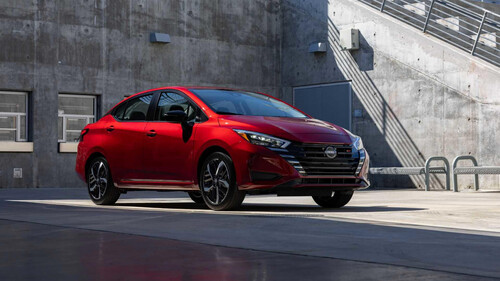
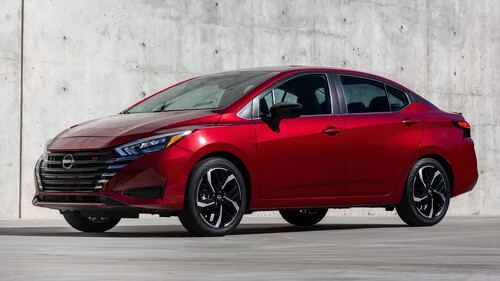
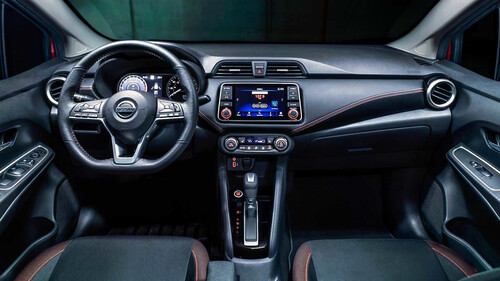
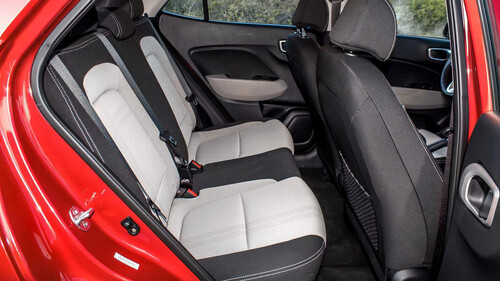
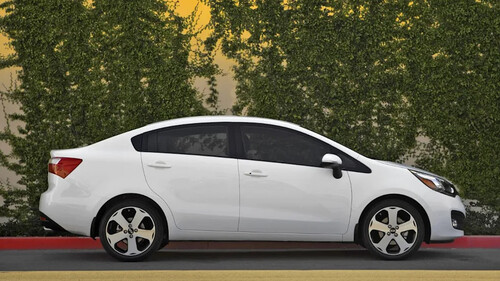
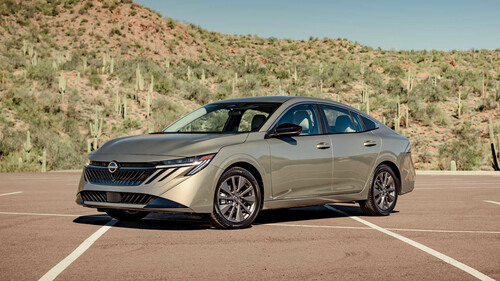
Autoblog and Yahoo may earn commission from links in this article.The Death of the Sub-$20,000 CarIf you're looking for a brand-new car for under $20,000 today, your options are down to zero, and you have no choice but to look at the second-hand market. These days, the average new car price is over $50,000, and there are no signs of that ever going down.The Nissan Versa was the last stand of the subcompact sedan class and was the last car to have a base price below $20,000. You can pin a lot of reasons on why it was axed in the U.S. The market's preference towards crossovers is one, and because it was made in Mexico, tariffs are another factor.AdvertisementAdvertisementProfit margins on the Versa were already razor-thin before the additional tariffs came into force. Rather than stocking up on a car that barely makes money, Nissan dropped it altogether.Anton Andres/AutoblogStill Alive ElsewhereOutside of the U.S, however, the Versa is still very much present. It also goes by Almera, Sunny, and V-Drive, and remains available in Latin America, the Middle East, and Southeast Asia. The car even got a facelift for 2026 for the Latin American markets, although that version is not going to the U.S or Canada any time soon.Still, we reckon the Versa does deserve some recognition for its efforts. After all, over a million had been sold in the span of three generations. To further appreciate it, we took one for a drive, and we have to say that it's a fine example of simple, affordable, and unpretentious motoring.Anton Andres/AutoblogNot a Penalty BoxThe third-generation Nissan Versa uses the Renault-Nissan B platform. That means it's the same car underneath as the Renault Clio IV, as well as the fifth-gen Nissan Micra, and the previous-generation Kicks, to name a few. If there's one thing to note here, it's that the cabin materials aren't actually that bad. Sure, there are hard plastics here and there, but the common touch points aren't half bad, especially for its asking price.AdvertisementAdvertisementYou might have noticed that the car is wearing a different name. What we have is a Southeast Asian-spec Almera, and it has a different engine under the hood. Instead of a 1.6-liter, it uses a turbocharged 1.0-liter three-cylinder, mustering 99 hp and 112 lb-ft. It's no hot rod, but given road and traffic conditions where this writer is based, it's adequate for most users in its target market.The VL model seen here is the top-spec trim, and for $19,600, it gets a CVT, six airbags, autonomous emergency braking, a surround-view camera, tire pressure monitoring, remote start, and even connected services, to name a few. It's far from bare, although it's missing conveniences such as adaptive cruise, which, for that price, is asking too much. Still, not bad considering you get a decent interior, just enough space, a fairly large trunk (for its size), and heaps of standard equipment.Anton Andres/AutoblogHow it DrivesObviously, it's not quick with that three-pot turbo, and 0 to 100 km/h (0-62 mph) takes about 11 seconds. That said, there's willingness in this compact turbo arrangement, though the throttle does feel a touch too eager at times. The segment it serves will find it adequate. The lack of a fourth cylinder does mean great fuel economy, registering 28 MPG despite averaging just 12 mph in dense traffic. Mixed driving yielded 40 MPG, and that number went as high as 45 MPG on the highway. We do wish for a bigger fuel tank, though.But what's surprising here is the chassis. For what it is, it has well-sorted underpinnings. It's reasonably refined and rides well for a subcompact, and there's a hint of sportiness in its handling even with those small 16-inch wheels. Steering feel won't impress enthusiasts, but for a commuter car, it's perfectly fine. The overall impression behind the wheel is pleasant, and you get the impression that this car was engineered for the world and not just specific markets. No wonder the profit margins were so slim with this car, and honestly, Nissan didn't have to make it this good for its class. We're not complaining, though.Anton Andres/AutoblogAs Good as it GetsAnd that's why the Versa deserves more credit than it actually gets. It faced off against the Kia Rio and Mitsubishi Mirage G4, and the Versa was easily the best subcompact sedan among that trio. It feels more expensive than it actually costs, and it's not too bad on the practicality scale, either. Admittedly, the price gap between subcompact sedan vs compact sedan wasn't that far off in the Nissan lineup, so one could say that the Versa made more sense with the base or mid-level trims.AdvertisementAdvertisementWe know that it won't be missed as much as, say, the Honda Fit, which has been venerated over the last couple of years. The final generation of the Versa didn't really hit its stride as it was launched right before the world went into lockdown, while supply issues in its early years stunted its sales potential. But towards the end, sales shot up, and given gas prices now, we reckon more people would buy one now had it been given the chance to grow. Nissan showed that economy cars don't have to feel like penalty boxes, and its retirement from the U.S market at least ended the sub-$20k class on a high note.Anton Andres/AutoblogAnton Andres/AutoblogView the 9 images of this gallery on the original articleThis story was originally published by Autoblog on Aug 15, 2026, where it first appeared in the Features section. Add Autoblog as a Preferred Source by clicking here.