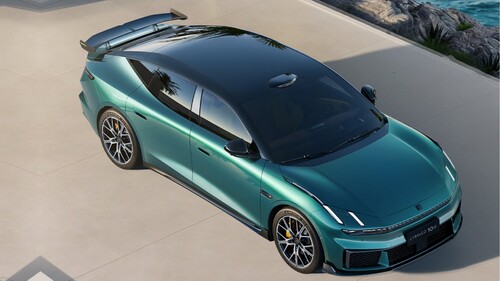
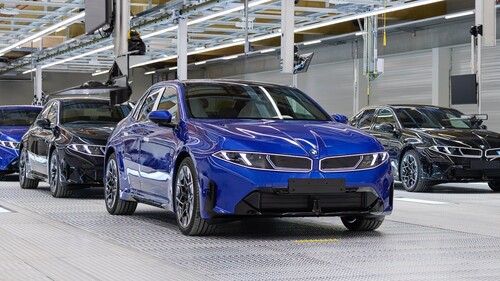
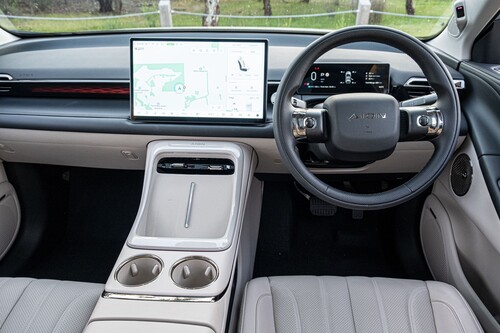
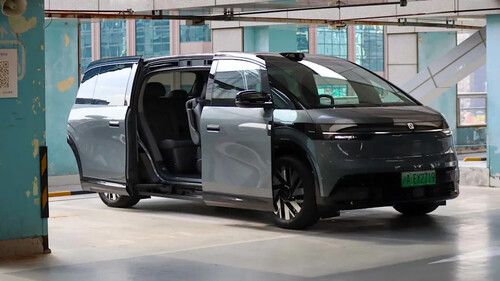
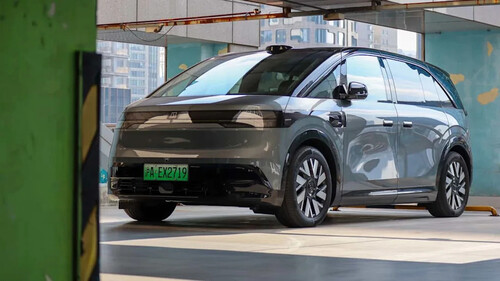
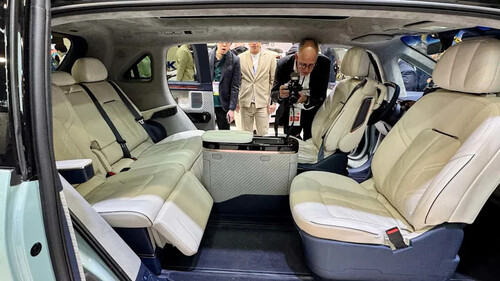
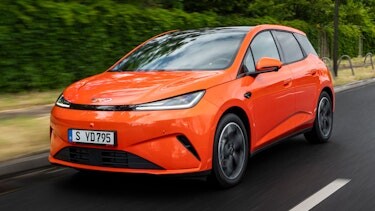
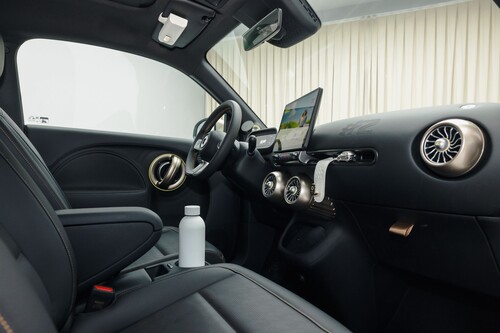
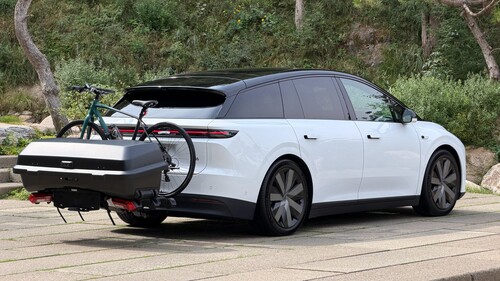
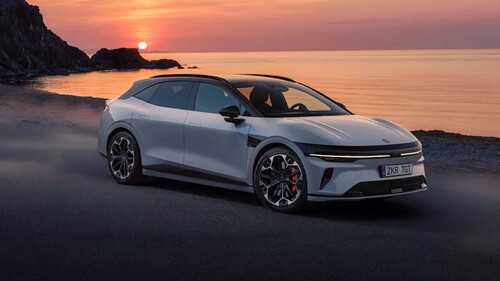
Zeekr CM1e vehicles at Waymo’s integration facility in Mesa, Arizona. Credit: David Moss Understand China EV’s Market Real-time notifications when critical EV data is released All important data in one place 2,000,000+ data points Become a member The Google parent Alphabet’s Waymo imported over 3,200 Zeekr-based Ojai robotaxis in the US cumulatively, despite 102.5% tariffs, Forbes reported. A recent clip shared by David Moss shows hundreds of vehicles parked at a facility in Arizona. Why is Waymo using Chinese-built vehicles for its latest robotaxi platform? More than 2,600 of those shipments were recorded in 2026, while more than 500 Ojai vehicles were seen together at a Waymo integration facility in Mesa, Arizona, in August. The Ojai is built by Zeekr, Geely Group’s electric vehicle brand, in Ningbo, China. The vehicle is also identified by its CM1e codename in customs and industry records. The customs records do not identify Waymo as the consignee. The Ojai entered the Waymo fleet and began public rides in San Francisco, Phoenix, and Los Angeles in 2026. Chinese-built vehicle, US-installed autonomous system The Ojai is based on Geely’s SEA-M architecture, which originated with the Zeekr M-Vision concept developed for Waymo’s autonomous ride-hailing program. The M-Vision was unveiled in 2022, while a production version later emerged under the CM-series designation. The vehicle uses an 800V electrical system, a 93 kWh battery and a single rear electric motor rated at 200 kW (268 hp). Its body has dual B-pillarless sliding doors, while the steering and braking systems use redundant drive-by-wire and brake-by-wire hardware. The vehicles supplied for the Waymo program are imported before the autonomous-driving system is fully integrated. The Chinese-built portion includes the vehicle body, battery and electric drivetrain, while Waymo’s autonomous-driving hardware and software are added in the United States. The Ojai uses Waymo’s sixth-generation Driver, which Waymo introduced in 2026. The system has four LiDAR sensors, six radar units and 13 cameras. Waymo said the streamlined hardware configuration was developed to reduce cost while expanding the system’s operating capabilities. A 102.5% tariff still leaves room for a lower hardware cost US import declarations place the ex-factory value of the Ojai’s CM1e chassis at roughly 38,000-38,500 USD per vehicle. Applying a 102.5% tariff to the upper end of that range brings the calculated landed chassis cost to about 78,000 USD. Waymo has disclosed a Gen 6 hardware cost of about 25,000 USD. Adding that figure to the calculated chassis cost produces an estimated 103,000 USD for the vehicle and autonomous-driving hardware before final US integration. The final integration cost is not public, so 103,000 USD should not be treated as the completed Ojai’s all-in cost. Waymo’s previous Jaguar I-Pace-based fifth-generation vehicles were estimated at 200,000 USD per unit, including roughly 75,000 USD for the vehicle and 125,000 USD for autonomous-driving hardware. On those figures, the 103,000 USD estimate is about 48.5% lower. The comparison is therefore based on the disclosed vehicle and hardware figures, rather than a complete accounting of manufacturing, integration, logistics and operating costs. Market & Political Context The same platform is also used by the consumer Zeekr Mix, which entered the Chinese market in 2024 at 41,200 USD. The Mix and Ojai share the SEA-M architecture but are separate vehicle configurations. In China, Zeekr’s June 2026 model sales data show the Mix recorded just 4 units, compared with 7,837 for the 007 GT, 5,817 for the 9X, and 3,935 for the 8X, according to China EV DataTracker. The figures provide context for the Mix’s position in Zeekr’s lineup, but do not establish a direct relationship between its Chinese retail sales and the Ojai vehicles supplied for Waymo. Waymo’s use of Chinese-built vehicles has also attracted political criticism in Washington. Senator Bernie Moreno criticised the company’s relationship with Geely and Zeekr during a Senate hearing in February 2026 and called for restrictions on Chinese automotive hardware and partnerships. For now, the import records show the scale of Ojai shipments rather than the number of vehicles operating on US roads. Waymo confirmed in May that the Ojai was entering public service and said it would initially be offered in San Francisco, Phoenix, and Los Angeles. The Zeekr Mix shares the SEA-M platform with the CM1e but is sold as a consumer vehicle in China. Most important news in your inbox. Recaps · scheduled All you need, in one email. Instant alerts · real-time Ping me when an article goes live. 0 of 27 topics selected Bundle into one email per day — instead of one email per article No spam · Unsubscribe with one click · Change settings anytime