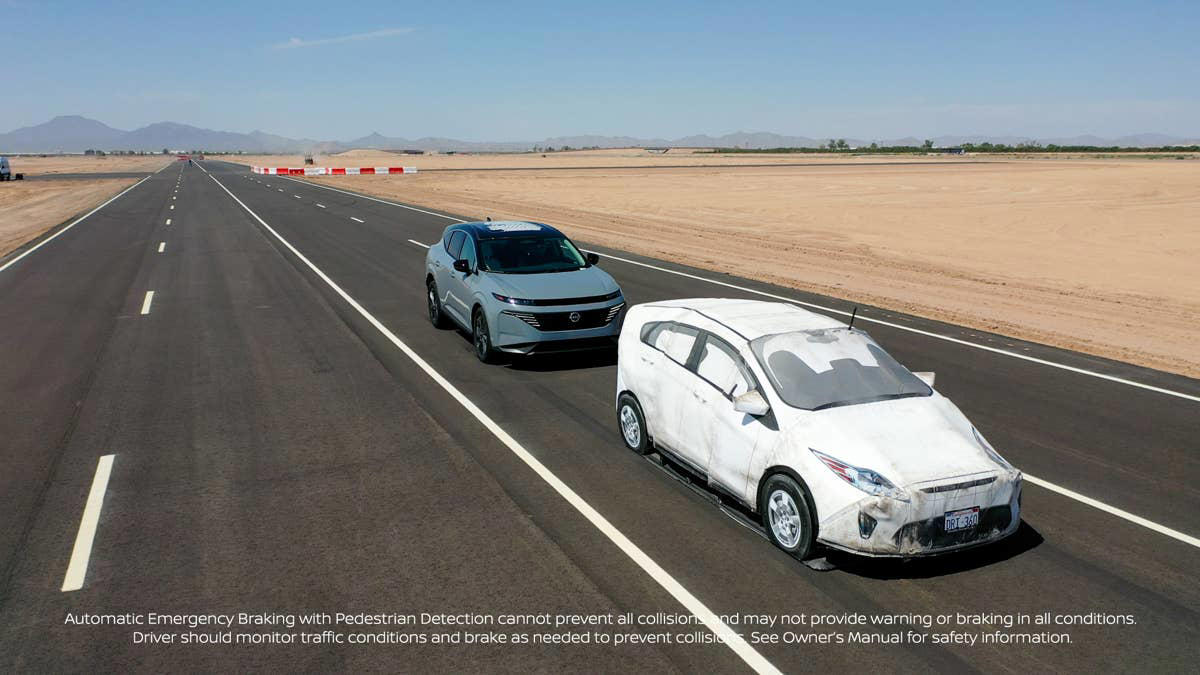
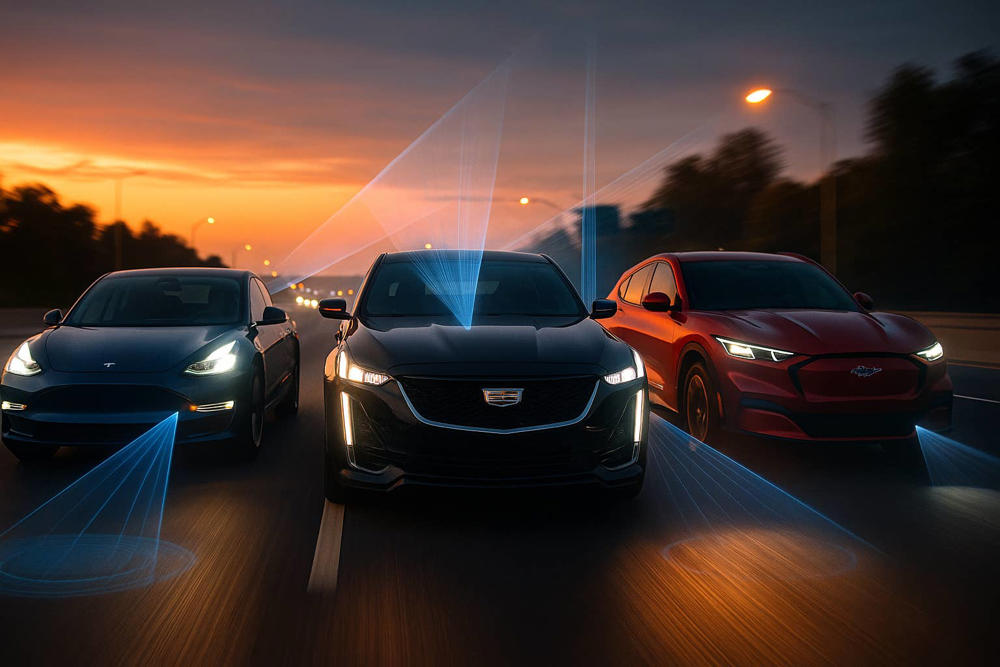
Modern driver assistance suites are getting smarter every year, yet a comprehensive new evaluation proves they still struggle when things go off-script. In a newly released study, AAA tested four 2026 vehicles, 74 closed-course runs to evaluate their standard intersection automatic emergency braking systems. While traditional rear-end crash prevention has become remarkably reliable, intersections remain a massive engineering hurdle. During standardized Euro NCAP left-turn scenarios across oncoming traffic, all four SUVs successfully warned the driver and braked to avoid a collision. Introducing minor real-world variables immediately exposed glaring capability gaps. When researchers repeated the left-turn test without activating the turn signal, one vehicle completely failed to intervene. Even worse, when a robotic soft target pulled out from a perpendicular side road directly into the path of the test vehicle traveling at 30 mph, three of the four vehicles slammed into the target every single time. Only the Tesla Model Y successfully stopped in all five runs. Meanwhile, the Equinox braked just once, and both the Explorer and Tucson failed to provide even a basic forward collision warning. A Massive Gap In Regulatory Standards The root cause of this inconsistent performance comes down to how safety regulators evaluate new cars. Historically, American crash-avoidance protocols have focused almost exclusively on straightforward, rear-end impacts. While the National Highway Traffic Safety Administration drafted a research procedure for intersection safety back in 2019, a mandatory federal test standard has still not been implemented. Automakers largely calibrate their radar and camera arrays to ace existing European left-turn protocols rather than preparing them for unpredictable American cross-traffic. Industry engineers are constantly pushing boundaries, whether that means developing parked crash avoidance or building software where autonomous systems intervene during manual driving. As AAA’s Director of Automotive Engineering Greg Brannon noted, intersection AEB performance outside of narrow, pre-programmed test parameters remains frustratingly spotty. Until federal testing protocols expand to mirror chaotic, everyday driving geometries, consumers are effectively buying vehicles optimized to pass a specific lab exam rather than handle a distracted driver running a stop sign. Don’t Trust The Sensors With Your Life AEB is net positive for road safety, representing a massive leap forward compared to AAA’s 2022 baseline tests where systems ignored intersection threats entirely. However, treating these digital safety nets as infallible co-pilots is a dangerous mistake. Over-reliance on finicky sensors can easily lull drivers into a false sense of security, especially when competing systems are already sparking lawsuits over phantom braking issues triggered by hyper-sensitive onboard cameras. The takeaway for anyone behind the wheel is simple: keep your eyes up and your foot ready. AAA explicitly advises drivers to “cover the brake” by hovering their right foot over the pedal whenever entering a busy intersection. Until automakers and regulators close the gap on perpendicular cross-traffic detection, your own reflexes remain the only crash-avoidance system you can truly count on.

 Liked by Victoria Smith, Aiden Morgan





 Liked by Victoria Smith, Aiden Morgan