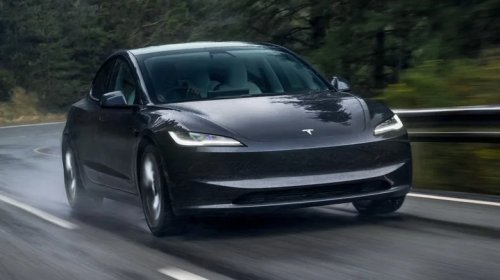
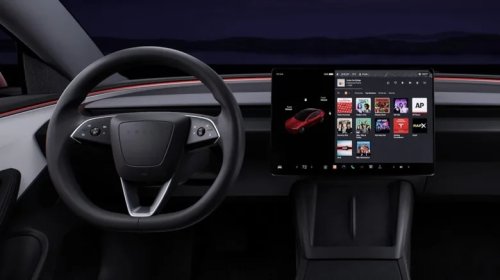
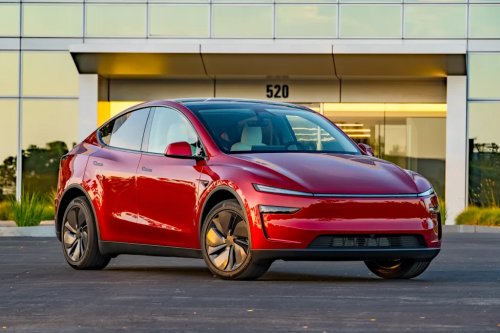
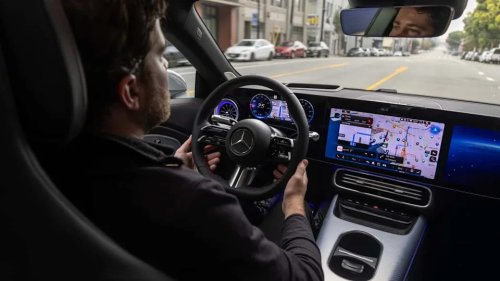
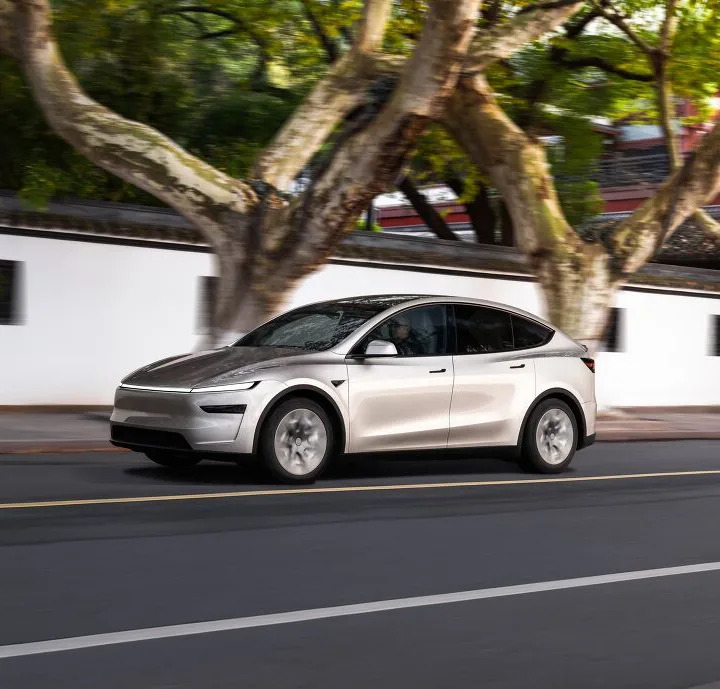
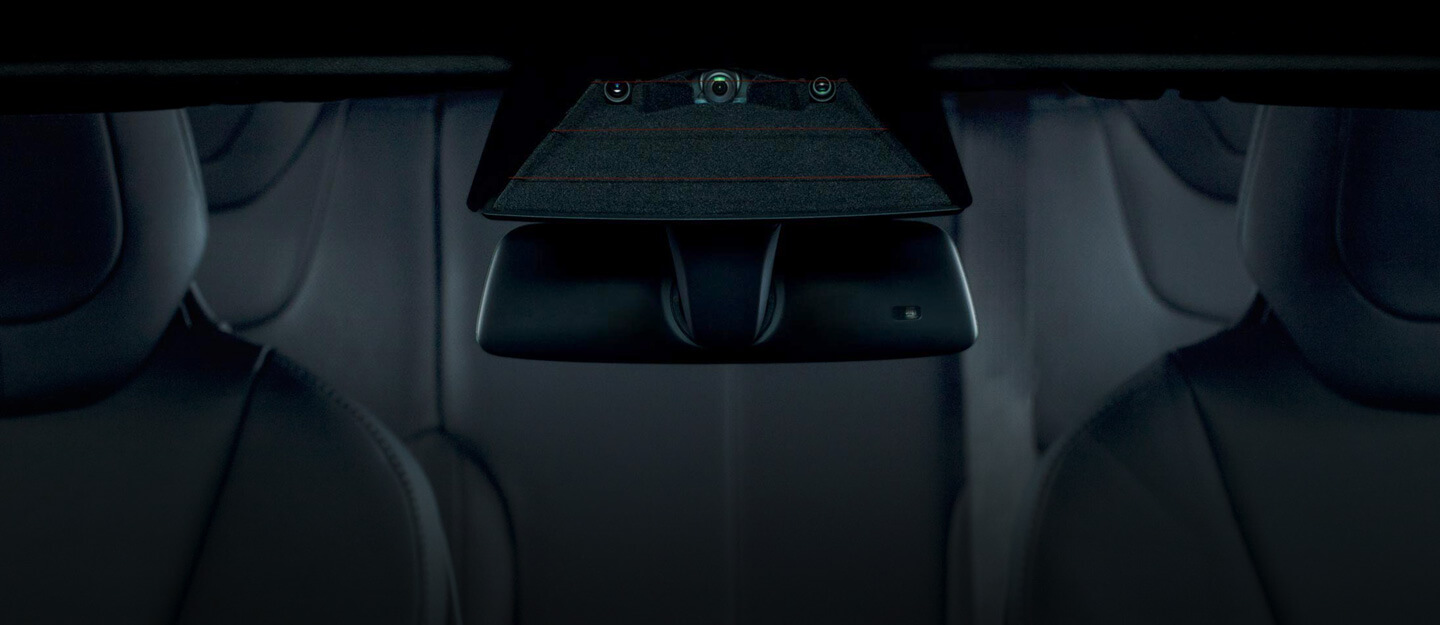
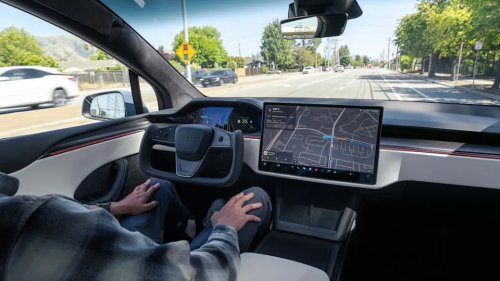
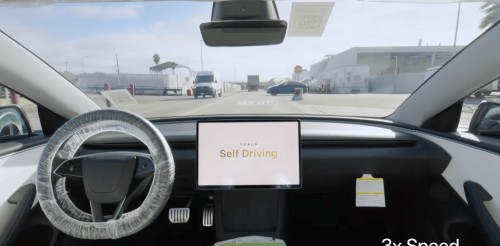
Someone filmed a dark gray 2026 Tesla Model Y on a British Columbia highway on July 5, 2026, and the footage is exactly as alarming as it sounds. The driver – wearing large sunglasses, head tilted back, mouth open, hands nowhere near the wheel – was completely unconscious at roughly 100 km/h on the Trans-Canada Highway. Two children were asleep in the back seat. The camera vehicle pulled alongside, then accelerated ahead, and through the rear window you can watch the Model Y continue navigating the winding mountain road on its own while its driver sleeps.The bystanders filming said it best: "He's fully… He is totally asleep."RCMP launched an investigation. Cpl. Michael McLaughlin of the B.C. Highway Patrol said: "Just because your vehicle comes with some fancy electronic intervention and automation doesn't mean you can actually use it on our roads."AdvertisementAdvertisementFor context, British Columbia only permits up to Level 2 driver assistance – adaptive cruise, lane-keeping, that kind of thing. Full Self-Driving is not legal to use there at all.Hi Tesla, would you please run this plate and permanently ban this car and the owner of their FSD subscription and/or purchase. Please and thank you!🙏@tesla @tesla_na pic.twitter.com/4IP6gLcHSC— Tesla Fam Ben🇺🇸🦾🚀(@TeslaFamBen) July 6, 2026Why the Sunglasses Matter More Than You'd ThinkThe 2026 Model Y's driver monitoring works primarily through a cabin-mounted camera above the rearview mirror, a system Tesla upgraded significantly with FSD v12.4 in 2024. It tracks eye position, blink rate, yawning, and head movement to detect inattention or drowsiness. The problem is spelled out in Tesla's own owner's manual: the vision-based system "will not be activated" when the driver is wearing sunglasses or a hat that obscures the eyes.When eye-tracking is unavailable, the fallback method relies on detecting physical pressure on the steering wheel – a much cruder form of monitoring that can confirm hands are touching the wheel but cannot determine whether the driver behind them is actually awake. A sleeping driver with a hand resting on the wheel passes that test. This particular driver apparently wasn't even doing that.It's worth noting that Chinese Tesla owners have reportedly been fooling the same camera with $30 plastic doll heads mounted near the mirror. If a cheap prop defeats the system intentionally, a pair of sunglasses defeating it by accident is entirely on-brand. The monitoring architecture was built to keep attentive drivers honest, not to catch someone truly checked out.The Complacency Problem Technology Can't Engineer AwayThis isn't an isolated incident. A Washington State Patrol trooper pulled over a woman on I-5 in late June 2026 after she passed him at 78 mph, apparently asleep – she received a roughly $300 negligent driving citation. In April 2026, a woman was arrested for DUI on I-75 after being found unconscious in her Tesla with Autopilot running, reportedly under the assumption the car would handle the drive home. A different East Bay case from March 2026 involved both the driver and the front passenger found to be asleep at the same time.AdvertisementAdvertisementTesla's own safety data is legitimately impressive – per the company's Q3 2025 report, Autopilot logs roughly one crash per 6.36 million miles, against a national average closer to one per 700,000 miles. Research from MIT AgeLab and the IIHS suggests that's precisely the problem. The better these systems perform, the more completely drivers mentally exit the vehicle. The rare emergency that actually requires human intervention arrives faster than a disengaged person can respond.Tesla classifies FSD (Supervised) as Level 2, and the owner's manual is unambiguous: "You must remain attentive and be ready to take over at all times while Full Self-Driving (Supervised) is engaged." The company has spent considerable time in court recently defending itself against claims it oversold those capabilities. A Miami federal jury in August 2025 found Tesla 33% liable for a 2019 crash in which a driver using Autopilot ran a T-intersection and killed a passenger, and NHTSA currently has an engineering analysis open covering roughly 3.2 million Tesla vehicles – the final step before a potential forced recall.Version 2025.32.3 of Tesla's software contains a troubling feature – upon detecting signs of drowsiness in the driver, the system may respond by prompting the driver to activate FSD. Pushing more automation at the exact moment a driver is least capable of supervising it isn't a safety feature. It's the problem wearing a safety vest.The 2026 Model Y starts at $41,630, and FSD (Supervised) now runs $99 per month – Autopilot is no longer bundled as a standard feature. Buyers are paying a premium for a system that works extraordinarily well right up until the moment human behavior makes it dangerous. No software update fixes that.