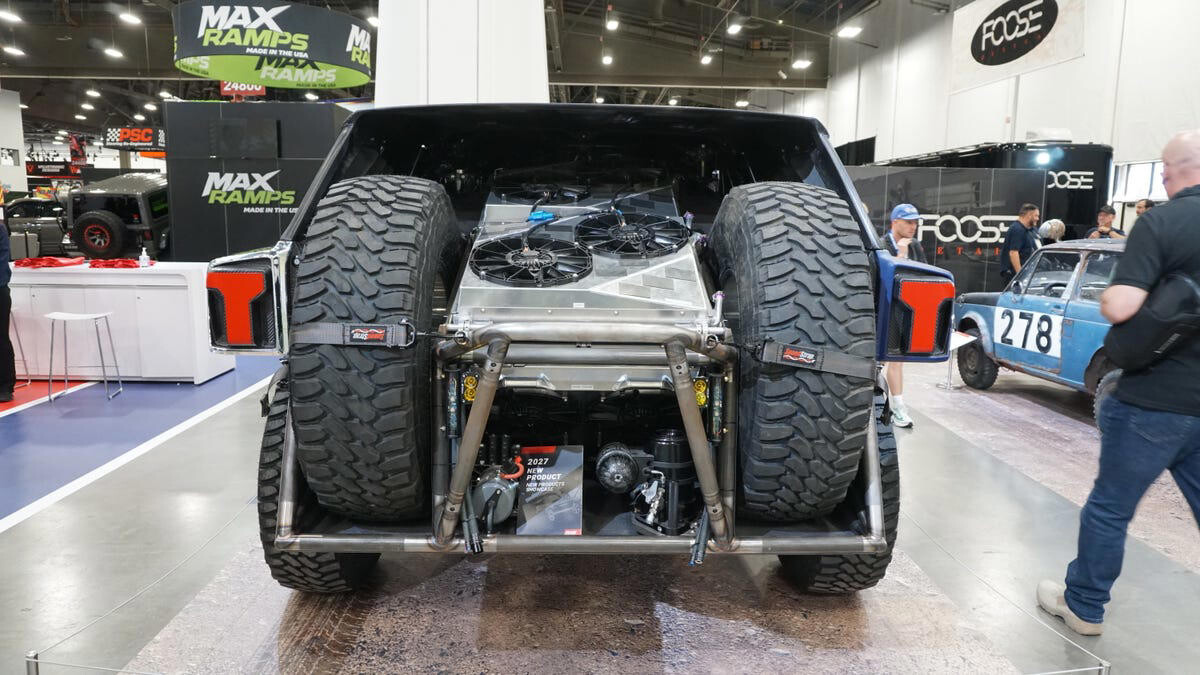
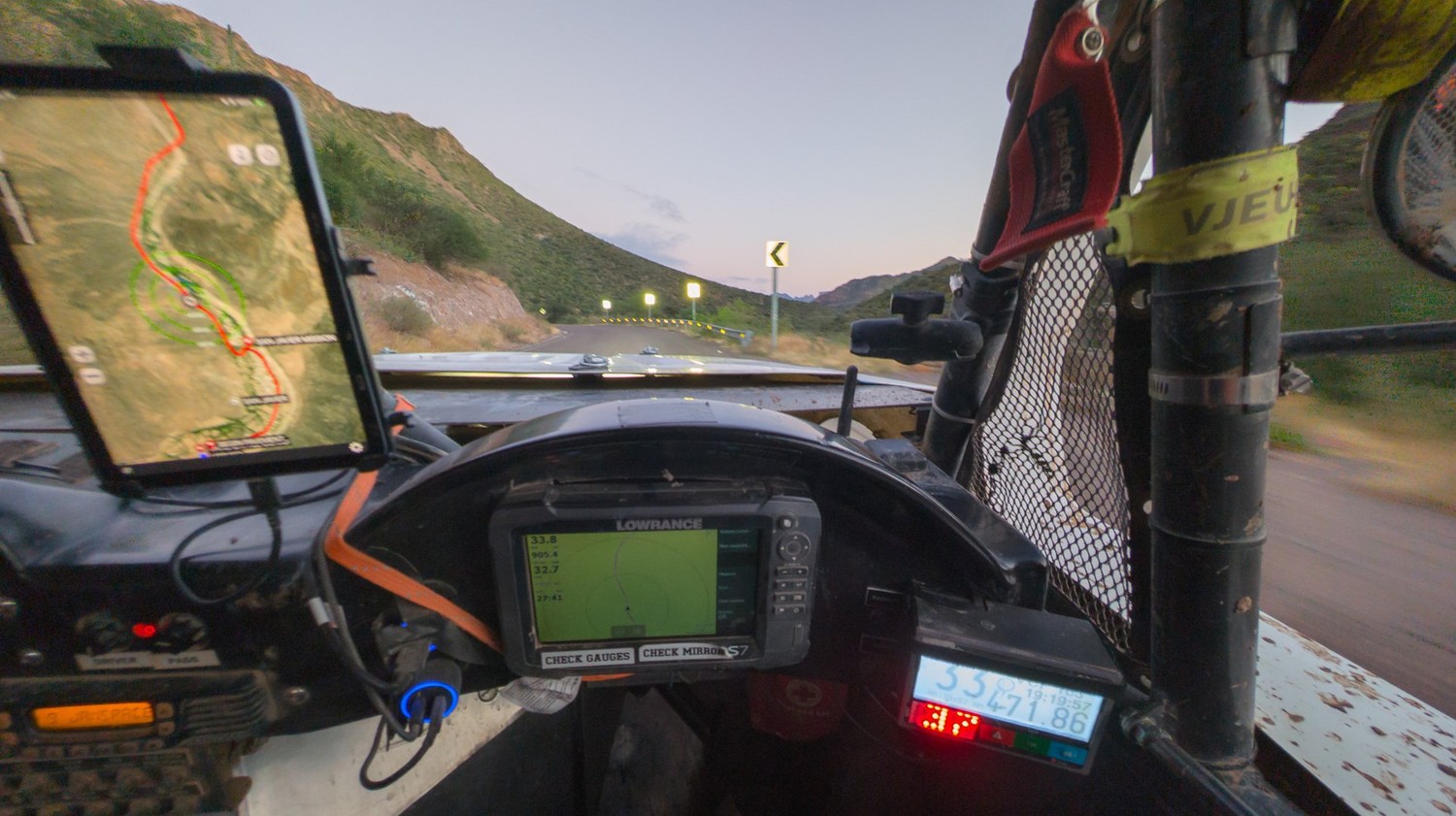
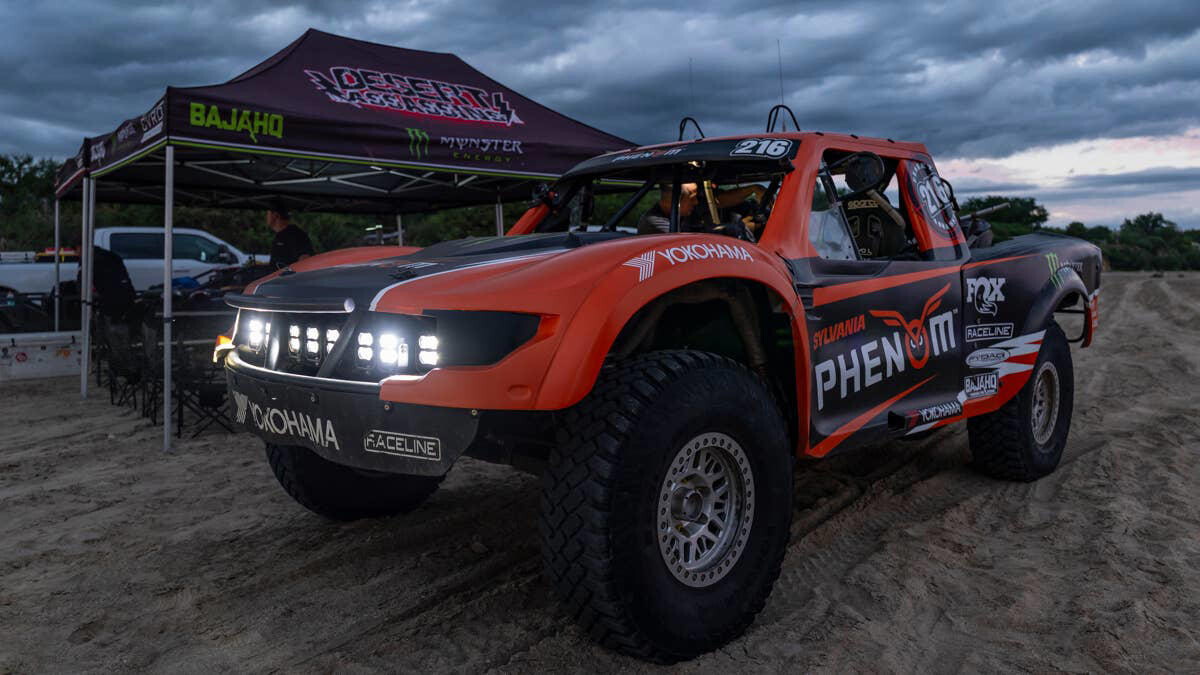
Ensenada-born Trophy Truck champ Alan Ampudia was first to cross the 2026 Baja 1000 finish line, declared the unofficial winner, and allowed to celebrate on stage. A day later, he was told he’d come in second. Post-race corrections are not uncommon in desert racing, but this one put race organizers in a particularly sticky situation. Ampudia and Australian co-driver Paul Weel brought Team Papas’ No. 1 Trophy Truck into San José del Cabo early on Saturday, November 14, 13.5 seconds ahead of Bryce Menzies and Andy McMillin in the No. 7 on raw time. When SCORE International posted corrected results on Sunday, Menzies and McMillin had won by 1 minute, 38 seconds. The swing came from a timing adjustment to one speed-zone section north of Loreto. Ampudia says it cost him a win he earned by following the rules. Fans are divided on the strength of his case, and even the winners aren’t fully celebrating. This year’s race was the first run entirely in Baja California Sur, a roughly 950-mile loop from Cabo to Cabo. I was in the mix myself, co-driving a TrophyLite running in Class 2, way, way behind the Trophy Trucks—look for that feature story soon. Meanwhile, here’s the drama from the front of the pack. What Happened Speed zones are routine in Baja. Where the course runs on or across public highways, racers are held to a posted limit, and SCORE’s Stella satellite tracker logs penalties for going over. Time in a speed zone normally still counts toward a team’s total; otherwise, it would be a free rest stop. Before the race, SCORE issued a course update, patch 02-E, adding a 37-mph section at a military checkpoint north of Loreto, inside a longer 60-mph speed zone on the highway. According to La Paz outlet Diario Humano, Ampudia identified the checkpoint stretch as zone 34B. Off-road news site 131 Off-Road reports that SCORE had also designated that stretch, about 14 miles long, as a neutralized section ahead of the race, though many racers say they weren’t told so at the drivers’ meeting. On race day, Stella and the GPS file disagreed. I can confirm that firsthand: I was co-driving for Ron Stobaugh in car No. 2085 through that exact section. The GPS file showed 60, 37, 60. Stella, which looks like an old digital watch mounted on the co-driver’s dash, showed 60, then 37, and stayed at 37. 131 Off-Road describes the same problem, reporting that Stella was programmed incorrectly and never told racers to go back to 60. I remember stressing over which one to trust. I went with the slower limit, assuming the live satellite device had more current information than the file we’d loaded before the start. By the rules, that was the wrong call. At the mandatory drivers’ meeting, organizers told teams that when in doubt, they should trust the GPS file over Stella. In a clip Ampudia posted, race director Abelardo Grijalva told drivers and co-drivers: “You guys have your file, you guys know the rules. Sometimes the Stella might fail, might, do whatever.” In other words: trust the map, not the satellite box. I’d forgotten that in the car, and that’s on me as co-driver. As it turned out, my caution didn’t cost us anything. Why it didn’t is the heart of this story. How the Fix Changed the Winner After the race, SCORE took the section out of the timing entirely, Autoweek reported, and credited every team for its time through it. That makes the stretch cost everyone zero seconds, so how fast you drove it no longer matters. The reasoning is easy to follow. Teams had run the same stretch under two different limits, and erasing it fixes that for as many people as possible. But the top two Trophy Trucks were close enough that the fix decided the win. Here’s how SCORE’s November 15 results broke down, per Diario Humano: Ampudia/Weel (No. 1)Menzies/McMillin (No. 7) Start-to-finish time16:47:12.81416:47:26.367 Neutralization credit−17:23−19:42 Speeding penalty+0:18+0:45 Corrected time16:30:07.81416:28:29.367 Reported figures vary. 131 Off-Road puts the credits at 16:10 for the No. 1 and 18:31 for the No. 7, and SCORE’s online timing portal later showed a 1:40 margin instead of 1:38. SCORE hasn’t publicly explained the differences. Every version, though, gives the No. 7 roughly 2 minutes, 20 seconds more credit, far more than Ampudia’s 13.5-second lead on the road. Why the No. 7 got the bigger credit is less clear. Ampudia has implied that Menzies’ team held 37 mph through the rest of the zone. But 131 Off-Road reports that the No. 7 also went back up to 60, per the GPS file. It suggests the No. 7 simply lost more time in the section, either by going slower or by driving through dust the leading No. 1 didn’t have to deal with. Either way, the effect is the same. The stretch where the No. 1 gained ground no longer counts, and over the rest of the course, the No. 7 was faster. What Each Side Says Ampudia articulated his exact issue, in English and Spanish, pretty clearly. His team issued a press release to the same effect. “For us, this is a robbery,” he said, as reported by Diario Humano. His argument rests on SCORE’s own rulebook. He cites rule GL 15, which makes the official GPS file the reference for the route, and CR 54, which covers Stella as a tracking and penalty-reporting device. His team says it never received an official communication setting 37 mph for the whole zone, according to AGP Noticias. He has asked SCORE to keep the section in the timing and apply one standard to every team, and he has asked Mexican authorities to review the result. Ampudia has been careful not to blame the race winners. “The No. 7 Trophy Truck didn’t make this decision,” he said. The winners aren’t thrilled with how it played out, either. McMillin told 131 Off-Road he thought they’d lost by 13 seconds until he reached the podium, found Menzies celebrating, and learned the speed-zone credit would put them ahead. Menzies had seen it coming; before results were final, he told Autoweek he knew “the speed zone is gonna play a factor.” McMillin described the outcome as the result of a mistake on SCORE’s part that had to be corrected days after the race. He said he felt for the Ampudia family, and noted there are no photos of him and Menzies being declared the winners. A legendary race, he said, is “going to go down in the history books now for the wrong reasons.” I called Gabriel Garcia, SCORE’s main media guy, to ask about the dispute. He just politely reiterated that the section was “removed for everyone,” and characterized the Ampudia situation as “just a difference of opinion.” Where It Stands Nobody comes out of this happy. Ampudia lost a win he’d already celebrated on stage. Menzies and McMillin won a Baja 1000 they can’t fully enjoy. And SCORE is defending a fix for a problem that, by most accounts, started with its own tracker. I feel for Ampudia and his team, and I do think he got screwed. But I also think SCORE made a defensible call in a bad spot. Leaving the section in would have cost racers like me time for obeying SCORE’s own device. Unless SCORE reverses course, the published results are what will go in the record books. It just goes to show that even over nearly 1,000 miles and dozens of terrain types, seconds still count. Got a story tip? Drop us a line at tips@thedrive.com.

 Liked by Lucas Wilson, Nicole Morgan









 Liked by Lucas Wilson, Nicole Morgan