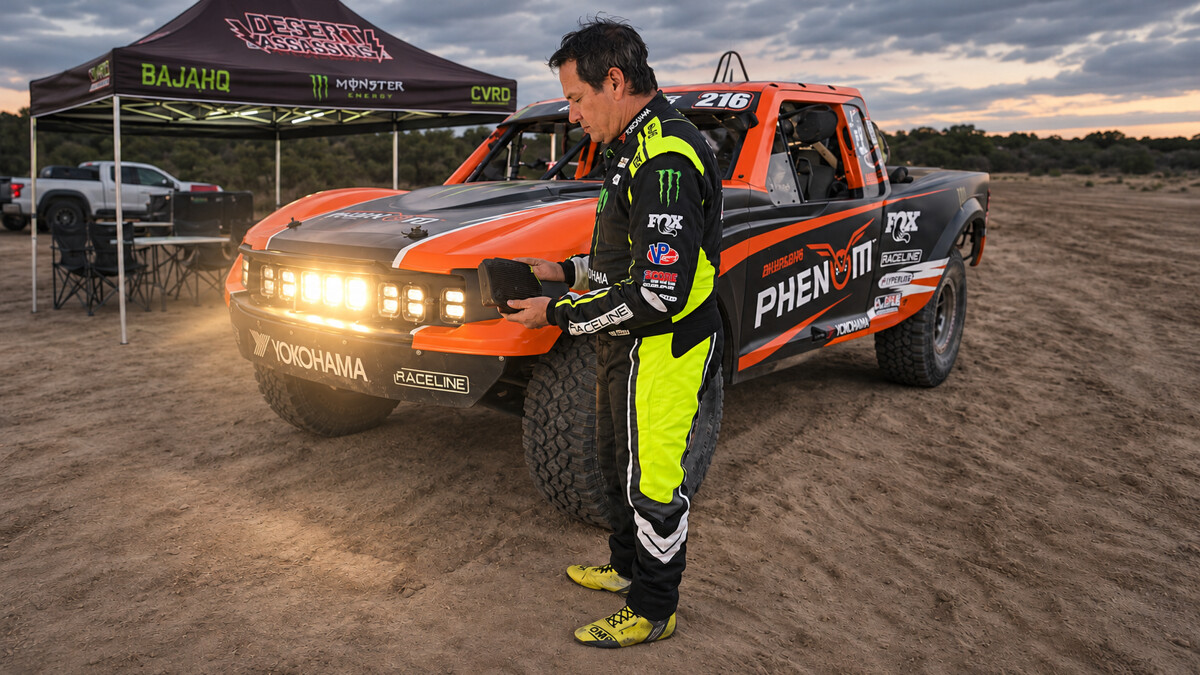
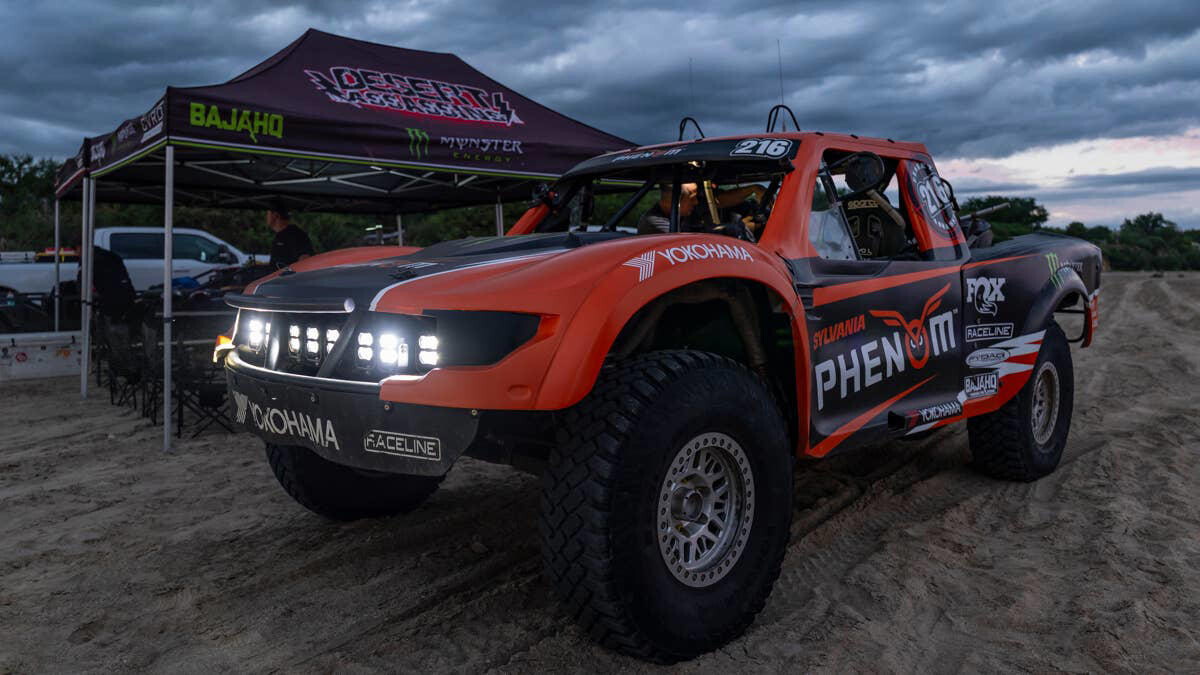
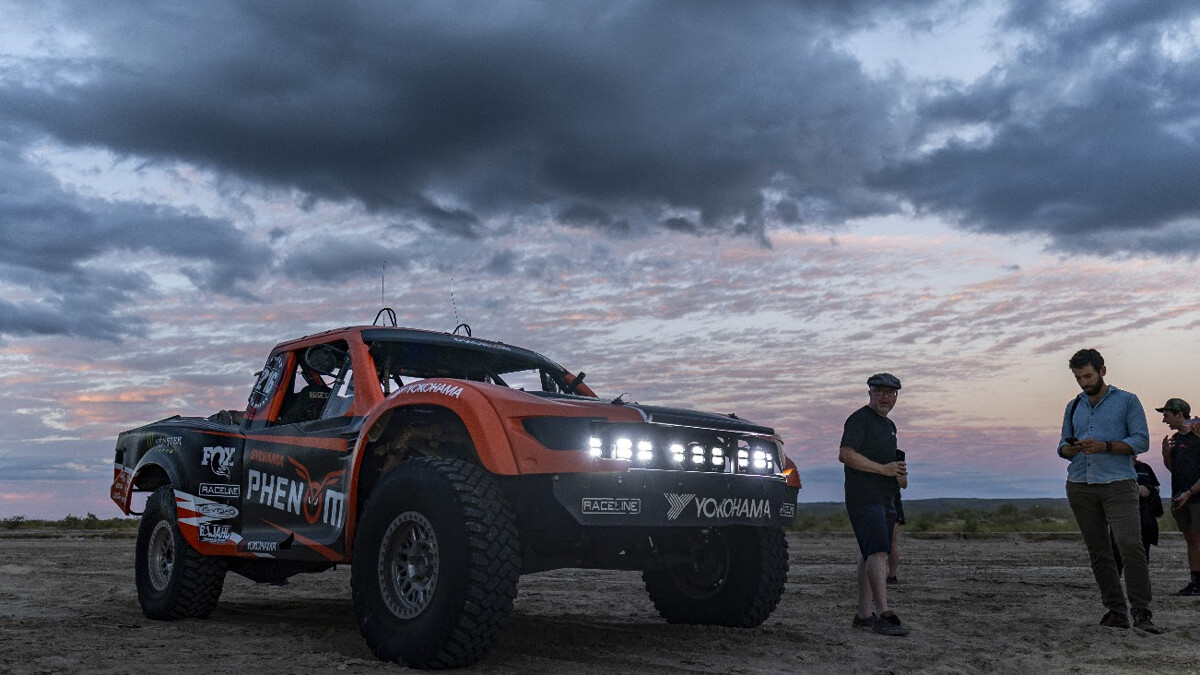
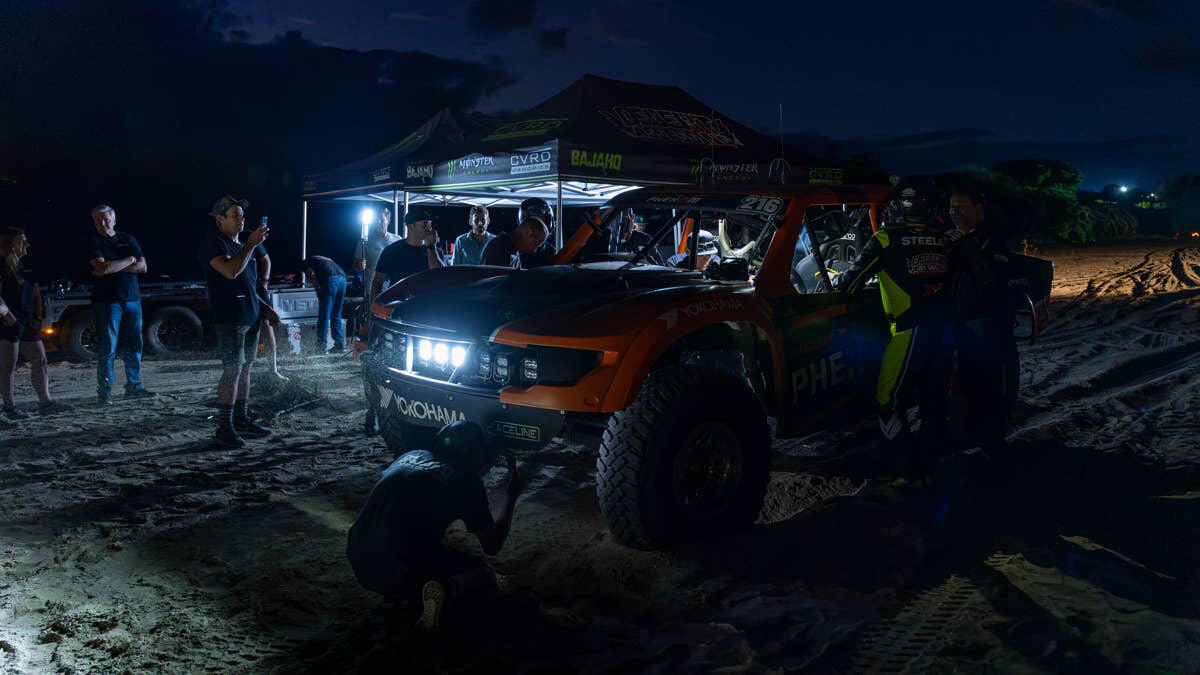
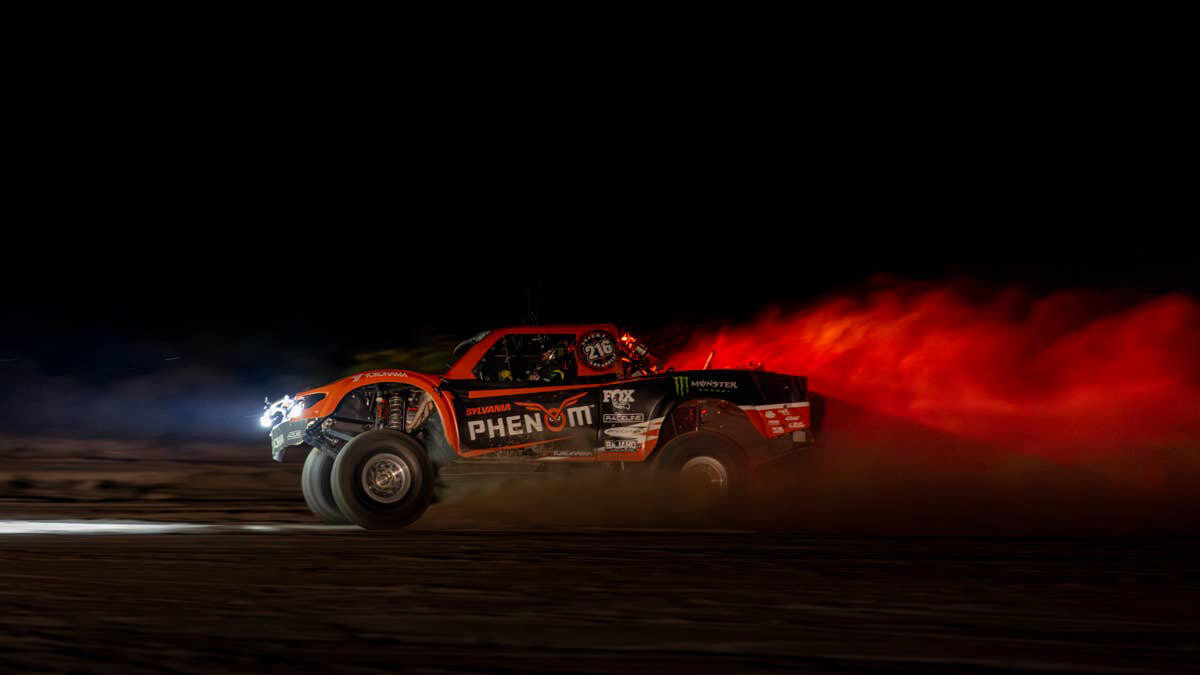
Desert racing is a comedy of errors performed by serious people in expensive machinery. Between broken parts, dust clouds, and logistical headaches, extraordinary things happen. The Baja 1000 might be the finest example. Sylvania invited me to Baja California Sur to meet sponsored driver Cameron Steele and experience its PHENOM off-road lights. Our visit included a demonstration, time with the team and a trip to qualifying. We weren’t there to follow the entire race, but we certainly got a taste of the preparation and occasional chaos surrounding it. Steele subsequently won his division. That gave this story a satisfying ending, although the tacos had already earned favorable consideration. Darkness changes the assignment The 2026 Baja 1000 covered 950.70 miles, starting and finishing in San José del Cabo. The race’s 59th running was its first held entirely within Baja California Sur, with 282 entries registered before the start. Sylvania Off-Road was the presenting sponsor. This isn’t an afternoon event where everyone finishes before dinner. Racing continues through darkness, with fatigue joining the rocks, ruts and mechanical problems already competing for attention. During daylight, drivers can read the terrain well beyond the truck. At night, that information depends heavily on lighting.might be a shadow, a hole or the beginning of an expensive conversation with your suspension builder. Seeing it early gives you options. Discovering it through the seat generally does not. Steele’s experience goes beyond the stopwatch Cameron Steele and Pat Dean won the overall four-wheel and Trophy Truck titles at the 2018 Baja 1000. Steele also entered the Off-Road Motorsports Hall of Fame that year. Those credentials give him considerably more authority on desert equipment than somebody demonstrating lights against a warehouse wall. He’s also a longtime television commentator and the personality behind Desert Assassins adventures including Rip to Cabo and Trail of Missions. His family has supported Baja’s Rancho Santa Marta orphanage for decades. His connection to the peninsula extends well beyond race week. In person, Steele was approachable and willing to discuss strategy, equipment, and nighttime visibility. He’s also funny, in a good way. There was enthusiasm and only a hint of chest-thumping. That’s refreshing in a sport where the machinery already does enough shouting for everybody. An older truck, a useful demonstration Our demonstration vehicle was an older team truck used for support and scouting duties. Steele’s actual race truck wasn’t available, understandably. Preparing for nearly 1,000 miles of punishment takes priority over letting journalists inspect every bracket. The truck provided rides for guests and gave us a chance to watch the PHENOM lights work as daylight faded. Compared with other vehicles operating nearby, its lighting appeared to cover more terrain, with useful illumination extending beyond the immediate foreground. That was my impression, not a controlled comparison. Different mounting positions, aiming and equipment make it impossible to declare a winner from this demonstration alone. I also couldn’t confirm the exact configuration and output of every light fitted to our truck. Still, the coverage was impressive. I could see why Steele places so much importance on lighting when discussing race preparation. What actually matters about off-road lights Sylvania is familiar to many drivers through replacement bulbs such as SilverStar. Its broader brand history reaches back to a Massachusetts light-bulb business established in 1901. That history provides context, but it doesn’t automatically prove how a new off-road product performs. For PHENOM, the relevant questions are beam quality, durability and how effectively the installation serves the driver. Lumens describe total light output, not precisely where that light lands. Optics and aiming determine whether you can distinguish an obstacle farther away while still seeing the trail’s edges. Excessive foreground brightness can make the distance seem relatively dark, while dust can scatter light back toward you. Illuminating every airborne particle isn’t particularly helpful unless you’re researching desert dandruff. Sylvania representatives described vibration, temperature and drop testing, including dropping a light from a drone at considerable height. I didn’t independently verify those tests. They’re company claims, rather than something I can certify after an evening in Baja. The company publishes a lifetime limited warranty for its off-road light bar and pod assemblies, requiring registration and proof of purchase. Installation costs aren’t covered, and misuse and abuse are excluded. Qualifying supplied the chaos Our qualifying visit was interrupted for a long time by a disabled water truck on the course. Fortunately, nobody was hurt, but the delay limited how much action we watched. It showed how even the equipment supporting a race can become an obstacle. The phrase “that’s Baja” is often repeated down here. Steele topped Trophy Truck 2WD qualifying with a 2:46.699 run, then won the division in the No. 16T entry at the Baja 1000. That’s a class victory, distinct from his overall four-wheel win in 2018. Final thoughts This was a first look at PHENOM, not a long-term product test. It was also a peek at their sponsorship and PR reach with Sylvania. I’d want confirmed specifications, pricing and more time with the equipment before recommending a particular setup, but that’s not the point of this journey. What stayed with me was the preparation, the people and how quickly the desert changes after sunset. Good lighting matters, but it works alongside driver judgment, navigation and a team capable of handling whatever breaks next. Steele won his division, the demonstration gave me something useful to consider, and Baja supplied its usual mixture of hospitality, spectacular scenery and mechanical uncertainty. The tacos remained the least complicated part of the assignment.

 Liked by Carter Lewis, Camille Brown





 Liked by Carter Lewis, Camille Brown