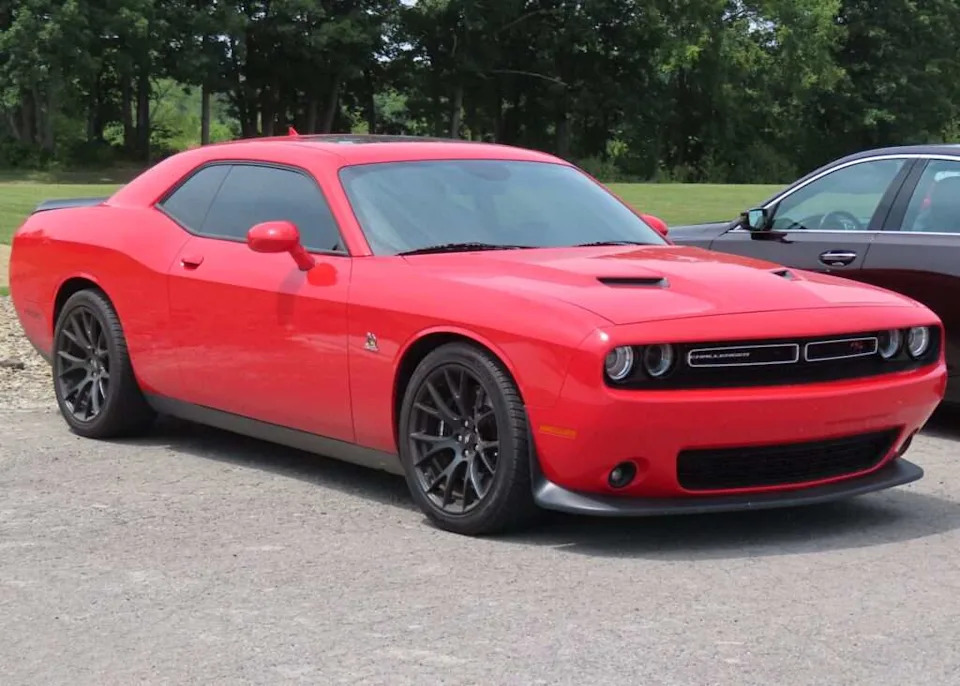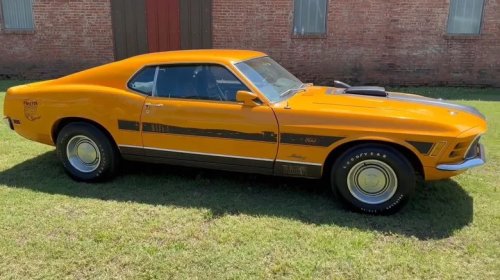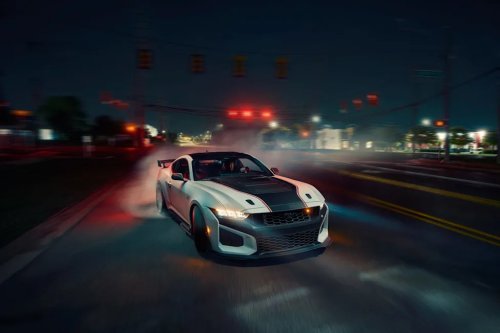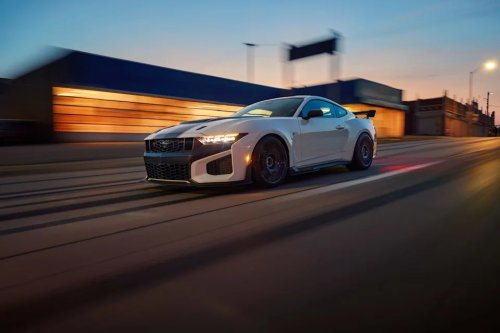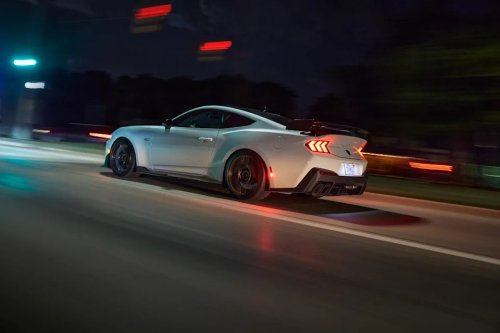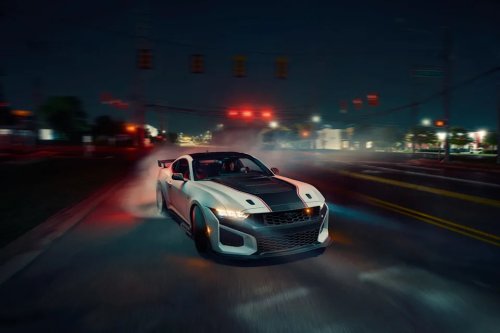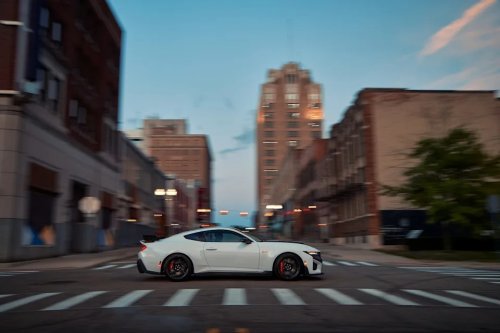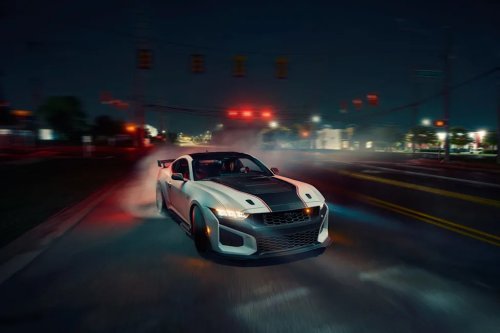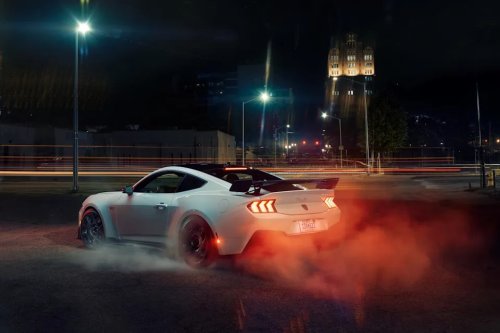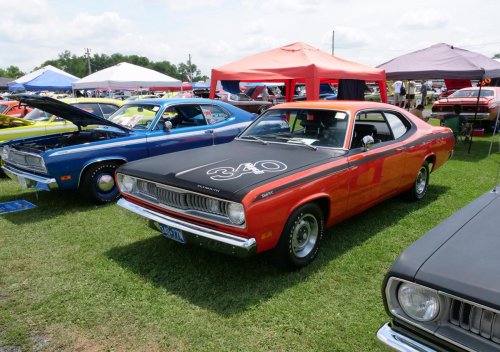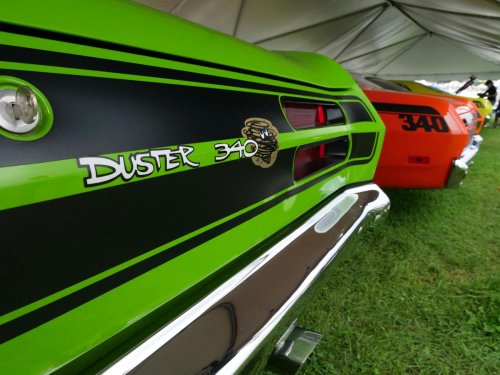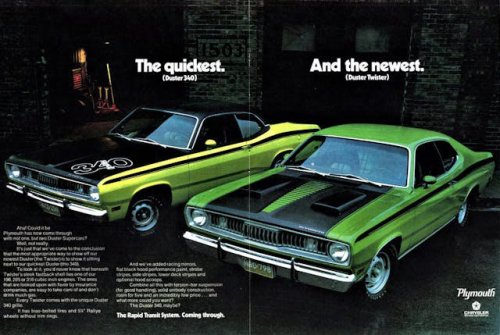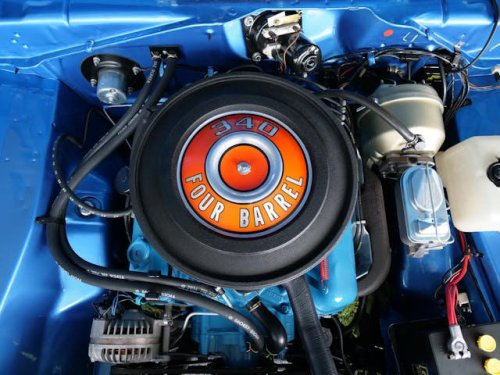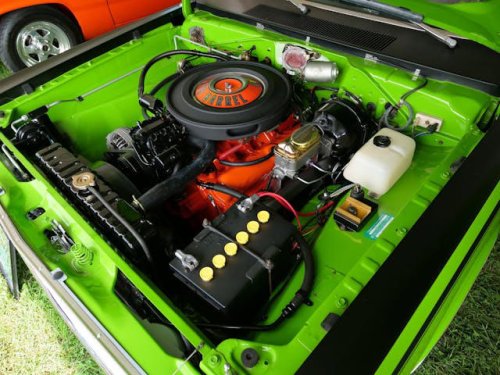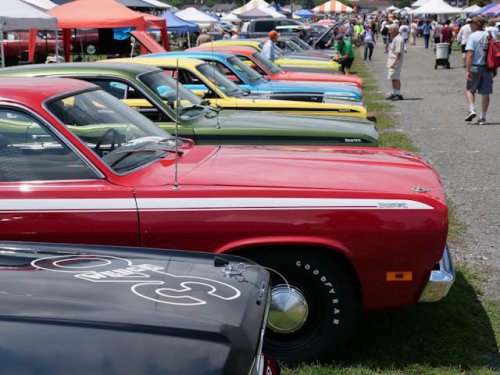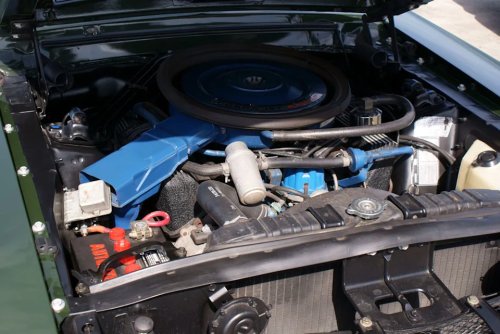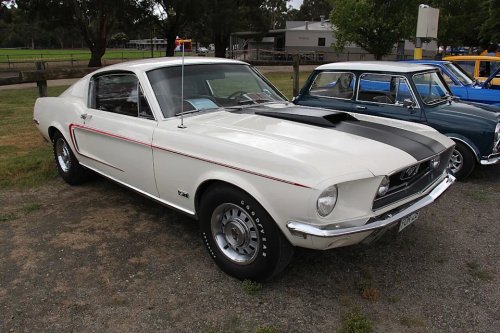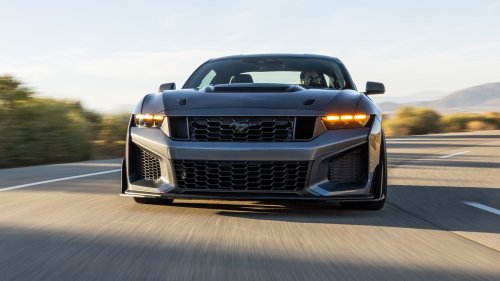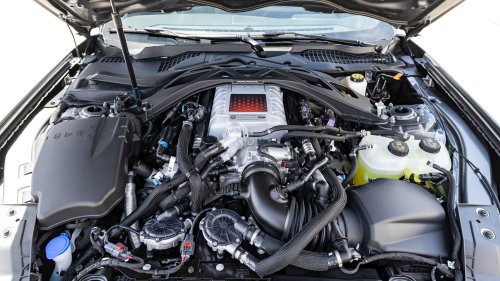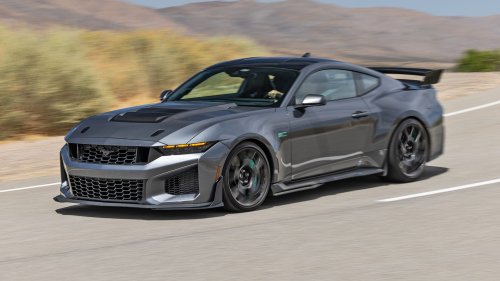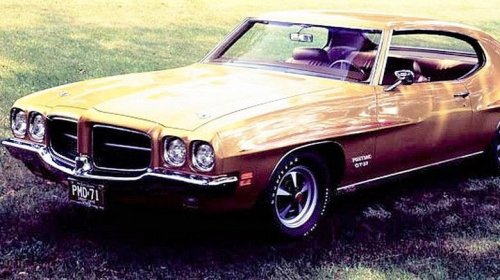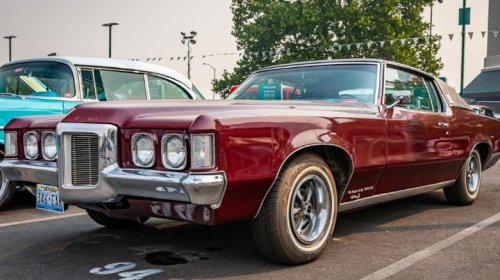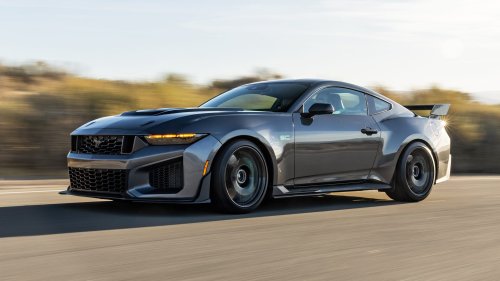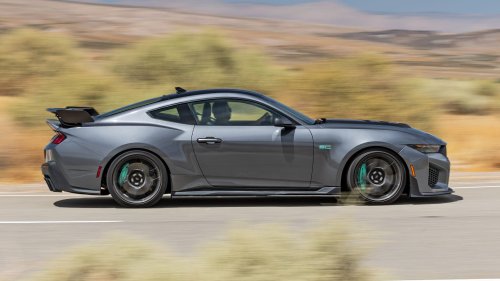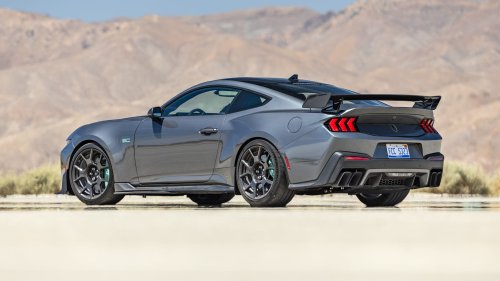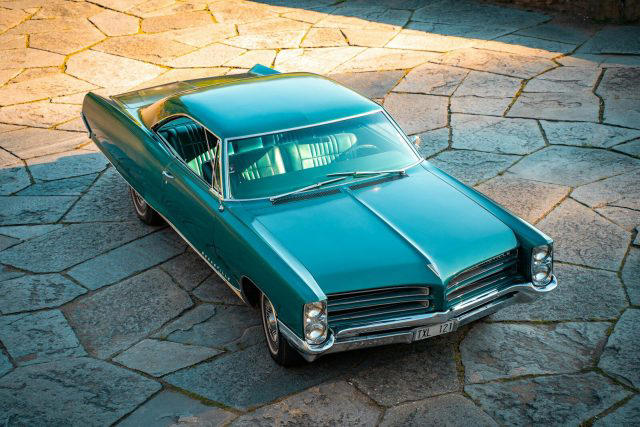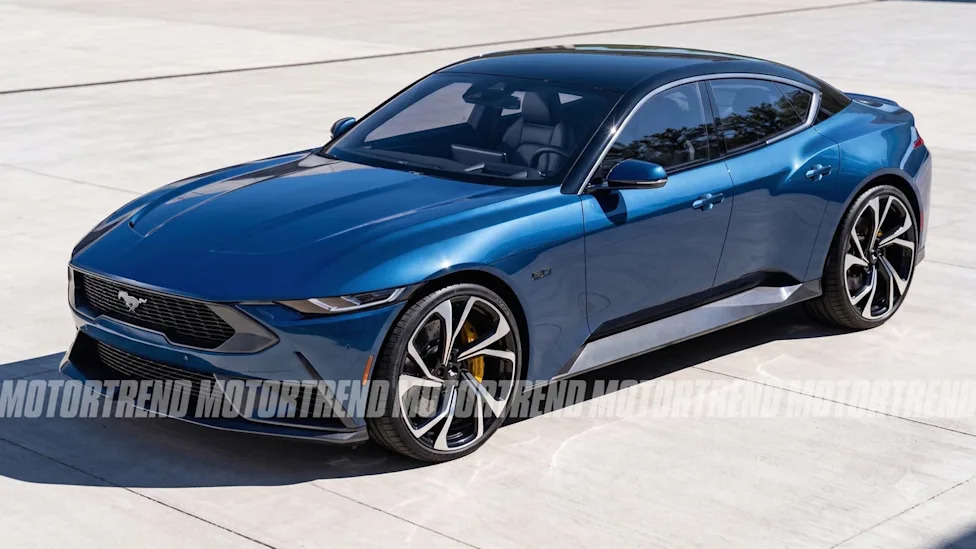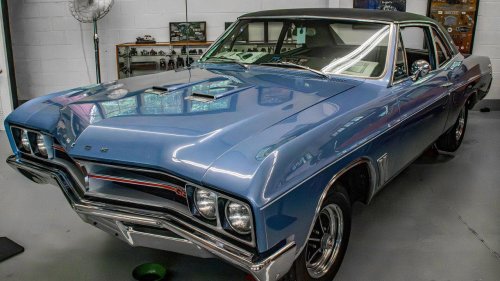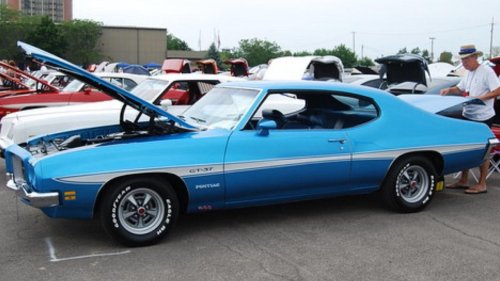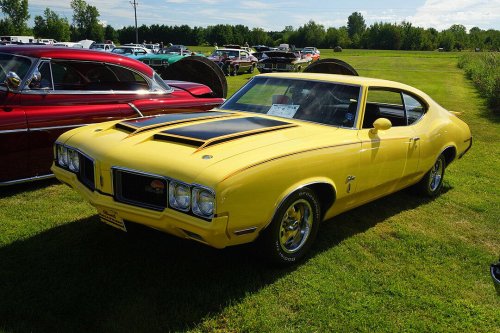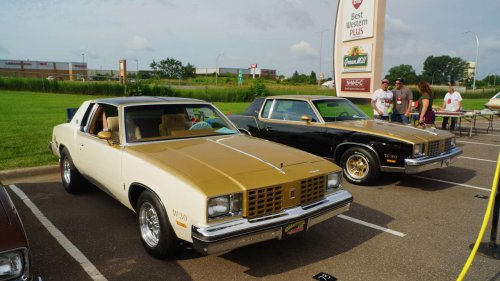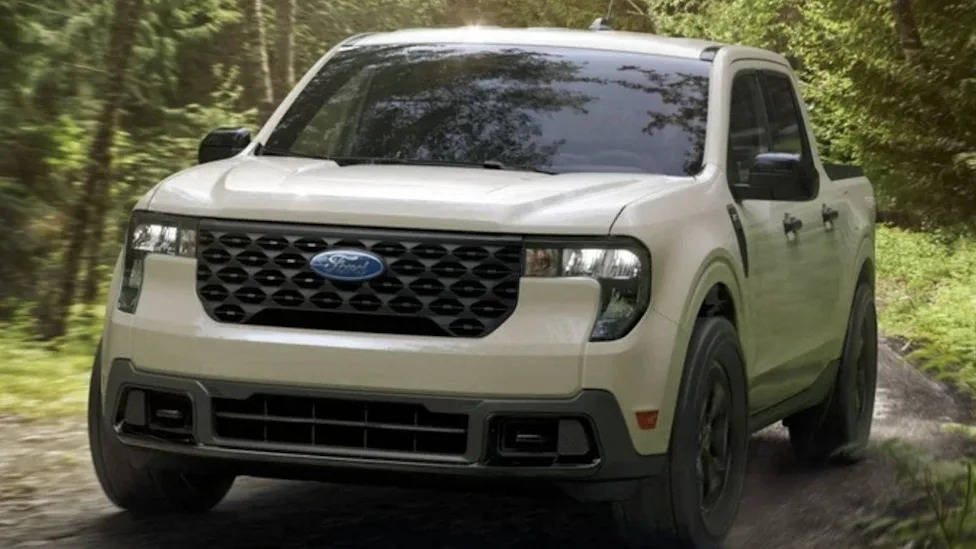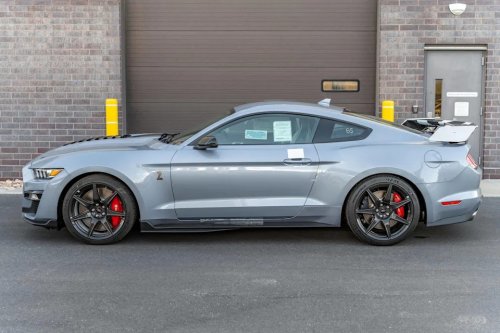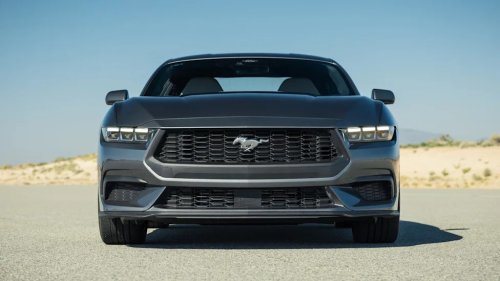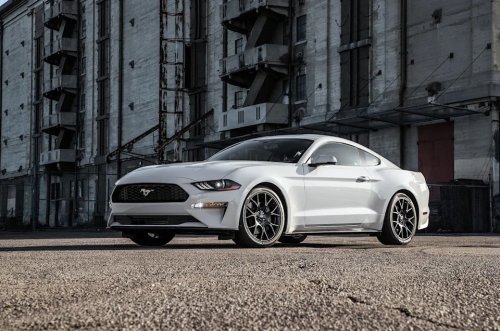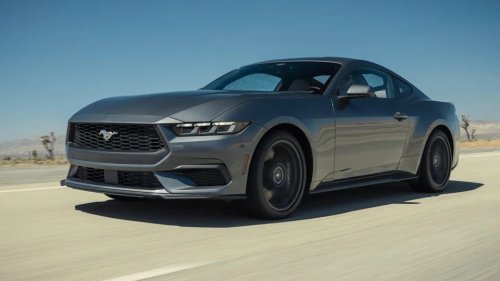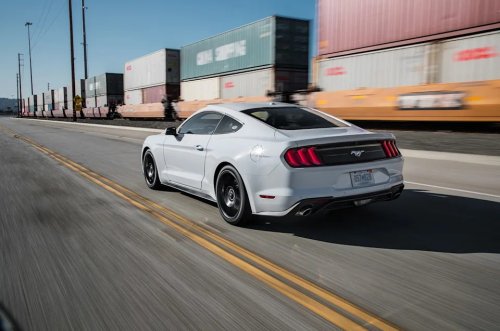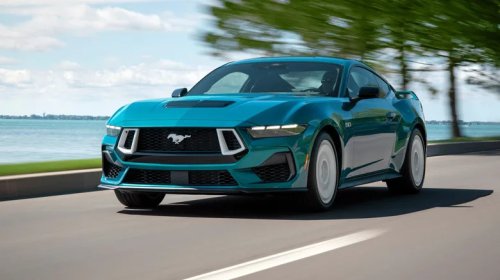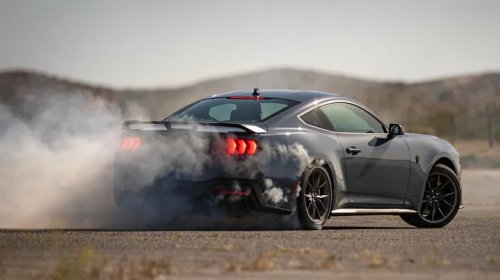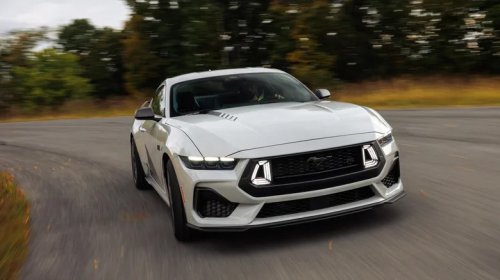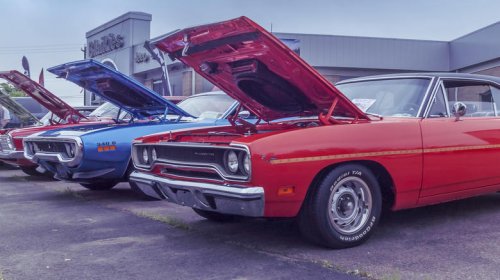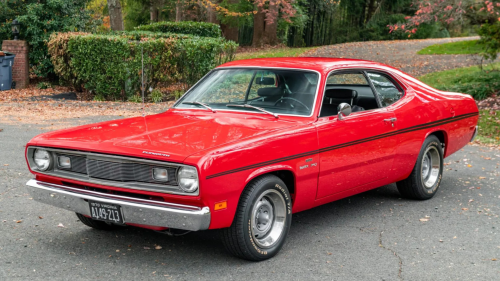
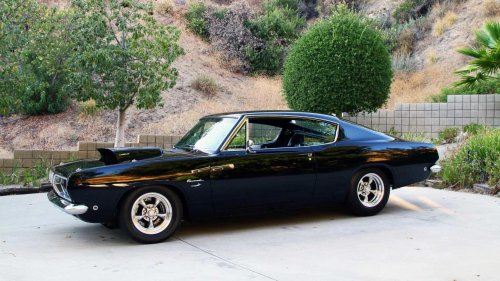
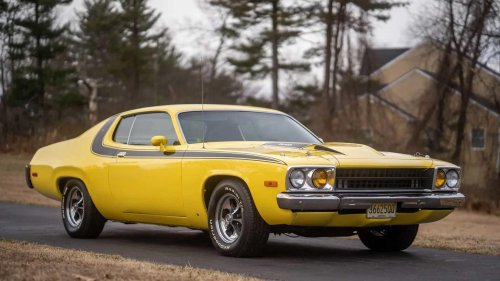
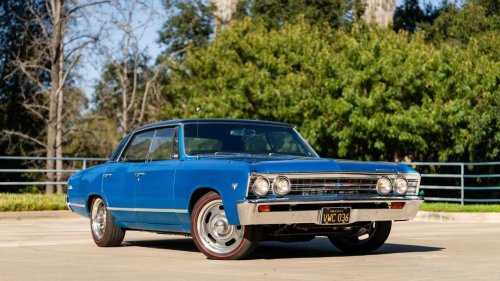
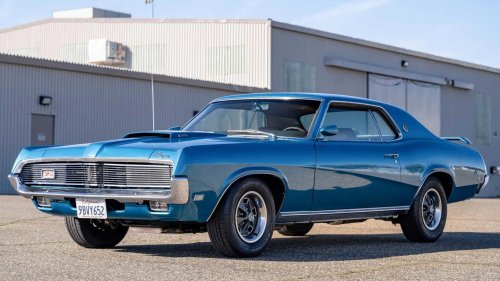
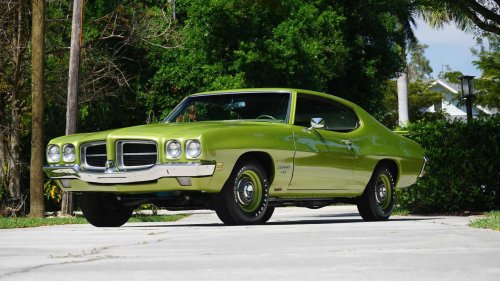
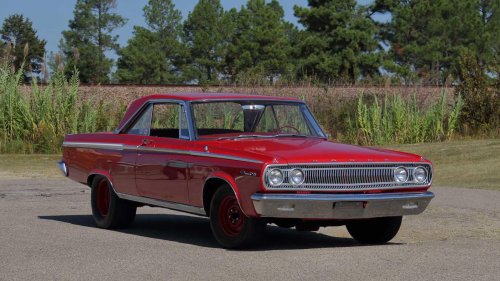
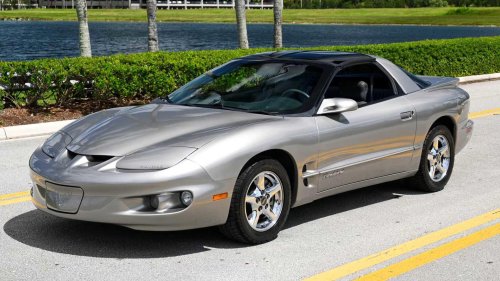



















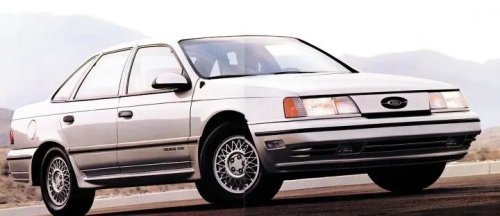
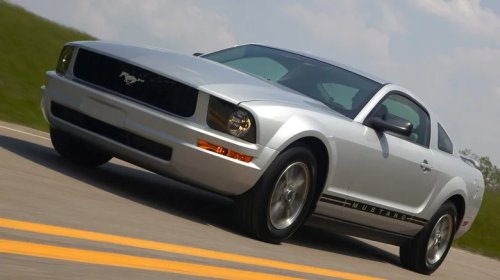

We'll admit that, for about $34,000, a 2025 EcoBoost Mustang is a wonderful little pony car. Its turbocharged and decently fuel-efficient inline-four provides a splendid 315 horsepower and 350 pound-feet of torque - power figures that, 20 years ago, would be found only in the top-trim V8 models.But the Mustang is one of the most-produced muscle cars of all time, and for some, that's a major turn-off. If you happen to be one of those people, or even if you still appreciate the pony car but want to explore some other options with more character, we thought it necessary to gather a list of eight muscle cars that not only cost less than a new base Mustang, but also deserve a whole lot more appreciation. 1970 Plymouth Valiant Duster 340 (340 c.i. V8) Market Value: $32,100 Bring A TrailerIn 1970, Plymouth's compact Valiant lineup underwent a major overhaul. It had been successful as an affordable and stylish family car, but Chrysler wanted Plymouth's planners and engineers to give the Valiant a new sporty image. Intended towards a younger demographic, it needed to have two doors and an attention-grabbing name – thus, the Duster was born.The new 1970 Valiant Duster used the regular Valiant's entire front clip, but from the fenders back, it would be a completely new body style. The roofline was known as a "semi-fastback," as it didn't quite slope all the way down to the end of the trunk lid, but still provided the sporty look they were going for.Our featured spec is the Valiant Duster 340, which came with Chrysler's small-block 340 c.i. V8 (one of the best Mopar engines of all time), producing 275 horsepower and 340 pound-feet of torque. The 340 could be paired with a three or four-speed manual, or a three-speed TorqueFlite automatic. As our first (and most expensive) entry, the Duster rubs right up against our $34,000-ish limit, but we'd argue it's a deal to have such a timeless bodystyle alongside solid small-block performance. 1968 Plymouth Barracuda Fastback (383 c.i. V8) Market Value: $23,700 Bring A TrailerThe higher-performance Plymouth 'Cuda, the upper-trim models of the Barracuda lineup, get all the good press these days. A Hemi 'Cuda will almost always sell in the hundreds of thousands of dollars, and the uber-rare Convertible Hemi 'Cudas have proven to fetch millions of dollars at auction, like this '71 Convertible that sold for $3.5 million in 2014 at Mecum's Seattle event.All that buzz means the regular Barracuda models are criminally underrated, and you can find some pretty well-equipped examples for a fraction of the money. We're featuring the 1968 Barracuda, fitted with the Fastback Formula S package and the biggest non-'Cuda engine available – the 383 c.i. V8.It produced an impressive 300 horsepower and 410 lb-ft of torque – not quite on par with the meanest of the big-three muscle cars, but still a formidable bit of performance. Market values for a good-condition example will be right around $23,700, but expect to pay slightly more for a car fitted with a factory four-speed manual instead of the three-speed automatic. 1973 Plymouth Road Runner (400 c.i. V8) Market Value: $22,600 Bring A TrailerOkay, last Plymouth, we promise. Whereas the Barracuda lineup gets more valuable the closer you get to 1970 or 1971, the Road Runner gets less expensive, with the earlier coke-bottle bodystyle being the more desirable of the bunch. For this reason, we've chosen to feature the second-gen Road Runner with the more traditional coupe body style.For 1973, the biggest engine you could option in the Road Runner was the 400 c.i. V8, which made 260 horsepower and 335 pound-feet of torque. These raised-deck big-blocks aren't the most potent, but a set of cylinder heads, an intake and maybe some good headers will put it right up there with the rest.And with an average market value in the mid-$22,000 range, the big-block Road Runner is one of the last proper muscle car options that existed prior to the power-choked emissions era cars, and as we said before, save a thousand bucks or so for speed parts and the 400 will run harder than it ever has before. 1967 Chevrolet Chevelle Malibu Sedan (327 c.i. V8) Market Value: $22,000 Bring A TrailerIn 1964, Chevrolet needed a response to Ford's well-received mid-sized Fairlane, and although they didn't have a vehicle quite big enough to compete directly, Chevy made due with what they had. They released the Chevy Chevelle that same year, and a new upscale variant would follow suit - the Chevelle Malibu. This came in two and four-door body styles through the mid-60s, but we've opted for the 1967 Chevelle Malibu Sedan four-door as our pick.Everyone always forgets the Chevelle sedan exists, and we can't help but love the idea of a muscle sports sedan. The engine we've chosen is the optional 327 c.i. V8, which sends 275-horsepower to the rear wheels via either a four-speed or three-speed manual transmission.At $22,000 for a good-condition example, the Chevelle Malibu sedan with a 327 V8 costs about the same as a new Nissan Sentra, but makes more than twice the amount of power and will provide infinitely more enjoyment... obviously. 1969 Mercury Cougar XR-7 (351 c.i. V8) Market Value: $21,500 Bring A TrailerThe 1969 Mercury Cougar is the most well-suited for this article's headline because it's the Mustang's rich brother. And our featured spec, the XR-7 package car, is the even fancier version of the fancy Mustang. Unlike the Mustang, however, every single first-gen Cougar was offered exclusively with V8 engines, whereas the Mustang could be optioned with a base straight-six.Does that make them cooler? It's really up to you, but now you know. For our featured spec, we've chosen the XR-7 with the 351 c.i. Windsor V8, which in four-barrel trim, produced 290 horsepower and 385 pound-feet of torque. Paired with the engine was your choice of a three or four-speed manual as well as a three-speed Select-Shift automatic transmission.It is worth noting that, according to Hagerty, the market value of an XR-7 equipped with the bigger 390 c.i. V8 is worth about $35,000. While it is more expensive than our $34,000 base Mustang budget, if you're keen on spending that kind of money anyway, the extra thousand dollars for a 390 would certainly be worth it. As for our 351-powered car, you'll find good-condition examples in the $21,500 range. 1971 Pontiac T-37 (455 c.i. V8) Market Value: $17,200 MecumTo reiterate this article's topic, the featured cars are "underrated," not necessarily forgotten. However, if there was one on this list that you likely did forget about, it's the Pontiac T-37. And because it's a fairly obscure piece of Pontiac's early 70s lineup, the T-37 is affordable as can be. Our chosen spec, equipped with the massive 455 c.i. V8, has a market value of just $17,200, according to Hagerty.Sold for only one year in 1971, the T-37 and its high-performance sibling, the GT-37, were essentially a rebadged, low-buck version of the Pontiac Lemans, which itself was already a higher-trim version of the Tempest. They came with a range of powerplants, including a 250 c.i. straight-six, a 350 c.i. V8, a 400 c.i. V8, and the big-daddy 455 – the engine option we've chosen.The 455 V8 also came in two flavors: a 325 hp and 455 lb-ft regular spec, and the 335 hp and 480 lb-ft "High-Output" (H.O.) variant. All of these options could be had with a three-speed manual, a close-ratio four-speed manual or a three-speed automatic. We're huge fans of the T-37 because of its classic styling, big nostril grilles, and its overall uniqueness in relation to the mainstream muscle car segment. 1967 Dodge Coronet 440 (383 c.i. V8) Market Value: $15,900 MecumHere's a confusing one for you - can you guess what size motor came in the Dodge Coronet 440? Nope, it's not a 440 c.i. V8. The "440" in its name was simply a trim-level badge - if you wanted an actual 440 c.i. V8, you'd have to upgrade to the more expensive, high-performance R/T trim. Those are pretty valuable nowadays (certainly more than our base Mustang MSRP), especially in excellent condition.Instead, the regular Coronet 440 came with a 383 c.i. V8, among other engine options. With a four-barrel carburetor, the 383 made a hearty 325 horsepower and 425 pound-feet of torque. Factory transmission options included a four-speed manual or a three-speed automatic transmission.If you had to have a 440 V8 but can't afford a factory R/T, you could find a junkyard 440 for pretty cheap these days and stick it straight in the Coronet. With a few mods, it could have similar or even better performance than a real one, for a heavily discounted bill. A stock 383 car, however, will run you a cool average of $15,900 in #3 condition. 1999 Pontiac Firebird Formula (350 c.i.) Market Value: $13,613 MecumObviously, the Firebird nameplate as a whole can't be considered underrated. But the fourth-gen is another story. They've flown under the radar for years because of their polarizing 1990s styling and dramatic design cues, but it's the perfect product of its mullet-having time.For the 1999 model year, and pretty much all of its fourth-gen production cycle, it shared the same basic specs with the Camaro, as they were the same car underneath. And in Formula trim, you could get GM's 5.7-liter V8 with 305 horsepower and 335 pound-feet of torque, sent through either a four-speed automatic or six-speed manual transmission.The Firebird Formula has the honorable distinction of being our cheapest featured vehicle this time around, but that doesn't mean it's not worth it. If you decide to buy this over the other classics we've listed, you'll have thousands of leftover dollar signs to play with, and can turn your base-V8 Firebird into a mean street machine.