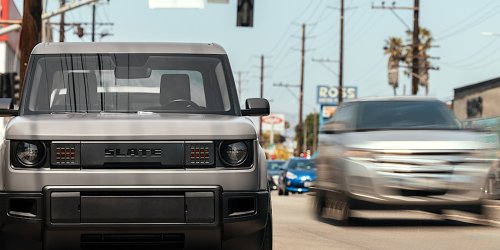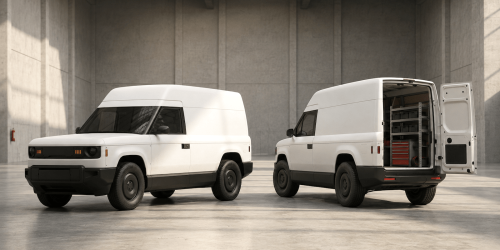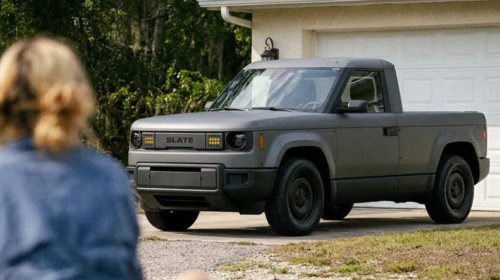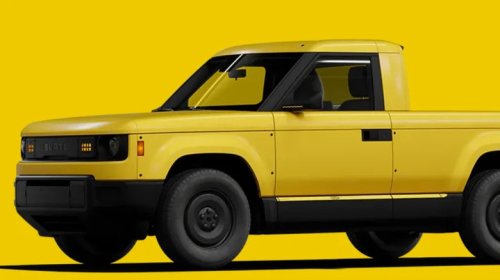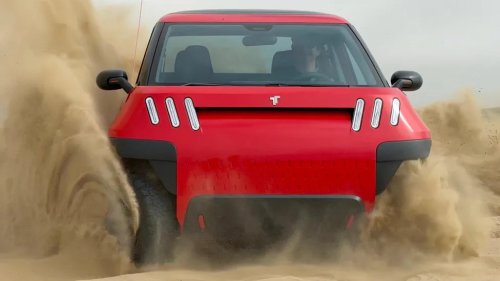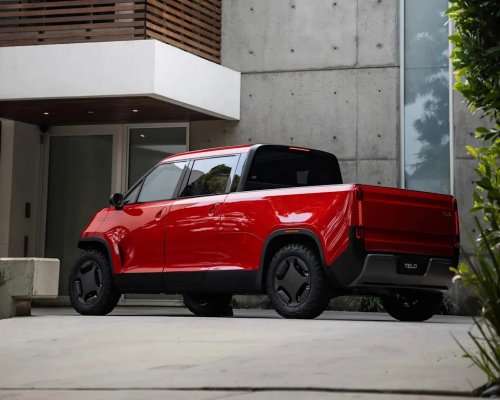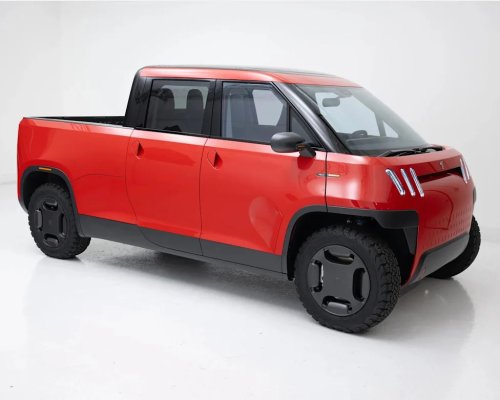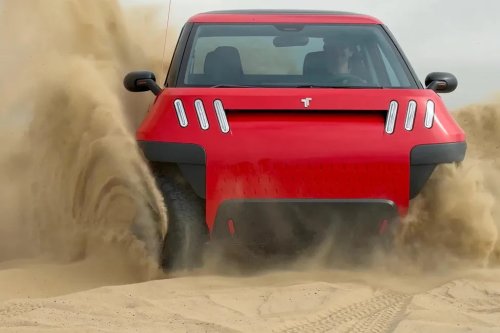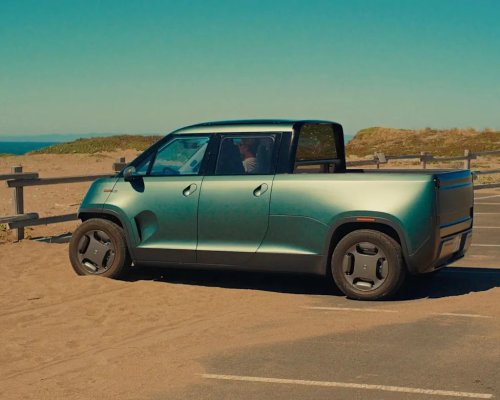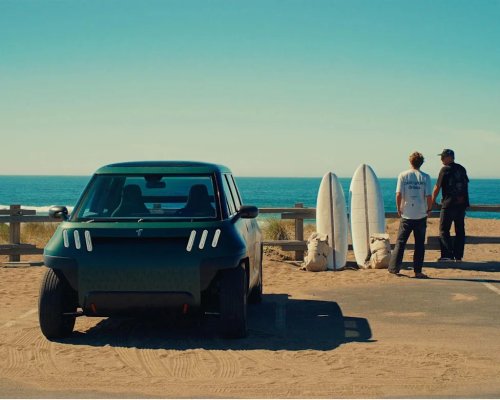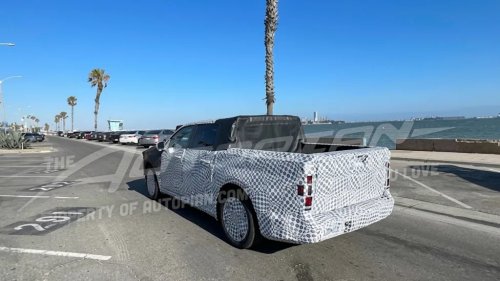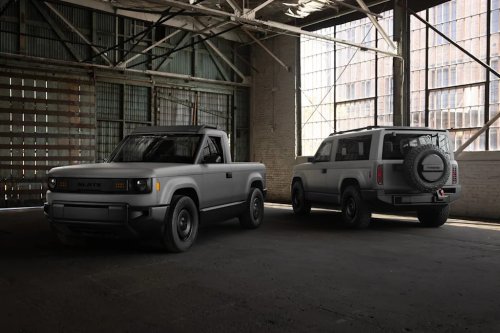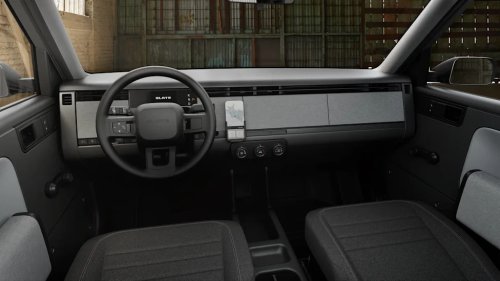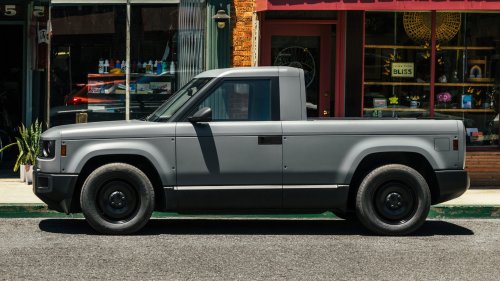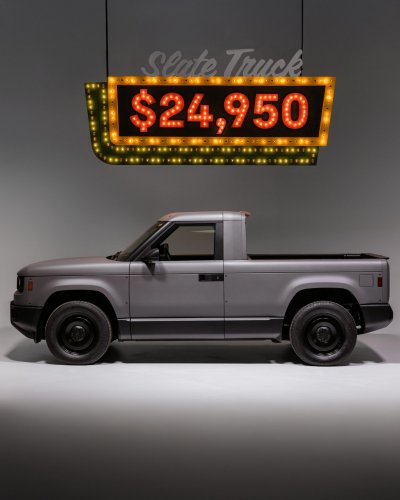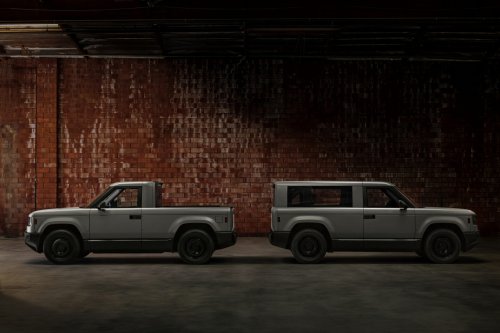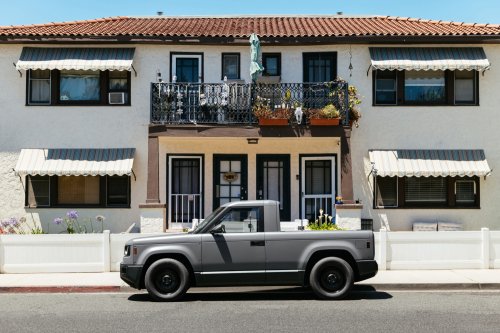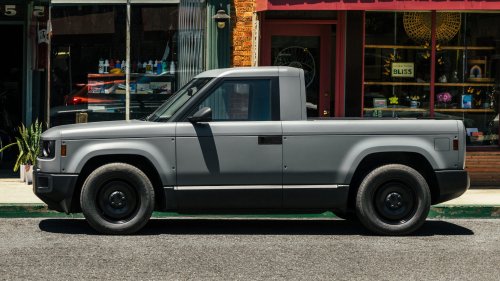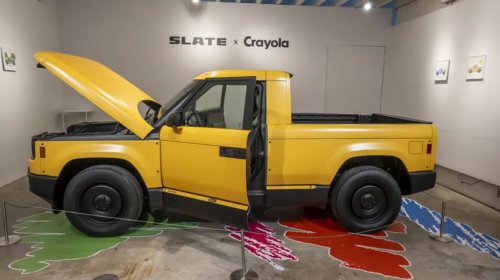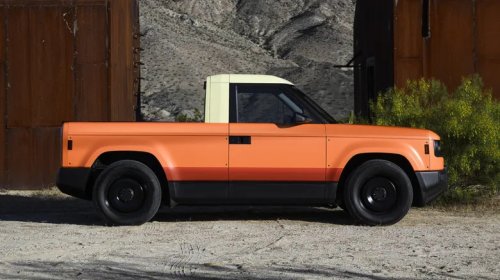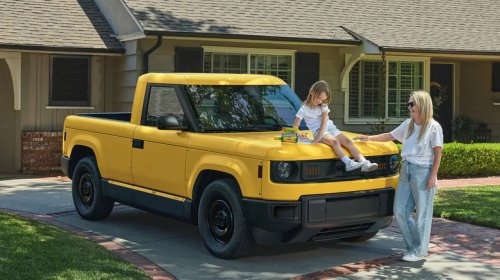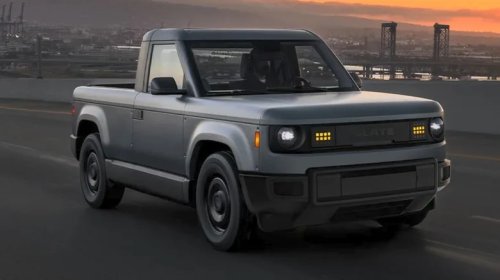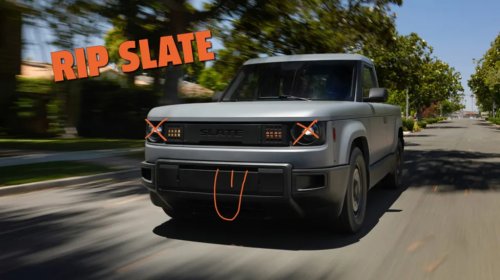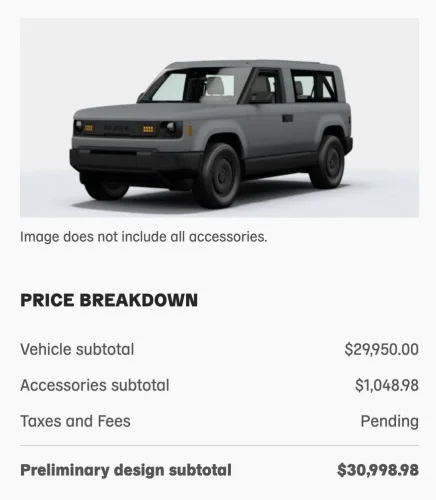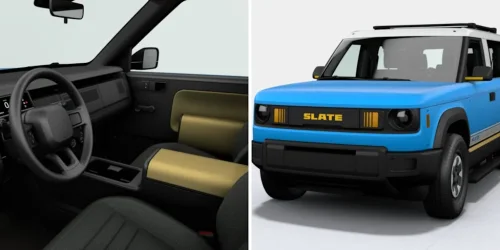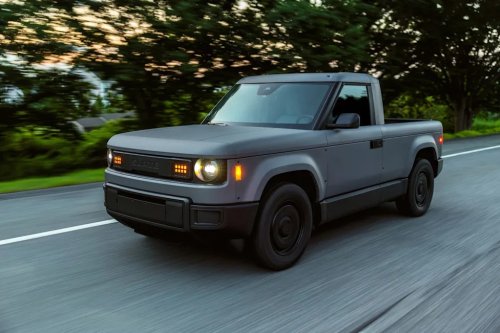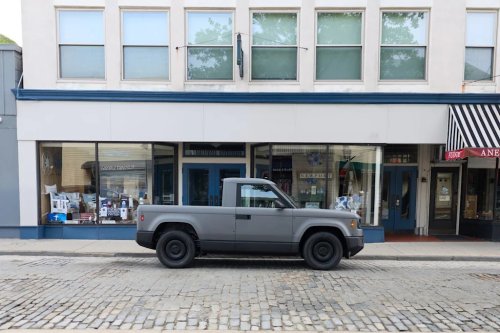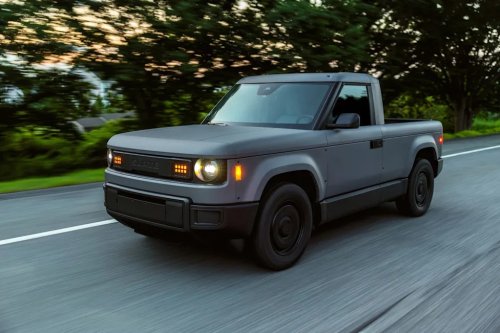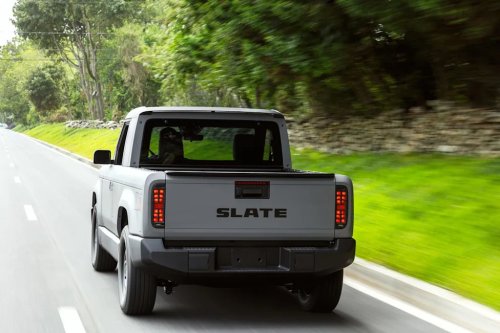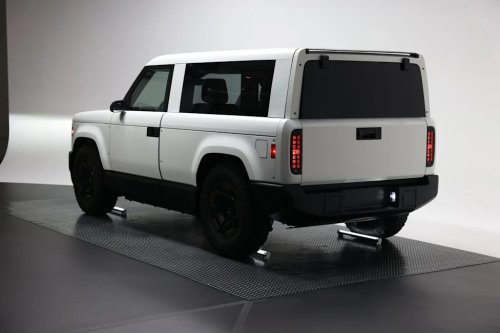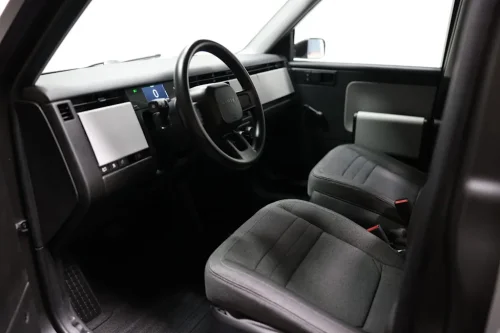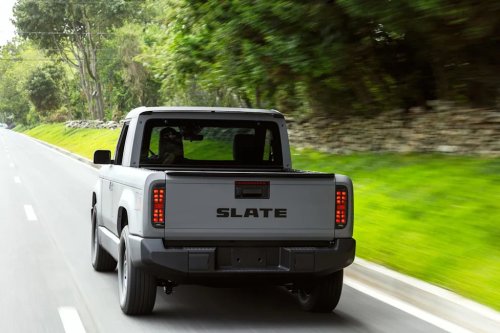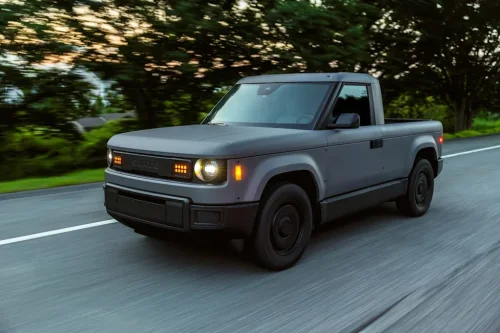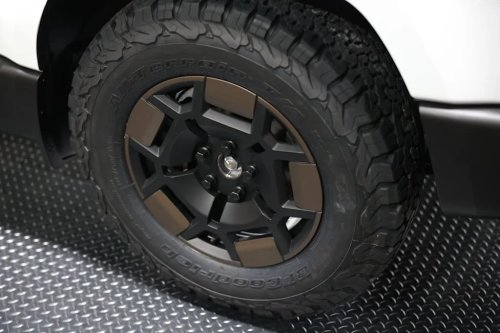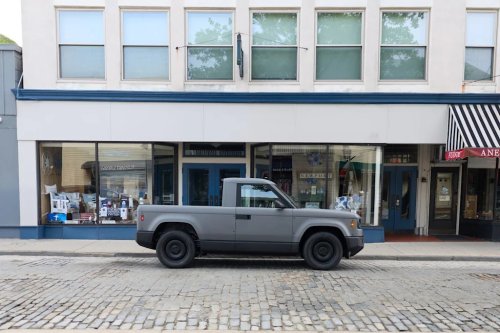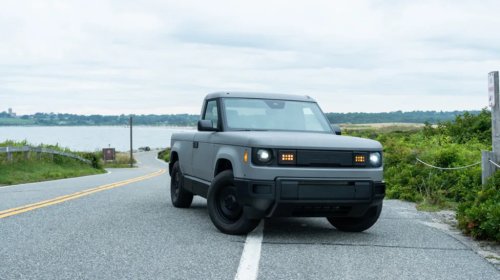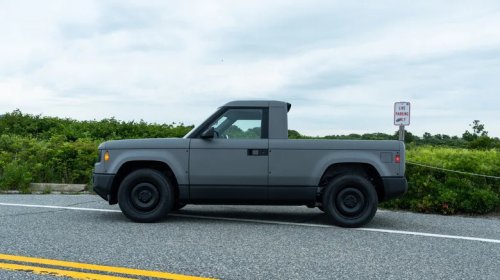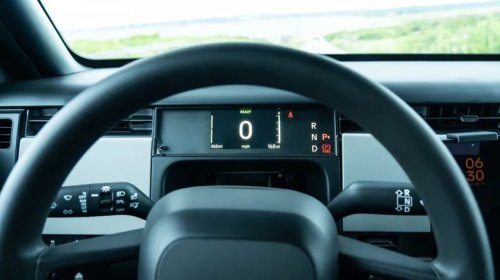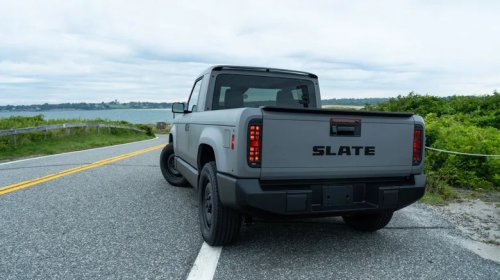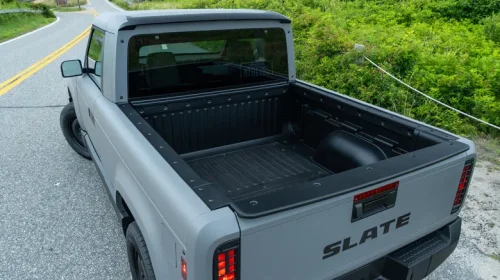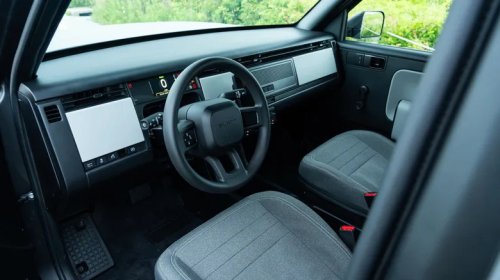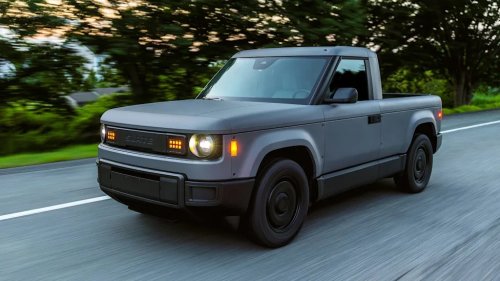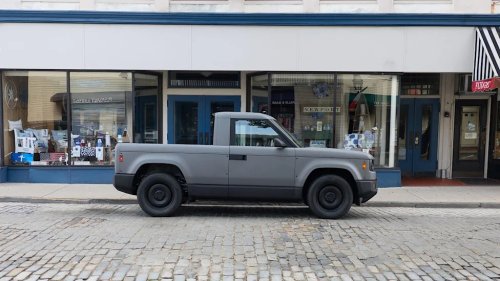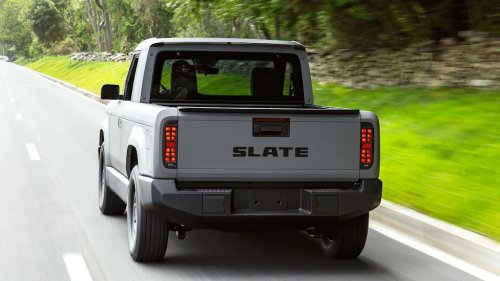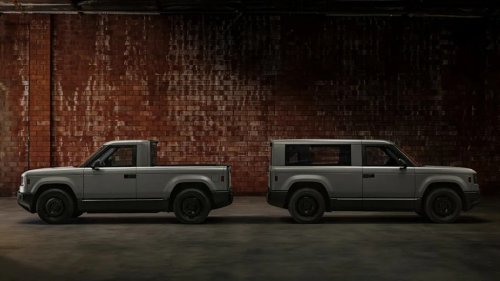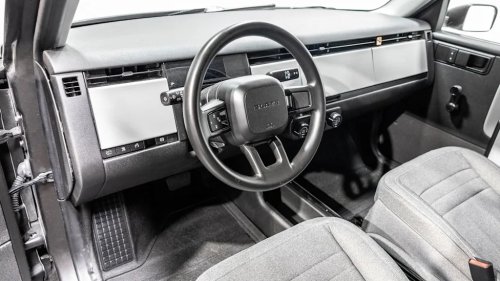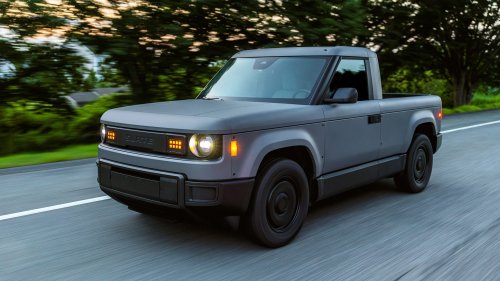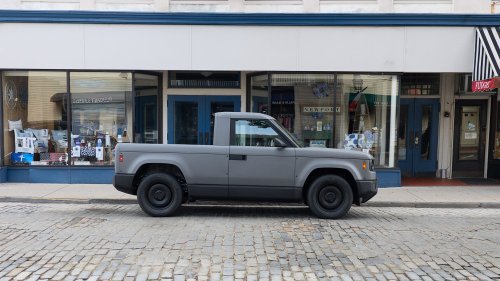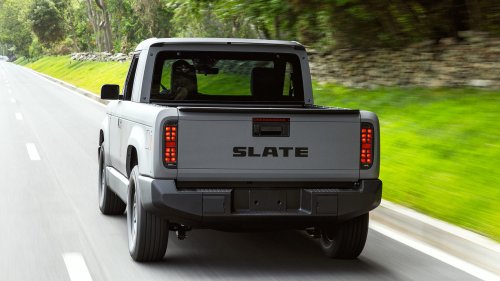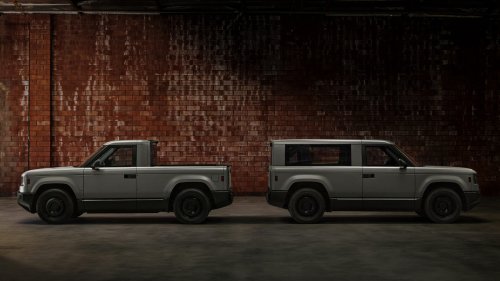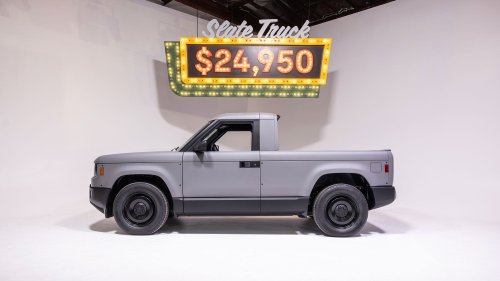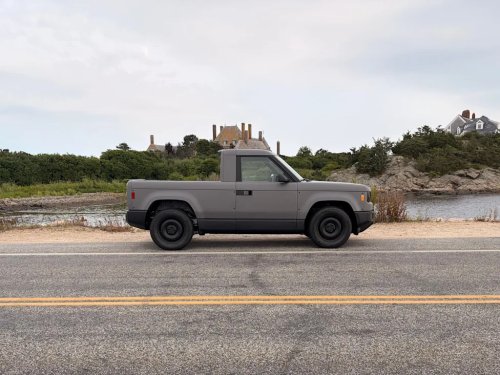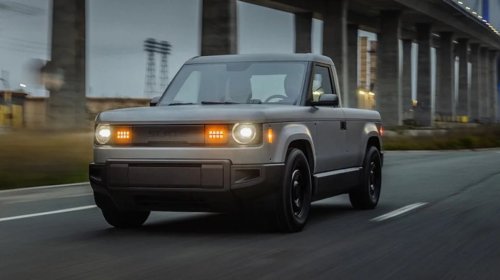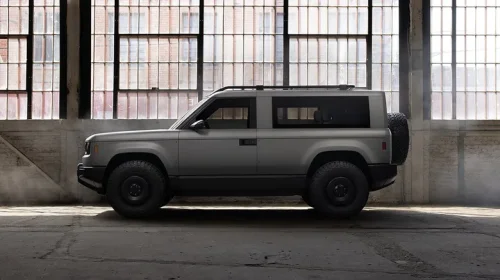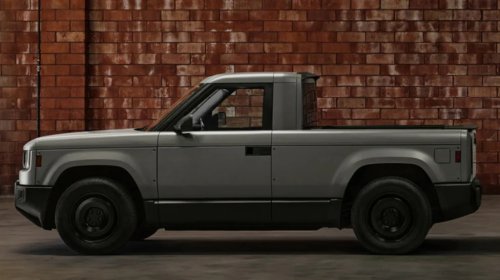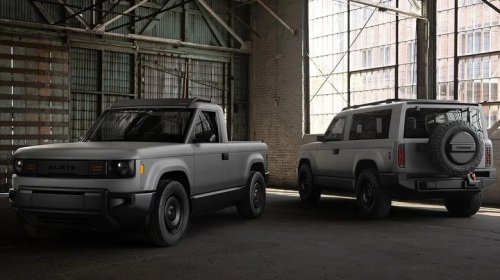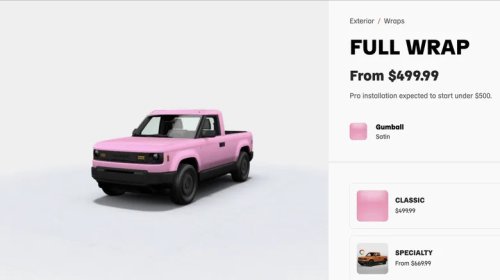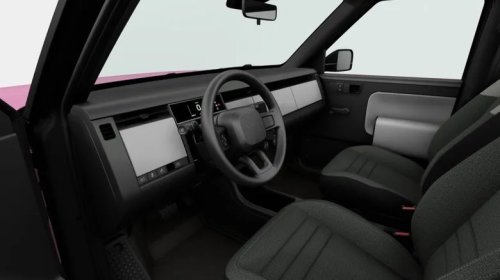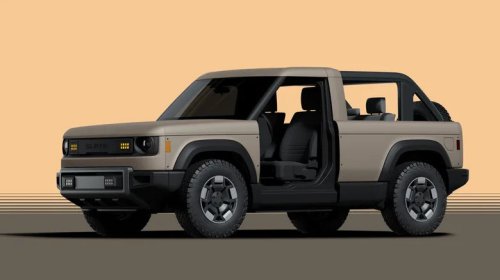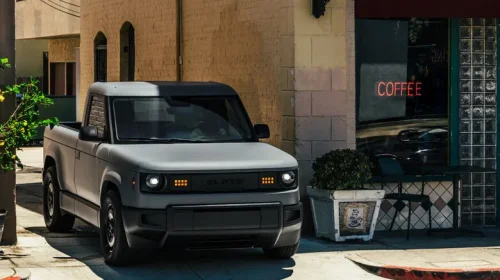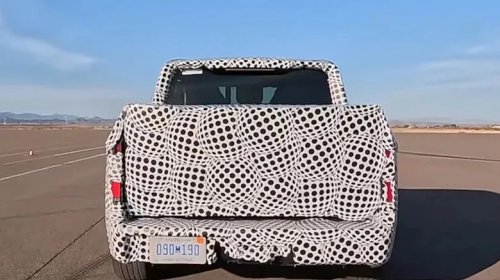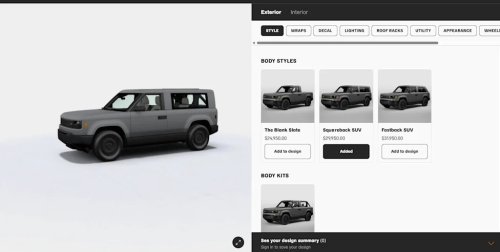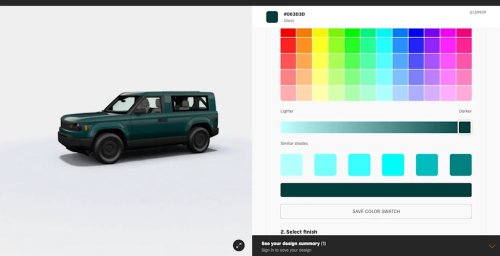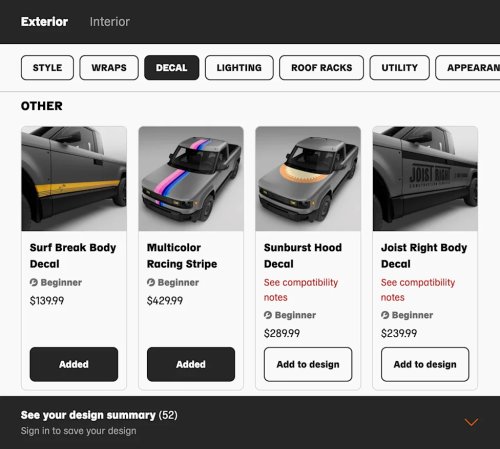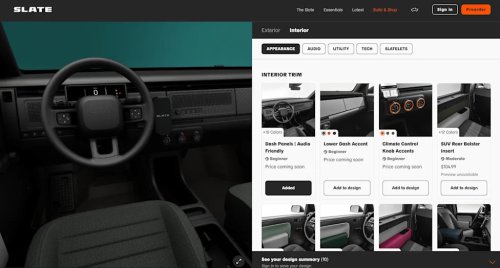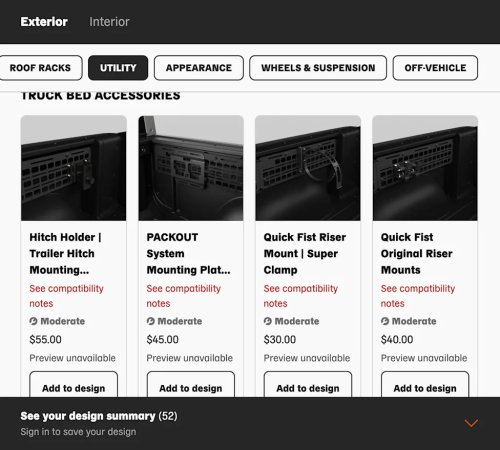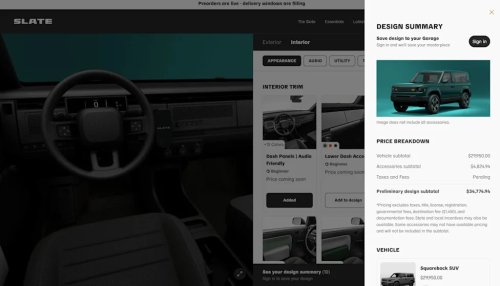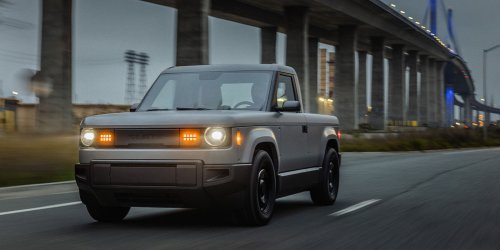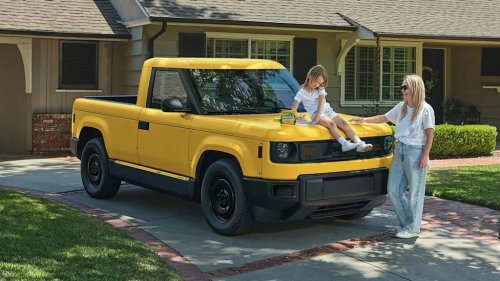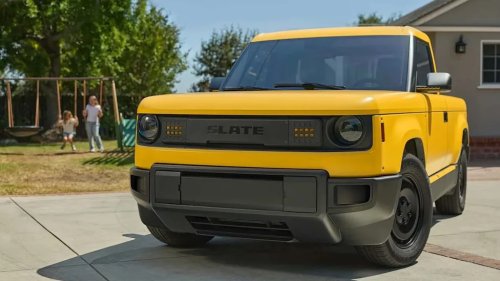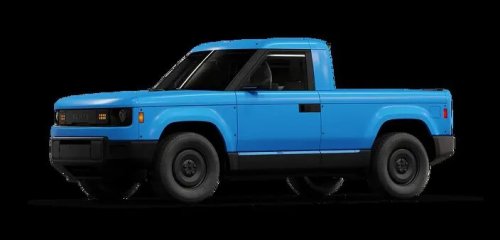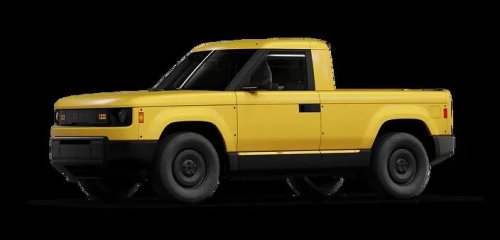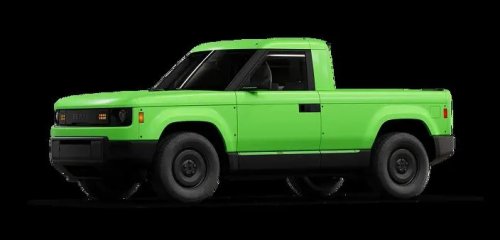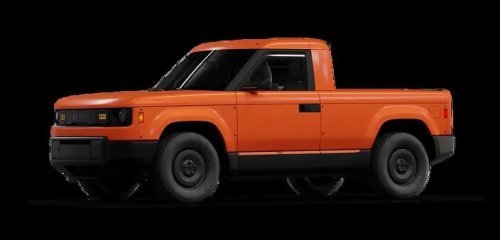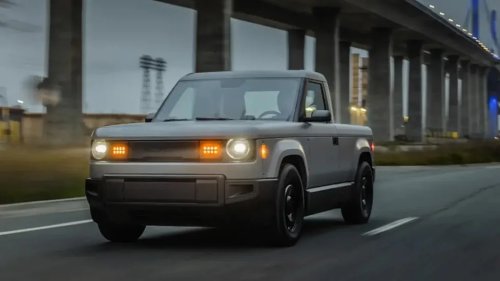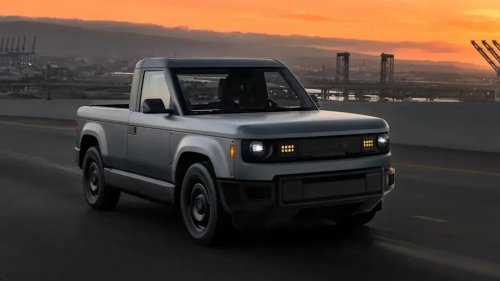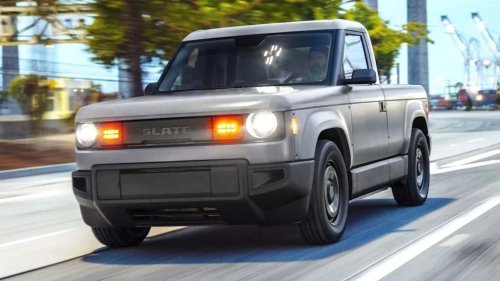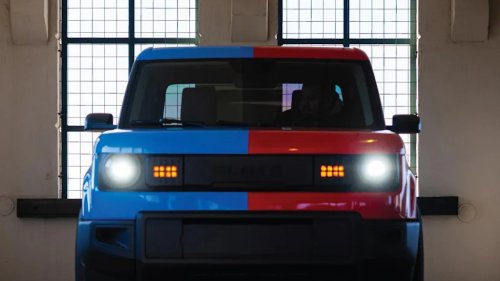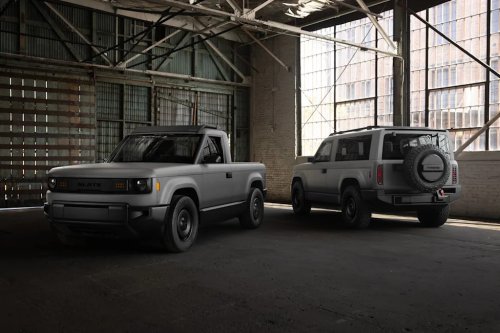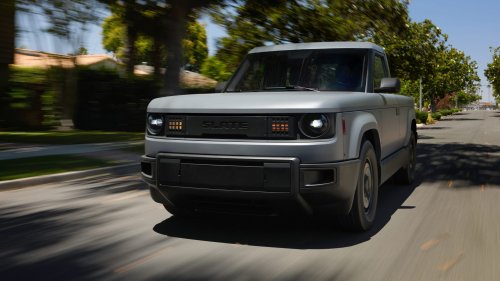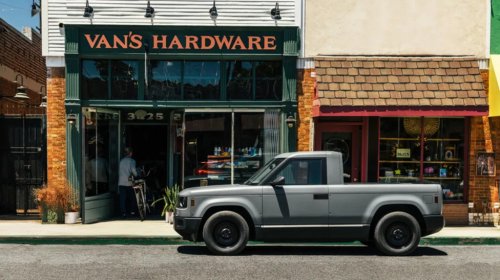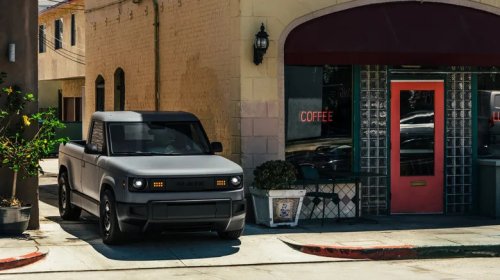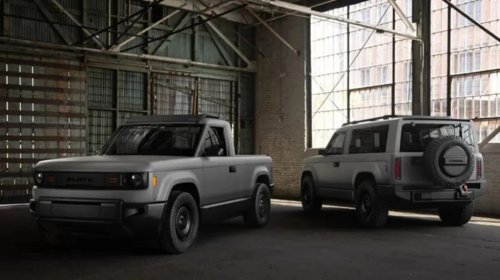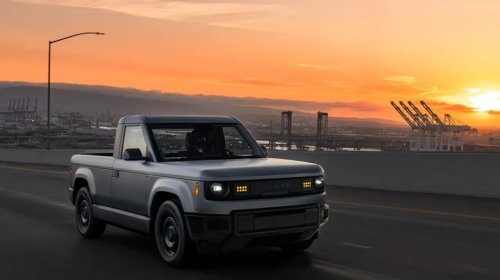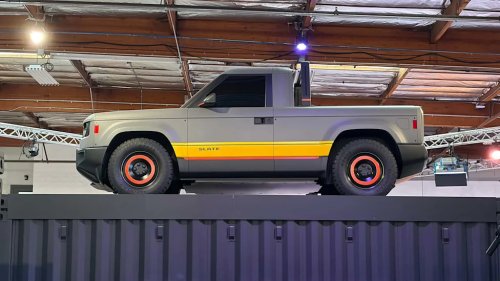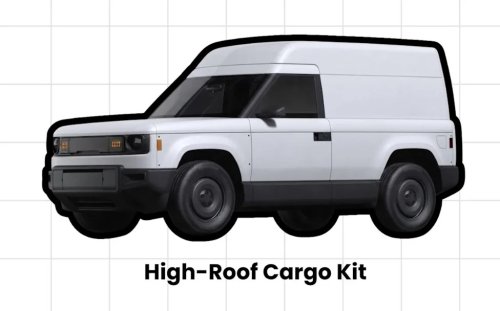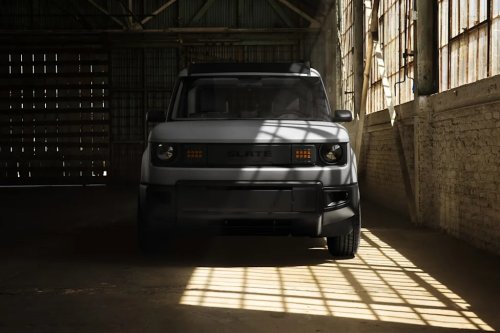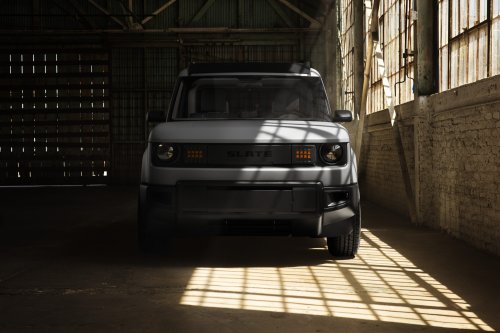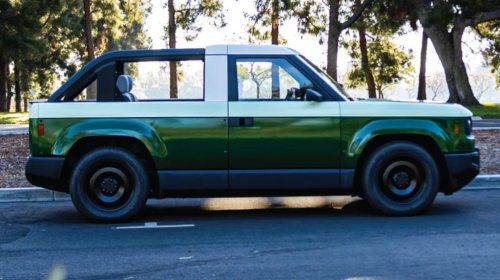
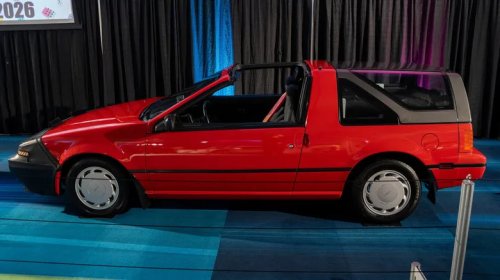
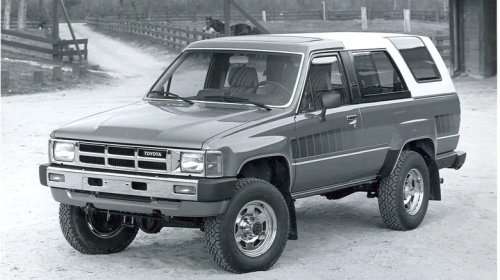
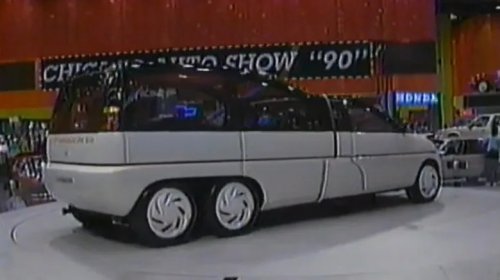
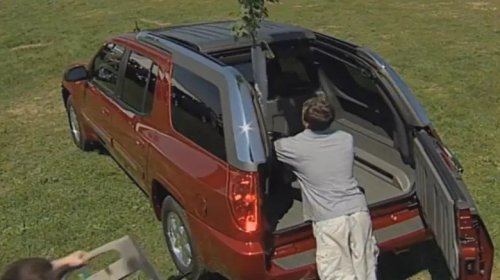
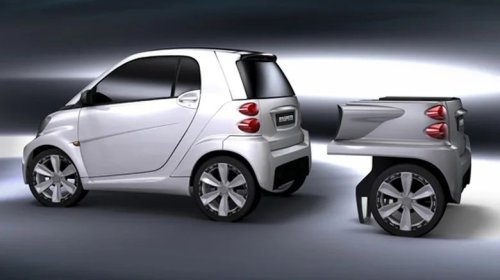



















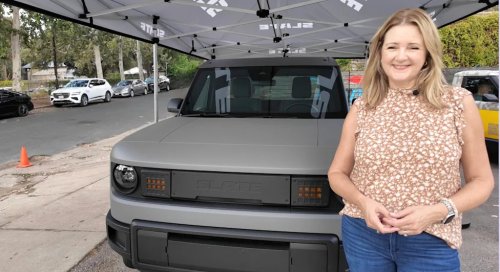
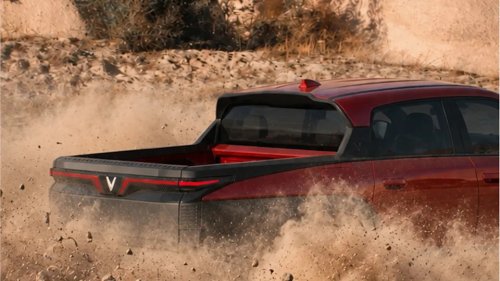
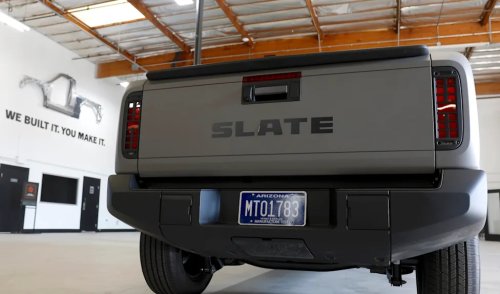
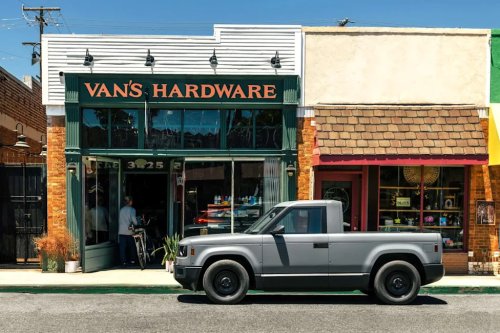

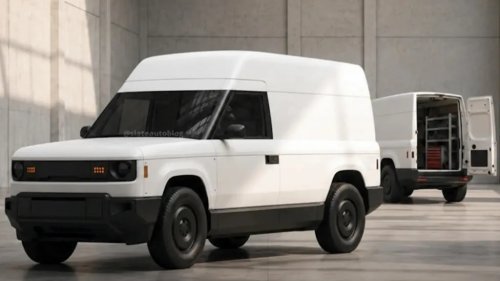

Slate Auto/XSlate's upcoming modular pickup truck is among the more exciting recent vehicle announcements, as the low-priced electric machine is a bare-bones return to old-school mini trucking. It also reintroduces the concept of modular body segments, as you can turn the little pickup into a boxy SUV or a fastback-style SUV just by bolting on some different bodywork.The pickup's rear wall comes out, and you can install a set of rear seats where there used to just be open-air truck bed. I'm sure most buyers will stick with one or the other, as it looks like a hassle to convert from truck to SUV, but if your lifestyle needs change, it's cool to know that your little truck can change with you. Maybe you had kids and need the extra seats in the back; now you can buy the SUV back for your Slate and you won't have to waste a bunch of money on a whole new vehicle. Or you got divorced and no longer need room for the whole family. It goes both ways, I suppose. I, for one, love the idea of making our cars more modular to fit as many stages of life as possible. The longer a car can remain useful with relatively inexpensive changes, the fewer unnecessary resources will be expended building disposable junk. Or building different vehicles for a wide variety of commercial applications. AdvertisementAdvertisementI've watched the auto industry flirt with modularity before in my years as a journalist, but it's been rare, and hasn't ever caught on in large numbers. There are a few notable exceptions of production vehicles with modular bodywork, though, and a handful of unique proposals introduced as concept cars. Read more: The Ten Dumbest Automotive Design MistakesNissan Pulsar NXErman Gunes/ShutterstockThe first thing that comes to mind when I think about modular bodywork is the often-overlooked Nissan Pulsar NX, which typically had a traditional sloped hatchback rear glass, but aft of the passenger compartment and B-pillar could be swapped out for a mini wagon-back to haul more stuff. This thing was essentially a Sentra underneath, but Nissan wanted to capture the youth market and worked in some kitsch and whimsy to make that happen. More cars need kitsch and whimsy. Car and Driver at the time described the car as "like one of those Japanese robot toys," which seems apt. Like a Transformer, there's more than meets the eye with the Pulsar NX. Because the roof panel lifts out to provide a Targa-style convertible, and you can run around with the rear hatch removed altogether in a tiny pickup configuration, the body shell needed a lot of strengthening, making the car unreasonably heavy, and therefore less fun to drive than it looks. While it might not be a track machine, Nissan thought it was the kind of youthful exuberance buyers wanted, and went with it. AdvertisementAdvertisementThis is an absolutely unnecessary add-on, but one that makes me smile every time I see it. I wish that the Nissan of today would take the kinds of risks and build inspiring, slightly weird machines like it once did. Perhaps if the R35 GT-R had been equipped with a lift-out roof and an optional bolt-on wagon hatch, I wouldn't find it so difficult to love. Toyota 4RunnerToyotaThe first-generation Toyota 4Runner is going to stand in here for pretty much any off-road-oriented SUV with a removable rear section. This includes a number of Land Cruisers, Land Rovers, Broncos, Blazers, Scouts, Jeeps, and more over the decades. I really like the 4Runner's looks here, however, and I enjoy that unlike most of the others it retains a roof over the driver and front-seat passenger even when the rear section has been removed. You get a lot of the joy of an open-air driving experience but still have the choice to keep the sunroof closed. Many of these open-top off-roaders also let you remove the rear seats (heck, the 4Runner initially didn't even have rear seats!) to use the vehicle like a truck, but unlike the Slate, they don't offer the ability to bolt in a rear wall. Because of that, you have to choose between hauling stuff and having a weather-tight drive. That doesn't much matter if you're hauling a surfboard around in Southern California, but if you need to move across town in a Midwest snow storm, this modularity doesn't help you much. Available from 1984 to 1989, the original 4Runner was a pioneering vehicle for Toyota and the SUV market. Sadly, the subsequent generation denied buyers the joy of a removable fiberglass rear roof, ceding this part of the market to Jeep. For a long time it was just the Wrangler offering such modularity, but Ford jumped back into the game with the current Bronco. Toyota has hinted at a desire to bring back the removable-roof 4Runner, but there doesn't seem to be anything solid in the works. Plymouth Voyager III ConceptChicagoAutoShow/YouTubeWhile the 1990 Plymouth Voyager III concept never made its way to production, it remains one of my favorite futuristic concepts to ever make it to the show floor. With a tiny two-seater city commuter at this contraption's front end, Plymouth designed the rear passenger compartment to detach. Not only could you haul an entire family's worth of people and stuff to your destination, but you could separate away from the back section to have a tiny shuttle to do your running around without having to haul an extra ton or two of weight every day. AdvertisementAdvertisementThis concept is perfect for getting premium fuel economy and great parking options on your daily commute, but then hooking up to the rest of the car to take a weekend family vacation or getting everyone you know together in one vehicle. Obviously there are some serious impracticalities involved here, but it's an outside-the-box piece of cool thinking from the engineers in Detroit. Weird concept vehicles like this used to be a normal part of the national car-show circuit, but they've been killed off and creativity has been stamped out at most automakers' design departments. I've love to see this level of creativity come back to the car show, or indeed the world. It's been missing for far too long. GMC Envoy XUVKing Rose Archives/YouTubeThere must have been something in the water in Detroit around 2004, because a bunch of people in the Renaissance Center thought the GMC Envoy XUV was an excellent idea. Don't get me wrong — this is exactly the kind of creativity I'm begging Detroit to bring back. That said, I'm not sure it was the most marketable or financially viable thing for GMC to build in this era. The Envoy XUV looked like a regular Envoy at first glance, but its defining feature was a power-retractable rear roof section, letting the cute ute be easily transformed into an open-air pickup. I distinctly remember the commercials for this vehicle, featuring the above image of a man loading a tree into the back of an XUV, and I recall a tall grandfather clock sticking out of the back of one of these things as it drove down a highway. For soft-handed landscapers and grandfather-clock repair companies, the XUV made perfect sense. For most buyers, however, it was expensive and complicated. AdvertisementAdvertisementTo gain full access to the rear of the SUV-based truck transformer, the driver had to retract the rear window and roof, fold the seats forward in a way reminiscent of Chrysler's Stow 'n Go, then erect the rear truck-bed wall. It isn't the work of a moment. Most Americans decided they were okay with having a truck all the time or an SUV all the time instead of a thing that shifted between the two. It's still a very cool example of modular bodywork, but perhaps not the most practical one. It's a relevant exercise with which to examine the Slate, however. Will it be more popular to have a truck that requires hand tools to swap into an SUV instead of a power retracting roof?2012 Rinspeed Dock+Go ConceptRinnspeed"You're not going to take your steamer trunk as if you were going on a lengthy vacation if all you want to do is a little shopping at your local supermarket," said Swiss Rinspeed designer Frank M. Rinderknecht upon unveiling his latest creation in 2012. Rinspeed was known for building truly bonkers concept cars and occasionally actually turning them into street cars. Most of Rinspeed's concepts were off-the-wall machines with very little practical use, like a submersible Lotus Elise called sQuba. In the case of the Smart ForTwo-based Dock+Go, however, the concept made sense for many city dwellers.Like the Plymouth Voyager III, this concept employed a detachable rear section for a practical two-seater city car. You could enjoy all of the benefits of a tiny car in your commute, then tack on a variety of rear sections Rinspeed had planned for whatever you might be up to that weekend. In a very 2012 kind of way, Rinspeed showed off deployable rear sections that included a DJ booth, a pizza warmer for delivery drivers, larger battery packs for longer EV range in the electric Smart, additional storage, or two rear seats. Rinspeed referred to these single-axle modular systems as "backpacks on wheels." Which I think is very fun. AdvertisementAdvertisementWouldn't it be nice to have a bit of extra range for your electric vehicle only when you needed it? You wouldn't have to haul around the weight of an extra battery until you were headed out of town for a nice long road trip. And you could use the battery at home as grid storage or backup during power outages when you were sticking close to home with the car. It's a genius idea, and I'm a little sad it hasn't caught on yet. Want more like this? Join the Jalopnik newsletter to get the latest auto news sent straight to your inbox, and follow us or add us as a preferred search source on Google.Read the original article on Jalopnik.