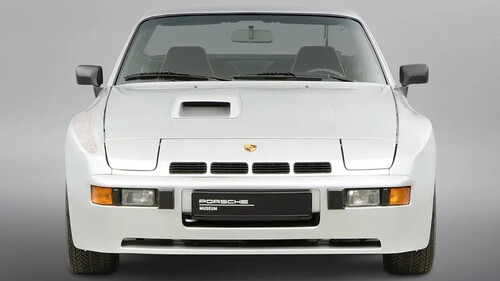
3 Cars That Were Supposed To Make Or Break Their BrandsAutoblogJoseph PudlewskiSun, September 20, 2026 at 8:45 PM UTCAdd us on GoogleAutoblog and Yahoo may earn commission from links in this article.For some automakers, a new car is more than just another model in the lineup. In some cases, it's a gamble in which the manufacturer's survival is at stake. Whether it's a fledgling company or a century-old automaker facing declining sales, sometimes a single model can help bring a company to solid ground. While some vehicles were designed to reinvent a brand, others were a bid for survival in a changing market, and that gamble didn't always pay off for the manufacturer.3. Porsche BoxsterIn the 1980s, Porsche was one of the world's most prestigious sports-car manufacturers. At the turn of the decade, however, the German marque was on a steady decline, if not on the brink of entering a state of financial crisis. In 1986, Porsche sold upwards of 30,000 vehicles in North America alone, but that number hit an all-time low in 1993, when just 3,713 vehicles left dealer lots.In short, Porsche was running out of cash as its sales essentially fell off a cliff. The company had four model lines, the 911, 944, 968, and 928, each of which had its own engineering and production requirements. Due to their small production runs, Porsche couldn't spread development and production costs across the range.AdvertisementAdvertisementAs far as the models themselves go, the 928 was on the expensive side, while the 944 was approaching the end of its generation. Its successor, the 968, wasn't doing so hot, either. The 911 remained an iconic model, but its price tag meant it had a limited customer base.Bring a TrailerIn order to save itself, Porsche needed to develop a model that was less expensive and appealed to younger buyers. Not only that, but it needed to share components with the next-gen 911. At the 1993 Detroit Auto Show, Porsche put their answer on full display in the form of the Boxster, a mid-engine, two-seat roadster positioned below the 911.The Boxster made its official debut for the 1996 model year with a $64,495 price tag and became an immediate sales success. Porsche sales rose by 35% in 1998, and sales continued to trend upwards from there. In 2000, Porsche sold 26,698 vehicles in North America. It wasn't long after that the German marque became more ambitious, with the Cayenne hitting the market for the 2003 model year. While it was the luxury SUV that's credited with saving the company, the Boxster gave Porsche a foundation to build upon.PorscheThinking about selling your car? Get an instant cash offer online now. Click here to get started.2. Tesla Model SThe Tesla Model Y has managed to grab best-selling titles around the world, but it was the Model S that truly established the brand to begin with. The EV automaker's success was a two-step process. In 2006, the Tesla Roadster proved that all-electric vehicles didn't have to be slow. While it was built on a modified Lotus Elise chassis, Tesla utilized its own electric powertrain and battery pack.When it hit the market in 2008, the Roadster could tap 60 mph in as little as four seconds while offering around 200 miles of range on a single charge. For better or worse, the electric sports car was produced in small numbers, and much of the manufacturing was outsourced. In order to establish itself, Tesla needed a vehicle all its own.AdvertisementAdvertisementTesla was a small company when the 2008 financial crisis rolled around, with just one limited-volume product and limited infrastructure. That's not to mention the massive development costs that lie ahead. In 2009, the U.S. Department of Energy loaned Tesla $465 million, effectively financing the development and production of what would become the Model S.Not long after, in 2010, Tesla purchased a manufacturing plant from Toyota and General Motors following the end of their joint venture. The factory, located in Fremont, California, came with the manufacturing equipment Tesla needed to jump-start production. Come June 2012, Tesla began deliveries of the Model S to customers.By the end of the year, Tesla had a production capacity of approximately 20,000 vehicles per year. In 2012, more than 2,600 examples of the Model S were delivered to customers. The following year, that number ballooned to more than 22,000. The Model S went on to win numerous awards and prestigious titles, effectively elevating Tesla beyond a niche automaker and setting the stage for the EV manufacturer to become a force to be reckoned with on a global scale.TeslaShopping for a new car? Click here to get a great deal on your next vehicle. Powered by Carvana, no haggle pricing, 100% online.1. DeLorean DMC-12While the Porsche Boxster and Tesla Model S effectively served as the foundation for their respective companies, the DMC-12 was the furthest thing from a success. The brainchild of John DeLorean, formerly of Packard and Pontiac, the DMC-12 might have a cult following today, but the company that built it closed its doors decades ago. In short, DeLorean faced no shortage of problems from beginning to end.In 1973, John DeLorean left General Motors in order to found his own automobile company. A man known for his ambition and unconventional methods, DeLorean was arguably one of the most well-known executives in the automotive industry of his day. Come 1975, the Delorean Motor Company was born with the vision of a vehicle far different from those conceived in Detroit.AdvertisementAdvertisementWith the help of Giorgetto Giugiaro, one of the world's most well-known car designers, the DMC-12 broke onto the scene. The wedge-shaped design was radical, even for the 1970s, and its stainless steel exterior and gullwing doors certainly made the model stand out. Unfortunately for DeLorean, designing a car and producing it are two very different processes.In order to make the car viable, DeLorean turned to Lotus, who reworked the vehicle's engineering without doing away with Giugiaro's design. In the end, the DMC-12 rode on a backbone-style chassis with a Lotus-designed suspension. While the original model came with a rotary engine, Lotus opted to utilize a 130-horsepower 2.85-liter V6 engine instead.After a slew of engineering issues, design flaws, and production delays, the DMC-12 finally began rolling off the line at the tail end of 1980. Unfortunately, that wasn't the end of DeLorean's woes with the DMC-12. Early models were littered with design and quality problems, many of which were attributed to an inexperienced work force.Neal BarclayBy the time DeLorean began producing the DMC-12, the market had shifted, and a recession was on the horizon. While customers were excited for the car at first, that enthusiasm quickly faded away. By the end of 1981, DeLorean had only sold around 3,000 of the 7,500 vehicles produced. In 1982, the company was facing serious financial constraints, and John DeLorean was arrested on drug charges. He wouldn't be acquitted until 1984, but the damage was already done.AdvertisementAdvertisementDeLorean Motor Company officially filed for bankruptcy in 1982, having produced around 9,000 examples of the DMC-12 over two years. Just three years later, in 1985, the car was saved from falling into the void by Hollywood. The DMC-12 became famous after production had ended following its appearance in Back to the Future. While the strange wedge-shaped car was a failure by most accounts, it lives on as one of cinema's most recognizable cars.Final thoughtsWhile models like the Boxster and Model S helped establish their brands, the DMC-12 ultimately doomed its company. Changing direction and reviving a struggling company is no easy task, even more so for automakers who have been ingrained in the industry for decades. Competition breeds innovation, and, for automotive manufacturers, sometimes the stakes are higher than ever, especially when the fate of the brand depends on the success of a single model.Disclaimer: Autoblog aims to feature only the best products and services. If you buy something via one of our links, we may earn a commission.This story was originally published by Autoblog on Sep 20, 2026, where it first appeared in the Features section. Add Autoblog as a Preferred Source by clicking here.